



Community hub
Recent from talks
Knowledge base stats:
Talk channels stats:
Members stats:
Suebi
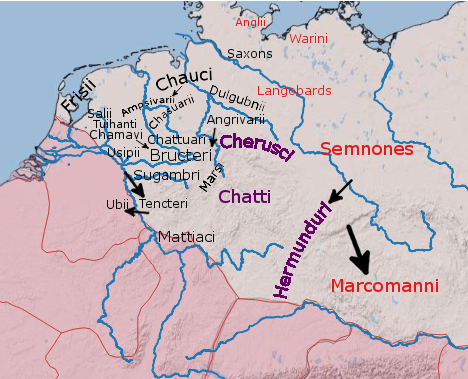
The Suebi (also spelled Suevi or Suavi) were a large group of Germanic peoples first reported by Julius Caesar in the 1st century BC. In different contexts over several centuries, peoples within this umbrella category were sometimes simply called the Suebi, although all or most Suebian peoples had their own names as well. They originated near the Elbe River in what is now Eastern Germany. From there, Suebian groups spread across Central Europe, and in the 5th and 6th centuries some took over parts of Spain, Portugal and Italy. Archaeologically, the forerunners of the Suebi before contact with Rome are associated with the Jastorf culture. During the Roman imperial period the Suebi are associated with the so-called "Elbe Germanic peoples" who brought Elbe material culture into new areas to the south and southwest. Linguistically, although contemporary evidence for Roman-era Suebian language is scarce, they spoke a Germanic language, which is believed to be the main predecessor of medieval Old High German, and the modern German language, with all its related dialects.
With the advent of Roman dominance in the 1st and 2nd centuries AD, some Suebi moved into Roman controlled regions near the Neckar river, while a powerful Suebian alliance outside their control maintained a tense relationship with the Roman empire. This was led by the Marcomanni, who settled with other Suebi in remote forests and mountains north of the Roman border along the Danube river, and maintained connections with Suebian and non-Suebian peoples to their north. After their crushing defeat to the Romans in the Marcomannic Wars of the late 2nd century, many Suebi moved into the Roman Empire, or regrouped in areas near the Roman frontier. Notably, the diverse group who came to be known as the Alemanni, took control of Roman territory in what later became medieval Swabia - a cultural region in southern Germany that still bears a version of the Suebian name. During the 3rd and 4th centuries, the Romans were often raided by the Alemanni, Juthungi, Quadi and other Suebi, and attempts to subjugate them had limited success.
After the Battle of Adrianople in 378, the Suebi, Romans and other peoples of the Middle Danube were unsettled by the large-scale arrival of Huns, Goths, Alans, and other newcomers from eastern Europe. Around 406, many Middle Danubians, including many Quadi, moved far to the west, entering Roman Gaul, and disrupting it badly. A large group of "Suebi", probably including many Quadi and other Middle Danubians, entered Roman Hispania by 409, where a civil war was in progress. There they established the Kingdom of the Suebi in Gallaecia (north-west Iberia), which lasted from 409 to 585. This was eventually absorbed by the Visigoths, but its legacy survives in local place-names.
Many other Middle Danubians joined the Huns, and became part of the empire of Attila. After his death in 453 several kingdoms formed, and divided up the region. Among these, a short-lived Suebian kingdom was defeated by the Ostrogoths, and some of them travelled west to join the Alemanni, contributing to the ongoing ethnogenesis of the medieval Swabians. After the Ostrogoths left the region to conquer Italy in 493, the Langobards (Lombards), filled the power vacuum in the Middle Danubian area and became dominant from around 500. They were a Suebian people who had moved southwards from the Elbe region, and they were willing to integrate other populations who agreed to follow their laws. In the still-Romanized areas between the Alemanni and Langobards, a new Germanic people called the Baiuvarii took control, who were the forerunners of the later Bavarians. Modern scholars categorize their language and material culture as Suebian, although they were not called Suebian. In 568 the Langobards entered Italy and established the Kingdom of the Lombards there. The Middle Danube was taken over by the Pannonian Avars, while Bavaria and Swabia became stem duchies of the Frankish empire.
The spelling form "Suebi" is the dominant one in classical times, while the common variant "Suevi" also appears throughout history. Around 300-600 AD spellings such as Suaevi, Suavi, and Σούαβοι started to occur, because of a sound shift which occurred in West Germanic at this time. However, the classical spellings also continued to be used. The Proto-Germanic pronunciation is reconstructed as *swēbōz (plural), *swēbaz (singular).
Throughout the 19th century, numerous attempts to propose a Germanic etymology for the name were made which are no longer accepted by scholars. The most widely accepted proposal today is that the word is related to a reconstructed Germanic adjective *swēsa- meaning “one’s own", which is also found in other ethnic names including the Germanic Suiones (Swedes).
The similarity between the Suebian name and the reconstructed Germanic word *sebjō meaning "clan", “related" or "family” is generally seen as indicating that the two words are related, and this is seen as relevant for attempts to explain the second part name. Notably, the name of the Semnones, who classical authors described as the most prestigious and original Suebians, may also have a similar etymology. Linguists generally believe that this name was pronounced as Sebnō, and derived from Proto Indo-European *swe-bh(o)-n meaning “of one’s own kind”, with an n-suffix that expresses belonging. The Suebi would then be “those who are of their own kind”, while the Semnones would be “those who belong to those of their own kind”.
In contrast, Rübekeil argues that the relevant Proto Indo-European suffix to explain the Germanic name of the Suebi is not -bho-, which was a suffix used to create adverbs from adjectives. Instead he proposes it was a suffix *-bū- based on the verb to be, *bʰuH-, with a syllabic lengthening which changed the meaning to “belonging to”. The Proto Indo-European root noun *swe-b(h)ū- would mean roughly “self-being”.
Hub AI
Suebi AI simulator
(@Suebi_simulator)
Suebi
The Suebi (also spelled Suevi or Suavi) were a large group of Germanic peoples first reported by Julius Caesar in the 1st century BC. In different contexts over several centuries, peoples within this umbrella category were sometimes simply called the Suebi, although all or most Suebian peoples had their own names as well. They originated near the Elbe River in what is now Eastern Germany. From there, Suebian groups spread across Central Europe, and in the 5th and 6th centuries some took over parts of Spain, Portugal and Italy. Archaeologically, the forerunners of the Suebi before contact with Rome are associated with the Jastorf culture. During the Roman imperial period the Suebi are associated with the so-called "Elbe Germanic peoples" who brought Elbe material culture into new areas to the south and southwest. Linguistically, although contemporary evidence for Roman-era Suebian language is scarce, they spoke a Germanic language, which is believed to be the main predecessor of medieval Old High German, and the modern German language, with all its related dialects.
With the advent of Roman dominance in the 1st and 2nd centuries AD, some Suebi moved into Roman controlled regions near the Neckar river, while a powerful Suebian alliance outside their control maintained a tense relationship with the Roman empire. This was led by the Marcomanni, who settled with other Suebi in remote forests and mountains north of the Roman border along the Danube river, and maintained connections with Suebian and non-Suebian peoples to their north. After their crushing defeat to the Romans in the Marcomannic Wars of the late 2nd century, many Suebi moved into the Roman Empire, or regrouped in areas near the Roman frontier. Notably, the diverse group who came to be known as the Alemanni, took control of Roman territory in what later became medieval Swabia - a cultural region in southern Germany that still bears a version of the Suebian name. During the 3rd and 4th centuries, the Romans were often raided by the Alemanni, Juthungi, Quadi and other Suebi, and attempts to subjugate them had limited success.
After the Battle of Adrianople in 378, the Suebi, Romans and other peoples of the Middle Danube were unsettled by the large-scale arrival of Huns, Goths, Alans, and other newcomers from eastern Europe. Around 406, many Middle Danubians, including many Quadi, moved far to the west, entering Roman Gaul, and disrupting it badly. A large group of "Suebi", probably including many Quadi and other Middle Danubians, entered Roman Hispania by 409, where a civil war was in progress. There they established the Kingdom of the Suebi in Gallaecia (north-west Iberia), which lasted from 409 to 585. This was eventually absorbed by the Visigoths, but its legacy survives in local place-names.
Many other Middle Danubians joined the Huns, and became part of the empire of Attila. After his death in 453 several kingdoms formed, and divided up the region. Among these, a short-lived Suebian kingdom was defeated by the Ostrogoths, and some of them travelled west to join the Alemanni, contributing to the ongoing ethnogenesis of the medieval Swabians. After the Ostrogoths left the region to conquer Italy in 493, the Langobards (Lombards), filled the power vacuum in the Middle Danubian area and became dominant from around 500. They were a Suebian people who had moved southwards from the Elbe region, and they were willing to integrate other populations who agreed to follow their laws. In the still-Romanized areas between the Alemanni and Langobards, a new Germanic people called the Baiuvarii took control, who were the forerunners of the later Bavarians. Modern scholars categorize their language and material culture as Suebian, although they were not called Suebian. In 568 the Langobards entered Italy and established the Kingdom of the Lombards there. The Middle Danube was taken over by the Pannonian Avars, while Bavaria and Swabia became stem duchies of the Frankish empire.
The spelling form "Suebi" is the dominant one in classical times, while the common variant "Suevi" also appears throughout history. Around 300-600 AD spellings such as Suaevi, Suavi, and Σούαβοι started to occur, because of a sound shift which occurred in West Germanic at this time. However, the classical spellings also continued to be used. The Proto-Germanic pronunciation is reconstructed as *swēbōz (plural), *swēbaz (singular).
Throughout the 19th century, numerous attempts to propose a Germanic etymology for the name were made which are no longer accepted by scholars. The most widely accepted proposal today is that the word is related to a reconstructed Germanic adjective *swēsa- meaning “one’s own", which is also found in other ethnic names including the Germanic Suiones (Swedes).
The similarity between the Suebian name and the reconstructed Germanic word *sebjō meaning "clan", “related" or "family” is generally seen as indicating that the two words are related, and this is seen as relevant for attempts to explain the second part name. Notably, the name of the Semnones, who classical authors described as the most prestigious and original Suebians, may also have a similar etymology. Linguists generally believe that this name was pronounced as Sebnō, and derived from Proto Indo-European *swe-bh(o)-n meaning “of one’s own kind”, with an n-suffix that expresses belonging. The Suebi would then be “those who are of their own kind”, while the Semnones would be “those who belong to those of their own kind”.
In contrast, Rübekeil argues that the relevant Proto Indo-European suffix to explain the Germanic name of the Suebi is not -bho-, which was a suffix used to create adverbs from adjectives. Instead he proposes it was a suffix *-bū- based on the verb to be, *bʰuH-, with a syllabic lengthening which changed the meaning to “belonging to”. The Proto Indo-European root noun *swe-b(h)ū- would mean roughly “self-being”.