



Community hub
Recent from talks
Knowledge base stats:
Talk channels stats:
Members stats:
Sugar
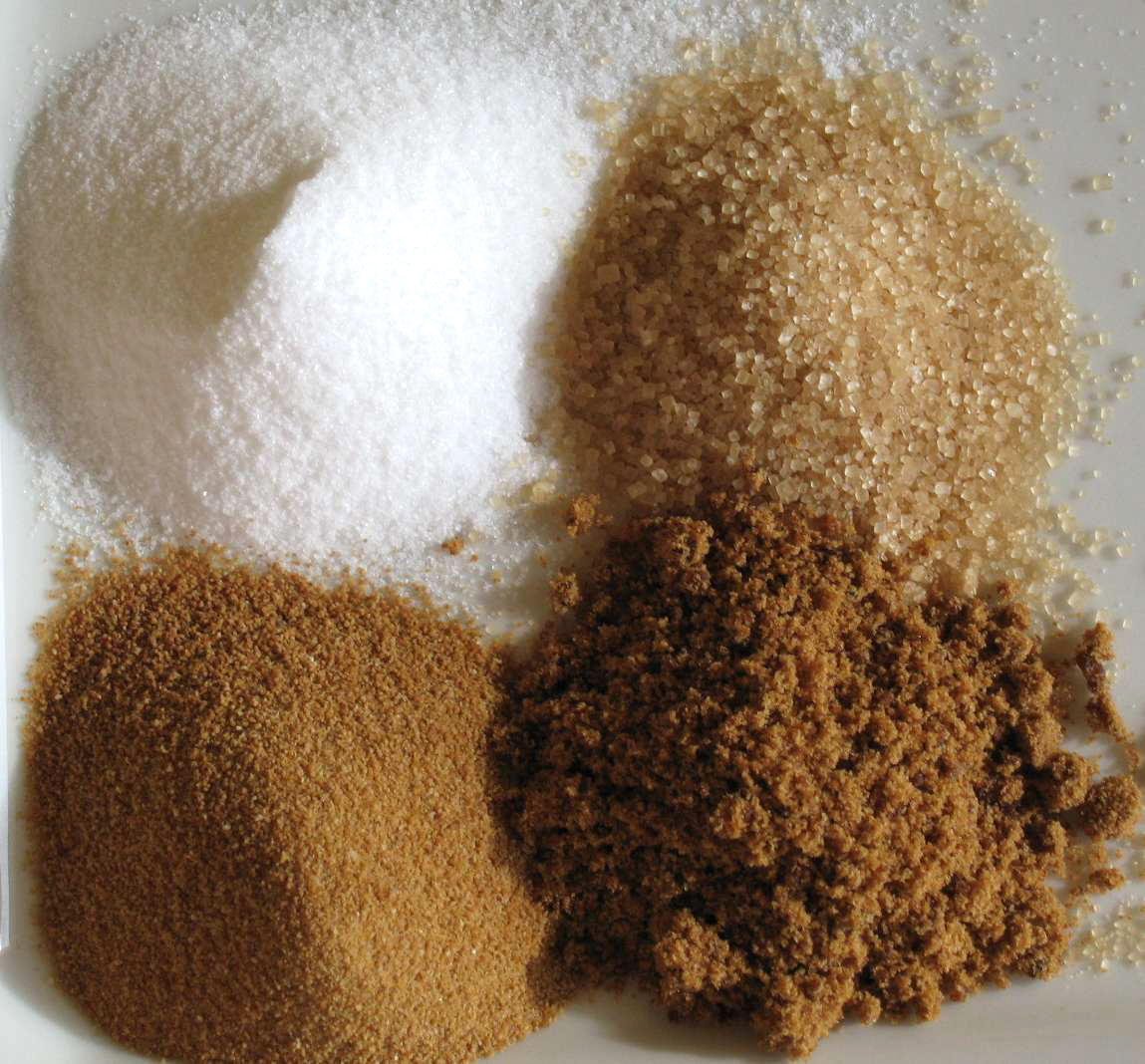
Sugar is the generic name for sweet-tasting, soluble carbohydrates, many of which are used in food. Simple sugars, also called monosaccharides, include glucose, fructose, and galactose. Compound sugars, also called disaccharides or double sugars, are molecules made of two bonded monosaccharides; common examples are sucrose (glucose + fructose), lactose (glucose + galactose), and maltose (two molecules of glucose). White sugar is almost pure sucrose. During digestion, compound sugars are hydrolysed into simple sugars.
Longer chains of saccharides are not regarded as sugars, and are called oligosaccharides or polysaccharides. Starch is a glucose polymer found in plants – the most abundant source of energy in human food. Some other chemical substances, such as ethylene glycol, glycerol and sugar alcohols, may have a sweet taste, but are not classified as sugar.
Sugars are found in the tissues of most plants. Honey and fruits are abundant natural sources of simple sugars. Sucrose is especially concentrated in sugarcane and sugar beet, making them efficient for commercial extraction to make refined sugar. In 2016, the combined world production of those two crops was about two billion tonnes. Maltose may be produced by malting grain. Lactose is the only sugar that cannot be extracted from plants, as it occurs only in milk, including human breast milk, and in some dairy products. A cheap source of sugar is corn syrup, industrially produced by converting corn starch into sugars, such as maltose, fructose and glucose.
Sucrose is used in prepared foods (e.g., cookies and cakes), is sometimes added to commercially available ultra-processed food and beverages, and is sometimes used as a sweetener for foods (e.g., toast and cereal) and beverages (e.g., coffee and tea). Globally on average a person consumes about 24 kilograms (53 pounds) of sugar each year. North and South Americans consume up to 50 kg (110 lb), and Africans consume under 20 kg (44 lb).
The use of added sugar in food and beverage manufacturing is a concern for elevated calorie intake, which is associated with an increased risk of several diseases, such as obesity, diabetes, and cardiovascular disorders. In 2015, the World Health Organization recommended that adults and children reduce their intake of free sugars to less than 10% of their total energy intake, encouraging a reduction to below 5%.
The etymology of sugar reflects the commodity's spread. From Sanskrit śarkarā, meaning "ground or candied sugar", came Persian shakar and Arabic sukkar. The Arabic word was borrowed in Medieval Latin as succarum, whence came the 12th century French sucre and the English sugar. Sugar was introduced into Europe by the Arabs in Sicily and Spain.
The English word jaggery, a coarse brown sugar made from date palm sap or sugarcane juice, has a similar etymological origin: Portuguese jágara from the Malayalam cakkarā, which is from the Sanskrit śarkarā.
Sugar was first produced from sugar cane in the Indian subcontinent. Diverse species of sugar cane seem to have originated from India (Saccharum barberi and S. edule) and New Guinea (S. officinarum). Sugarcane is described in Chinese manuscripts dating to the 8th century BCE, which state that the use of sugarcane originated in India.
Hub AI
Sugar AI simulator
(@Sugar_simulator)
Sugar
Sugar is the generic name for sweet-tasting, soluble carbohydrates, many of which are used in food. Simple sugars, also called monosaccharides, include glucose, fructose, and galactose. Compound sugars, also called disaccharides or double sugars, are molecules made of two bonded monosaccharides; common examples are sucrose (glucose + fructose), lactose (glucose + galactose), and maltose (two molecules of glucose). White sugar is almost pure sucrose. During digestion, compound sugars are hydrolysed into simple sugars.
Longer chains of saccharides are not regarded as sugars, and are called oligosaccharides or polysaccharides. Starch is a glucose polymer found in plants – the most abundant source of energy in human food. Some other chemical substances, such as ethylene glycol, glycerol and sugar alcohols, may have a sweet taste, but are not classified as sugar.
Sugars are found in the tissues of most plants. Honey and fruits are abundant natural sources of simple sugars. Sucrose is especially concentrated in sugarcane and sugar beet, making them efficient for commercial extraction to make refined sugar. In 2016, the combined world production of those two crops was about two billion tonnes. Maltose may be produced by malting grain. Lactose is the only sugar that cannot be extracted from plants, as it occurs only in milk, including human breast milk, and in some dairy products. A cheap source of sugar is corn syrup, industrially produced by converting corn starch into sugars, such as maltose, fructose and glucose.
Sucrose is used in prepared foods (e.g., cookies and cakes), is sometimes added to commercially available ultra-processed food and beverages, and is sometimes used as a sweetener for foods (e.g., toast and cereal) and beverages (e.g., coffee and tea). Globally on average a person consumes about 24 kilograms (53 pounds) of sugar each year. North and South Americans consume up to 50 kg (110 lb), and Africans consume under 20 kg (44 lb).
The use of added sugar in food and beverage manufacturing is a concern for elevated calorie intake, which is associated with an increased risk of several diseases, such as obesity, diabetes, and cardiovascular disorders. In 2015, the World Health Organization recommended that adults and children reduce their intake of free sugars to less than 10% of their total energy intake, encouraging a reduction to below 5%.
The etymology of sugar reflects the commodity's spread. From Sanskrit śarkarā, meaning "ground or candied sugar", came Persian shakar and Arabic sukkar. The Arabic word was borrowed in Medieval Latin as succarum, whence came the 12th century French sucre and the English sugar. Sugar was introduced into Europe by the Arabs in Sicily and Spain.
The English word jaggery, a coarse brown sugar made from date palm sap or sugarcane juice, has a similar etymological origin: Portuguese jágara from the Malayalam cakkarā, which is from the Sanskrit śarkarā.
Sugar was first produced from sugar cane in the Indian subcontinent. Diverse species of sugar cane seem to have originated from India (Saccharum barberi and S. edule) and New Guinea (S. officinarum). Sugarcane is described in Chinese manuscripts dating to the 8th century BCE, which state that the use of sugarcane originated in India.