Hubbry Logo
JaggeryJaggeryMain
Open search
Jaggery
Community hub
Jaggery
logo
8 pages, 0 posts
0 subscribers
Be the first to start a discussion here.
Jaggery
Jaggery
from Wikipedia

Jaggery
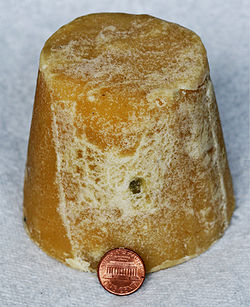
A block of jaggery with a US penny for size comparison
Main ingredientsSugarcane juice, boiled and concentrated.
Similar dishesMuscovado, panela, palm sugar
  •   Media: Jaggery

Jaggery is a traditional non-centrifugal cane sugar[1] consumed in the Indian subcontinent, Southeast Asia, North America,[2] Central America, Brazil and Africa.[3] It is a concentrated product of cane juice and often date or palm sap without separation of the molasses and crystals, and can vary from golden brown to dark brown in colour. It contains up to 50% sucrose, up to 20% invert sugars, and up to 20% moisture, with the remainder made up of other insoluble matter, such as wood ash, proteins, and bagasse fibres.[3] Jaggery is very similar to muscovado, an important sweetener in Portuguese, British and French cuisine.

Etymology

[edit]

Jaggery comes from Portuguese terms jágara, jagra, borrowed from Malayalam ശർക്കര (śarkara), which is borrowed from Sanskrit शर्करा (śarkarā). It is a doublet of sugar.[4]

Origins and production

[edit]
Non-centrifugal cane sugar (jaggery) production near Inle Lake (Myanmar). Crushing and boiling stage.
The process of making granular jaggery

Jaggery is made of the products of sugarcane and the toddy palm tree.[5] The sugar made from the sap of the date palm is more prized and less commonly available outside of the regions where it is made.[citation needed] The toddy palm is tapped for producing jaggery in India, Bangladesh, Pakistan, Nepal, Myanmar and Sri Lanka.

In Sri Lanka, syrup extracts from kithul (Caryota urens) trees are widely used for jaggery production.[6]

All types of the sugar come in blocks or pastes of solidified concentrated sugar syrup heated to 200 °C (392 °F). Traditionally, the syrup is made by boiling raw sugarcane juice or palm sap in large, shallow, round-bottomed vessels.

Preparation

[edit]
Harvesting sugar cane without pre-burn – the abundant waste on the ground will be irrigated to release nutrients for the next crop

Historically, the sugarcane cultivators used crushers that were powered by oxen, but all modern crushers are power-driven. These crushers are placed in fields near the sugarcane plants. The cut and cleaned sugarcane is crushed and the extracted cane juice is collected in a large vessel. A quantity of the juice is transferred to a smaller vessel for heating in a furnace.

The vessel is heated for about an hour. Dried wood pulp from the crushed sugarcane is traditionally used as fuel for the furnace. While boiling the juice, lime is added to it so that all the wood particles rise to the top of the juice in a froth, which is skimmed off. Finally, the juice is thickened. The resulting thick liquid is about one-third of the original volume.

This hot liquid is golden in colour. It is stirred continuously and lifted with a spatula to observe whether it forms a thread or drips while falling. If it forms many threads, it has completely thickened. It is poured into a shallow flat-bottomed pan to cool and solidify. The pan is extremely large to allow only a thin coat of this hot liquid to form at its bottom, so as to increase the surface area for quick evaporation and cooling. After cooling, the jaggery becomes a soft solid that is then molded into the desired shape.

The quality of jaggery is judged by its colour; dark brown means it was not clarified during the making, or the sugarcane juice was boiled with full nutrients intact. Some people misinterpret this as impure and clarify the juice to improve colour while taking out the nutrients to make golden-yellow jaggery, which is nothing but refined sugar. Due to this grading scale, coloured adulterants, which may be toxic, are sometimes added to jaggery to simulate the golden hue.[citation needed]

Natural dark brown jaggery is derived from whole sugarcane juice, by means of boiling at nearly 200 °C in a large cast iron pan. Food-grade mustard or castor oil (having a high smoke point) is usually used in such pans in negligible quantity (approximately 2 teaspoons per 100 kg) so that the very hot juice froth does not come out of the pan during boiling. Mustard or castor oil is present in whole jaggery in traces, and the qualities of such oils (laxative) coincide and support this quality of whole jaggery.[citation needed]

Uses

[edit]

South Asia

[edit]

Jaggery is used as an ingredient in sweet and savoury dishes in the cuisines of India, Pakistan, Bangladesh, Nepal, Sri Lanka, Afghanistan and Iran. For example, a pinch of it is sometimes added to sambar, rasam and other common dishes in Udupi cuisine. Jaggery is added to lentil soups (dāl) to add sweetness to balance the spicy, salty, and sour components, particularly in Gujarati cuisine.[citation needed]

In Sri Lanka, jaggery is usually made using the syrup of the kithul palm tree, or from coconut syrup.[7] The respective names in Sinhalese are kitul hakuru (කිතුල් හකුරු) and pol hakuru (පොල් හකුරු). Jaggery from the syrup of the palmyrah palm is more prominent in the northern part of the country; this is referred to as palmyrah jaggery or panangkaruppatti (பனங்கருப்பட்டி) in Tamil. Jaggery made from sugarcane syrup is considered inferior to palm syrup-based jaggery varieties, and the term jaggery (கருப்பட்டி) is generally understood in the country to refer to the latter.[6]

Maharashtra in India is the largest producer and consumer of jaggery known as "gul" (गुळ) in Marathi and Marwadi, "gur" (گڑ) in Urdu, "bellaṁ" (బెల్లం) in Telugu, bella (ಬೆಲ್ಲ) in Kannada, "vellam"(வெல்லம்) in Tamil, "sharkara" (ശർക്കര) in Malayalam , "gōḷa" (ગોળ) in Gujarati , "miṣṭa" (मिष्ट) in Sanskrit, "guṛa" (ଗୁଡ଼) in Odia, gur (गुड़) in Hindi and "guṛ" (গুড়) in Bengali.

Kolhapur is one of the largest producers of jaggery in India and has a GI Tag for Kolhapur jaggery.[8] Most vegetable dishes, curries, and dals, and many desserts, contain it. Jaggery is especially used during Makar Sankranti for making a dessert called tilgul. In Gujarat, a similar preparation known called tal na ladu or tal sankli is made. In rural Maharashtra and Karnataka, water and a piece of jaggery are given to a person arriving home from working under the hot sun. In Andhra, Telangana and Karnataka, on Ugadi festival day (New Year), Ugadi pachadi is made from jaggery and five other ingredients (shad ruchulu- sweet, sour, salt, tangy, spice and bitter) and is consumed symbolizing life is a mixture of happiness, disgust, fear, surprise, anger and sadness.

Molasses (काकवी), a byproduct of the production of jaggery, is used in rural Maharashtra and Karnataka as a sweetener. It contains many minerals not found in ordinary sugar and is considered beneficial to health in traditional Ayurvedic medicine.[9] It is an ingredient of many sweet delicacies, such as gur ke chawal / chol ("jaggery rice"), a traditional Rajasthani or Punjabi dish.

Jaggery preparation by heating juice in the vessel on furnace

In Gujarat, laddus are made from wheat flour and jaggery. A well-known Maharashtrian recipe, puran poli, uses it as a sweetener apart from sugar. Jaggery is considered an easily available sweet which is shared on any good occasion. In engagement ceremonies, small particles of it are mixed with coriander seeds (ધાણા). Hence, in many Gujarati communities, engagement is commonly known by the metonym gol-dhana (ગોળ-ધાણા), literally "jaggery and coriander seeds".

Jaggery is used extensively in South India to balance the pungency of spicy foods. In Andhra Pradesh and Tamil Nadu it is used for sweets such as chakkara pongal and milk pongal, which are prepared with rice, milk, and jaggery. During Sankranti, Ariselu, an authentic Andhra Pradesh dish, is prepared. In Tamil Nadu, ellurundai (sesame balls), Adhirasam and pori vilangu urundai (puffed rice balls) are prepared as an offering - called prasadam - to god during Puja and festivals such as Diwali, Tamil New Year and Janmashtami.

A sweet liquid called Paanakam, made of water, jaggery and peppercorns is prepared as the favorite offering to Lord Rama during Rama Navami festival. In Kerala, it is considered auspicious and is widely used in cooking. It is a vital ingredient in many varieties of payasam, a sweet dish. The state of Kerala as 2 GI tagged jaggeries by the name of Central Travancore jaggery and Marayoor jaggery

In Tamil Nadu, jaggery is used exclusively as a sweetener. It is used in a dish called chakkarai pongal. It is prepared during the festival of Pongal (Thai Pongal), which is held when the harvesting season begins. It is used to make kalhi, to sweeten fruit salads and payasam (sweet milk) that are offered to the gods. Jaggery is used in religious rituals. In rural areas, cane jaggery and palm jaggery are used to sweeten beverages, whereas refined sugar has replaced it in urban areas.[10]

Semisolid sugarcane juice drying in another pan for preparation of jaggery: a practice in India

In Odia cuisine, cakes or piṭhas contain jaggery. Pithas like Arisa pitha are made out of jaggery called guda in Odia. Kakara pitha contains coconut filings which are caramelized using jaggery. Guda is also added to rice flakes known as chuda and eaten for breakfast. Some marmalade made of mango and dillenia contain the ingredient.

In Bengali cuisine, it is commonly used in making sweet dishes, some of which mix jaggery with milk and coconut. Popular sweet dishes such as laḍḍu/laṛu or paṭishapta piṭha mix it with coconut shreds. Jaggery is molded into novel shapes as a type of candy. The same preparation of sweets have been made in the neighbouring state of Assam. Some of the popular sweet dishes of Assam such as til-pitha (made of rice powder, sesame and jaggery), other rice-based pitha, and payas are made of jaggery. In some villages of Assam, people drink salty red tea with a cube of gurd (jaggery), which is popularly called cheleka-chah (licking tea).

Traditional Karnataka sweets, such as paayasa, obbattu (holige) and unday use different kinds of jaggery. A pinch is commonly added to sambar (a.k.a. huLi saaru) and rasam (a.k.a. saaru). Karnataka produces sugar and palm-based jaggery.

Muzaffarnagar in Uttar Pradesh has the largest jaggery market in the world along with having a GI Tag for Muzaffarnagar jaggery, followed by Anakapalle in the Visakhapatnam District in Andhra Pradesh. The Kolhapur District in western Maharashtra is famous for its jaggery, which is yellow and much sought after in Maharashtra and Gujarat. Mandya in Karnataka is known for its jaggery production.

Southeast Asia

[edit]

In Myanmar, jaggery, called htanyet (ထန်းလျက်) in Burmese, is harvested from toddy palm syrup. In central Myanmar and around Bagan (Pagan), toddy syrup is collected solely for making jaggery. The translucent white syrup is boiled until it becomes golden brown and then made into bite-size pieces. It is considered a sweet and is eaten by children and adults alike, usually in the afternoon with a pot of green tea. It has been referred to locally as Burmese chocolate. Toddy palm jaggery is sometimes mixed with coconut shreds, jujube puree or sesame, depending on the area. This type of jaggery is used in Burmese cooking, usually to add colour and enrich the food.

Other uses

[edit]

Other uses include jaggery toffees and jaggery cake made with pumpkin preserve, cashew nuts, peanuts and spices. Jaggery may be used in the creation of alcoholic beverages such as palm wine.

Besides being a food, jaggery may be used (mixed in an emulsion with buttermilk and mustard oil) to season the inside of tandoor ovens.[11]

Jaggery is used in natural dyeing of fabric. It is also used in hookahs in rural areas of Pakistan and India.

Nomenclature

[edit]

In the Indian subcontinent

[edit]
Making jaggery (gur) in Punjab
  • From guḍa in Sanskrit (गुड, 'ball'):
  • From Proto-Dravidian *vell-am:
    • vellam in Tamil (வெல்லம்) and Malayalam (വെല്ലം), or longer form panai vellam in Tamil (பனை வெல்லம்)
    • bellam in Telugu (బెల్లం)
    • bella in Kannada (ಬೆಲ್ಲ) and Tulu
  • From Sanskrit śarkarā (शर्करा, 'gravel, grit, candied sugar'):
    • śarkkara or cakkara in Malayalam (ശർക്കര or ചക്കര)
    • sakkarai in Tamil (சக்கரை)
    • sakkhar in Nepali (सक्खर)
    • hakuru in Sinhala (හකුරු) and Dhivehi (ހަކުރު)
  • From Sanskrit miṣṭa (मिष्ट, 'sweet, tasty'):
  • Other terms:
    • kawltu tuikang in Paite
    • kurtai in Mizo
    • bheli in Nepali
    • karuppaṭṭi, karippaṭṭi, or karipeṭṭi in Malayalam (കരിപെട്ടി) is jaggery made from palm juice, and panam kalkaṇḍam (പനം കല്കണ്ടം) is rock candy made from palm juice.
    • karupaṭṭi (கருப்பட்டி) or panam kalkaṇḍu (பனம் கற்கண்டு) in Tamil

In Southeast Asia

[edit]

Cambodia

[edit]
The production of palm jaggery in Cambodia
  • Skor tnaot (ស្ករត្នោត) in Khmer[12]

Myanmar (Burma)

[edit]
Burmese jaggery at a market in Mandalay
Sugarcane jaggery in Myanmar
  • Htanyet (ထန်းလျက်) [Toddy Palm Jaggery] (pronounced [tʰəɲeʔ]) in Burmese
  • Kyan Tha Kar (ကြံသကာ) [Sugarcane Jaggery] in Burmese

Malaysia

[edit]

Indonesia

[edit]

Philippines

[edit]
Philippine sangkaka or panutsá are disc-shaped as these are traditionally made in dried coconut shell halves.

Thailand

[edit]

Vietnam

[edit]

Elsewhere

[edit]
[edit]

See also

[edit]
  • Brown sugar – Sucrose sugar product with a distinctive brown colour
  • Caramelization – Process of liquifying sugar
  • Muscovado – Type of unrefined brown sugar
  • Palm sugar – Sugar extracted from the sap of palm trees
  • Panela – Unrefined whole cane sugar, typical of Latin America
  • Peen tong – Chinese brown sugar
  • Piloncillo – Unrefined whole cane sugar, typical of Latin America
  • Sugarloaf – Refined sugar molded into a conical shape for commercial distribution

References

[edit]
[edit]
Revisions and contributorsEdit on WikipediaRead on Wikipedia
from Grokipedia
Jaggery is a traditional, unrefined sugar known as non-centrifugal cane sugar or palm sugar, produced by evaporating the water content from the juice of sugarcane (Saccharum officinarum) or the sap of various palm trees, such as coconut (Cocos nucifera), palmyra (Borassus flabellifer), or date palms, without centrifugation to separate crystals. This results in a dark brown, sticky solid, semi-solid, liquid, or granular product with a caramel-like flavor, serving as a natural sweetener in rural and traditional diets across Asia, Africa, and Latin America for over 3,000 years. India dominates global production, accounting for over 70% of the world's output—approximately 8 million tons annually as of 2023—primarily from sugarcane, though per capita consumption has declined from 15.2 kg in 1960 to 4.1 kg as of 2018–19 due to preferences for refined sugar. Nutritionally, jaggery retains micronutrients from its source, offering a healthier alternative to refined sugar with 70–85% sucrose, 7–10% reducing sugars (glucose and fructose), 0.35–0.45% protein, and negligible fat (0–0.1 g per 100 g). It is rich in minerals including iron (10–13 mg/100 g), calcium (40–100 mg/100 g), magnesium (70–90 mg/100 g), and potassium (1056 mg/100 g), along with vitamin C (7 mg/100 g), B-complex vitamins, phenolics (280–320 mg/100 g), and antioxidants. Palm jaggery variants often exhibit higher mineral levels (e.g., potassium 1026–1250 mg/100 g) and a lower glycemic index compared to sugarcane types. These properties may contribute to benefits like anemia prevention and digestive aid, and it is used in Ayurvedic medicine. In culinary applications, it flavors sweets, beverages, and confections across regions.

Etymology and Nomenclature

Etymology

The word jaggery entered English from the Indo-Portuguese jágara or jagra, a term adopted by Portuguese traders in India during the colonial era. This Portuguese form derives from the Malayalam chakkara (ചക്കര), meaning unrefined sugar, or the closely related Tamil cakkarai (சக்கரை). Ultimately, these Dravidian terms trace back to the Sanskrit śarkarā (शर्करा), which originally referred to gravel or pebbles and later denoted candied or ground sugar, reflecting the coarse, granular texture of the product. The linguistic path highlights influences from Indo-Aryan roots in ancient Indian texts, where śarkarā appears in descriptions of sweeteners derived from sugarcane or palm sap. The adoption of jaggery into English occurred in the early 17th century, with the first recorded use in 1631, stemming from European accounts of Indian trade goods encountered via Portuguese maritime routes. These routes facilitated the exchange not only of commodities but also of terminology across Dravidian, Indo-Aryan, and European languages, embedding the word in global descriptions of unrefined sugars.

Regional Variations

In the Indian subcontinent, jaggery is most commonly known as "gur" in Hindi, reflecting its widespread use as a traditional unrefined sweetener derived primarily from sugarcane. Regional linguistic variations abound, such as "gud" in Punjabi and Urdu, "bella" in Kannada, "vellam" in Malayalam and Tamil, "gul" in Marathi, "guda" in Oriya, and "gurh" in Bengali, among others, highlighting the product's deep integration into local cultures and languages across diverse states. These names often distinguish it from refined sugars, and in some contexts, it is referred to broadly as "non-centrifugal sugar" to emphasize its unprocessed nature, contrasting with influences like "panela" from Latin American traditions that share similar production methods. In Southeast Asia, nomenclature reflects adaptations to palm-based production, with "gula melaka" denoting palm sugar in Malaysia, derived from coconut or date palm sap and valued for its caramel-like flavor in local cuisine. In Indonesia, it is called "gula jawa," a Javanese variant similarly produced from palm nectar, underscoring the region's reliance on tropical palms over sugarcane. The Maldives uses "hakuru" or "dhivehi hakuru" for its traditional coconut palm sugar, a staple tied to island self-sufficiency and often consumed in liquid or solid form. Thailand refers to palmyra palm jaggery as "nam tan ode," while in Vietnam, "đường thốt nốt" specifically names the sugar from palmyra palm sap, illustrating how palm varieties influence terminology in these areas. Beyond these regions, similar unrefined sugars bear distinct names in , where "" is the prevalent term in countries like , , , and , produced from boiled and molded into blocks. In and , it is known as "rapadura," a hardened form of with historical ties to colonial influences, akin to the of "jaggery" itself. "Muscovado," another variant, appears in some Latin American contexts but is more commonly associated with unrefined cane sugars in the Philippines and parts of the Caribbean, often sharing the non-centrifugal processing trait. Nomenclature patterns generally align with source materials: sugarcane-derived products like "gur" and "panela" emphasize the crop's juice extraction, while palm-based ones such as "gula melaka" and "hakuru" highlight sap from specific trees, adapting to local botany and colonial linguistic exchanges without altering the core unrefined character.

History and Origins

Historical Development

Jaggery's origins trace back to ancient India, where early references to sugarcane processing appear in Vedic texts around 1500 BCE. The Rigveda mentions sugarcane as ikṣu, a plant valued for its sweet juice, while the term śarkarā—meaning grit or pebbles—emerged in later Vedic and post-Vedic literature to describe the granulated, unrefined sugar product derived from boiling the juice, marking the beginnings of non-centrifugal sugar production. This process, akin to modern jaggery making, highlighted sugarcane's role in rituals, medicine, and daily sustenance in the Indus Valley and Gangetic plains. By the CE, jaggery played a notable in ancient maritime , as documented in the , a Greek merchant's guide to . The text describes exports from western Indian ports like Barygaza (modern ) and Ariaca, including " from the reed called sacchari"—a clear reference to crude sugar or jaggery extracted from sugarcane—shipped alongside spices, cotton, and ivory to Arabian and East African markets. This trade facilitated jaggery's spread along overland routes like the Silk Road, where Indian sugarcane processing techniques reached China by the 6th century via Buddhist monks, and extended to Southeast Asia through maritime networks, integrating into local palm-based sweetener traditions. European colonial encounters further elevated jaggery's profile in global trade during the 16th to 19th centuries. Portuguese explorers, arriving in India around 1498, documented jaggery (adopting the term jagra from regional languages) as a staple commodity in Goan and Malabar ports, incorporating it into their records of spice and sugar exchanges. British colonial administrators, from the East India Company era onward, noted its widespread production and use in revenue assessments and trade logs, leading to increased exports; by the mid-19th century, Indian jaggery and related sugarcane products were shipped to Europe and colonial outposts, often as raw material for refining, amid a global sugar market boom that saw British India supply up to 70,000 tons annually by the 1840s. In the 20th century, post-independence India formalized jaggery's status through regulatory advancements. Following 1947, the government introduced grading standards via the Agmark system in 1937 (expanded post-independence), culminating in the Jaggery Grading and Marking Rules of 2008, which defined quality grades for sugarcane and palm jaggery based on sucrose content, moisture, and impurities to support domestic and export markets. The Food Safety and Standards Authority of India (FSSAI) further refined these in 2017, segregating standards for cane jaggery to ensure safety and authenticity, reflecting its enduring recognition as a traditional, nutrient-rich food amid national efforts to preserve indigenous agro-practices.

Geographical Spread

Jaggery production originated in the Indian subcontinent, where sugarcane cultivation is documented in ancient texts from the Vedic period, dating to approximately 1400–1000 BCE in the Gangetic plains, though archaeological evidence suggests earlier use in the region following the plant's introduction from Southeast Asia. The processing of sugarcane juice into unrefined blocks, known as jaggery or gur, became a staple in local diets and rituals, reflecting the subcontinent's early advancements in non-centrifugal sugar extraction. This development coincided with the domestication of sugarcane hybrids in nearby areas, enabling widespread cultivation across the fertile river valleys by the first millennium BCE. The dissemination of jaggery-making techniques to Southeast Asia occurred primarily through Indian cultural exchanges and maritime trade routes established by 500 BCE, integrating with local palm sap processing traditions. In Indonesia and the Philippines, variants using coconut or date palm sap—similar to jaggery—emerged as staples, influenced by Austronesian agricultural practices and Indian merchants who introduced refined boiling methods during the expansion of Hindu-Buddhist kingdoms. These exchanges facilitated the adaptation of non-centrifugal sugars into regional cuisines, such as gula melaka in Indonesia, blending indigenous palm toddy fermentation with Indian-style solidification. Jaggery-like products reached Africa and Latin America via European colonial networks in the 16th century, with Spanish and Portuguese explorers introducing sugarcane cultivation to the Americas starting in 1493 on Hispaniola. In Latin America, this led to the development of panela, an unrefined cane block akin to jaggery, produced through similar open-pan in regions like and , often relying on African diaspora labor for harvesting and techniques adapted from West African traditions. In Africa, sugarcane arrived through Arab and Portuguese routes earlier, but colonial expansion amplified production in areas like Mozambique and South Africa, where unrefined sugars supported local economies amid the transatlantic slave . Today, global production of non-centrifugal sugars like jaggery remains concentrated in Asia, with India accounting for over 70% of the world's supply at approximately 10 million tonnes annually (as of 2023–24), primarily from the Gangetic and Deccan plateaus. Bangladesh contributes significantly through small-scale artisanal operations in its riverine deltas, while emerging hotspots in Latin America, such as Colombia and Brazil, produce panela variants totaling around 1.5 million tonnes, driven by sustainable farming initiatives and export demands. Recent trends include increased promotion of organic and climate-resilient jaggery production in India under national agriculture missions. These regions highlight jaggery's enduring role in rural economies, though production volumes vary with sugarcane yields and climate factors.

Production

Raw Materials

Jaggery is predominantly produced from the juice of sugarcane (Saccharum officinarum), the primary raw material in major producing regions such as India. The juice, extracted by crushing mature stalks, typically yields 10-15% sucrose content, alongside water (70-80%), reducing sugars (1-3%), and trace minerals like potassium and iron that contribute to the final product's nutritional profile. In addition to sugarcane, jaggery is derived from the sap of various palm species, including coconut (Cocos nucifera), date (Phoenix dactylifera), and palmyra (Borassus flabellifer), particularly in tropical areas. These saps vary in sweetness, with palmyra sap containing approximately 12-15% total sugars, primarily sucrose (around 14%), while coconut sap ranges from 12-15% sugars; date palm sap similarly offers 10-15% sucrose. The composition influences the jaggery's flavor and color, with palm-based varieties often exhibiting a darker hue and caramel-like notes due to higher mineral content. Regional preferences highlight sugarcane's dominance in India, where it accounts for over 90% of jaggery production due to abundant cultivation, contrasted with palm sap's prevalence in Southeast Asia, such as Indonesia and the Philippines, where coconut and palmyra palms are integral to local traditions. The quality of these raw materials is influenced by factors like seasonal harvesting, which optimizes sugar accumulation during dry periods for higher sucrose yields, and soil types, with well-drained loamy soils enhancing nutrient uptake in sugarcane and palms compared to saline or waterlogged conditions.

Manufacturing Process

The manufacturing process of jaggery begins with the extraction of juice from sugarcane or palm sap, followed by clarification, concentration through evaporation, and solidification into the final product. For sugarcane jaggery, the primary raw material, mature cane is crushed using traditional roller mills or mechanized crushers to extract the juice, yielding approximately 600-700 liters per metric ton of cane. The extracted juice, typically containing 12-15% sucrose, is filtered to remove fibrous residues. In traditional methods, this step relies on manual or animal-powered mills, while semi-modern processes employ power-driven three-roller mills for higher efficiency and yields up to 85% juice extraction. Clarification follows to remove impurities such as suspended particles, colloids, and coloring compounds. The juice is heated to 70-80°C and treated with natural coagulants like lime (to raise pH to 6.0-6.2) or herbal extracts such as deola (45 g per 100 kg juice), which causes impurities to form scum that is skimmed off. This boiling stage reduces the juice volume by about 80% through water evaporation and impurity removal, resulting in clearer liquid ready for concentration. Traditional clarification uses open pans over wood or bagasse fires, whereas mechanized setups incorporate steam-heated vessels for better control and reduced fuel use. Concentration involves further evaporation in open pans or multi-pan systems fueled by bagasse, the fibrous residue from crushing, to reach 80-90% total solids. The juice is boiled continuously, with temperatures rising to 103-106°C for liquid forms or 120°C for solid varieties, at which point it thickens into a viscous mass. Traditional open-pan evaporation is labor-intensive and energy-inefficient, often taking 3-4 hours per batch, while semi-modern methods use steam compressors or vacuum evaporation to shorten the process by up to 33% and improve energy recovery from bagasse. Recent advancements as of 2025 include improved furnace designs with multi-pan configurations, preheating systems, and integration of renewable energy sources to enhance efficiency and reduce environmental impact. Solidification occurs as the hot concentrate cools, forming blocks or granules. For solid jaggery, common in India, the mass is poured into rectangular molds to cool into amber-colored blocks; overall yield is about 10% of the original cane weight. Granular jaggery involves rubbing the semi-solid slurry with wooden scrapers to form crystals, followed by sieving and sun-drying to under 2% moisture. Liquid jaggery, produced in some regions including parts of , is withdrawn earlier at lower solids (60-65%) and preserved with additives like . Palm jaggery production shares similarities but starts with tapping sap from trees like . Incisions are made at the trunk's apex to collect sucrose-rich sap (neera), yielding 1.7-10 liters per tree daily depending on the method—higher in intensive local tapping (8-10 L/day) versus sustainable annual tapping (1.7-3 L/day). The sap is filtered, clarified with lime and phosphoric acid to neutralize yeasts, and boiled in earthen pans over palm-leaf fires to concentrate it, reducing volume similarly to sugarcane processes. Modern techniques include spray drying at 220°C inlet temperature or vacuum evaporation at 40°C for efficient processing. Final solidification yields 10-15% jaggery by weight of raw sap, typically molded into blocks; variations include softer forms from less evaporation. Traditional palm methods emphasize manual tapping and open boiling, with limited mechanization due to small-scale operations.

Culinary and Traditional Uses

In Indian subcontinent

In the Indian subcontinent, jaggery serves as a versatile to everyday culinary practices, particularly in and , where it imparts a rich, caramel-like flavor to traditional sweets and beverages. It is commonly used to prepare confections such as laddoos, which are spherical made by mixing jaggery with roasted , nuts, or seeds, and chikkis, brittle bars combining jaggery with peanuts, , or puffed rice for a crunchy texture. In beverages, jaggery enhances masala chai by dissolving into boiling milk with spices like ginger and cardamom, providing natural sweetness without refined sugar, while in , it features in gur ki roti, a sweet flatbread stuffed with jaggery and fennel seeds, often enjoyed during winter for its warming qualities. Medicinally, jaggery holds a prominent place in Ayurvedic traditions across Indian subcontinent, valued for its iron content that aids in preventing and treating by supporting production. It is recommended for digestive health, as its content promotes bowel regularity and relieves , and serves as a remedy for coughs and colds due to its warming potency that helps expel . Traditional preparations include jaggery-ginger balls, made by combining melted jaggery with dry ginger , which are consumed to soothe respiratory issues, improve digestion, and boost immunity during seasonal ailments. Seasonal consumption of jaggery peaks during post-harvest festivals in Indian subcontinent, symbolizing prosperity and community bonding. In Tamil Nadu, it is central to Pongal, where sweet pongal—a rice and lentil dish cooked with jaggery—is offered to deities and shared among families to celebrate the harvest. Similarly, during Makar Sankranti in northern India, jaggery-based sweets like tilgul (sesame-jaggery balls) are exchanged with the phrase "tilgul ghya, god god bola," promoting sweetness in relationships. Annual per capita consumption in India stands at approximately 4.1 kg, reflecting its role in these cultural rituals and daily diets. Unique preparations in tribal areas of Indian subcontinent include fermented jaggery beverages, such as kapisayani in parts of southern India, where jaggery is mixed with rice and spices, then fermented to create a mildly alcoholic drink used in rituals and as a digestive aid. These indigenous methods highlight jaggery's adaptability in tribal cuisines, often incorporating local herbs for enhanced nutritional benefits.

In Southeast Asia

In Southeast Asia, jaggery, often derived from palm sap rather than sugarcane, plays a central role in regional cuisines, imparting a distinctive caramel-like flavor and nutritional depth to both sweet and savory dishes. Known locally by names such as gula melaka in Malaysia, gula jawa in Indonesia, nam tan peuk in Thailand, and đường thốt nốt in Vietnam, palm jaggery is prized for its unrefined qualities and integration into everyday meals. This contrasts with sugarcane-dominant varieties elsewhere, highlighting adaptations to tropical palm resources abundant in the region. Culinary uses emphasize its balancing sweetness in diverse preparations. In Malaysia, gula melaka is essential for traditional desserts like onde-onde, glutinous rice balls filled with palm sugar syrup and coated in grated coconut, providing a molten caramel contrast to the chewy texture. Similarly, in Indonesia, gula jawa features prominently in klepon, green pandan-flavored rice balls stuffed with liquid palm sugar that bursts upon biting, and in sambal variants where it tempers chili heat with subtle sweetness, as seen in Javanese recipes incorporating palm sugar alongside tamarind and lime. In Thailand, nam tan peuk adds depth to curries like massaman or green curry, where its rich, full-bodied profile balances spicy and sour elements without overpowering the dish. Further west, Philippine suman rice cakes, steamed wrapped in leaves, are traditionally topped with , an unrefined cane similar to jaggery, that enhances the milk's creaminess with its earthy . In Vietnam, đường thốt nốt from palm is incorporated into chewy sweets like bánh thốt nốt, layered sticky cakes with and , where its delicate fragrance elevates the dessert's tropical . Beyond cuisine, palm jaggery holds medicinal and ritual significance. In Cambodia, it is infused into herbal teas with ginger or lemongrass, valued for its detoxifying properties that aid digestion and liver health through natural mineral content. In Myanmar, known as htan nyet, palm jaggery is consumed post-meal to promote digestion and is stirred into traditional teas, reflecting its role in daily wellness rituals rather than cosmetic applications like thanaka. Regional adaptations include liquid forms of palm jaggery, such as đường thốt nốt syrup, used in Vietnamese fermented beverages like nước thốt nốt, where fresh palm sap is lightly boiled and combined with rice wine for a mildly effervescent, probiotic-rich drink.

In Other Regions

In Africa, unrefined cane sugars similar to jaggery are incorporated into traditional culinary practices, particularly in West Africa where palm jaggery, derived from palm sap, serves as a natural sweetener in beverages and dishes. In Latin America, jaggery equivalents such as piloncillo in Mexico and rapadura in Brazil have been staples since colonial times, with sugarcane processing techniques tracing back to Indian origins introduced via Portuguese trade routes around the 16th century. Piloncillo, an unrefined cane sugar molded into cones, is commonly grated into mole sauces to balance the savory, spicy, and bitter elements with its caramel-like depth, as seen in traditional Oaxacan moles where it complements chiles, chocolate, and nuts. Similarly, rapadura provides a rustic sweetness in Brazilian cuisine, often paired with feijoada—a hearty black bean stew—to mellow its robust, meaty profile during festive meals, reflecting the region's blend of indigenous, African, and European influences tied to early sugarcane exports from Asia. Jaggery's adoption in the West has surged since the 2010s amid health food movements emphasizing natural, unrefined sweeteners over processed sugars. In Europe and the United States, it features prominently in vegan baking, where its mineral-rich profile—retaining iron, magnesium, and potassium—adds moisture and a toffee-like nuance to recipes like energy balls or gluten-free cookies without refined additives. Superfood bars often incorporate jaggery as a binder for nuts, seeds, and supergrains, appealing to consumers seeking low-glycemic alternatives in plant-based snacks. Emerging applications include craft beers, where jaggery contributes fermentable sugars and subtle maple-caramel notes during brewing, as in Belgian-style ales or experimental stouts. Import data indicates growing demand, with non-Asian markets like the US receiving substantial volumes from India, supporting organic trends in these sectors.

Nutritional and Health Aspects

Chemical Composition

Jaggery, an unrefined cane sugar product, consists primarily of carbohydrates with minimal proteins and fats, distinguishing it from refined white sugar, which is nearly pure sucrose devoid of additional nutrients. Per 100 grams, jaggery typically provides 353-383 kilocalories, derived mainly from its sugar content. The macronutrient profile of jaggery includes 84-95 grams of carbohydrates, predominantly sucrose (65-85 grams), along with 5-25 grams of reducing sugars such as glucose and fructose. Protein content ranges from 0.4-1.85 grams, while fats are trace at approximately 0.1 gram per 100 grams. Values can vary by region and production method. Micronutrients in jaggery are notably higher than in refined sugar due to its minimal processing, which retains minerals and vitamins from the sugarcane juice. It contains significant amounts of iron (2.6-11.4 mg per 100 grams), potassium (105-1050 mg per 100 grams), and magnesium (70-115 mg per 100 grams), alongside other minerals like calcium (46-149 mg), phosphorus (40-113 mg), zinc (0.45-0.58 mg), and copper (0.1-0.9 mg). Vitamins present include total carotenoids (provitamin A; 0.024 mg), thiamine (B1; 0.01-0.04 mg), riboflavin (B2; 0.01-0.06 mg), niacin (B3; 0.02-0.9 mg), and C (0-0.8 mg) per 100 grams. Additionally, jaggery features antioxidants, such as phenolics (280-320 mg per 100 grams), derived from the unrefined extraction process. Nutritional values vary by type (e.g., solid, liquid) and geographical source. Impurities and compositional variations in jaggery arise from its non-centrifugal production, resulting in 2-5% non-sugar solids, including ash (1.45-2.63%) and fiber. These elements differ by source material; for instance, palm jaggery may exhibit higher levels of certain B vitamins, such as riboflavin, thiamine, and niacin, compared to cane-based varieties. Analytical data for jaggery indicate a moisture content of 3-10% in solid form, contributing to its texture and shelf life, and a pH range of 5-6, reflecting its mildly acidic nature from natural organic acids.

Health Benefits and Risks

Jaggery provides several potential health benefits attributed to its mineral and fiber content, distinguishing it from refined sugar. The dietary fiber in jaggery supports digestive health by promoting intestinal peristaltic movements, alleviating constipation, and reducing inflammation in the gut. Its iron content aids in hemoglobin production and helps prevent iron-deficiency anemia; clinical trials have demonstrated that daily supplementation with 5 grams of jaggery alongside other iron-rich foods significantly raises hemoglobin levels in affected individuals after eight weeks. Additionally, jaggery's phenolic compounds and antioxidants exhibit cytoprotective effects, reducing oxidative stress and erythrocyte damage in experimental models. Modern research from the 2020s highlights jaggery's anti-inflammatory potential, with systematic reviews indicating that unrefined sugarcane products like jaggery may regulate inflammatory markers and offer protective effects against chronic inflammation-related conditions. For diabetes management, studies suggest moderate intake could support metabolic health due to its micronutrients, though its glycemic index of approximately 84—higher than white sugar's 65—necessitates caution to avoid rapid blood glucose spikes. Organic varieties of jaggery offer additional benefits by avoiding synthetic pesticides used in conventional sugarcane cultivation and retaining higher levels of minerals, such as iron and magnesium, compared to refined white sugar; however, these advantages are modest, as jaggery remains primarily composed of sucrose and carbohydrates. Despite these advantages, jaggery carries health risks, particularly from overconsumption and production quality. As a calorie-dense food (about 353-383 calories per 100 grams), excessive intake can lead to weight gain and obesity, similar to refined sugars. In unregulated manufacturing, jaggery may be contaminated with heavy metals like lead, arsenic, and cadmium from polluted equipment or environments, potentially causing kidney damage and toxicity. Its sticky texture promotes bacterial adhesion and plaque buildup, increasing the risk of dental caries comparable to that of refined sugar in frequent-exposure studies. Recommended daily intake in traditional contexts is 20-30 grams, equivalent to 1-2 tablespoons, which fits within WHO guidelines limiting added sugars to under 50 grams (10% of total energy) for adults to minimize non-communicable disease risks. Individuals with diabetes or metabolic concerns should consult healthcare providers, as even moderate amounts can elevate fasting insulin levels.

Cultural and Economic Significance

Role in Traditions and Festivals

In Indian traditions, jaggery holds a prominent place in festivals marking seasonal transitions and social bonds. During Lohri in Punjab, communities gather around bonfires to celebrate the winter solstice and harvest, tossing sesame-jaggery sweets like gajak and rewri into the flames as offerings to the sun god for prosperity and warmth. These confections, made from jaggery and sesame seeds, symbolize gratitude for the earth's bounty in agrarian Punjabi culture. Similarly, in Maharashtra, tilgul—balls or bars of sesame seeds bound with jaggery—is exchanged during festivals like Diwali and Makar Sankranti, with the phrase "tilgul ghya, god god bola" urging recipients to "accept the sweet and speak sweetly," fostering harmony and positive relationships. In Southeast Asian rituals, jaggery equivalents like gula melaka (palm sugar) feature in Hindu-influenced ceremonies, reflecting shared cultural ties with India. In Bali, Indonesia, gula melaka is incorporated into offerings during Nyepi, the Day of Silence, where families prepare sweetened rice cakes and other canang sari baskets placed at temples to honor deities and purify the spirit. These sweets embody renewal and balance in Balinese Hindu practices. For Thailand's Loy Krathong, floating baskets carry jaggery-sweetened sticky rice parcels alongside flowers and incense, released into rivers to pay respects to water spirits and seek forgiveness for environmental transgressions, highlighting themes of gratitude and ecological harmony. Across African and Latin American contexts, unrefined sugars akin to jaggery appear in communal feasts tied to renewal. In Mexico, piloncillo—solidified cane juice—flavors calabaza en tacha (candied pumpkin), a staple on Day of the Dead altars, where it represents life's sweetness and invites ancestral souls to partake in the ofrenda, blending indigenous and colonial influences. Jaggery's ritualistic use often carries symbolic weight, denoting prosperity, fertility, and a connection to the earth in agrarian societies. As a natural sweetener derived from sugarcane or palms, it evokes abundance and spiritual purity, frequently offered in temples to invoke blessings for bountiful harvests and family well-being. Preparation traditions frequently involve gendered roles, with women in rural Indian subcontinental and Southeast Asian communities leading the boiling and molding processes during festivals, underscoring their custodianship of household rituals and cultural continuity, though men contribute in commercial or field-based aspects.

Commercial Production and Trade

India dominates global jaggery production, accounting for the majority of output with an estimated 8.5 million tons for 2024-25, primarily derived from sugarcane and palm sources. Bangladesh follows as a significant producer, yielding around 400,000 tons per year, mainly from sugarcane and date palm sap, while Thailand contributes notably through its palm-based variants, though exact figures remain lower than India's scale. A growing shift toward organic certification is evident, driven by demand for pesticide-free products, with certified organic jaggery comprising an increasing share of production in regions like Maharashtra and Tamil Nadu. International trade in jaggery has expanded, with global exports valued at approximately $100-150 million annually, led by India which exported around 50,000 metric tons worth $40 million in 2023-24, marking a 15% year-over-year growth into 2024-25 driven by health food demand and organic standards. Major destinations include the United States and European countries such as France and the Netherlands, where jaggery is marketed as a natural health food alternative to refined sugar, supported by rising consumer interest in organic and plant-based sweeteners. Trade faces challenges from adulteration issues, including the addition of synthetic colors and chemicals, prompting stricter regulations like those enforced by India's Food Safety and Standards Authority, which have led to seizures and reduced urban demand by up to 15%. Sustainability concerns in commercial production center on the environmental impact of sugarcane monoculture, which requires intensive water resources—approximately 2,000 liters per kilogram of jaggery—contributing to groundwater depletion and soil degradation in water-stressed areas like Maharashtra. Efforts to address these include promoting fair trade palm jaggery, which supports ethical sourcing from smallholder farmers and reduces reliance on water-heavy crops through sustainable tapping practices in regions like South India and Southeast Asia. Looking ahead, the jaggery market is projected to grow at a 5-7% compound annual rate through 2030, fueled by expanding plant-based and health-oriented food sectors, with organic variants leading the surge due to certifications that enhance export competitiveness.

References

Add your contribution
Related Hubs
User Avatar
No comments yet.