Hubbry Logo
search
logo
950912

Sunny Varkey

logo
Community Hub0 Subscribers
Read side by side
from Wikipedia

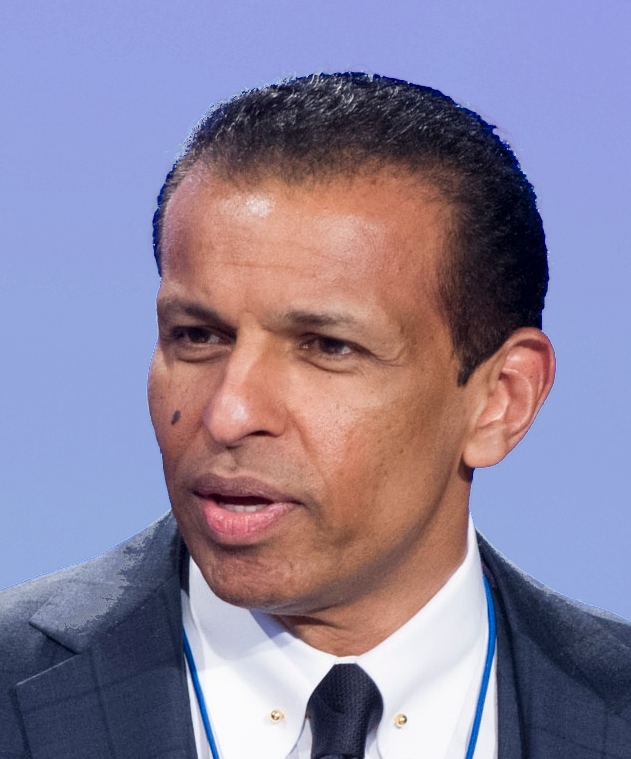
Sunny Varkey (born 9 April 1957)[1][2] is an Indian education entrepreneur and philanthropist based in Dubai. He is the founder and executive chairman of the global advisory and educational management firm GEMS Education, which is the largest operator of private kindergarten-to-grade-12 schools in the world, with a network of over 80 schools in over a dozen countries.[3][4]

Key Information

He is also the chairman of the umbrella business organisation the Varkey Group, and the founder and trustee of the philanthropic Varkey Foundation. As of 2012, Varkey is also a UNESCO Goodwill Ambassador.[5] And in June 2015, Varkey committed to The Giving Pledge, vowing to donate at least half of his money to philanthropic causes over his lifetime. He is the first education entrepreneur to join the pledge.[6]

According to Forbes, Varkey is one of India's richest billionaires with a net worth of $3.5 billion.[7]

Early life and education

[edit]

Varkey was born in Ranni, Kerala, India in 1957.[1] His father, K. S. Varkey, and mother, Mariamma, were Kerala Syrian Christians, and educators.[8][9] The family moved to Dubai in 1959, when the emirate was still very undeveloped.[10] His father worked for the British Bank of the Middle East (now called HSBC Bank Middle East), and both of his parents taught English to local Arabs, including members of the royal family.[9][11][12]

At the age of four, Sunny was sent back to Kerala to attend Infant Jesus Anglo-Indian Boys' School, a Catholic boarding school in Kollam city.[13][14] When he was 11 years old, he sold fruit on the side of the road to make a little extra money.[9] He and his elder sister returned to Dubai in 1970,[15][16] and Sunny completed his O-Levels at St. Mary's Catholic High School.[11][15] He pursued his A-Levels at Bembridge School in the UK for a year,[11][17] and completed his A-Levels in Dubai at the British Council.[15]

Career

[edit]

GEMS Education

[edit]

Varkey's parents founded Our Own English High School in Dubai in 1968.[10][16] Varkey returned to Dubai in 1977,[11] and his employment included work at Standard Chartered bank,[1] opening a small trading company and a maintenance company, becoming part owner of the Dubai Plaza Hotel, and entering the healthcare industry.[8][9][10][11][14]

When in 1980 local authorities insisted that his parents' Our Own English High School be housed in a purpose-built facility, Varkey took over the operation of the school, which had under 400 students at the time.[9] He dropped his other businesses, expanded the school, and added new schools as well.[11][14][15] The education situation in Dubai was ripe for expansion, since local schools were only for native Arabs, and the children of the ever-increasing number of expats needed education of their own.[15][16] Varkey opened Indian, Pakistani, and British schools,[16] and offered education under the different curricula: Indian (CBSE and ICSE), U.S., British, and later International Baccalaureate.[17][18][19]

In 2000, Varkey established Global Education Management Systems (GEMS), an advisory and educational management firm, in advance of his worldwide overseas expansion.[20] In 2003, he began opening GEMS schools in England and elsewhere.[8][21]

Varkey Foundation

[edit]

In December 2010, Varkey consolidated and structured his various donations and charitable initiatives by creating the Varkey Foundation (initially the Varkey GEMS Foundation) as the philanthropic arm of GEMS. The foundation intends to impact 100 impoverished children for every child enrolled at GEMS schools, via enrolment and education-access initiatives, worldwide teacher training programs, advocacy campaigns, and physical projects such as building classrooms, schools, and learning centres.[9][22][23] Bill Clinton launched the foundation.[9][14][24]

Argentine president Mauricio Macri met with Varkey (third from left) at the World Economic Forum in 2016.[25][26]

In March 2011, the foundation partnered with UNESCO for girls' education in Lesotho and Kenya, and donated $1,000,000 to the effort.[27][28] In September 2011, a further $1 million was pledged with UNESCO to train 10,000 school principals in India, Ghana, and Kenya.[9][29] In 2014, the foundation's Teacher Training Programme committed to train 250,000 teachers within 10 years in under-served communities across the world.[30]

In 2013, the Varkey Foundation helped launch the annual Global Education and Skills Forum, in partnership with UNESCO and the U.A.E. Ministry of Education.[31] Bill Clinton gave the inaugural keynote address.[32] At the second annual forum in March 2014, Varkey announced the Global Teacher Prize, a $1 million award to an exceptional teacher who has made an outstanding contribution to the profession, to be presented at the third annual GESF in 2015.[33]

Varkey Group

[edit]

Varkey Group is the umbrella organisation covering GEMS Education and Varkey's other businesses, including healthcare and, previously, construction.[34] Varkey founded the company in 1979, and it is based in Dubai, with additional offices in the UK, U.S., and India.[35]

In 1984 Varkey founded Welcare, a healthcare consultancy and management venture which developed a number of hospitals and clinics.[14][36] A controlling interest in Emirates Healthcare, the Varkey Group's umbrella company which held Welcare, was purchased by Mediclinic International in 2012.[14][36][37][38] The sale of his healthcare sector allowed Varkey to focus on education and educational philanthropy.[9][14][39]

Honors

[edit]

Personal life

[edit]

Varkey lives in Dubai. He is married and has two sons, Dino and Jay, who have taken leadership roles in GEMS Education, allowing him to focus on his philanthropic foundation.[14][53][54][55] Varkey's sister, Susan Mathews, runs pre-schools, and his wife and mother have both offered advice on the GEMS family business.[56]

References

[edit]
[edit]
Revisions and contributorsEdit on WikipediaRead on Wikipedia
from Grokipedia
Sunny Varkey (born 1957) is an Indian education entrepreneur and philanthropist based in Dubai, United Arab Emirates.[1] The son of educators from Kerala who migrated to Dubai in the late 1950s, he expanded his parents' modest school into GEMS Education, which he founded and chairs as one of the world's largest operators of K-12 private schools.[1][2] Varkey established the Varkey Foundation to address global education challenges, notably creating the Global Teacher Prize, a $1 million award recognizing exceptional educators for their impact on students and communities.[3][4] His efforts have earned recognition including India's Padma Shri award in 2009 and UNESCO Goodwill Ambassador status in 2012, reflecting his commitment to elevating teaching as a profession through partnerships with organizations like the World Economic Forum and UNESCO.[3]

Early Life and Education

Family Background and Childhood

Sunny Varkey was born in 1957 in Ranni, Kerala, India, to K. S. Varkey and Mariamma Varkey, both educators from a Kerala Syrian Christian background.[5][6] His parents' profession as teachers instilled early values of education and self-reliance, particularly within the context of modest immigrant aspirations common among Syrian Christian families in Kerala during the post-independence era.[7] In 1959, when Varkey was two years old, his family migrated to Dubai, then a nascent trading hub with limited infrastructure, seeking professional opportunities amid the emirate's economic expansion driven by oil discovery and expatriate influx.[8][5] This move exemplified the pattern of economic migration from Kerala, where educators and professionals pursued better prospects in the Gulf without relying on state welfare, exposing young Varkey to the challenges of expatriate life in a resource-scarce environment.[9] During his childhood in Dubai, Varkey observed stark educational deficiencies, as formal schools were scarce and expatriate children, including those from Indian families, often lacked structured learning options beyond informal setups.[5] His parents addressed this gap by initially teaching groups of children in makeshift arrangements, such as tents, highlighting the necessity of private initiative to meet community needs in a pre-welfare state context.[8] These experiences underscored the practical demands of self-sufficiency and market-driven education solutions, shaping Varkey's formative understanding of opportunity amid adversity for immigrant families.[10]

Formal Education and Early Influences

Varkey attended primary and secondary schools in Dubai, including St. Mary's Catholic High School, before completing his A-Levels at Bembridge School on the Isle of Wight in the United Kingdom.[11] He did not pursue university education, forgoing higher credentials in favor of immediate entry into the workforce at age 19.[2] This limited formal schooling aligned with his family's emphasis on practical teaching, as his parents had established a small English-medium school in Dubai in 1968 to serve expatriate children amid shortages in public options.[12] Upon returning to Dubai, Varkey began his career as a general clerk at the Al Shamal branch of Standard Chartered Bank in Deira, gaining foundational experience in financial operations within the emirate's burgeoning expatriate-driven economy.[12] He supplemented this with hands-on involvement in his parents' school, assisting in daily operations and even driving the school bus, which exposed him to the logistical and managerial demands of education provision.[13] These roles cultivated business acumen through direct problem-solving, contrasting with theoretical academia and highlighting inefficiencies in state-supported systems that relied heavily on under-resourced expatriate labor. Varkey's early ventures extended to non-education sectors, including part-ownership of the Dubai Plaza Hotel by 1982 and a small trading company, fostering entrepreneurial skills in hospitality and commerce amid Dubai's competitive, credential-light market for South Asian expatriates.[12] [14] Disillusioned by banking's capped prospects—after noting his manager's modest salary—he pivoted toward leveraging familial insights into education's unmet demands, prioritizing real-world initiative over prolonged formal study.[15] This path reinforced a self-reliant approach, where observed gaps in quality schooling for migrant workers' children spurred private-sector involvement rather than credentialed expertise.[13]

Business Career

Founding and Expansion of GEMS Education

Sunny Varkey assumed leadership of his family's educational initiatives in Dubai in 1980, building on the Our Own English High School established by his parents in 1968 to cater to the growing expatriate community amid the emirate's economic transformation.[8] Under his direction, he formalized the expansion into a structured network, initially adding schools focused on K-12 private education that emphasized British and American curricula to meet demand from international families and local residents underserved by public systems.[1] This for-profit approach capitalized on Dubai's oil-driven boom and liberalization policies, enabling rapid scaling through private investment rather than state dependency, which addressed capacity shortages in quality schooling by introducing competition and operational efficiencies.[16] By the mid-2000s, GEMS had grown to operate dozens of institutions across the UAE, with a strategy prioritizing modular school models, teacher recruitment from global talent pools, and performance-based management to sustain profitability while expanding access.[8] The network's emphasis on privatization demonstrated empirical gains in enrollment and outcomes, educating over 168,000 students annually across 92 owned or managed schools in eight countries by 2025, including strong academic results such as record A-level pass rates exceeding national averages in the UAE.[2][17] This growth reflected causal advantages of market-driven incentives, where investor-backed infrastructure and innovation—such as AI integration and "capital-light" partnerships—outpaced public sector inertia in regions with educational deficits.[18] In recent years, GEMS pursued international diversification to replicate its Dubai model, announcing a partnership with India's Adani Group in early 2025 to establish up to 20 affordable high-quality schools over three years, starting with the Adani GEMS School of Excellence in Lucknow for the 2025-26 academic year.[2][19] This collaboration, backed by a ₹2,000 crore investment, targets underserved areas by blending GEMS's operational expertise with local infrastructure, underscoring the model's adaptability in filling government shortfalls through profit-oriented scalability and verifiable metrics like rapid school setup and enrollment growth.[20] Such expansions highlight sustained success in enhancing access and standards via private competition, with GEMS committing $300 million for organic development in facilities and technology over 2025-2027.[16]

Development of the Varkey Group

The Varkey Group was founded in 1979 as a holding company to consolidate Sunny Varkey's expanding business interests, initially rooted in education but evolving to include complementary sectors such as property development for institutional infrastructure. With GEMS Education remaining the dominant revenue source—valued implicitly through Varkey's estimated $4 billion net worth in 2025, derived primarily from his controlling stake—the group structure facilitates centralized oversight of operations across education and ancillary real estate holdings used to support school campuses. This integration allows for cost efficiencies by internalizing property acquisition and management, reducing reliance on external leasing amid volatile regional real estate markets.[21][2] Strategic investments under the Varkey Group have emphasized infrastructure tied to educational needs, exemplified by earmarked expansions like the $300 million allocated for UAE school developments between 2025 and 2028, which leverage owned properties to streamline construction and operations. Such vertical integration demonstrates causal advantages over disjointed public-sector models, where bureaucratic silos often inflate costs and delay adaptations; private control enables rapid scaling in response to demand from expatriate populations driving Dubai's non-oil economy. Empirical outcomes include sustained growth despite global disruptions, as the group's agility in reallocating resources—such as during post-2008 financial strains—preserved profitability by prioritizing high-occupancy assets in diversifying markets.[2][22] Resilience is evidenced by the group's navigation of Middle Eastern economic shifts, including UAE's pivot from oil dependency to services-led growth, where education infrastructure investments capitalized on population influxes without equivalent public funding lags. For instance, proprietary real estate holdings buffered against rental volatility, maintaining operational stability as enrollment rebounded post-recessions through targeted private-sector efficiencies rather than state subsidies. This model underscores how diversified holdings within a cohesive entity enhance long-term viability, with education's primacy ensuring revenue predictability amid sector interdependencies.[1][23]

Philanthropic Activities

Establishment of the Varkey Foundation

The Varkey Foundation was founded by Sunny Varkey in 2010 to address educational disparities for underprivileged children globally, emerging directly from his experience building the GEMS Education network of international schools.[24] This initiative consolidated prior charitable efforts tied to GEMS, shifting focus toward underserved regions where commercial education models were infeasible, with an initial priority on elevating teaching standards through targeted professional development.[24] Unlike GEMS's profit-oriented expansion, the foundation adopted a nonprofit structure emphasizing human capital investment via educator empowerment, aiming to replicate sustainable models in developing areas.[24] Formally registered as a private limited company by guarantee in England and Wales on September 14, 2011, the organization operates on a hybrid model of private philanthropy—primarily funded by Varkey—and strategic partnerships with governments, NGOs, and international stakeholders to ensure scalability and local adaptation.[25] This approach prioritizes evidence-based interventions, such as teacher training programs in low-resource settings like Uganda, over diffuse aid distribution, seeking verifiable outcomes in instructional quality and student access.[24] By design, it differentiates from traditional charity through rigorous emphasis on measurable replication, fostering long-term systemic improvements rather than short-term relief.[24]

Key Initiatives and Global Reach

The Varkey Foundation's Global Teacher Prize, launched in 2014, annually awards $1 million to an educator demonstrating exceptional impact on students and communities through innovative teaching practices.[24] Winners have hailed from varied global contexts, such as a Chilean mechanics teacher advancing vocational skills in underserved areas in 2023 and a Canadian educator supporting Inuit youth in remote Arctic communities in 2017, underscoring a focus on individual teacher efficacy amid systemic challenges.[26][27] While the prize elevates teacher prestige and inspires replication of proven methods, empirical assessments of broader causal effects on enrollment or performance metrics in winner-affiliated schools remain primarily anecdotal, with no large-scale randomized studies publicly documented.[28] Complementing the prize, the Global Education & Skills Forum (GESF), initiated in 2015, convenes over 1,300 delegates from 80 countries in its inaugural year to facilitate evidence-based discussions on skill gaps and policy reforms, evolving to attract more than 2,000 participants in subsequent editions including ministers, executives, and practitioners.[29][30] The forum promotes public-private collaborations, such as partnerships leveraging corporate resources for teacher professionalization, though outcomes hinge on implementation fidelity rather than forum attendance alone.[31] The Foundation extends its reach through targeted expansions, notably into Latin America since the early 2020s, where it has rolled out teacher training programs emphasizing school leadership to enhance instructional quality and student results.[32] Initiatives like multi-edition programs in Argentina focus on sustainable energy-integrated learning, aiming to bolster teacher capabilities in policy-reform contexts supported by regional networks, yet verifiable data on retention rates or skill gains—beyond self-reported professional growth—shows correlations with leadership training in analogous global studies rather than Foundation-specific longitudinal metrics.[33][34] This approach leverages private philanthropy to scale interventions in under-resourced areas, prioritizing measurable teacher actions over institutional narratives.

Honors and Recognition

Awards and Accolades

In recognition of his role in scaling GEMS Education to operate over 370 schools across 14 countries, serving approximately 500,000 students as of 2025, Sunny Varkey has received multiple awards tied to measurable expansions in private-sector education delivery.[1] These honors underscore the empirical outcomes of his business model, which grew from a single villa-based school in Dubai in 1959 to a multinational network emphasizing accessible K-12 schooling, rather than abstract policy advocacy.[2] In 2009, Varkey was conferred the Padma Shri, one of India's highest civilian honors, by the President of India for distinguished contributions to education through entrepreneurial initiatives.[35] This award highlighted GEMS' establishment of over 100 schools in the preceding decade, primarily in the Middle East, where public education infrastructure lagged.[35] In 2012, he was appointed a UNESCO Goodwill Ambassador for promoting education access in underserved regions, linked to GEMS' training programs for 12,000 teachers in Uganda and similar efforts.[36] In 2016, Forbes included him among its Global Game Changers for innovations in education scalability.[37] Varkey's economic achievements were further evidenced by his listing on Forbes' billionaires rankings, with a net worth of $4 billion as of October 2025, derived from GEMS' valuation amid expansions backed by investments exceeding $300 million.[38] Additional accolades include the 2012 Gulf Business Industry Award for outstanding work in education and the 2017 Arabian Business Achievement Award, both citing GEMS' role in regional school infrastructure growth.[35][37]

Philanthropic Pledges and Commitments

In June 2015, Sunny Varkey, alongside his wife Sherly, signed The Giving Pledge, becoming the first education entrepreneur to commit to donating the majority of his wealth to charitable causes, with a primary emphasis on improving educational access and teacher quality for underprivileged children worldwide.[39][40] This self-imposed obligation, lacking legal enforcement but rooted in personal accountability, directs resources toward scalable education initiatives rather than relying solely on public funding mechanisms.[40] Varkey's follow-through is evidenced by sustained funding of the Varkey Foundation, which he established in 2015 to operationalize these commitments, including an annual endowment for the Global Teacher Prize—a $1 million award recognizing outstanding educators since 2014, with disbursements tied to deeds of donation from his business entities.[41][42] These efforts have supported teacher capacity-building in over 40 countries, prioritizing measurable outcomes like professional development programs over broader international bureaucracies.[41] In March 2025, Varkey and his family pledged AED 100 million (approximately $27 million USD) to the UAE's Fathers' Endowment campaign, channeling private wealth into community support initiatives that promote educational values and aid for the needy, further illustrating directed, long-term societal investments.[43][44] Such commitments underscore a model of philanthropy where entrepreneurial resources enable agile responses to education gaps, with verifiable execution through foundation-led projects rather than diffused public allocations.[45]

Controversies and Criticisms

Debates on Corporate Philanthropy and Education Policy

Critics of corporate philanthropy in education, including analyses from the Network for Organizing Research, Policy and Practice on Education and Development (NORRAG), have scrutinized the Varkey Foundation's involvement in public-private partnerships (PPPs), arguing that such initiatives enable undue private sector influence on global education policy. Through events like the Global Education & Skills Forum (GESF), convened annually since 2015, the foundation convenes policymakers, business leaders, and educators, potentially steering agendas toward market-oriented reforms that prioritize efficiency metrics over equitable access. NORRAG reports highlight how these networks facilitate "fast-policy" dissemination, where philanthropic actors like the Varkey Foundation shape teacher training and standards in ways that align with for-profit education providers' interests, raising concerns about democratic accountability in policy formulation.[46][47] In Latin America, the foundation's expansions, beginning with partnerships in Argentina around 2018, exemplify debates over profit-nonprofit blurring, as GEMS Education's for-profit model intersects with philanthropic efforts to train over 46,000 teachers and influence reforms across countries like Chile and Peru. Studies document how the foundation leverages policy networks—comprising former ministers and multilateral organizations—to "land and expand" via PPPs for teacher professional development, potentially prioritizing donor-aligned outcomes such as performance-based evaluations over context-specific public needs. Critics contend this dynamic risks subordinating state sovereignty to corporate philanthropy, with evidence from regional case studies showing selective scaling that favors scalable, privatized interventions amid persistent public system underfunding.[48][34] Proponents of private involvement counter that empirical performance data from GEMS schools undermines narratives of inherent corporate overreach, demonstrating superior student outcomes relative to many public systems. For instance, in 2025 GCSE examinations, GEMS students achieved 26% grades 9-8 (equivalent to A*) across 28,227 entries from 4,000 students, exceeding UK national averages where top grades hover around 20-25% for similar metrics, alongside an 87% International Baccalaureate Diploma pass rate and 33-point average score. Such results, drawn from standardized assessments, support arguments for privatization's efficiency gains, as private operators introduce competition and innovation absent in state monopolies, with broader studies on school choice programs affirming improved proficiency in reading and math for participants compared to traditional public peers. These data challenge ideologically driven critiques, often rooted in academic skepticism of market mechanisms, by privileging causal evidence of better resource allocation and accountability in private-led models.[49][50][51]

Statements on Work Ethic and Success

In August 2025, Sunny Varkey articulated that true success demands the passion to pursue goals alongside the capacity for relentless effort, stating, "One must have the passion, and then you must have the ability to literally work 24/7 to achieve success."[52] He contrasted this with conventional routines, noting, "If I work eight hours like everybody else, I won't be successful," positioning such diligence as essential rather than optional for outsized accomplishments.[53] Varkey grounded these remarks in his personal trajectory, from a family of educators who immigrated from Kerala, India, to Dubai, where he expanded a modest tutoring operation into GEMS Education, a network now operating over 370 schools across 10 countries serving more than 500,000 students as of 2025.[54][55] Varkey's philosophy emphasizes causal links between sustained intensity and results, attributing GEMS's growth— from its founding in 1980 to annual revenues exceeding $1.5 billion by the mid-2020s—directly to a culture of unyielding execution rather than balanced moderation.[56] He described his own breakthroughs as non-accidental outcomes of a lifestyle prioritizing persistence over prescribed limits, challenging narratives that attribute underperformance to structural barriers like restricted hours.[54] The comments ignited public debate, particularly in Indian media, where detractors decried the endorsement of round-the-clock labor as akin to "modern-day slavery" and dismissive of mental health imperatives in an era prioritizing work-life equilibrium.[57] Critics argued it imposes unattainable standards, potentially exacerbating burnout amid broader cultural shifts toward regulated workloads.[55] Proponents countered by invoking empirical patterns from high-achievers' accounts, such as entrepreneurs and innovators who documented similar immersive commitments as prerequisites for breakthroughs, viewing Varkey's stance as a candid reflection of competitive realities rather than exploitation.[58] This divide underscores tensions between exceptionalism-driven success models and egalitarian ideals of equilibrium, with Varkey's experience offering verifiable substantiation through GEMS's scaled operations amid global education markets.[52]

Personal Life

Family and Relationships

Sunny Varkey is married to Shirley Varkey, who works within the GEMS Education organization.[59] [60] The couple has two sons, Dino Varkey and Jay Varkey.[61] [21] Dino Varkey, the elder son, serves as CEO of GEMS Education, while Jay Varkey holds executive roles within the family enterprise, illustrating the transfer of entrepreneurial oversight to the next generation.[62] [35] The Varkey family has consistently prioritized privacy in personal relationships, with limited public disclosures beyond their shared involvement in education initiatives.[63]

Wealth, Residence, and Lifestyle

Sunny Varkey, an Indian-origin entrepreneur, holds a net worth estimated at $4 billion as of October 25, 2025, derived principally from his equity in GEMS Education, the Dubai-headquartered operator of over 300 private schools worldwide.[1] This fortune reflects the market valuation of his education enterprise, bolstered by a $2 billion investment consortium in June 2024 led by Brookfield Asset Management.[2] Varkey resides in Dubai, United Arab Emirates, aligning with the operational base of GEMS Education and the city's expatriate business community.[1] His presence in the UAE underscores a strategic choice for proximity to regional expansion opportunities in the Gulf's private education sector.[35] Varkey's lifestyle, as a member of Dubai's elite expatriate class, integrates property interests through the Varkey Group but prioritizes enterprise discipline over conspicuous consumption, evidenced by his public emphasis on relentless work capacity—stating the necessity to "literally work 24/7" for sustained success.[55] No verifiable records indicate personal extravagance or scandals, consistent with a focus on operational stewardship rather than leisure pursuits.[54]

References

User Avatar
No comments yet.