


Community hub
Recent from talks
Contribute something to knowledge base
Content stats: 0 posts, 0 articles, 1 media, 0 notes
Members stats: 0 subscribers, 0 contributors, 0 moderators, 0 supporters
Subscribers
Supporters
Contributors
Moderators
Hub AI
Surajkund AI simulator
(@Surajkund_simulator)
Hub AI
Surajkund AI simulator
(@Surajkund_simulator)
Surajkund
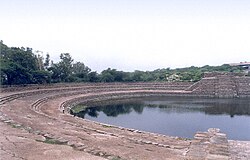
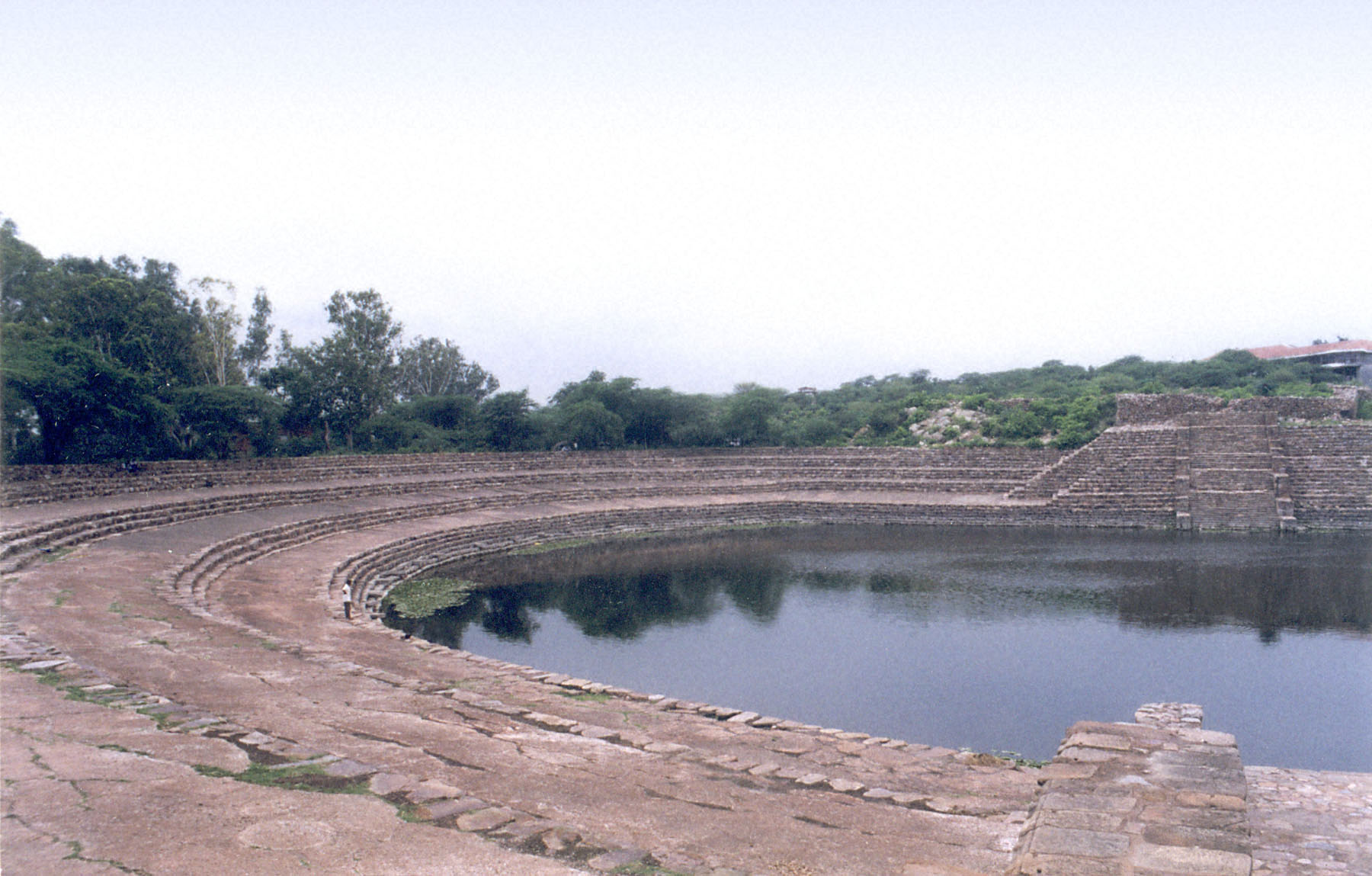
Surajkund is an ancient reservoir of the 10th century located on Southern Delhi Ridge of Aravalli range in Faridabad city of Haryana state about 8 km (5 mi) from South Delhi. Surajkund (literally 'Lake of the Sun') is an artificial Kund ('Kund' means "lake" or reservoir) built in the backdrop of the Aravalli hills with an amphitheatre shaped embankment constructed in semicircular form. It is said to have been built by the king Surajpal of the Tomara Rajput dynasty in the 10th century. Tomar, a younger son of Anangpal Tomar- the Rajput ruler of Delhi, was a sun worshipper and he had therefore built a Sun temple on its western bank. Surajkund is known for its annual fair "Surajkund International Craft Mela", 2015 edition of this fair was visited by 1.2 million visitors including 160,000 foreigners with more than 20 countries participating in it.
There are 43 Paleolithic sites (100,000 BC), with rock art and microlithic stone tools, scattered surround the Surajkund from Mangar Bani in the west to Tuglaqabad in the northeast.
It is an important biodiversity area within the Northern Aravalli leopard wildlife corridor stretching from Sariska Tiger Reserve to Delhi. Historical place around sanctuary are Badkhal Lake (6 km northeast), Anangpur Dam (16 km north), Damdama Lake, Tughlaqabad Fort and Adilabad ruins (both in Delhi), Chhatarpur Temple (in Delhi). It is contiguous to the seasonal waterfalls in Pali-Dhuaj-Kot villages of Faridabad, the sacred Mangar Bani and the Asola Bhatti Wildlife Sanctuary. There are several dozen lakes formed in the abandoned open pit mines in and around the area. Surajkund falls inside the leopard habitat.
Another 'kund' by the same name as 'Suraj Kund' existed in Sunam in Punjab, which was sacked by Mahmood Ghaznvi or Taimur Lane, consequently now lies in ruins.
Surajkund is located near the Surajkund village between the villages of Badarpur and Lakkarpur in Faridabad district of Haryana. It is 8 kilometres (5 mi) by road from South Delhi and 20 kilometres (12 mi) from the heart of the New Delhi city. It is well connected to all parts of the city. The nearest airport is the Indira Gandhi International Airport, 25 km (16 mi) away. The nearest railway stations are the New Delhi Railway Station and the Nizamuddin Railway Station, 22 kilometres (14 mi) and 21 kilometres (13 mi) respectively by road. It is also approached by road and rail from Faridabad (headquarters of the district) and Gurgaon cities. It is 11.5 kilometres (7 mi) from the Qutub Minar and 3 kilometres (2 mi) Tughlaqabad, two historical.
In the forested area where the Surajkund and the Anagpur Dam are located, ancient Stone Age relics have been found which are microliths (stone tools) belonging to Lower Paleolithic era. These were found at 43 sites from Ankhir (a village 17 km east of Mangar Bani) in south to north along Anangpur-Angnpur Dam-Surajkund-Tughlaqabad axis. These sites are on the 'Tughlaqabad-Surajkund Road' and south of 'Surajkund-Faridabad Road', on Anangpur hills, and on Ankhir hill, and on the road embracing the low ridge from Faridabad (Ankhir) to Surajkund. From a study of the prehistoric findings along the ridges of Surajkund reservoir, Anagpur Dam, and around Delhi and adjoining parts of Haryana, it has been inferred that the southern hilly area of Delhi and Haryana was environmentally suited for pre-historic man to settle here.
Paleolithic tools, rock paintings and rock art found in 2021 at various sites scattered inside the Mangar Bani might be extension of Anangpur-Surajkund Paleolithic sites.
According to Hindu hagiography, the Dilli Mahatam, the Surajkund was earlier known as the Prabhashkund where sage Vishwamitra used to live, pray and worship.
Surajkund
Surajkund is an ancient reservoir of the 10th century located on Southern Delhi Ridge of Aravalli range in Faridabad city of Haryana state about 8 km (5 mi) from South Delhi. Surajkund (literally 'Lake of the Sun') is an artificial Kund ('Kund' means "lake" or reservoir) built in the backdrop of the Aravalli hills with an amphitheatre shaped embankment constructed in semicircular form. It is said to have been built by the king Surajpal of the Tomara Rajput dynasty in the 10th century. Tomar, a younger son of Anangpal Tomar- the Rajput ruler of Delhi, was a sun worshipper and he had therefore built a Sun temple on its western bank. Surajkund is known for its annual fair "Surajkund International Craft Mela", 2015 edition of this fair was visited by 1.2 million visitors including 160,000 foreigners with more than 20 countries participating in it.
There are 43 Paleolithic sites (100,000 BC), with rock art and microlithic stone tools, scattered surround the Surajkund from Mangar Bani in the west to Tuglaqabad in the northeast.
It is an important biodiversity area within the Northern Aravalli leopard wildlife corridor stretching from Sariska Tiger Reserve to Delhi. Historical place around sanctuary are Badkhal Lake (6 km northeast), Anangpur Dam (16 km north), Damdama Lake, Tughlaqabad Fort and Adilabad ruins (both in Delhi), Chhatarpur Temple (in Delhi). It is contiguous to the seasonal waterfalls in Pali-Dhuaj-Kot villages of Faridabad, the sacred Mangar Bani and the Asola Bhatti Wildlife Sanctuary. There are several dozen lakes formed in the abandoned open pit mines in and around the area. Surajkund falls inside the leopard habitat.
Another 'kund' by the same name as 'Suraj Kund' existed in Sunam in Punjab, which was sacked by Mahmood Ghaznvi or Taimur Lane, consequently now lies in ruins.
Surajkund is located near the Surajkund village between the villages of Badarpur and Lakkarpur in Faridabad district of Haryana. It is 8 kilometres (5 mi) by road from South Delhi and 20 kilometres (12 mi) from the heart of the New Delhi city. It is well connected to all parts of the city. The nearest airport is the Indira Gandhi International Airport, 25 km (16 mi) away. The nearest railway stations are the New Delhi Railway Station and the Nizamuddin Railway Station, 22 kilometres (14 mi) and 21 kilometres (13 mi) respectively by road. It is also approached by road and rail from Faridabad (headquarters of the district) and Gurgaon cities. It is 11.5 kilometres (7 mi) from the Qutub Minar and 3 kilometres (2 mi) Tughlaqabad, two historical.
In the forested area where the Surajkund and the Anagpur Dam are located, ancient Stone Age relics have been found which are microliths (stone tools) belonging to Lower Paleolithic era. These were found at 43 sites from Ankhir (a village 17 km east of Mangar Bani) in south to north along Anangpur-Angnpur Dam-Surajkund-Tughlaqabad axis. These sites are on the 'Tughlaqabad-Surajkund Road' and south of 'Surajkund-Faridabad Road', on Anangpur hills, and on Ankhir hill, and on the road embracing the low ridge from Faridabad (Ankhir) to Surajkund. From a study of the prehistoric findings along the ridges of Surajkund reservoir, Anagpur Dam, and around Delhi and adjoining parts of Haryana, it has been inferred that the southern hilly area of Delhi and Haryana was environmentally suited for pre-historic man to settle here.
Paleolithic tools, rock paintings and rock art found in 2021 at various sites scattered inside the Mangar Bani might be extension of Anangpur-Surajkund Paleolithic sites.
According to Hindu hagiography, the Dilli Mahatam, the Surajkund was earlier known as the Prabhashkund where sage Vishwamitra used to live, pray and worship.
Recent media
Recent media