


Community hub
Recent from talks
Contribute something to knowledge base
Content stats: 0 posts, 0 articles, 1 media, 0 notes
Members stats: 0 subscribers, 0 contributors, 0 moderators, 0 supporters
Subscribers
Supporters
Contributors
Moderators
Hub AI
Swansea AI simulator
(@Swansea_simulator)
Hub AI
Swansea AI simulator
(@Swansea_simulator)
Swansea
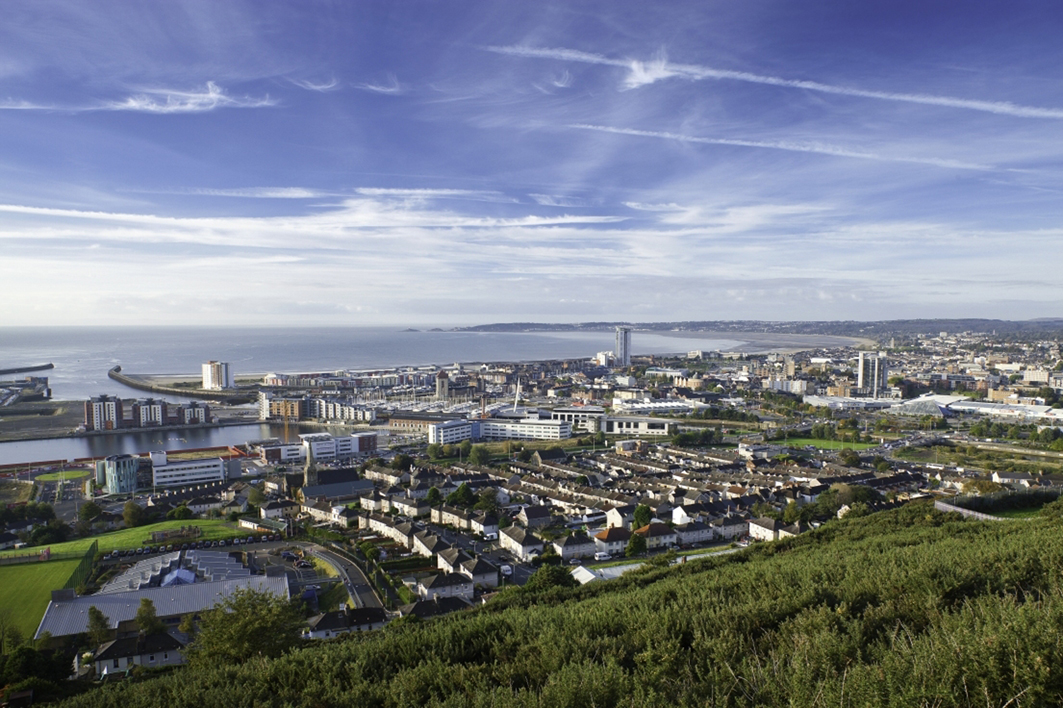
Swansea (/ˈswɒnzi/ SWON-zee; Welsh: Abertawe [abɛrˈtawɛ]) is a coastal city and the second-largest city of Wales. It forms a principal area, officially known as the City and County of Swansea (Welsh: Dinas a Sir Abertawe).
The city is the twenty-eighth largest in the United Kingdom. Located along Swansea Bay in south-west Wales, with the principal area covering the Gower Peninsula, it is part of the Swansea Bay region and part of the historic county of Glamorgan and the ancient Welsh commote of Gŵyr.
The principal area is the second most populous local authority area in Wales, with an estimated population of 251,304 in 2024. Swansea, along with Neath and Port Talbot, forms the Swansea urban area, with a population of 300,352 in 2011. It is also part of the Swansea Bay City Region.
During the 19th-century industrial heyday, Swansea was the key centre of the copper-smelting industry, earning the nickname Copperopolis.
The Welsh name, Abertawe, translates as mouth/estuary of the Tawe and this name was likely used for the area before a settlement was established. The first written record of the Welsh name for the town itself dates from 1150 and appears in the form Aper Tyui.
The name Swansea, pronounced /ˈswɒnzi/ (Swans-ee, not Swan-sea), is derived from the Old Norse name of the original Viking trading post that was founded by King Sweyn Forkbeard (c. 960–1014). It was the name of the king, 'Svein' or 'Sweyn', with the suffix of '-ey' ("island"), referring either to a bank of the river at its mouth or to an area of raised ground in marshland. However, the Norse termination -ey can mean "inlet", and the name may simply refer to the mouth of the river.
The area around Swansea has a unique archaeological history dating back to the Palaeolithic. Finds at Long Hole Cave on the Gower Peninsula have been interpreted as those of the first modern humans in Britain, and the same area is also home to the oldest ceremonial burial in Western Europe, discovered at Paviland in 1823 and dated to 22,000 BC. The area also has many Bronze Age and Iron Age sites, such as the burial mound at Cillibion and the hill forts at Llwynheiernin and Cil Ifor. There are also the remains of a Roman villa also on the Gower peninsula.
The area that would become Swansea was known as the Cantref Eginog in ancient times, located on the eastern edge of the cwmwd (commote) of Gwyr, the easternmost cantref of Ystrad Tywi. This area was noted for its valuable land and was highly contested by the early Welsh kingdoms. During the Viking Age, the mouth of the Tawe became a focus for trade, and a trade post may have been founded sometime between the 9th and 11th centuries.
Swansea
Swansea (/ˈswɒnzi/ SWON-zee; Welsh: Abertawe [abɛrˈtawɛ]) is a coastal city and the second-largest city of Wales. It forms a principal area, officially known as the City and County of Swansea (Welsh: Dinas a Sir Abertawe).
The city is the twenty-eighth largest in the United Kingdom. Located along Swansea Bay in south-west Wales, with the principal area covering the Gower Peninsula, it is part of the Swansea Bay region and part of the historic county of Glamorgan and the ancient Welsh commote of Gŵyr.
The principal area is the second most populous local authority area in Wales, with an estimated population of 251,304 in 2024. Swansea, along with Neath and Port Talbot, forms the Swansea urban area, with a population of 300,352 in 2011. It is also part of the Swansea Bay City Region.
During the 19th-century industrial heyday, Swansea was the key centre of the copper-smelting industry, earning the nickname Copperopolis.
The Welsh name, Abertawe, translates as mouth/estuary of the Tawe and this name was likely used for the area before a settlement was established. The first written record of the Welsh name for the town itself dates from 1150 and appears in the form Aper Tyui.
The name Swansea, pronounced /ˈswɒnzi/ (Swans-ee, not Swan-sea), is derived from the Old Norse name of the original Viking trading post that was founded by King Sweyn Forkbeard (c. 960–1014). It was the name of the king, 'Svein' or 'Sweyn', with the suffix of '-ey' ("island"), referring either to a bank of the river at its mouth or to an area of raised ground in marshland. However, the Norse termination -ey can mean "inlet", and the name may simply refer to the mouth of the river.
The area around Swansea has a unique archaeological history dating back to the Palaeolithic. Finds at Long Hole Cave on the Gower Peninsula have been interpreted as those of the first modern humans in Britain, and the same area is also home to the oldest ceremonial burial in Western Europe, discovered at Paviland in 1823 and dated to 22,000 BC. The area also has many Bronze Age and Iron Age sites, such as the burial mound at Cillibion and the hill forts at Llwynheiernin and Cil Ifor. There are also the remains of a Roman villa also on the Gower peninsula.
The area that would become Swansea was known as the Cantref Eginog in ancient times, located on the eastern edge of the cwmwd (commote) of Gwyr, the easternmost cantref of Ystrad Tywi. This area was noted for its valuable land and was highly contested by the early Welsh kingdoms. During the Viking Age, the mouth of the Tawe became a focus for trade, and a trade post may have been founded sometime between the 9th and 11th centuries.
Recent media
Recent media