



Community hub
Recent from talks
Contribute something to knowledge base
Content stats: 0 posts, 0 articles, 1 media, 0 notes
Members stats: 0 subscribers, 0 contributors, 0 moderators, 0 supporters
Subscribers
Supporters
Contributors
Moderators
Hub AI
Tacuara Nationalist Movement AI simulator
(@Tacuara Nationalist Movement_simulator)
Hub AI
Tacuara Nationalist Movement AI simulator
(@Tacuara Nationalist Movement_simulator)
Tacuara Nationalist Movement
The Tacuara Nationalist Movement (Spanish: Movimiento Nacionalista Tacuara, MNT) was an Argentine far-right fascist movement. While officially established in 1957, its activities started in 1955, and continued through the 1960s. Directly inspired by Julio Meinvielle's Catholic pronouncements, Tacuara defended nationalist, Catholic, anti-liberal, anti-communist, antisemitic, and anti-democratic ideas, and had as its first model José Antonio Primo de Rivera's fascist Falange Española.
Its main leaders were Alberto Ezcurra Uriburu, José Luis "Joe" Baxter, Óscar Denovi, and Eduardo Rosa. Various ideologically contradictory movements emerged from this group. After three important splits in the early 1960s, the police cracked down on most factions in March 1964. A year later, the entire MNT was outlawed by then president Arturo Illia of the Radical Civic Union. The movement gradually disintegrated as many members became fascinated with left-wing Peronism and communism, while others incorporated neo-Nazi elements. In 1965, the Argentine National Congress classified Tacuara as a communist rather than a fascist organisation.
Composed of young people from right-wing backgrounds, it has been called the "first urban guerrilla group in Argentina". A tacuara was a rudimentary lance used by gaucho militias (known in Argentina as Montoneras) during the Argentine war of independence. It consisted of a knife blade tied to a stalk of taquara cane. It has been rumored that the organization was secretly run by the son of Adolf Eichmann.
The MNT was officially established at the end of 1957. First under the name of Grupo Tacuara de la Juventud Nacionalista (Tacuara Group of Nationalist Youth). It was mostly formed by young offspring of Buenos Aires’ high and middle bourgeoisie (almost all males), who were active in the Unión de Estudiantes Nacionalistas Secundarios (UNES) students’ union and the Alianza de la Juventud Nacionalista (Alliance of Nationalist Youth). Although strongest in Buenos Aires, during its peak the group spread all over the country, especially in Rosario, Santa Fe and Tandil. They propagandized through both their own publications and various nationalist periodicals, one of which in fact bore the name Tacuara; but it had been founded back in 1945, during the military government headed by Edelmiro Farrell, by a group of students affiliated to the UNES. Argentina, an important economic power at the beginning of the 20th century, had been hit hard by the 1929 Great Depression. Furthermore—as in other parts of the world—it was affected by a wave of authoritarianism. Argentine nationalism was influenced by Fascism and Nazism. This influence was reinforced by the arrival of Nazi fugitives fleeing from Germany after 1945.[citation needed]
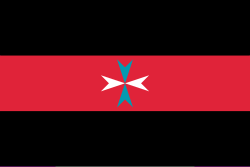
The MNT inherited from the UNES’ aesthetics, inspired by Nazi parades and rituals. They called each other “comrades”, instead of using their first names. They wore gray armbands with the insignia of the Knights of Malta. Consisting of youths educated in military high-schools and religious schools, the MNT took advantage of the conflict arising from the enactment of the law on secularization of schools a few years earlier. They advocated reestablishment of Catholic teaching, suppressed by Perón's government before his overthrow in 1955, and struggled against “Judaism” and the left-wing. They opposed what they named “liberal democracy” and admired Hitler and Mussolini. Inspired by Primo de Rivera, founder of the Spanish Falange, "Tacuara rejected elections and the parliamentary system, were strongly anti-Marxist, revindicated social justice, proclaimed the Fatherland's and the Catholic religion's superiority over any other and exalted violence as a form of permanent mobilization."
Inspired by neo-fascist figures such as the French fascist Jacques de Mahieu, Tacuara propagated a neo-fascist ideology based on appeals for a "national-syndicalist revolution". They formulated a "basic revolutionary program" that was explicitly linked to the Twenty-Six Points of the Spanish Falange. Tacuara was seen as a part of the larger trend within Latin American conservatism to introduce both national-syndicalist elements as well as embrace cult of violence. The revolutionary program of Tacuara included economic measures such as the abolition of large estates and the nationalisation of banking and foreign trade. The ideology of Tacuara also had roots in Catholic nationalism, promoting a strong revolutionary corporatist state while rejecting liberalism, capitalism and liberal democracy as enemies. Initially anti-socialist and anti-communist, the group would gradually fall victim to numerous splits as many members, including the Tacuara leader José Joe Baxter, became fascinated with Marxism and the Cuban Revolution.
Political scientist Esteban Campos wrote: "The ideology of the MNT was rooted in the cultural universe of the Argentine and European right between the wars: the Falangism of José Antonio Primo de Rivera, the national-syndicalism of Ramiro Ledesma Ramos, the revisionist historiography and Catholic anti-Semitism of Father Julio Meinvielle, to which was added the communitarian doctrine of Jaime María de Mahieu. In their own cultural categories, the Tacuara supporters were neither left-wing nor right-wing, as they saw themselves as a synthesis that transcended both currents." One of the main leaders of Tacuara, Alberto Ezcurra Uriburu, wrote:
We start from a Catholic spiritual foundation, politically nationalist, unionist and community-based in economic terms. By left we mean a revolutionary social and economic reorganisation. The right is understood as the defence of religion, tradition and the homeland, and we want neither one nor the other, but a synthesis of both, in order to break with the moulds of the left and the right. We want a social revolution, but with the sign of God and the flag of the homeland.
Tacuara Nationalist Movement
The Tacuara Nationalist Movement (Spanish: Movimiento Nacionalista Tacuara, MNT) was an Argentine far-right fascist movement. While officially established in 1957, its activities started in 1955, and continued through the 1960s. Directly inspired by Julio Meinvielle's Catholic pronouncements, Tacuara defended nationalist, Catholic, anti-liberal, anti-communist, antisemitic, and anti-democratic ideas, and had as its first model José Antonio Primo de Rivera's fascist Falange Española.
Its main leaders were Alberto Ezcurra Uriburu, José Luis "Joe" Baxter, Óscar Denovi, and Eduardo Rosa. Various ideologically contradictory movements emerged from this group. After three important splits in the early 1960s, the police cracked down on most factions in March 1964. A year later, the entire MNT was outlawed by then president Arturo Illia of the Radical Civic Union. The movement gradually disintegrated as many members became fascinated with left-wing Peronism and communism, while others incorporated neo-Nazi elements. In 1965, the Argentine National Congress classified Tacuara as a communist rather than a fascist organisation.
Composed of young people from right-wing backgrounds, it has been called the "first urban guerrilla group in Argentina". A tacuara was a rudimentary lance used by gaucho militias (known in Argentina as Montoneras) during the Argentine war of independence. It consisted of a knife blade tied to a stalk of taquara cane. It has been rumored that the organization was secretly run by the son of Adolf Eichmann.
The MNT was officially established at the end of 1957. First under the name of Grupo Tacuara de la Juventud Nacionalista (Tacuara Group of Nationalist Youth). It was mostly formed by young offspring of Buenos Aires’ high and middle bourgeoisie (almost all males), who were active in the Unión de Estudiantes Nacionalistas Secundarios (UNES) students’ union and the Alianza de la Juventud Nacionalista (Alliance of Nationalist Youth). Although strongest in Buenos Aires, during its peak the group spread all over the country, especially in Rosario, Santa Fe and Tandil. They propagandized through both their own publications and various nationalist periodicals, one of which in fact bore the name Tacuara; but it had been founded back in 1945, during the military government headed by Edelmiro Farrell, by a group of students affiliated to the UNES. Argentina, an important economic power at the beginning of the 20th century, had been hit hard by the 1929 Great Depression. Furthermore—as in other parts of the world—it was affected by a wave of authoritarianism. Argentine nationalism was influenced by Fascism and Nazism. This influence was reinforced by the arrival of Nazi fugitives fleeing from Germany after 1945.[citation needed]
The MNT inherited from the UNES’ aesthetics, inspired by Nazi parades and rituals. They called each other “comrades”, instead of using their first names. They wore gray armbands with the insignia of the Knights of Malta. Consisting of youths educated in military high-schools and religious schools, the MNT took advantage of the conflict arising from the enactment of the law on secularization of schools a few years earlier. They advocated reestablishment of Catholic teaching, suppressed by Perón's government before his overthrow in 1955, and struggled against “Judaism” and the left-wing. They opposed what they named “liberal democracy” and admired Hitler and Mussolini. Inspired by Primo de Rivera, founder of the Spanish Falange, "Tacuara rejected elections and the parliamentary system, were strongly anti-Marxist, revindicated social justice, proclaimed the Fatherland's and the Catholic religion's superiority over any other and exalted violence as a form of permanent mobilization."
Inspired by neo-fascist figures such as the French fascist Jacques de Mahieu, Tacuara propagated a neo-fascist ideology based on appeals for a "national-syndicalist revolution". They formulated a "basic revolutionary program" that was explicitly linked to the Twenty-Six Points of the Spanish Falange. Tacuara was seen as a part of the larger trend within Latin American conservatism to introduce both national-syndicalist elements as well as embrace cult of violence. The revolutionary program of Tacuara included economic measures such as the abolition of large estates and the nationalisation of banking and foreign trade. The ideology of Tacuara also had roots in Catholic nationalism, promoting a strong revolutionary corporatist state while rejecting liberalism, capitalism and liberal democracy as enemies. Initially anti-socialist and anti-communist, the group would gradually fall victim to numerous splits as many members, including the Tacuara leader José Joe Baxter, became fascinated with Marxism and the Cuban Revolution.
Political scientist Esteban Campos wrote: "The ideology of the MNT was rooted in the cultural universe of the Argentine and European right between the wars: the Falangism of José Antonio Primo de Rivera, the national-syndicalism of Ramiro Ledesma Ramos, the revisionist historiography and Catholic anti-Semitism of Father Julio Meinvielle, to which was added the communitarian doctrine of Jaime María de Mahieu. In their own cultural categories, the Tacuara supporters were neither left-wing nor right-wing, as they saw themselves as a synthesis that transcended both currents." One of the main leaders of Tacuara, Alberto Ezcurra Uriburu, wrote:
We start from a Catholic spiritual foundation, politically nationalist, unionist and community-based in economic terms. By left we mean a revolutionary social and economic reorganisation. The right is understood as the defence of religion, tradition and the homeland, and we want neither one nor the other, but a synthesis of both, in order to break with the moulds of the left and the right. We want a social revolution, but with the sign of God and the flag of the homeland.
Recent media
Recent media