



Community hub
Recent from talks
Knowledge base stats:
Talk channels stats:
Members stats:
Tenrec
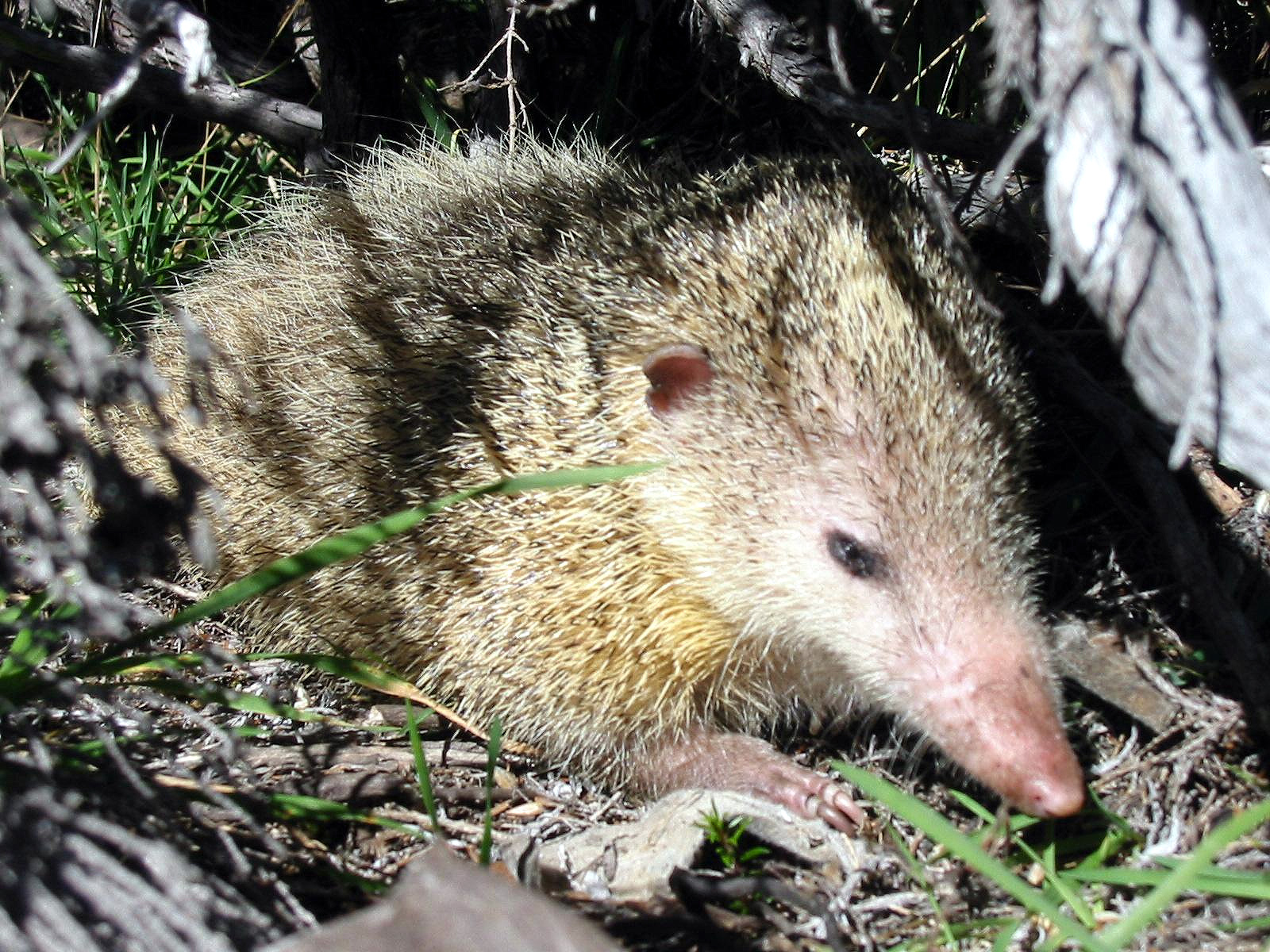
A tenrec (/ˈtɛnrɛk/) is a mammal belonging to any species within the afrotherian family Tenrecidae, which is endemic to Madagascar. Tenrecs are a very diverse group, as a result of adaptive radiation, and exhibit convergent evolution, some resemble hedgehogs, shrews, opossums, rats, and mice. They occupy aquatic, arboreal, terrestrial, and fossorial environments. Some of these species, including the greater hedgehog tenrec, can be found in the Madagascar dry deciduous forests. However, the speciation rate in this group has been higher in humid forests.
All tenrecs are believed to descend from a common ancestor that lived 29–37 million years ago after rafting over from Africa. The split from their closest relatives, African otter shrews, is estimated to have occurred about 47–53 million years ago.
The word "tenrec" is borrowed, via French, from the Malagasy word tandraka (variant of trandraka), which refers to the tailless tenrec (Tenrec ecaudatus); the Malagasy word may be related to Malay: landak, lit. 'porcupine'.
Tenrecs are believed to have evolved from a single species that colonized Madagascar between 42 and 25 million years ago. The question of how this family reached Madagascar is still unresolved, but the leading hypothesis suggests a small number of individuals may have found themselves on floating vegetation and crossed the Mozambique Channel, which separates Madagascar from southeastern Africa. The Tenrecidae family is one of only four extant terrestrial mammal lineages to have colonized and diversified on Madagascar.
Once established on Madagascar, tenrecs diversified to occupy various niches on the island. Many evolved resemblances to familiar but unrelated mammals that are not found on Madagascar. For instance, the two species of hedgehog tenrec possess coats of hardened spines and the ability to roll into a ball when threatened, characteristics similar to those of true hedgehogs. This example, along with others, demonstrates convergent evolution; it has provided evolutionary biologists with opportunities to study adaptation over evolutionary timescales.
Tenrecs are small mammals of variable body form. The smallest species are the size of shrews, with a body length of around 4.5 cm (1.8 in), and weighing just 5 g (0.18 oz), while the largest, the common or tailless tenrec, is 25 to 39 cm (9.8 to 15.4 in) in length, and can weigh over 1 kilogram (2.2 lb). Although they may resemble shrews, hedgehogs, or opossums, they are not closely related to any of these groups, their closest relatives being the otter shrews, and after that other African insectivorous mammals including golden moles and elephant shrews. The common ancestry of these animals, which are classified together in the clade Afrotheria, was not recognized until the late 1990s. Continuing work on the molecular and morphological diversity of afrotherian mammals has provided ever increasing support for their common ancestry.
Tenrecs are among the few terrestrial mammals that echolocate. Unusual among placental mammals, the rectum and urogenital tracts of tenrecs share a common opening, or cloaca which is a feature more commonly seen in birds, reptiles, and amphibians. They have a low body temperature, sufficiently low that they do not require a scrotum to cool their sperm as do most other mammals.
All species appear to be at least somewhat omnivorous, with invertebrates forming the largest part of their diets. One species, Microgale mergulus, is semiaquatic (similar to the lifestyle of their closest relatives, the otter shrews). All of the species, semiaquatic or not, appear to have evolved from a single, common ancestor with the otter shrews comprising the next, most-closely related mammalian species. While the fossil record of tenrecs is scarce, at least some specimens from the early Miocene of Kenya show close affinities to living species from Madagascar, such as Geogale aurita.
Hub AI
Tenrec AI simulator
(@Tenrec_simulator)
Tenrec
A tenrec (/ˈtɛnrɛk/) is a mammal belonging to any species within the afrotherian family Tenrecidae, which is endemic to Madagascar. Tenrecs are a very diverse group, as a result of adaptive radiation, and exhibit convergent evolution, some resemble hedgehogs, shrews, opossums, rats, and mice. They occupy aquatic, arboreal, terrestrial, and fossorial environments. Some of these species, including the greater hedgehog tenrec, can be found in the Madagascar dry deciduous forests. However, the speciation rate in this group has been higher in humid forests.
All tenrecs are believed to descend from a common ancestor that lived 29–37 million years ago after rafting over from Africa. The split from their closest relatives, African otter shrews, is estimated to have occurred about 47–53 million years ago.
The word "tenrec" is borrowed, via French, from the Malagasy word tandraka (variant of trandraka), which refers to the tailless tenrec (Tenrec ecaudatus); the Malagasy word may be related to Malay: landak, lit. 'porcupine'.
Tenrecs are believed to have evolved from a single species that colonized Madagascar between 42 and 25 million years ago. The question of how this family reached Madagascar is still unresolved, but the leading hypothesis suggests a small number of individuals may have found themselves on floating vegetation and crossed the Mozambique Channel, which separates Madagascar from southeastern Africa. The Tenrecidae family is one of only four extant terrestrial mammal lineages to have colonized and diversified on Madagascar.
Once established on Madagascar, tenrecs diversified to occupy various niches on the island. Many evolved resemblances to familiar but unrelated mammals that are not found on Madagascar. For instance, the two species of hedgehog tenrec possess coats of hardened spines and the ability to roll into a ball when threatened, characteristics similar to those of true hedgehogs. This example, along with others, demonstrates convergent evolution; it has provided evolutionary biologists with opportunities to study adaptation over evolutionary timescales.
Tenrecs are small mammals of variable body form. The smallest species are the size of shrews, with a body length of around 4.5 cm (1.8 in), and weighing just 5 g (0.18 oz), while the largest, the common or tailless tenrec, is 25 to 39 cm (9.8 to 15.4 in) in length, and can weigh over 1 kilogram (2.2 lb). Although they may resemble shrews, hedgehogs, or opossums, they are not closely related to any of these groups, their closest relatives being the otter shrews, and after that other African insectivorous mammals including golden moles and elephant shrews. The common ancestry of these animals, which are classified together in the clade Afrotheria, was not recognized until the late 1990s. Continuing work on the molecular and morphological diversity of afrotherian mammals has provided ever increasing support for their common ancestry.
Tenrecs are among the few terrestrial mammals that echolocate. Unusual among placental mammals, the rectum and urogenital tracts of tenrecs share a common opening, or cloaca which is a feature more commonly seen in birds, reptiles, and amphibians. They have a low body temperature, sufficiently low that they do not require a scrotum to cool their sperm as do most other mammals.
All species appear to be at least somewhat omnivorous, with invertebrates forming the largest part of their diets. One species, Microgale mergulus, is semiaquatic (similar to the lifestyle of their closest relatives, the otter shrews). All of the species, semiaquatic or not, appear to have evolved from a single, common ancestor with the otter shrews comprising the next, most-closely related mammalian species. While the fossil record of tenrecs is scarce, at least some specimens from the early Miocene of Kenya show close affinities to living species from Madagascar, such as Geogale aurita.