


Community hub
Recent from talks
Contribute something
Nothing was collected or created yet.
Terry Matalas
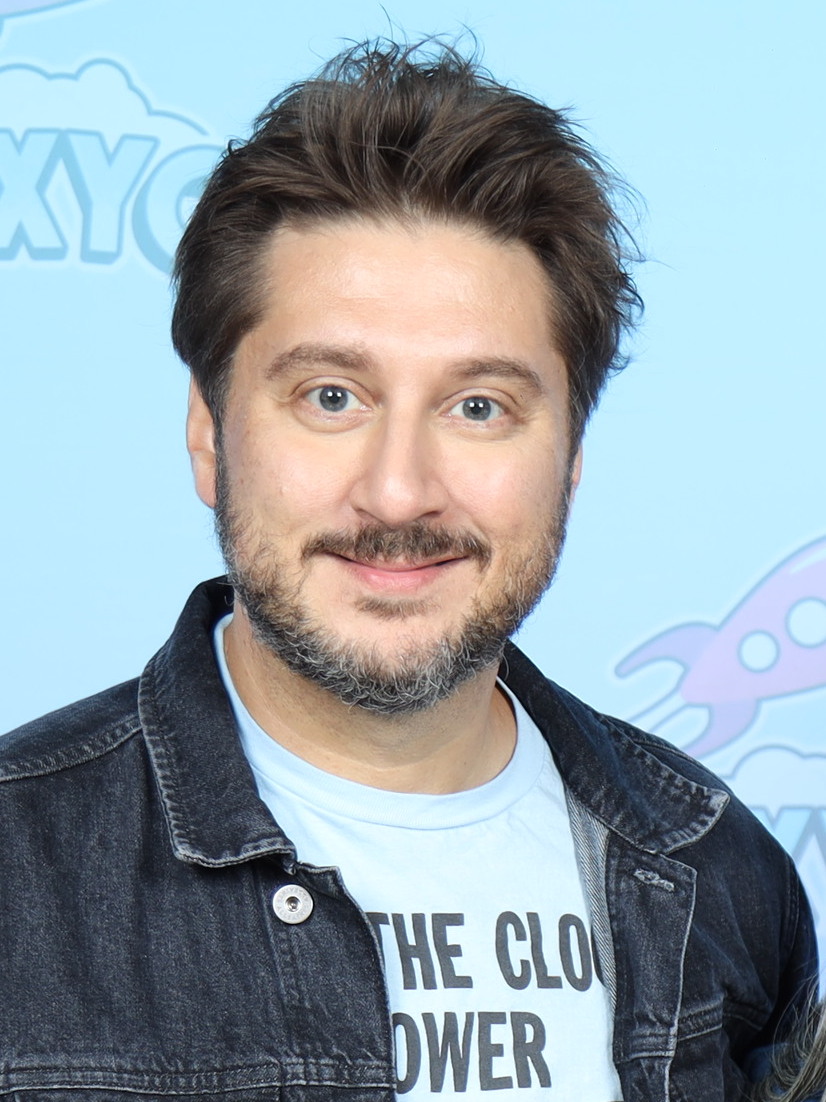
View on WikipediaTerry Matalas (born December 11, 1975) is an American television writer, director, and executive producer, best known for co-creating and showrunning 12 Monkeys (2015–18), which ran for four seasons on SyFy.[1][2] He was a showrunner on the fourth season of MacGyver for CBS (2020)[3] and the second and third seasons of Star Trek: Picard on Paramount+ (2022–23).
Key Information


Early life and education
[edit]Matalas grew up near Raritan, New Jersey.[4] As a teenager, Matalas' favorite movie was Back to the Future, and Star Trek: The Next Generation was one of his favorite shows. He ended up working on projects related to both titles later in his professional career.[5]
Matalas attended Emerson College in Boston, where he met frequent co-collaborator Travis Fickett.[6]
Career
[edit]Career beginnings: 2001–2012
[edit]Matalas began his career working as an associate on the TV series Star Trek: Voyager and Star Trek: Enterprise, including writing two stories for the latter.[7][8] He also wrote for Terra Nova on Fox and Nikita on The CW.[9]
In 2011, Matalas and Fickett wrote the graphic novel Witch for Kickstart Comics.[10][11] In 2012, Matalas wrote the Star Trek: The Next Generation comic miniseries Hive for IDW Publishing.[12]
12 Monkeys
[edit]Matalas says he always wanted to create a serialized time travel show. In 2013, he and Fickett co-wrote a spec pilot script called Splinter. Their script received positive responses and ended up at the offices of Atlas Entertainment, the production company that produced the 1995 film 12 Monkeys. The company told Matalas and Fickett that they had been planning to reboot the film as a show, and they wanted the pair to rewrite Splinter as a pilot for 12 Monkeys. Rather than completely rewriting their script, Matalas suggested simply changing the characters' names to those from 12 Monkeys. Atlas agreed, and SyFy ordered the series. The show ran for four seasons.[13][14][15]
During its run, 12 Monkeys earned both critical acclaim and a dedicated viewer base.[16] The show has been praised for its consistent logic regarding time travel, to which Matalas said that his rule in the writers' room was, "If you have to draw a timeline on a dry erase board then we can't use it."[5] Both the cast and the crew, including Matalas, embraced the show's fandom by interacting via social media to answer questions and give shoutouts to individuals.[17]
Matalas often wrote easter eggs into the series. In the second season, the Emerson Hotel is named after his alma mater, and has a clock that is always set to 10:04 in reference to Back to the Future.[18][19] Matalas also cast Christopher Lloyd in the third season of 12 Monkeys, which he called a "dream come true".[1][14]
Recent work
[edit]In 2018, Matalas sold an original drama series to CBS entitled Apex.[7] The same year, he was hired as a consultant producer on SyFy's Nightflyers, an adaptation of George R.R. Martin's novella of the same name.[20]
In 2019, Matalas was brought on to the reboot of MacGyver for CBS, as a showrunner on the fourth season.[21]
Matalas' drama series The Last American Vampire was announced for defunct streaming service Quibi.[22] Matalas had originally sold the project to NBC as an adaptation of the novel Abraham Lincoln, Vampire Hunter.[9] There is no update since the shuttering of Quibi.
In 2022, Matalas was promoted to co-showrunner of Star Trek: Picard for the second season and served as sole showrunner for the third and final season.
In 2024, Matalas was hired by Marvel Studios to serve as showrunner for the Marvel Cinematic Universe TV series VisionQuest, set for release in 2026.[23]
Personal life
[edit]While making 12 Monkeys, Matalas became a parent. During that time, he also lost his father.[14]
Matalas is an official restorer for the original DeLorean cars from the film Back to the Future, and he and fellow enthusiast Joe Walser spent nearly two years working to restore Universal's original hero car. Since its completion, the car has lived in the Petersen Automotive Museum. Matalas also owns a second replica DeLorean, built from parts of the film's second hero car. It has been displayed at the Academy Awards, in Super Bowl commercials, and on Jay Leno's Garage.[24]
Filmography
[edit]| Year | Title | Director | Writer | Producer | Creator | Showrunner | Notes | Ref. |
|---|---|---|---|---|---|---|---|---|
| 2003 | Star Trek: Enterprise | No | Yes | No | No | No | Season 3 | [7] |
| 2011 | Terra Nova | No | Yes | No | No | No | Season 1 | [9] |
| 2012–13 | Nikita | No | Yes | Yes | No | No | Seasons 3–4 | [25] |
| 2015–18 | 12 Monkeys | Yes | Yes | Executive | Yes | Yes | Seasons 1–4 | [14] |
| 2017 | Blood Drive | No | No | Consulting | No | No | Season 1 | [26] |
| 2018 | Nightflyers | No | Yes | Consulting | No | No | Season 1 | [20] |
| 2020 | MacGyver | No | No | Executive | No | Yes | Season 4 | [21] |
| 2022–23 | Star Trek: Picard | Yes | Yes | Executive | Yes | Yes | Season 2–3 | [27] |
| 2026 | VisionQuest | Yes | Yes | Executive | Yes | Yes | [23] |
Actor
| Year | Title | Role | Note |
|---|---|---|---|
| 2024 | Impractical Jokers | Man in Q's Wheel of Doom challenge goal | Episode "Bowling for Dollars" |
Notable awards and nominations
[edit]| Year | Award | Category | Nominated work | Result | Ref |
|---|---|---|---|---|---|
| 2023 | Astra TV Awards | Best Directing in a Streaming Series, Drama | Star Trek: Picard ("The Last Generation") | Nominated | [28] |
| Best Writing in a Streaming Series, Drama | Won | ||||
| 2024 | Writers Guild of America Awards | Television: Episodic Drama | Nominated | [29] |
References
[edit]- ^ a b Barr, Merrill (2017-05-15). "'12 Monkeys' Showrunner Terry Matalas On The Insanity Of Season Three". Forbes. Retrieved 2019-06-21.
- ^ Franich, Darren (2018-07-06). "12 Monkeys had one of the great series finales". Entertainment Weekly. Retrieved 2019-06-21.
- ^ Cruz, Rachel (2019-06-10). "'MacGyver' Season 4 Promotes Levy Tran, Premiere Pushed Back To January 2020". Business Times. Retrieved 2019-06-21.
- ^ "A nod to Raritan, New Jersey near my home town. I put it in everything I do. @NJGov", Terry Matalas via Twitter. Accessed March 7, 2023.
- ^ a b Pantozzi, Jill (19 July 2016). "JK Rowling Saved the Back to the Future III Train From Becoming a Harry Potter Attraction". The Nerdy Bird. Retrieved 7 August 2019.
- ^ Longo, Chris (2015-01-15). "On Location with Syfy's 12 Monkeys". Den of Geek. Retrieved 2019-07-16.
- ^ a b c Goldberg, Lesley (2018-10-04). "'12 Monkeys' Showrunner Sets FBI Drama at CBS (Exclusive)". The Hollywood Reporter. Retrieved 2019-06-21.
- ^ "Interview: 'Star Trek: Picard' Showrunner Terry Matalas Previews Season 2 and Teases Season 3".
- ^ a b c Otterson, Joe (2018-10-10). "NBC to Develop Drama Series Based on Character From 'Abraham Lincoln: Vampire Hunter'". Variety. Retrieved 2019-06-23.
- ^ Johnston, Rich (14 July 2010). "PREVIEW: Witch by Terry Matalas, Travis Fickett and Tony Shasteen from Kickstart Comics". Bleeding Cool News. Retrieved 17 July 2019.
- ^ Chantaal (8 June 2011). "Review: Witch". Wordpress. Retrieved 17 July 2019.
- ^ Armitage, Hugh (2012-06-17). "'Star Trek: The Next Generation' miniseries announced by IDW". Digital Spy. Retrieved 2019-06-23.
- ^ McCarthy, Erin (11 June 2018). "26 Facts About Syfy's 12 Monkeys". Mental Floss. Retrieved 7 August 2019.
- ^ a b c d Matalas, Terry (2018-07-06). "'12 Monkeys' Series Finale: The Deeply Personal Road to "Happily Ever Now" (Guest Column)". The Hollywood Reporter. Retrieved 2019-06-21.
- ^ Andreeva, Nellie (2013-08-26). "'12 Monkeys' Drama Gets Pilot Order At Syfy". Deadline. Retrieved 2019-06-23.
- ^ Mitchell, Be (5 August 2018). "12 Monkeys' final season lands an air date". Digital Spy. Retrieved 7 August 2019.
- ^ Skrabala, Joanna (19 May 2016). "'12 Monkeys': 6 reasons you should be watching the best show on Syfy". Entertainment Weekly. Retrieved 7 August 2019.
- ^ Elfring, Mat (11 March 2016). ""12 Monkeys" Season 2 Set Visit". Gamespot. Retrieved 18 July 2019.
- ^ Nguyen, Hanh (2016-04-18). "'12 Monkeys' Season 2: Can the Time Travelers Actually Challenge Fate?". The Hollywood Reporter. Retrieved 2019-06-21.
- ^ a b Goldberg, Lesley (2018-03-19). "'Nightflyers' Showrunner Exits Syfy's George R.R. Martin Drama (Exclusive)". The Hollywood Reporter. Retrieved 2019-06-30.
- ^ a b Levine, Daniel (2019-09-27). "'MacGyver' Fans Upset After Season 4 Premiere Delayed". Popculture.tv.
- ^ Goldberg, Lesley (31 July 2019). "Terry Matalas' 'Last American Vampire' Moves to Quibi (Exclusive)". The Hollywood Reporter. Retrieved 31 July 2019.
- ^ a b Otterson, Adam B. Vary, Joe; Vary, Adam B.; Otterson, Joe (2024-05-22). "Marvel Sets Vision Series for 2026 With Paul Bettany, 'Star Trek: Picard' EP Terry Matalas as Showrunner (EXCLUSIVE)". Variety. Retrieved 2024-05-22.
{{cite web}}: CS1 maint: multiple names: authors list (link) - ^ Alaniz, Anthony (2018-06-12). "Jay Leno Drives Doc Brown's DeLorean From Back To The Future". Motor1. Archived from the original on 2018-06-14. Retrieved 2023-10-19.
- ^ Andreeva, Nellie (2016-04-14). "'12 Monkeys' Showrunner Terry Matalas Signs Overall Deal With UCP". Deadline. Retrieved 2019-06-30.
- ^ "Terry Matalas". IMDb.
- ^ Del Rosario, Alexandra (2021-04-05). "'Star Trek: Picard' Season 2 Teaser: Patrick Stewart Ponders The Final Frontier, Hints At A Familiar Character's Return". Deadline Hollywood. Retrieved 2021-07-27.
- ^ Schneider, Michael (January 8, 2024). "'The Boys,' 'Succession' Land Most Honors at Astra TV Awards (FULL WINNERS LIST)". Variety. Archived from the original on January 9, 2024. Retrieved January 9, 2024.
- ^ Pedersen, Erik (February 21, 2024). "Strike-Delayed Writers Guild Awards Nominations Revealed". Deadline Hollywood. Archived from the original on February 21, 2024. Retrieved February 21, 2024.
External links
[edit]| International | |
|---|---|
| National | |
| Other | |

Terry Matalas
View on GrokipediaEarly life and education
Early life
Terry Matalas was born on December 11, 1975, in New Jersey. He grew up near Raritan, New Jersey, where he developed an early passion for science fiction storytelling.[5][6] Matalas's family background played a key role in shaping his interests, particularly through shared viewing experiences with his father. From as young as age eight, he watched episodes of Star Trek: The Original Series with his dad on Sunday afternoons, an activity that ignited his lifelong fascination with the franchise. This bonding time extended to the Star Trek films of the 1980s, including Star Trek II: The Wrath of Khan, Star Trek III: The Search for Spock, and Star Trek IV: The Voyage Home, whose epic scope and ensemble dynamics left a lasting impression on his approach to narrative construction.[7] During his childhood and adolescence, Matalas was also captivated by other iconic 1980s media, such as the film Back to the Future, which fueled his enthusiasm for time travel themes and adventurous plots—a recurring motif in his later work. He and his father similarly enjoyed Star Trek: The Next Generation together, further embedding science fiction in his formative years. These influences sparked his aspirations in television production and writing. Matalas later pursued formal training at Emerson College.[8][9]Education
Terry Matalas attended Emerson College in Boston, Massachusetts, where he majored in television/radio and graduated in 1998.[10] Motivated by his lifelong fandom of Star Trek, he selected Emerson for its renowned internship program, which allowed students to gain hands-on experience in Los Angeles.[2] During his time at Emerson, Matalas met fellow student Travis Fickett, with whom he formed a key collaboration rooted in their mutual passion for science fiction and genre storytelling. The two bonded over explorations of complex narratives like time travel, laying the foundation for their future joint projects in television.[11] Matalas also engaged with the Emerson Independent Video (EIV) club, where he developed his skills in screenwriting and production through collaborative student work.[10] As a freshman, Matalas created The Late Hour, a quasi-sitcom-dramedy short about rival late-night television hosts, which sharpened his abilities in crafting engaging scripts and managing small-scale productions.[10] In his final semester, he participated in Emerson's internship program by working on the set of Star Trek: Voyager in Los Angeles, earning college credit while acquiring practical insights into professional television production.[2] This experience marked his initial foray into the industry, bridging academic training with real-world application immediately before graduation.[10]Career
Early career (2001–2012)
Matalas transitioned to a production associate role on Star Trek: Enterprise, contributing to all four seasons of the series from 2001 to 2005, where he supported script development and production logistics.[12] During this period, Matalas received his first writing credits, co-authoring the story for the episode "Impulse" in season 3, which explored themes of desperation and moral compromise amid a zombie-like plague on a mining planet.[13] He also co-wrote the story for season 4's "Stratagem," focusing on Captain Archer's encounter with a deceptive Xindi prisoner during the war against invading spheres.[14] Following his Star Trek tenure, Matalas advanced to staff writer on the Fox science fiction series Terra Nova in 2011, a show executive produced by Brannon Braga and René Echevarria that depicted a family's relocation to a prehistoric colony.[15] His contributions included co-writing the teleplay for "Within," the series premiere, which introduced the Shannon family's arrival and internal colony conflicts, alongside Barbara Marshall and frequent collaborator Travis Fickett. Matalas solely penned "Nightfall," an episode centering on a meteor-induced blackout that exposed vulnerabilities in the colony's defenses and family dynamics. He also co-wrote the season finale "Resistance" with Fickett, building tension around a supply convoy ambush and revelations about the colony's leadership. In 2012, Matalas joined Nikita on The CW as a story editor and writer, contributing to the action-thriller series about a rogue operative dismantling a covert agency.[15] His writing credit that year was for "Sideswipe," co-authored with Fickett, which involved Nikita and Michael using an arms dealer as bait to target a Division affiliate while uncovering a mole within their ranks. These episodes highlighted Matalas's growing expertise in high-stakes genre storytelling, blending espionage with personal vendettas. Beyond television, Matalas ventured into comics, co-writing the original graphic novel Witch with Travis Fickett, published by Kickstart Comics in 2011 with artwork by Tony Shasteen.[16] The 96-page story followed teenage protagonist Kylie Woods as she discovered her witch heritage, allied with a familiar and a male witch named Aaron, to evade hunters targeting the last remaining witches in a modern supernatural thriller.[17] The following year, 2012, saw Matalas scripting the four-issue Star Trek: The Next Generation – Hive miniseries for IDW Publishing, based on a story by Brannon Braga, with art by Joe Corroney.[18] Set in a dystopian future where the Borg had assimilated the galaxy under Locutus (Picard's assimilated form) as their king, the narrative followed the Enterprise crew's time-displaced mission to avert total assimilation, emphasizing themes of resistance and temporal intervention.[19] His Emerson College education in film and television production laid the groundwork for these early roles, honing his skills in scriptwriting and genre narratives.[12]12 Monkeys (2015–2018)
Terry Matalas co-created the Syfy television series 12 Monkeys with Travis Fickett, loosely adapting the 1995 film directed by Terry Gilliam and based on Chris Marker’s short La Jetée. The project originated as an original spec script titled Splinter, which Matalas and Fickett pitched to Atlas Entertainment; after revisions, it secured a pilot order from Syfy in August 2013, produced by Universal Cable Productions and Atlas. The series premiered on January 16, 2015, and ran for four seasons until July 6, 2018, comprising 47 episodes across 13 in season one, 13 in season two, 10 in season three, and 11 in season four. Matalas served as co-executive producer from the outset and became showrunner alongside Fickett starting with season two, following Natalie Chaidez's tenure in season one.[20][21][22][23] The series distinguished itself through its innovative approach to time travel mechanics, establishing a framework where interventions created consistent paradoxes that rippled across timelines, enabling branching realities while preserving narrative coherence—such as when characters' actions generated temporal anomalies like the Messengers' bone paradox in 1944, which altered historical events without resolving into a single fixed loop. This system allowed for intricate plotting across eras, from 2043 post-apocalypse to 1940s New York, emphasizing free will's tension with predestination. Matalas infused the production with fan-service Easter eggs, notably the recurring Emerson Hotel as a safe haven in multiple time periods; its name and a perpetually frozen clock paid homage to his alma mater, Emerson College, symbolizing timeless convergence.[24][25][26] Production faced key challenges inherent to cable television, including tight budget constraints that necessitated resourceful set design and location shooting, often transforming practical spaces like Toronto's historic buildings into multi-era hubs to maximize visual impact without extensive CGI. Cast dynamics added complexity, with leads Aaron Stanford (James Cole) and Amanda Schull (Dr. Cassandra Railly) developing an on-screen rapport built on improvisational trust, which Matalas credited for grounding the high-concept plot amid the ensemble's evolving alliances and betrayals. These elements contributed to completing all 47 episodes on schedule despite the serialized format's demands.[27][28][29] Critics praised 12 Monkeys for its narrative complexity, weaving emotional depth into the time-bending intrigue through character-driven arcs that explored love, sacrifice, and redemption amid apocalyptic stakes. Reviewers highlighted the series' ability to balance cerebral paradoxes with heartfelt moments, such as Cole and Railly's enduring bond defying temporal chaos. The 2018 series finale, "The Beginning," received particular acclaim for its meta resolution—tying loops into a triumphant affirmation of free will and familial reunion—earning a 9.6/10 from IGN as a "triumph of love over hate" and described by Entertainment Weekly as one of television's most gratifying endings, brainy yet bighearted.[30][31][32][33]Star Trek: Picard (2020–2023)
Matalas joined Star Trek: Picard as an executive producer for its first season, which premiered on CBS All Access (later Paramount+) in January 2020. He transitioned to co-showrunner for season 2 in 2022 alongside Akiva Goldsman and served as the sole showrunner for season 3 in 2023, overseeing the creative direction and production of seasons 2 and 3 (20 episodes).[12][2] As showrunner, Matalas shaped the narrative arcs of seasons 2 and 3, with season 3 particularly emphasizing the reunion of the core ensemble from Star Trek: The Next Generation to explore intergenerational dynamics. The season's storyline centered on themes of legacy and redemption, as veteran characters like Jean-Luc Picard and his former crew members grappled with aging, unresolved regrets, and the transition of responsibilities to younger officers aboard the USS Titan-A.[34][35] This approach allowed for a reflective culmination of the characters' journeys while bridging to potential future stories within the franchise. His lifelong fandom of Star Trek, dating back to childhood, informed these elements, infusing the series with homages to its foundational lore.[2] Matalas directed the season 3 finale episode, titled "The Last Generation," marking his first major directing credit within the Star Trek franchise. In this episode, he helmed a high-stakes climax involving a multigenerational battle against a Borg threat, blending action sequences with emotional resolutions for key characters.[36][3] Post-Picard, Matalas developed a pilot script for an unproduced spin-off series tentatively called Star Trek: Legacy, pitched in 2023 and expanded through 2025. The project was envisioned to continue elements from season 3, featuring returning characters such as Captain Liam Shaw, played by Todd Stashwick, in a narrative focused on a new ship and crew navigating Federation challenges in the 25th century. As of November 2025, the pilot remains unproduced, with Matalas having completed about 30 pages of the script amid ongoing discussions at Paramount, though no greenlight has been announced.[37]Recent and upcoming projects (2024–present)
Following the conclusion of Star Trek: Picard, Terry Matalas transitioned to new opportunities across multiple studios, leveraging his experience in ensemble sci-fi narratives to helm high-profile genre projects. In May 2024, Marvel Studios appointed Matalas as showrunner and executive producer for the untitled Disney+ series centered on Vision, later titled VisionQuest, marking his entry into the Marvel Cinematic Universe.[38] The series, a direct sequel to WandaVision, features Paul Bettany reprising his role as the synthezoid Vision and James Spader returning as Ultron, with production wrapping in July 2025 after filming at Pinewood Studios in London. In November 2025, Lauren Morais and Diane Morgan were added to the cast.[39][40] Matalas directed the final two episodes of the eight-episode season, which is slated for a 2026 release and has generated positive early buzz for its exploration of Vision's resurrection and synthetic family dynamics.[41] Notably, the project includes crossovers such as Todd Stashwick, Matalas's collaborator from Picard, in a key role as an assassin.[42] In September 2024, Netflix tapped Matalas as showrunner for its animated adaptation of Magic: The Gathering, restarting development under a fresh creative direction after an earlier iteration stalled.[43] The series, produced by Hasbro Entertainment and animated by DIGIC Pictures, draws from the trading card game's expansive lore to depict multiversal conflicts among planeswalkers and magical realms, with production ongoing as of mid-2025 and recent casting announcements signaling progress toward a potential release in the late 2020s.[44] Matalas has emphasized a faithful yet accessible approach to the source material, aiming to capture the game's themes of strategy, mythology, and epic storytelling.[45] Matalas also expanded his film work with 20th Century Studios, where he was hired in June 2024 to write and potentially direct a remake of the 1985 sci-fi cult film Enemy Mine.[46] The project reimagines the original story of a human pilot and alien Drac stranded on a hostile planet, forming an unlikely bond amid interstellar war, with development continuing into 2025 but no casting or release details announced yet.[47] Amid these active endeavors, rumors surfaced in September 2025 of Matalas's potential involvement in Marvel's long-developing Nova series, with insiders suggesting discussions for him to showrun the project alongside a possible overall deal at the studio, though no official confirmation has emerged.[48] Earlier projects from Matalas's portfolio remain stalled, including the supernatural thriller The Last American Vampire, which he developed for Quibi in 2019 based on Seth Grahame-Smith's novel but was canceled following the platform's closure in 2020.[49]Personal life
Family
Terry Matalas was raised in a family that fostered his early passion for science fiction, with regular viewings of Star Trek: The Next Generation alongside his father and family outings to see films from the original series.[2] Matalas has been married to actress Amy Earhart since November 11, 2006. They have one son, born in 2014.[50][9] During the production of 12 Monkeys from 2015 to 2018, fatherhood profoundly shaped his perspective on storytelling and presence in the moment.[8] He has described how fatherhood influenced his approach to work-life balance, emphasizing shared geeky activities like watching shows such as Andor and building with Legos with his son, though demanding schedules like that on Star Trek: Picard limited family time.[8] In reflections on the period, Matalas noted that becoming a parent amid the intense showrunning duties brought a heightened appreciation for "enjoy[ing] now," integrating themes of family and closure into the series' narrative.[8] Tragically, Matalas also lost his father halfway through the 12 Monkeys production, an experience that amplified the emotional weight of the show's themes of time, loss, and redemption.[51] He publicly reflected on this duality of joy and grief in a 2018 guest column, recounting childhood memories like watching Back to the Future with his father and tying it to the finale's message: "A story isn’t a story with meaning unless it has an ending. Forget the past. Don’t worry about the future. Enjoy now."[52] As of 2023, Matalas remains a dedicated father to his son, who was then nine years old and shared his father's enthusiasm for science fiction and fantasy media.[8]Hobbies and interests
Terry Matalas has a longstanding passion for restoring DeLorean vehicles inspired by Back to the Future, owning two such cars himself, including a fully restored 1981 model. He led a team of enthusiasts in a museum-quality restoration of the film's original "hero" DeLorean time machine, with the approval of creator Robert Zemeckis and producer Bob Gale, resulting in the vehicle being loaned to the Petersen Automotive Museum in Los Angeles in 2016, where it remains on display as of 2025.[53][8][54][55] This hands-on project stemmed from his childhood exposure to the film, which ignited his interest in the iconic car. Matalas maintains an avid fandom of science fiction, particularly Star Trek, which has profoundly shaped his creative perspective as a lifelong devotee of the franchise. His enthusiasm extends to participating in genre conventions, such as Star Trek Las Vegas and Comic-Con International, where he connects with fellow enthusiasts. These pursuits reflect his appreciation for practical, tangible elements in storytelling, evident in his preference for detailed, nostalgic recreations that echo the hands-on effects and craftsmanship of classic sci-fi like Back to the Future.[8][56][57]Filmography
Television credits
Terry Matalas has contributed to numerous television series in roles including writer, producer, and showrunner, primarily in science fiction genres. His credits span from story contributions on early Star Trek series to leading major productions like 12 Monkeys and Star Trek: Picard. Below is a chronological overview of his key television credits.[58]| Year(s) | Series | Role(s) | Details |
|---|---|---|---|
| 2004 | Star Trek: Enterprise | Story writer | Contributed story to the episode "Stratagem" (Season 3, Episode 14).[14] |
| 2011 | Terra Nova | Staff writer, Writer | Staff writer for 10 episodes (Season 1); wrote the episodes "Nightfall" (Season 1, Episode 4), "What Remains" (Season 1, Episode 5), "Within" (Season 1, Episode 9), and "Resistance" (Season 1, Episode 13).[59][60] |
| 2012–2013 | Nikita | Story editor, Executive story editor, Writer | Story editor for 22 episodes (Season 3); executive story editor for 6 episodes (Season 4); wrote episodes including "Sideswipe" (Season 3, Episode 4), "Reunion" (Season 3, Episode 8), "Broken Home" (Season 3, Episode 18), and "Wanted" (Season 4, Episode 1).[61][62] |
| 2015–2018 | 12 Monkeys | Co-creator, Executive producer, Showrunner (Seasons 2–4), Writer | Executive producer for all 47 episodes; showrunner starting Season 2; wrote 10 episodes, including "Splinter" (Season 1, Episode 1), "Atari" (Season 1, Episode 2), and "Divine Move" (Season 4, Episode 10).[63] (Note: Secondary source for context only; primary from IMDb) |
| 2017 | Blood Drive | Consulting producer | Consulting producer for 13 episodes (Season 1).[58] |
| 2018 | Nightflyers | Consulting producer, Teleplay writer | Consulting producer for 4 episodes (Season 1); teleplay for "Greywing" (Season 1, Episode 5).[64] (Note: Secondary for episode detail; primary from IMDb) |
| 2016–2020 | MacGyver | Executive producer, Showrunner (Season 4), Writer | Executive producer and showrunner for Season 4 (13 episodes, shortened due to COVID-19); wrote episodes including "Fire + Ashes + Legacy = Phoenix" (Season 4, Episode 1) and "Red Cell + Quantum + Cold + Committed" (Season 4, Episode 2); provided story for "Save + The + Dam + World" (Season 4, Episode 13).[65][60] |
| 2020–2023 | Star Trek: Picard | Executive producer (Seasons 2–3), Showrunner (Seasons 2–3), Writer, Director | Executive producer and showrunner for Seasons 2 (10 episodes) and 3 (10 episodes); wrote 5 episodes total, including teleplay for "Penance" (Season 2, Episode 3) and "The Next Generation" (Season 3, Episode 7), plus "Võx" (Season 3, Episode 8) and "The Last Generation" (Season 3, Episode 10); directed the Season 3 finale "The Last Generation."[66][12] |
| 2026 | Vision Quest | Executive producer, Showrunner | Showrunner and executive producer for the miniseries (TBD episodes); in production as of November 2025.[67] |
| TBA | Magic: The Gathering | Executive producer, Showrunner | Showrunner and executive producer for the animated Netflix series (TBD episodes); scripts completed and in production as of November 2025.[43][68] |