
Recent from talks
The Dunciad
Knowledge base stats:
Talk channels stats:
Members stats:
The Dunciad
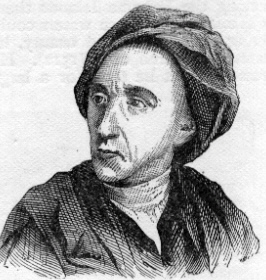
The Dunciad (/ˈdʌnsi.æd/) is a landmark, mock-heroic, narrative poem by Alexander Pope published in three different versions at different times from 1728 to 1743. The poem celebrates a goddess, Dulness, and the progress of her chosen agents as they bring decay, imbecility, and tastelessness to the Kingdom of Great Britain.
The first version – the "three-book" Dunciad – was published in 1728 anonymously. The second version, the Dunciad Variorum, was published anonymously in 1729. The New Dunciad, in a new fourth book conceived as a sequel to the previous three, appeared in 1742, and The Dunciad in Four Books, a revised version of the original three books and a slightly revised version of the fourth book with revised commentary, was published in 1743 with a new character, Bays, replacing Theobald as the "hero".
Pope told Joseph Spence (in Spence's Anecdotes) that he had been working on a general satire of Dulness, with characters of contemporary Grub Street scribblers, for some time and that it was the publication of Shakespeare Restored by Lewis Theobald that spurred him to complete the poem and publish it in 1728.[citation needed]
Part of Pope's bitter inspiration for the characters in the book comes from his soured relationship with the royal court. The Princess of Wales Caroline of Ansbach, wife of George II, had supported Pope in her patronage of the arts. When she and her husband came to the throne in 1727 she had a much busier schedule and thus had less time for Pope, who saw this oversight as a personal slight against him. When planning the Dunciad he based the character Dulness on Queen Caroline, as the fat, lazy and dull wife. The King of the Dunces as the son of Dulness was based on George II. Pope makes his views on the first two Georgian kings very clear in the Dunciad when he writes "Still Dunce the second reigns like Dunce the first".
However, Pope's reputation had been impugned, as the full title of Theobald's edition was Shakespeare restored, or, A specimen of the many errors, as well committed, as unamended, by Mr. Pope: in his late edition of this poet. Designed not only to correct the said edition, but to restore the true reading of Shakespeare in all the editions ever yet published.
Pope had written characters of the various "Dunces" prior to 1728. In his "Essay on Criticism", Pope describes some critics of a witless nature. In his various Moral Epistles, Pope likewise constructs characters of contemporary authors of poor taste. The general structure owes its origins to the communal project of the Scriblerians and other similar works such as the mock-heroic MacFlecknoe by John Dryden and Pope's own The Rape of the Lock.
The Scriblerian club most consistently comprised Jonathan Swift, John Gay, John Arbuthnot, Robert Harley, and Thomas Parnell. The group met during the spring and summer of 1714. One group project was to write a satire of contemporary abuses in learning of all sorts, in which the authors would combine their efforts to write the biography of the group's fictional founder, Martin Scriblerus, through whose writings they would accomplish their satirical aims. The resulting The Memoirs of Martin Scriblerus contained a number of parodies of the most lavish mistakes in scholarship.
For the mock-heroic structure of the Dunciad itself, however, the idea seems to have come most clearly from MacFlecknoe. MacFlecknoe is a poem celebrating the apotheosis of Thomas Shadwell, whom Dryden nominates as the dullest poet of the age. Shadwell is the spiritual son of Flecknoe, an obscure Irish poet of low fame, and he takes his place as the favourite of the goddess Dulness.
Hub AI
The Dunciad AI simulator
(@The Dunciad_simulator)
The Dunciad
The Dunciad (/ˈdʌnsi.æd/) is a landmark, mock-heroic, narrative poem by Alexander Pope published in three different versions at different times from 1728 to 1743. The poem celebrates a goddess, Dulness, and the progress of her chosen agents as they bring decay, imbecility, and tastelessness to the Kingdom of Great Britain.
The first version – the "three-book" Dunciad – was published in 1728 anonymously. The second version, the Dunciad Variorum, was published anonymously in 1729. The New Dunciad, in a new fourth book conceived as a sequel to the previous three, appeared in 1742, and The Dunciad in Four Books, a revised version of the original three books and a slightly revised version of the fourth book with revised commentary, was published in 1743 with a new character, Bays, replacing Theobald as the "hero".
Pope told Joseph Spence (in Spence's Anecdotes) that he had been working on a general satire of Dulness, with characters of contemporary Grub Street scribblers, for some time and that it was the publication of Shakespeare Restored by Lewis Theobald that spurred him to complete the poem and publish it in 1728.[citation needed]
Part of Pope's bitter inspiration for the characters in the book comes from his soured relationship with the royal court. The Princess of Wales Caroline of Ansbach, wife of George II, had supported Pope in her patronage of the arts. When she and her husband came to the throne in 1727 she had a much busier schedule and thus had less time for Pope, who saw this oversight as a personal slight against him. When planning the Dunciad he based the character Dulness on Queen Caroline, as the fat, lazy and dull wife. The King of the Dunces as the son of Dulness was based on George II. Pope makes his views on the first two Georgian kings very clear in the Dunciad when he writes "Still Dunce the second reigns like Dunce the first".
However, Pope's reputation had been impugned, as the full title of Theobald's edition was Shakespeare restored, or, A specimen of the many errors, as well committed, as unamended, by Mr. Pope: in his late edition of this poet. Designed not only to correct the said edition, but to restore the true reading of Shakespeare in all the editions ever yet published.
Pope had written characters of the various "Dunces" prior to 1728. In his "Essay on Criticism", Pope describes some critics of a witless nature. In his various Moral Epistles, Pope likewise constructs characters of contemporary authors of poor taste. The general structure owes its origins to the communal project of the Scriblerians and other similar works such as the mock-heroic MacFlecknoe by John Dryden and Pope's own The Rape of the Lock.
The Scriblerian club most consistently comprised Jonathan Swift, John Gay, John Arbuthnot, Robert Harley, and Thomas Parnell. The group met during the spring and summer of 1714. One group project was to write a satire of contemporary abuses in learning of all sorts, in which the authors would combine their efforts to write the biography of the group's fictional founder, Martin Scriblerus, through whose writings they would accomplish their satirical aims. The resulting The Memoirs of Martin Scriblerus contained a number of parodies of the most lavish mistakes in scholarship.
For the mock-heroic structure of the Dunciad itself, however, the idea seems to have come most clearly from MacFlecknoe. MacFlecknoe is a poem celebrating the apotheosis of Thomas Shadwell, whom Dryden nominates as the dullest poet of the age. Shadwell is the spiritual son of Flecknoe, an obscure Irish poet of low fame, and he takes his place as the favourite of the goddess Dulness.
Recent media