



Community hub
Recent from talks
Contribute something
Nothing was collected or created yet.
The Voice Chile
View on Wikipedia| The Voice Chile | |
|---|---|
| Genre | Talent show |
| Created by | John de Mol Jr. |
| Presented by | Sergio Lagos Julián Elfenbein Diana Bolocco |
| Judges | |
| Country of origin | Chile |
| Original language | Spanish |
| No. of seasons | 4 |
| Production | |
| Production locations | Santiago, Chile |
| Running time | 120 min. |
| Production companies |
|
| Original release | |
| Network |
|
| Release | March 31, 2015 – June 15, 2023 |
| Related | |
| The Voice (franchise) | |
The Voice Chile was a Chilean reality talent show that premiered on Canal 13 in 2015. Based on the original The Voice of Holland, and part of an international franchise, created by John de Mol Jr.[1]
The show is renewed for third season under the new broadcaster, Chilevisión.[2]
Format
[edit]The Voice Chile is part of The Voice franchise which is based on the Netherlands original entitled The Voice of Holland. The series consists of three phases: a blind audition, a battle phase, and live performance shows. Four coaches, all noteworthy recording artists, choose teams of contestants through a blind audition process. Each coach has the length of the auditioners performance to decide if he or she wants that singer on his or her team; if two or more judges want the same singer (as happens frequently), the singer has the final choice of coach.
Each team of singers is mentored and developed by its respective coach. In the second stage, called the battle phase, coaches have two of their team members battle against each other directly by singing the same song together, with the coach choosing which team member to advance from each of individual "battles" into the first live round. Within that first live round, the surviving four acts from each team again compete head-to-head, with public votes determining one of two acts from each team that will advance to the final eight, while the coach chooses which of the remaining three acts comprises the other performer remaining on the team.
In the final phase, the remaining contestants compete against each other in live broadcasts. The television audience and the coaches have equal say 50/50 in deciding who moves on to the final 4 phase. With one team member remaining for each coach, the (final 4) contestants compete against each other in the finale with the outcome decided solely by public vote. The winner receives a record deal with Universal Republic.
Coaches and hosts
[edit]Chilean singers Nicole and Álvaro López, were joined by Puerto Rican singer Luis Fonsi and Italian-born Franco Simone as coaches for season one with Sergio Lagos taking on the responsibilities of hosting with Jean Philippe Cretton, who served as the backstage and social networking correspondent. After the season finale, Franco Simone went on saying that the production went against him and his team members in favor of the other coaches,[3][4][5] subsequently letting him being replaced by Spanish singer Ana Torroja in the second season, alongside returning coaches Nicole, Lopez and Fonsi. Lagos and Cretton also returned to their respective positions.
Coaches
[edit]


- Notes
- Coaches
-
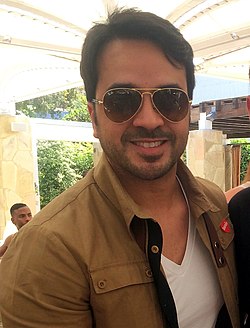 Luis Fonsi (2015–2016)
 -
 Nicole (2015–2016)
 -
 Franco Simone (2015)
 -
 Álvaro López (2015–2016)
 -
 Ana Torroja (2016)
 -
 Gente de Zona (2022)
 -
 Cami (2022)
 -
 Yuri (2022)
 -
 Beto Cuevas (2022–2023)
 -
 Gepe (comeback stage, 2022)
 -
 Prince Royce (2023)
 -
 Francisca Valenzuela (2023)
 -
 José Luis Rodríguez (2023)
.JPG)


.jpg)
.jpg)


_(cropped_2).jpg)


Coaches' teams
[edit]- Final contestant first listed. Winners are in bold, other finalists in italic, and eliminated contestants in small font.
- Winning coach and contestant
- Runner-up coach and contestant
- 3rd place coach and contestant
- 4th place coach and contestant
| Season | Coaches and their finalists | |||
|---|---|---|---|---|
| 1 | Luis Fonsi | Nicole | Franco Simone | Álvaro López |
| Camila Gallardo Josefa Serrano Alejando Zapata |
Luis Pedraza Martina Petric Sebastián Zerené |
Charly Benavente Karin Cáceres Luis Layseca |
Trygve Nystoyl Astrid Veas Consuelo Cifre | |
| 2 | Luis Fonsi | Nicole | Ana Torroja | Álvaro López |
| Lucas Piraino Nicole Davidovich Luis Zapata María Jesús Parra |
Héctor Palma Caroline Toledo Esteban Aspée Nicolás Vergara |
Javiera Flores Gloria López Sergio Lagos Anselmo Sandoval |
Gonzalo Sorich Claribel Enríquez Manuela Paz María Elena Carvallo | |
| 3 | Beto Cuevas | Yuri | Gente de Zona | Cami |
| Jordan Matamala Florencia Santibañez Belén Robert Jorge Imhoff Óscar Obando |
Isaias Morales Ignacio Araneda Carla Pérez Elizabeth Moya |
Pablo Rojas Thayz Torres Paulo Zieballe Christian Aranda |
Roberto Lobos Enzo Ferrada Valeria Fernández Óscar Rosas | |
| 4 | José Luis Rodríguez | Beto Cuevas | Francisca Valenzuela | Prince Royce |
| Hadonais Nieves William & Roberto Alexis Salinas Dany Álvarez Stanley Weissohn |
Marcelo Durán Antonia Núñez Celene Painemal Savka Gómez Zoylin Ybarra |
Catalina Campos Tito Rey Francisco Aleuy Tayra Hucke Alejandra Moraga |
Alexis Vásquez Camilo Peralta Alexia Valech Alondra Bravo Christopher & Fabián | |
Series overview
[edit]| Season | Aired | Winner | Runner-up | Third place | Fourth place | Winning coach | Presenters | Coaches (chairs' order) | |||
|---|---|---|---|---|---|---|---|---|---|---|---|
| 1 | 2 | 3 | 4 | ||||||||
| 1 | 2015 | Luis Pedraza | Camila Gallardo | Charly Benavente | Trygve Nystoyl | Nicole | Sergio Lagos | Fonsi | Nicole | Franco | Álvaro |
| 2 | 2016 | Javiera Flores | Héctor Palma | Lucas Piriano | Gonzalo Sorich | Ana Torroja | Ana | ||||
| 3 | 2022 | Pablo Rojas | Jordan Matamala | Roberto Lobos | Isaías Morales | Gente de Zona | Julian Elfenbein | Beto | Yuri | GDZ | Cami |
| 4 | 2023 | Hadonais Nieves | Marcelo Durán | Alexis Vásquez | Catalina Campos | José Luis Rodríguez | Elfenbein, Diana Bolocco | Puma | Beto | Fran | Royce |
References
[edit]- ^ Morabito, Andrea (February 28, 2011). "Cee Lo Green, Adam Levine Named Coaches of 'The Voice'". Broadcasting & Cable. Retrieved April 2, 2011.
- ^ ""The Voice Chile" Chilevisión anunció el regreso del exitoso programa de talento" (in Spanish). Chilevisión. November 19, 2021. Retrieved November 23, 2021.
- ^ Chile., BioBioChile – La Red de Prensa Más Grande de (April 11, 2016). "Franco Simone denuncia sabotaje en 'The Voice Chile'". BioBioChile – La Red de Prensa Más Grande de Chile (in Spanish). Retrieved August 30, 2017.
- ^ "La grave acusación de Franco Simone que dejó en jaque a Canal 13 y The Voice Chile". eldinamo.cl (in Spanish). Retrieved August 30, 2017.
- ^ "Franco Simone lanza dura acusación contra "The Voice" de Canal 13". The Clinic Online. April 8, 2016. Retrieved August 30, 2017.
External links
[edit]The Voice Chile
View on GrokipediaHistory
Initial Launch on Canal 13
The Voice Chile premiered on May 31, 2015, on Canal 13 as the Chilean adaptation of the international talent competition format created by Dutch producer John de Mol.[17][18] The show introduced the blind auditions stage to Chilean television, where coaches selected contestants based solely on vocal performance without seeing them, amid a rising wave of international talent programs gaining traction in the local market during the mid-2010s.[19] Production for the first season centered in Santiago, with casting calls drawing participants from across the country to emphasize national representation.[20] The initial coaching panel featured Puerto Rican singer Luis Fonsi, Chilean pop artist Nicole, Italian singer-songwriter Franco Simone, and Chilean musician Álvaro López (formerly of Los Bunkers), selected for their diverse musical backgrounds to appeal to a broad audience.[21][22] The season aired weekly in prime time, building on the format's global success while adapting to Chilean cultural sensibilities through bilingual elements and regional contestant stories. Early episodes achieved solid viewership, with premieres averaging 17-20 rating points, though later installments saw fluctuations.[23] A second season followed in 2016, premiering on June 19 with Ana Torroja replacing Franco Simone to refresh the panel and inject new energy.[18][24] Production maintained a focus on Santiago-based filming but continued nationwide casting to sustain viewer engagement. However, the season averaged lower ratings, around 14.4 points at launch, falling short of network expectations for sustained leadership in the competitive prime-time slot.[18] Canal 13 placed the program on indefinite hiatus after the second season concluded in September 2016, citing shifting priorities toward other programming amid underwhelming overall performance relative to production costs and anticipated dominance over rivals like Mega.[25] This decision reflected broader challenges in adapting high-budget international formats to Chile's evolving TV landscape, where audience fragmentation impacted returns.[26]Hiatus and Revival on Chilevisión
After the conclusion of its second season in September 2016 on Canal 13, The Voice Chile entered a hiatus lasting until 2022. This break was influenced by Canal 13's severe financial difficulties, including reported losses of approximately CLP 5,850 million in 2016 and CLP 26,469 million in 2017, amid broader challenges in the Chilean television industry that led to cost-cutting measures and program cancellations.[27][28] Declining ratings for reality formats during this period further contributed to the decision not to renew high-production shows like The Voice.[29] In November 2021, Chilevisión announced the revival of the format, acquiring the rights to produce a new edition under the name La Voz Chile, marking a shift from its previous broadcaster.[30] The production partnered with Endemol Shine Chile, the local arm of the global franchise owner, to adapt the show for the Chilean market. This relaunch aimed to strengthen Chilevisión's prime-time lineup, leveraging the format's international success to attract viewers in a competitive landscape dominated by established reality programming.[31] The third season premiered on April 24, 2022, airing Sundays at 22:30 and Mondays to Wednesdays following Doctor Milagro, with enhanced live performance elements to engage audiences.[32] The fourth season followed on March 18, 2023, maintaining the same Sunday-to-Thursday schedule at 22:30, reflecting Chilevisión's commitment to consistent prime-time delivery. The COVID-19 pandemic had delayed initial revival planning from 2020 onward, prompting adaptations like expanded virtual audition processes to facilitate participant submissions amid restrictions.[33]Format
Competition Stages
The competition in The Voice Chile begins with the blind auditions phase, where aspiring singers perform solo in front of the coaches, who sit with their backs turned and cannot see the contestants.[34] If a coach is impressed by the vocal performance, they press a button to turn their chair, indicating interest in adding the singer to their team; multiple turns allow the contestant to choose their coach, while no turns result in elimination.[34] Each coach typically assembles a team of 20 to 30 members during this stage, varying by season, with auditions held in studios in Santiago to facilitate production.[35][36] Following the blind auditions, the battle rounds pit two team members against each other in duet performances selected by their coach, who then decides the winner to advance while the loser is eliminated unless stolen by another coach.[37] Each coach has a limited number of steals for the battle phase (such as two in some seasons), allowing them to recruit a losing contestant from another team to bolster their roster.[38] This phase emphasizes teamwork and vocal harmony, with pre-recorded segments showcasing rehearsals and performances to build narrative depth. The knockout rounds, a stage present from the first season onward, feature solo performances by remaining team members, where coaches select winners to proceed; in later seasons, coaches may use limited saves to retain additional strong performers and steals from other teams (one per round in some cases).[39] In this phase, each coach typically divides their reduced team into groups for head-to-head matchups, advancing a set number—often around eight per team—to the live shows.[39][40] The live shows mark the final phase, where the top contestants from all teams perform weekly in front of a studio audience and viewers, advancing based on a combination of public votes and coach decisions until eight finalists remain for the season finale.[9] These performances occur in Santiago studios, culminating in a grand finale where the winner is determined by audience votes.[8] Unique to the Chilean adaptation, seasons 1 and 2 (2015–2016) incorporated regional auditions across cities like Valparaíso and Concepción to attract diverse talent from beyond the capital, broadening participant representation before advancing to national blind auditions.[41][42] Episodes generally run 90 to 120 minutes, blending pre-recorded content for earlier stages like battles and knockouts with live elements in the performance shows, where voting occurs via SMS, app, or online platforms to engage the audience in real time.[20][43][44]Judging and Voting Mechanics
In The Voice Chile, coaches evaluate contestants during the blind auditions and battles based on vocal technique, stage presence, and fit with their musical genre or team dynamic, selecting artists to advance without visual bias in the initial phase.[45] During the battle rounds, coaches pair team members for head-to-head performances, choosing one winner per matchup while other coaches can use a limited number of steals to claim the losing artist for their own team, with steals available across the phase in seasons 1 through 4.[46] In the knockout rounds, coaches again select winners from solo performances, employing saves to retain promising artists in later seasons, allowing for strategic team building before the live shows.[45] The public voting system plays a pivotal role in the live performance stages, carrying 50% weight alongside coaches' input, with votes submitted via the Chilevisión app, SMS, or the official website (chilevision.cl); in cases of ties, coaches provide the tiebreaker vote.[47] Elimination occurs weekly as the bottom vote-getters from each team are removed, narrowing the field until the finale, where the winner is determined by a combination of public and coach votes.[47] The prize typically includes a recording contract with a major label and a cash award, varying by season (e.g., 20 million CLP and Universal Music in season 4).[10] Over the seasons, the mechanics evolved to balance influence, with a balance of coach and public influence in live decisions, evolving toward greater public participation in later seasons.[48]Personnel
Hosts
The first two seasons of The Voice Chile, aired on Canal 13 from 2015 to 2016, were hosted by Sergio Lagos as the main presenter, with Jean Philippe Cretton managing backstage and green room segments.[21][49] Lagos and Cretton, both established figures in Canal 13's entertainment programming, handled on-air announcements and off-stage contestant support, respectively.[50] Following a hiatus after the second season, the show was revived on Chilevisión in 2022 for its third season, with Julián Elfenbein serving as the sole host. Elfenbein, a veteran presenter born on July 24, 1972, in Santiago, drew on his extensive experience from hosting the long-running quiz show Pasapalabra to guide the live broadcasts.[51] His role marked a notable return to high-profile talent competitions after over two decades in Chilean television, where he had built a career spanning journalism and entertainment since the early 2000s. In the fourth season of 2023, Diana Bolocco joined Elfenbein as co-host, focusing on contestant interviews and audience engagement during live episodes.[52] Bolocco, born on July 30, 1977, in Santiago, brought her background as a journalist and television presenter to the role, enhancing the show's interactive elements. The transition from Lagos to Elfenbein was influenced by the network switch from Canal 13 to Chilevisión, leading to Lagos' departure alongside the original production team.[53] Throughout its run, hosts on The Voice Chile were responsible for announcing contestant performances, overseeing live audience voting, and conducting post-elimination interviews, while occasionally interacting with coaches to transition between segments.[9] These duties ensured smooth progression through the competition stages, maintaining the high-energy atmosphere central to the format.[54]Coaches
The coaches on The Voice Chile serve as mentors to contestants throughout the competition, providing guidance on vocal techniques, stage styling, and overall performances to help develop their artistry. During the blind auditions, they sit in rotating chairs that turn to face the stage only if they wish to select a performer, emphasizing voice over appearance. This panel composition evolves each season to reflect a blend of international celebrities and local Chilean talent, aiming to attract diverse audiences by covering various musical genres and cultural influences, with an effort toward gender balance featuring at least two female coaches where possible.[55] For the inaugural season in 2015, aired on Canal 13, the coaches were Puerto Rican pop singer Luis Fonsi, Chilean pop and rock singer-songwriter Nicole, Argentine-Italian folk musician Franco Simone, and Chilean rock musician Álvaro López. Luis Fonsi, a global pop icon with multi-platinum albums and hits like "Despacito" that topped charts worldwide, contributed pop and Latin music perspectives to mentoring.[56] Nicole, a prominent figure in Chilean music since the 1990s with successful solo albums and collaborations in pop and ballad genres, offered insights into local songwriting and performance. Franco Simone, renowned for his folk compositions and over five decades in Latin American music, including classics like "Alguien," emphasized emotional storytelling in vocals. Álvaro López, former lead vocalist of the band Los Bunkers and a staple in Chile's alternative rock scene, focused on rock and alternative styles.[57] This lineup combined regional flavors with international appeal to launch the show strongly. In season 2 (2016), also on Canal 13, the panel retained Luis Fonsi, Nicole, and Álvaro López, with Franco Simone replaced by Spanish pop legend Ana Torroja, former lead singer of the iconic band Mecano. Ana Torroja, celebrated for her ethereal voice on synth-pop anthems like "Hijo de la Luna" that sold millions across Europe and Latin America, added a European pop dimension and expertise in emotive ballads to the coaching. The returning coaches continued their roles, with Fonsi and López providing continuity in Latin pop and rock, while Nicole maintained focus on Chilean contemporary styles. This adjustment refreshed the international element while preserving local representation.[58] Following a hiatus, the third season in 2022 on Chilevisión introduced a new panel: Chilean rock singer Beto Cuevas, Mexican pop diva Yuri, Cuban reggaeton duo Gente de Zona, and rising Chilean pop artist Cami (Camila Gallardo). Beto Cuevas, frontman of the Grammy-winning rock band La Ley with hits like "Mentira" that defined 1990s Latin rock, brought rock and alternative expertise. Yuri, a veteran Mexican singer with over 50 years in pop and ranchera, known for chart-topping albums and telenovela themes, offered guidance in versatile vocal ranges and showmanship. Gente de Zona, the reggaeton pair of Alexander Delgado and Randy Malcom, famous for global smashes like "Bailando" with Enrique Iglesias, infused urban Latin rhythms and high-energy performance coaching. Cami, an emerging indie-pop talent with critically acclaimed albums like Rosa blending electronic and folk elements, represented fresh Chilean perspectives. This diverse group highlighted urban and pop genres to revitalize the show's appeal post-revival.[55] Season 4 (2023) on Chilevisión retained Beto Cuevas and added Venezuelan bolero icon José Luis Rodríguez "El Puma," Chilean indie-pop singer Francisca Valenzuela, and American bachata artist Prince Royce. El Puma, a legendary romantic singer with decades of bolero and ballad hits like "Dueño de Nada" that spanned Latin America, contributed classical Latin vocal techniques. Francisca Valenzuela, known for her electro-pop albums like Tappeti Értico and advocacy in Chilean music, focused on modern production and lyrical depth. Prince Royce, a bachata sensation with multi-platinum sales and crossovers like "Stand by Me," provided insights into Dominican rhythms and contemporary Latin fusion. Cuevas's return ensured rock continuity, creating a panel that balanced veteran romantics with current indie and urban sounds.Seasons and Results
Series Overview
The Voice Chile is a Chilean adaptation of the international singing competition franchise created by Talpa, airing for four seasons from 2015 to 2023 across two networks, with a total of over 165 episodes. The series combined blind auditions, battle rounds, knockouts, and live performances, typically featuring 20-25 episodes per season for blind auditions, 15-20 for battles and knockouts, and 10-12 for live shows. Production was based in studios in Santiago, Chile, with international consultants from Talpa ensuring fidelity to the original format during the initial seasons on Canal 13, and later under ITV Studios for the revival on Chilevisión. The first season premiered on Canal 13 on May 31, 2015, and ran for 22 episodes until later that year, achieving strong initial viewership with an average rating of around 20 points and a share exceeding 40% in prime time, driven by hype for the format's debut in Chile. The second season, airing 24 episodes from June 19 to September 8, 2016, saw a dip in performance, averaging approximately 14 points and a 30-35% share, which contributed to the show's temporary cancellation after modest overall engagement.[59][1][18][60] Revived on Chilevisión, the third season launched on April 24, 2022, spanning 59 episodes until August 3, 2022, and peaking at 12-15 points with an 18% share, bolstered by post-pandemic demand for live entertainment and integration with streaming platforms. The fourth season followed from March 18 to June 15, 2023, with 60 episodes and steady averages of 10-12 points alongside a 16% share, culminating in a finale that drew over 1.5 million viewers. Overall viewership trended from high initial excitement on Canal 13 to a decline leading to hiatus, followed by renewed success on Chilevisión through enhanced digital accessibility.[61][62][63][64][65]Winners and Impact
The first season of The Voice Chile, which aired in 2015 on Canal 13, was won by Luis Pedraza from Team Nicole.[66] Following his victory, Pedraza, a former contestant on the Chilean talent show Rojo, continued his music career, releasing singles such as "Tú no vuelves" in 2025 and performing in intimate concerts.[67] The second season in 2016 crowned Javiera Flores from Team Ana Torroja as the winner.[2] Flores, then 17 years old, later pursued an independent music path, participating in shows like Rojo in 2019 and collaborating on recent projects, including a feature on a 2025 album.[68] After a hiatus, the show's revival on Chilevisión in 2022 saw Pablo Rojas from Team Gente de Zona take the title in the third season.[69] Rojas debuted his single "Cargar el peso" shortly after winning, marking his entry into professional recording.[70] In 2025, he adopted the stage name Pol Pablo to explore a broader sound beyond ballads.[71] The fourth season in 2023 was won by Hadonais Nieves from Team El Puma, a Venezuelan singer whose bachata-influenced style highlighted diverse Latin genres.[10] As winner, she received a recording contract with Universal Music and 20 million Chilean pesos, which she planned to partly allocate to her family.[72] Beyond the winners, notable non-winners have also achieved success. Runner-up Camila Gallardo from the first season signed with Sony Music Latin and released her debut album Rosa in 2018, blending pop and emotional storytelling to gain international recognition.[73] Overall, alumni from the show have secured more than 20 recording deals across various labels, including Universal and Sony, fostering a pipeline of emerging Chilean artists. The Voice Chile has had a significant cultural impact by elevating the visibility of Latin pop and regional genres like bachata within Chilean media, introducing diverse voices from local and immigrant talents.[74] The program inspired subsequent local talent competitions and contributed to a more inclusive music landscape on Chilean television.[75] Its revival in 2022 diversified airwaves by prioritizing national artists and varied styles, amassing strong viewership in finals that often led prime-time ratings.[76] As of 2025, no fifth season has been announced, leaving the format's legacy tied to its role in revitalizing interest in vocal talent shows and supporting the growth of Chilean music post-revival.[9]| Season | Year | Winner | Team | Post-Show Highlight |
|---|---|---|---|---|
| 1 | 2015 | Luis Pedraza | Nicole | Continued solo career with recent singles and concerts |
| 2 | 2016 | Javiera Flores | Ana Torroja | Independent releases and TV appearances |
| 3 | 2022 | Pablo Rojas | Gente de Zona | Debut single release; rebranded as Pol Pablo in 2025 |
| 4 | 2023 | Hadonais Nieves | El Puma | Universal Music contract; focus on family and music |