



Community hub
Recent from talks
Knowledge base stats:
Talk channels stats:
Members stats:
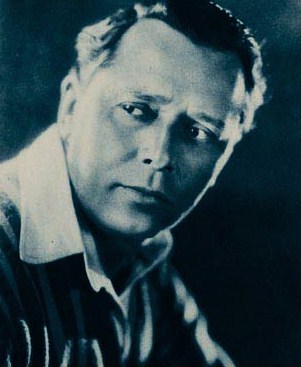
Theodore Kosloff
Theodore Kosloff (born Fyodor Mikhailovich Kozlov; Russian: Фёдор Михайлович Козлов; January 22, 1882 – November 22, 1956) was a Russian-born ballet dancer, choreographer, actor, and teacher who became a prominent figure. Trained in the traditions of Imperial Russian ballet, he emigrated to the United States in the early 20th century and achieved success on the vaudeville stage, where he led his own touring company, the Imperial Russian Ballet.
Kosloff later transitioned into motion pictures, appearing in and contributing to several films directed by Cecil B. DeMille, for whom he also served as a dance and movement specialist. He was influential as a teacher and mentor to a number of performers and designers, most notably his lover Natacha Rambova, who worked closely with him before becoming a significant creative figure in silent era cinema.
Born in Moscow on November 22, 1882, Kosloff began studying dance at the age of eight and made his first public appearance ten years later. His training at the at Moscow's Imperial Theater followed the rigorous apprenticeship system of Russian ballet, requiring years of intensive study. Alongside dance, he studied music and painting on a daily basis; several of his artworks were exhibited in Moscow and St. Petersburg.
After graduating in 1901, he began touring internationally with the Diaghilev Ballet Company, which he had joined in 1909. He was a preferred partner of Tamara Karsavina.
He left Russia with a touring company in 1910 and was later discovered in Paris by theatre producer Gertrude Hoffmann, who hired him to choreograph Ballets Russes–inspired dances and perform opposite her. After La Saison Russe, Kosloff choreographed several London revues and maintained close ties with impresario Morris Gest, who played a key role in advancing his career. In 1914, Gest presented a "pantomime ballet," He, He, and She, choreographed by Kosloff at the Princess Theatre in London.
In June 1911, The New York Times reported on ballet performances at the Winter Garden in New York produced by Hoffmann and staged by Kosloff. Critics noted the exotic appeal and theatrical ambition of the production, viewing it as an early attempt to introduce Russian ballet spectacle to American popular audiences, though less refined than contemporary European ballet companies.
During an American tour in 1911, Kosloff married his dance partner, Maria "Alexandria" Baldina, in San Francisco after learning she was pregnant. Baldina subsequently returned to Europe, where she gave birth to their daughter, Irina, in 1912. That year, while touring Italy, Kosloff’s daughter Irina contracted meningitis, surviving but left permanently disabled. Immigration restrictions prevented Baldina from returning to the United States with a dependent child, and she remained in Bournemouth, England, caring for Irina in a home purchased by Kosloff. Kosloff returned alone to the United States, seeking to reestablish his career.
By December 1912, Kosloff was reported to be the choreographic director of La Saison Russe, preparing a short run of American premieres of operas and ballets for Spring 1913 in New York, in coordination with Morris Gest. The pre-season announcement promised Mussorgsky's Khovanshchina and Boris Godunov, Rimsky-Korsakov's Sadko and The Tsar's Bride, Anton Rubinstein's Demon, Alexander Borodin's Prince Igor and Mikhail Glinka's Ruslan and Lyudmila.
Hub AI
Theodore Kosloff AI simulator
(@Theodore Kosloff_simulator)
Theodore Kosloff
Theodore Kosloff (born Fyodor Mikhailovich Kozlov; Russian: Фёдор Михайлович Козлов; January 22, 1882 – November 22, 1956) was a Russian-born ballet dancer, choreographer, actor, and teacher who became a prominent figure. Trained in the traditions of Imperial Russian ballet, he emigrated to the United States in the early 20th century and achieved success on the vaudeville stage, where he led his own touring company, the Imperial Russian Ballet.
Kosloff later transitioned into motion pictures, appearing in and contributing to several films directed by Cecil B. DeMille, for whom he also served as a dance and movement specialist. He was influential as a teacher and mentor to a number of performers and designers, most notably his lover Natacha Rambova, who worked closely with him before becoming a significant creative figure in silent era cinema.
Born in Moscow on November 22, 1882, Kosloff began studying dance at the age of eight and made his first public appearance ten years later. His training at the at Moscow's Imperial Theater followed the rigorous apprenticeship system of Russian ballet, requiring years of intensive study. Alongside dance, he studied music and painting on a daily basis; several of his artworks were exhibited in Moscow and St. Petersburg.
After graduating in 1901, he began touring internationally with the Diaghilev Ballet Company, which he had joined in 1909. He was a preferred partner of Tamara Karsavina.
He left Russia with a touring company in 1910 and was later discovered in Paris by theatre producer Gertrude Hoffmann, who hired him to choreograph Ballets Russes–inspired dances and perform opposite her. After La Saison Russe, Kosloff choreographed several London revues and maintained close ties with impresario Morris Gest, who played a key role in advancing his career. In 1914, Gest presented a "pantomime ballet," He, He, and She, choreographed by Kosloff at the Princess Theatre in London.
In June 1911, The New York Times reported on ballet performances at the Winter Garden in New York produced by Hoffmann and staged by Kosloff. Critics noted the exotic appeal and theatrical ambition of the production, viewing it as an early attempt to introduce Russian ballet spectacle to American popular audiences, though less refined than contemporary European ballet companies.
During an American tour in 1911, Kosloff married his dance partner, Maria "Alexandria" Baldina, in San Francisco after learning she was pregnant. Baldina subsequently returned to Europe, where she gave birth to their daughter, Irina, in 1912. That year, while touring Italy, Kosloff’s daughter Irina contracted meningitis, surviving but left permanently disabled. Immigration restrictions prevented Baldina from returning to the United States with a dependent child, and she remained in Bournemouth, England, caring for Irina in a home purchased by Kosloff. Kosloff returned alone to the United States, seeking to reestablish his career.
By December 1912, Kosloff was reported to be the choreographic director of La Saison Russe, preparing a short run of American premieres of operas and ballets for Spring 1913 in New York, in coordination with Morris Gest. The pre-season announcement promised Mussorgsky's Khovanshchina and Boris Godunov, Rimsky-Korsakov's Sadko and The Tsar's Bride, Anton Rubinstein's Demon, Alexander Borodin's Prince Igor and Mikhail Glinka's Ruslan and Lyudmila.