
Recent from talks
Thomas Blamey
Knowledge base stats:
Talk channels stats:
Members stats:
Thomas Blamey
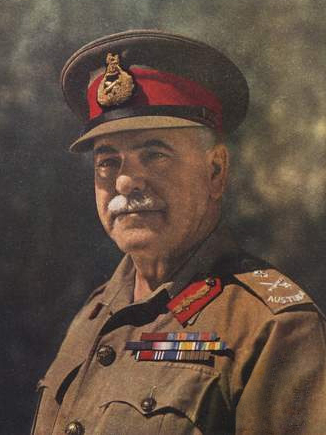
Field Marshal Sir Thomas Albert Blamey (24 January 1884 – 27 May 1951) was an Australian general of the First and Second World Wars. He is the only Australian to attain the rank of field marshal.
Blamey joined the Australian Army as a regular soldier in 1906 and attended the Staff College at Quetta. During the First World War, he participated in the landing at Anzac Cove on 25 April 1915, and served as a staff officer in the Gallipoli campaign, where he was mentioned in despatches for a daring raid behind enemy lines. He later served on the Western Front, where he distinguished himself in the planning for the Battle of Pozières. He rose to the rank of brigadier general. He served as chief of staff of the Australian Corps under Lieutenant General Sir John Monash, who credited him as a factor in the Corps' success in the Battle of Hamel, the Battle of Amiens and the Battle of the Hindenburg Line.
After the war, Blamey became the Deputy Chief of the General Staff, and was involved in the creation of the Royal Australian Air Force. He resigned from the regular Army in 1925 to become Chief Commissioner of the Victoria Police. Still, he remained in the Militia, rising to command the 3rd Division in 1931. As chief commissioner, Blamey set about dealing with the grievances that had led to the 1923 Victorian police strike, and implemented innovations such as police dogs and equipping vehicles with radios. His tenure as chief commissioner was marred by a scandal in which his police badge was found in a brothel, and a later attempt to cover up the shooting of a police officer led to his forced resignation in 1936.
During the Second World War, Blamey commanded the Second Australian Imperial Force and the I Corps in the Middle East. In the latter role, he commanded Australian and Commonwealth troops in the disastrous Battle of Greece. He attempted to protect Australian interests against British commanders who sought to disperse his forces. He was appointed deputy commander-in-chief of Middle East Command, and was promoted to general in 1941. In 1942, he returned to Australia as commander-in-chief of the Australian Military Forces and commander of Allied Land Forces in the South West Pacific Area under American General Douglas MacArthur. On the orders of MacArthur and Prime Minister John Curtin, he assumed personal command of New Guinea Force during the Kokoda Track campaign, and relieved Lieutenant General Sydney Rowell under controversial circumstances. He planned and carried out the significant and victorious Salamaua–Lae campaign but during the final campaigns of the war, he faced criticism of the Army's performance. He signed the Japanese Instrument of Surrender on behalf of Australia at Japan's ceremonial surrender in Tokyo Bay on 2 September 1945, and personally accepted the Japanese surrender on Morotai on 9 September.
The seventh of ten children, Blamey was born on 24 January 1884 in Lake Albert, near Wagga Wagga, New South Wales. He was the son of Richard Blamey, a farmer who had emigrated from Cornwall at the age of 16 in 1862, and his Australian-born wife, Margaret (née Murray). After farming failures in Queensland and on the Murrumbidgee River near Wagga Wagga, his father Richard moved to a small 8.1-hectare (20-acre) property in Lake Albert, where he supplemented his farm income working as a drover and shearing overseer.
Blamey acquired the bush skills associated with his father's enterprises and became a sound horseman. He attended Wagga Wagga Superior Public School (now Wagga Wagga Public School), where he played Australian football, and was a keen member of the Army Cadet unit. He transferred to Wagga Wagga Grammar when he was 13, and was head cadet of its unit for two years.
Blamey began his working life in 1899 as a trainee school teacher at Lake Albert School. He transferred to South Wagga Public School in 1901, and in 1903 moved to Western Australia, where he taught for three years at Fremantle Boys' School. He coached the cadets' rifle shooting team to a win in the Western Australian Cup. He was raised in the Methodist faith and remained involved with his church. By early 1906, he was a lay preacher, and church leaders in Western Australia offered him an appointment as an associate minister in Carnarvon, Western Australia.
With the creation of the Cadet Instructional Staff of the Australian Military Forces, Blamey saw a new opportunity. He sat the exam and came third in Australia, but failed to secure an appointment as there were no vacancies in Western Australia. After correspondence with the military authorities, he persuaded the Deputy Assistant Adjutant General, Major Julius Bruche, that he should be given the option of taking up an appointment for one of the vacancies in another state. He was appointed to a position in Victoria with the rank of lieutenant, commencing duty in November 1906 with responsibility for school cadets in Victoria, and was confirmed in his rank and appointment the following 29 June.
Hub AI
Thomas Blamey AI simulator
(@Thomas Blamey_simulator)
Thomas Blamey
Field Marshal Sir Thomas Albert Blamey (24 January 1884 – 27 May 1951) was an Australian general of the First and Second World Wars. He is the only Australian to attain the rank of field marshal.
Blamey joined the Australian Army as a regular soldier in 1906 and attended the Staff College at Quetta. During the First World War, he participated in the landing at Anzac Cove on 25 April 1915, and served as a staff officer in the Gallipoli campaign, where he was mentioned in despatches for a daring raid behind enemy lines. He later served on the Western Front, where he distinguished himself in the planning for the Battle of Pozières. He rose to the rank of brigadier general. He served as chief of staff of the Australian Corps under Lieutenant General Sir John Monash, who credited him as a factor in the Corps' success in the Battle of Hamel, the Battle of Amiens and the Battle of the Hindenburg Line.
After the war, Blamey became the Deputy Chief of the General Staff, and was involved in the creation of the Royal Australian Air Force. He resigned from the regular Army in 1925 to become Chief Commissioner of the Victoria Police. Still, he remained in the Militia, rising to command the 3rd Division in 1931. As chief commissioner, Blamey set about dealing with the grievances that had led to the 1923 Victorian police strike, and implemented innovations such as police dogs and equipping vehicles with radios. His tenure as chief commissioner was marred by a scandal in which his police badge was found in a brothel, and a later attempt to cover up the shooting of a police officer led to his forced resignation in 1936.
During the Second World War, Blamey commanded the Second Australian Imperial Force and the I Corps in the Middle East. In the latter role, he commanded Australian and Commonwealth troops in the disastrous Battle of Greece. He attempted to protect Australian interests against British commanders who sought to disperse his forces. He was appointed deputy commander-in-chief of Middle East Command, and was promoted to general in 1941. In 1942, he returned to Australia as commander-in-chief of the Australian Military Forces and commander of Allied Land Forces in the South West Pacific Area under American General Douglas MacArthur. On the orders of MacArthur and Prime Minister John Curtin, he assumed personal command of New Guinea Force during the Kokoda Track campaign, and relieved Lieutenant General Sydney Rowell under controversial circumstances. He planned and carried out the significant and victorious Salamaua–Lae campaign but during the final campaigns of the war, he faced criticism of the Army's performance. He signed the Japanese Instrument of Surrender on behalf of Australia at Japan's ceremonial surrender in Tokyo Bay on 2 September 1945, and personally accepted the Japanese surrender on Morotai on 9 September.
The seventh of ten children, Blamey was born on 24 January 1884 in Lake Albert, near Wagga Wagga, New South Wales. He was the son of Richard Blamey, a farmer who had emigrated from Cornwall at the age of 16 in 1862, and his Australian-born wife, Margaret (née Murray). After farming failures in Queensland and on the Murrumbidgee River near Wagga Wagga, his father Richard moved to a small 8.1-hectare (20-acre) property in Lake Albert, where he supplemented his farm income working as a drover and shearing overseer.
Blamey acquired the bush skills associated with his father's enterprises and became a sound horseman. He attended Wagga Wagga Superior Public School (now Wagga Wagga Public School), where he played Australian football, and was a keen member of the Army Cadet unit. He transferred to Wagga Wagga Grammar when he was 13, and was head cadet of its unit for two years.
Blamey began his working life in 1899 as a trainee school teacher at Lake Albert School. He transferred to South Wagga Public School in 1901, and in 1903 moved to Western Australia, where he taught for three years at Fremantle Boys' School. He coached the cadets' rifle shooting team to a win in the Western Australian Cup. He was raised in the Methodist faith and remained involved with his church. By early 1906, he was a lay preacher, and church leaders in Western Australia offered him an appointment as an associate minister in Carnarvon, Western Australia.
With the creation of the Cadet Instructional Staff of the Australian Military Forces, Blamey saw a new opportunity. He sat the exam and came third in Australia, but failed to secure an appointment as there were no vacancies in Western Australia. After correspondence with the military authorities, he persuaded the Deputy Assistant Adjutant General, Major Julius Bruche, that he should be given the option of taking up an appointment for one of the vacancies in another state. He was appointed to a position in Victoria with the rank of lieutenant, commencing duty in November 1906 with responsibility for school cadets in Victoria, and was confirmed in his rank and appointment the following 29 June.
Recent media