
Recent from talks
Thracian warfare
Knowledge base stats:
Talk channels stats:
Members stats:
Thracian warfare
The history of Thracian warfare spans from the 10th century BC up to the 1st century AD in the region defined by Ancient Greek and Latin historians as Thrace. It concerns the armed conflicts of the Thracian tribes and their kingdoms in the Balkans. Apart from conflicts between Thracians and neighboring nations and tribes, numerous wars were recorded among Thracian tribes.
Instances of Thracian people engaging in armed conflict occur in the Iliad of Homer and in Greek mythology. The Greek Temenids ousted the Thracians from Pieria (later central Macedonia). The Thracians, prominent warriors who became allies of Troy, came from the Aegean coast. In the Odyssey, there is only one instance of Thracians, that of Cicones again on the coast, but they are weak.
The Thracians were a particularly fierce culture in terms of violence and conflict and so they appeared in Greek Mythology as mostly associated with its stories of strife. The god of war Ares was said to have been born in Thrace and was also heavily worshiped there; in contrast to the revulsion of his worship by many other Balkan city states. Homer recounts in the book of Odyssey that an embarrassed Ares retreated among his Thracian followers when his love affair with the goddess Aphrodite was caught and the two were promptly ensnared by Hephaestus.
Thracian tribes fought amongst each other and they allied themselves with the Greeks against other Thracian tribes. Those allied with the Greeks were more civilized and they were usually established in settlements along the Thracian coast. The interior tribes were known as savages, retaining their barbarous habits even until the Roman period. The tribal wars also kept Thrace from becoming a major regional power due to the lack of a central government.
At the onset of the Peloponnesian War, the Thracian tribes were united under the rule of Sitalces, king of the Odrysae. It was allied with Athens during the conflict. However, the kingdom was again split into different parts after the death of king Seuthes. It was during this time when Philip of Macedon conquered a large swath of Thrace, absorbing the territory and its tribes into Macedon.
The Odrysian kingdom (Ancient Greek, "Βασιλεία Όδρυσων") was a union of Thracian tribes that endured between the 5th century BC and the 3rd century BC. The Odrysian state was the first Thracian kingdom that acquired power in the region, by the unification of many Thracian tribes under a single ruler, King Teres 5th century BC. It became involved in wars and military conflicts against the Romans, Greek colonies, the kingdom of Macedon and the Diadochi, the Persian Empire, Paeonians, Dacians, Celts, Scythians and Thracian tribes. Sometimes it was allied with various Ancient Greek tribes or Greek city states. During the Peloponnesian War, Thracians were the allies of Athens. The Thracians fought alongside Athenians and Macedonians against the forces of the Spartans. Greek generals like Iphicrates and Charidemos fought for the Odrysae as well. The Thracians served under Scythian kings in 310 BC. Odrysian military strength was based on intra-tribal elite making the kingdom prone to fragmentation. Although the kingdom was wealthy, a large proportion of its income was in kind and suitable portions had to be paid to the tribal chiefs. The army was mostly fed and paid by plunder. Sitalces was able to raise an army supposedly 150,000 strong for his invasion of Macedonia in 429 BC but these economic and political factors (plus the onset of winter) meant that this army only held together for about six weeks and any Thracian conquests were ephemeral.
The Sapaeans ruled Thrace after the Odrysians until its incorporation to the Roman Empire as a province. Thrace became a Client state of Rome at 11 BC and was annexed at 46 AD.
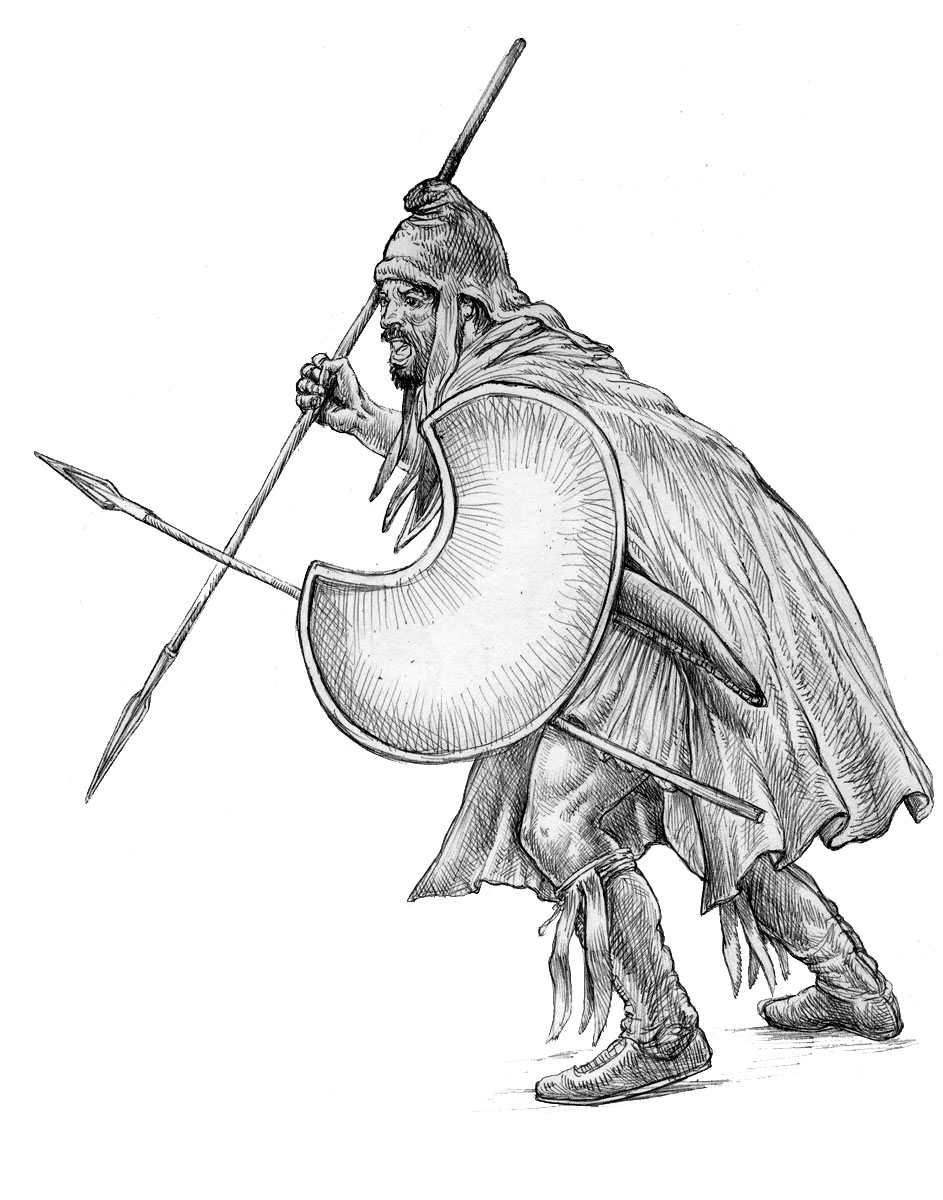
Thrace had the potential to muster a huge number of troops though this rarely occurred. By tradition, Thracians honored warriors and, according to Herodotus, despised all other occupations. The Thracians fought as peltasts using javelins and crescent or round wicker shields called peltes. Missile weapons were favored but close combat weaponry was carried by the Thracians as well. These close combat weapons varied from the dreaded rhomphaia to clubs (used to knock the heads off the spears in Xenophon's Anabasis by Thynians), one- and two-sided axes, bows, knives, spears, akinakes and long swords. Thracians shunned armor and greaves and fought as light as possible, favoring mobility above all other traits and had excellent horsemen. The sica was considered their national weapon. The Bithynian Thracians had contributed a number of 6,000 men (60,000 according to Herodotus) in Xerxes I of Persia campaign of 480 BC but in general resisted Persian occupation and turned against Mardonius's army as he retreated. The Triballi frequently used Scythian and Celtic equipment. Thracians decorated their bodies with tattoos like the Illyrians and the Dacians.
Hub AI
Thracian warfare AI simulator
(@Thracian warfare_simulator)
Thracian warfare
The history of Thracian warfare spans from the 10th century BC up to the 1st century AD in the region defined by Ancient Greek and Latin historians as Thrace. It concerns the armed conflicts of the Thracian tribes and their kingdoms in the Balkans. Apart from conflicts between Thracians and neighboring nations and tribes, numerous wars were recorded among Thracian tribes.
Instances of Thracian people engaging in armed conflict occur in the Iliad of Homer and in Greek mythology. The Greek Temenids ousted the Thracians from Pieria (later central Macedonia). The Thracians, prominent warriors who became allies of Troy, came from the Aegean coast. In the Odyssey, there is only one instance of Thracians, that of Cicones again on the coast, but they are weak.
The Thracians were a particularly fierce culture in terms of violence and conflict and so they appeared in Greek Mythology as mostly associated with its stories of strife. The god of war Ares was said to have been born in Thrace and was also heavily worshiped there; in contrast to the revulsion of his worship by many other Balkan city states. Homer recounts in the book of Odyssey that an embarrassed Ares retreated among his Thracian followers when his love affair with the goddess Aphrodite was caught and the two were promptly ensnared by Hephaestus.
Thracian tribes fought amongst each other and they allied themselves with the Greeks against other Thracian tribes. Those allied with the Greeks were more civilized and they were usually established in settlements along the Thracian coast. The interior tribes were known as savages, retaining their barbarous habits even until the Roman period. The tribal wars also kept Thrace from becoming a major regional power due to the lack of a central government.
At the onset of the Peloponnesian War, the Thracian tribes were united under the rule of Sitalces, king of the Odrysae. It was allied with Athens during the conflict. However, the kingdom was again split into different parts after the death of king Seuthes. It was during this time when Philip of Macedon conquered a large swath of Thrace, absorbing the territory and its tribes into Macedon.
The Odrysian kingdom (Ancient Greek, "Βασιλεία Όδρυσων") was a union of Thracian tribes that endured between the 5th century BC and the 3rd century BC. The Odrysian state was the first Thracian kingdom that acquired power in the region, by the unification of many Thracian tribes under a single ruler, King Teres 5th century BC. It became involved in wars and military conflicts against the Romans, Greek colonies, the kingdom of Macedon and the Diadochi, the Persian Empire, Paeonians, Dacians, Celts, Scythians and Thracian tribes. Sometimes it was allied with various Ancient Greek tribes or Greek city states. During the Peloponnesian War, Thracians were the allies of Athens. The Thracians fought alongside Athenians and Macedonians against the forces of the Spartans. Greek generals like Iphicrates and Charidemos fought for the Odrysae as well. The Thracians served under Scythian kings in 310 BC. Odrysian military strength was based on intra-tribal elite making the kingdom prone to fragmentation. Although the kingdom was wealthy, a large proportion of its income was in kind and suitable portions had to be paid to the tribal chiefs. The army was mostly fed and paid by plunder. Sitalces was able to raise an army supposedly 150,000 strong for his invasion of Macedonia in 429 BC but these economic and political factors (plus the onset of winter) meant that this army only held together for about six weeks and any Thracian conquests were ephemeral.
The Sapaeans ruled Thrace after the Odrysians until its incorporation to the Roman Empire as a province. Thrace became a Client state of Rome at 11 BC and was annexed at 46 AD.
Thrace had the potential to muster a huge number of troops though this rarely occurred. By tradition, Thracians honored warriors and, according to Herodotus, despised all other occupations. The Thracians fought as peltasts using javelins and crescent or round wicker shields called peltes. Missile weapons were favored but close combat weaponry was carried by the Thracians as well. These close combat weapons varied from the dreaded rhomphaia to clubs (used to knock the heads off the spears in Xenophon's Anabasis by Thynians), one- and two-sided axes, bows, knives, spears, akinakes and long swords. Thracians shunned armor and greaves and fought as light as possible, favoring mobility above all other traits and had excellent horsemen. The sica was considered their national weapon. The Bithynian Thracians had contributed a number of 6,000 men (60,000 according to Herodotus) in Xerxes I of Persia campaign of 480 BC but in general resisted Persian occupation and turned against Mardonius's army as he retreated. The Triballi frequently used Scythian and Celtic equipment. Thracians decorated their bodies with tattoos like the Illyrians and the Dacians.
Recent media