


Community hub
Recent from talks
Contribute something to knowledge base
Content stats: 0 posts, 0 articles, 1 media, 0 notes
Members stats: 0 subscribers, 0 contributors, 0 moderators, 0 supporters
Subscribers
Supporters
Contributors
Moderators
Hub AI
Tolui AI simulator
(@Tolui_simulator)
Hub AI
Tolui AI simulator
(@Tolui_simulator)
Tolui
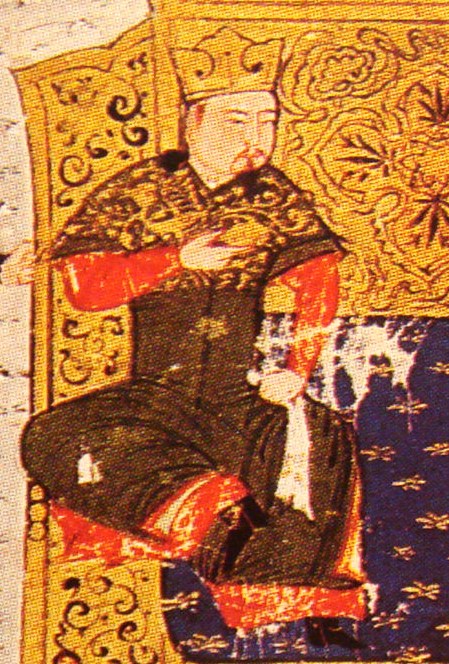
Tolui (c. 1191 – 1232) was the youngest son of Genghis Khan and Börte. A prominent general during the early Mongol conquests, Tolui was a leading candidate to succeed his father after his death in 1227 and ultimately served as regent of the Mongol Empire until the accession of his brother Ögedei two years later. Tolui's wife was Sorghaghtani Beki; their sons included Möngke and Kublai, the fourth and fifth khans of the empire, and Hulagu, the founder of the Ilkhanate.
Tolui was less active than his elder brothers Jochi, Chagatai, and Ögedei during their father's rise to power, but once he reached adulthood he was considered the finest warrior of the four. He commanded armies under his father during the first invasion of Jin China (1211–1215), and his distinguished service during the Mongol invasion of the Khwarazmian Empire secured his reputation. After the fall of the cities of Transoxiana in 1220, Genghis dispatched Tolui early the following year to subjugate the region of Khorasan, which had begun to cause trouble for the Mongol armies. Tolui executed his orders with ruthless efficiency, assaulting the major cities of Merv, Nishapur, and Herat, and subjugating numerous others. Medieval chroniclers attributed more than three million deaths to the massacres he ordered at Nishapur and Merv; while these figures are considered exaggerated by modern historians, they are evidence of the abnormal brutality of Tolui's campaign.
As the Mongols' traditional inheritance system was a form of ultimogeniture, Tolui was always a leading candidate to succeed his father. His position was strengthened by the elimination of Jochi and Chagatai, on account of possible illegitimacy and excessive arrogance respectively. Genghis eventually passed Tolui over in favour of Ögedei, who was known for his generosity. Tolui was on his father's last campaign when the latter died in mid-1227; as the youngest son, he became regent, in charge of his father's burial and the administration of the nation. It is possible that the two-year interregnum was lengthened by Tolui's desire to become khan himself; he nevertheless eventually swore allegiance to Ögedei, who was crowned in 1229.
Tolui accompanied Ögedei after the resumption of warfare against the Jin dynasty in 1230. The campaign was successful and they returned home to Mongolia two years later. Tolui died in unclear circumstances in late 1232. The official record was that he died during a shamanic ritual while saving Ögedei from a curse; alternative theories suggest that he died from alcoholism or that Ögedei had him poisoned. Having taken over Tolui's lands and estates after his death, Sorghaghtani amassed enough wealth and supporters to ensure that her son Möngke took power in 1251, after the death of Ögedei's son Güyük.
The year of Tolui's birth is disputed; while the historian Christopher Atwood believes he was born in 1191 or 1192, the sinologists Frederick W. Mote and Paul Ratchnevsky placed the date in the late 1180s. He was the fourth son of Temüjin, the future Genghis Khan, and Börte, Temüjin's first wife; his elder brothers were Jochi (b. c. 1184), Chagatai (b. c. 1185), and Ögedei (b. c. 1186). He also had five full sisters—in order of birth, these were Qojin, Chechiyegen, Alaqa, Tumelun, and Altun. The name "Tolui" (Mongolian script: ᠲᠤᠯᠤᠢ, Mongolian: Толуй, meaning 'mirror') has also been transliterated to English as Toli and Tuluy, among other spellings. The historian Isenbike Togan has speculated that "Tolui" was a title which Genghis intended to replace the pre-imperial epithet otchigin, traditionally given to the youngest son.
Shortly after Temüjin's campaign against the Tatars c. 1196, Tolui, then a young child, was the subject of a kidnapping attempt recounted in two sources: the 13th-century Mongolian poem The Secret History of the Mongols and the Jami' al-tawarikh history by the 14th-century Persian historian Rashid al-Din. According to the Secret History, the five year-old Tolui was saved by Altani, the wife of the general Boroqul, who held onto the Tatar kidnapper until two other Mongols killed him; Rashid al-Din on the other hand recounts that Tolui was saved by his adopted brother Shigi Qutuqu, then a young adolescent, with the help of a nearby Mongol sheepdog. After the defeat and death of the Kereit khan Toghrul in 1203, Tolui received Toghrul's niece Sorghaghtani Beki and granddaughter Doquz Khatun, both Nestorian Christians, as wives. Tolui and Sorghaghtani had their first son, Möngke, in 1209; Kublai and Hulagu followed in 1215 and 1217 respectively, while their final son Ariq Böke was born more than a decade afterwards. Tolui also married Lingqun, the daughter of Kuchlug, prince of the Naiman tribe, and had a son named Qutuqtu with her.
Tolui was considered the best warrior of the sons of Temüjin, who entitled himself Genghis Khan at a kurultai in 1206. He commanded armies during the invasion of Jin China; when Genghis was wounded by an arrow during the siege of Xijing (modern Datong), Tolui was appointed to command the besieging army until the Mongols withdrew. With his brother-in-law Chigu, he assaulted the walls of Dexing in autumn 1213 during preparations for the assault on the Juyong Pass.
During the invasion of the Khwarazmian Empire, which began in 1219, Tolui initially accompanied his father's army. They bypassed the ongoing siege at Otrar to attack the major centres of Transoxiana—the Khwarazmshah's capital Samarkand and its neighbour Bukhara—in early 1220. The latter was captured in February after a swift siege, while Samarkand fell a couple of months later. Genghis moved southwards into the Turkestan mountain range, where he rested his army for the summer while his generals Jebe and Subutai moved westwards and his sons conducted various operations; he emerged in the autumn to assault and capture Termez. Tolui and his father spent the winter of 1220–1221 dealing with rebels on the upper Vakhsh river in modern-day Tajikistan. By this point, Jebe and Subutai had moved into western Iran, and the cities which had earlier submitted to them in the Khorasan region had become bolder; Genghis Khan's son-in law Toquchar was killed by a nascent rebellion at Nishapur in November 1220. After capturing Balkh in early 1221 and while continuing to besiege Taliqan, Genghis dispatched Tolui to Khorasan to make sure that no opposition remained in the extensive and wealthy region. His task was to pacify and subjugate the region and its cities by any means possible, and he carried out the task "with a thoroughness from which that region has never recovered", in the words of the historian J. A. Boyle.
Tolui
Tolui (c. 1191 – 1232) was the youngest son of Genghis Khan and Börte. A prominent general during the early Mongol conquests, Tolui was a leading candidate to succeed his father after his death in 1227 and ultimately served as regent of the Mongol Empire until the accession of his brother Ögedei two years later. Tolui's wife was Sorghaghtani Beki; their sons included Möngke and Kublai, the fourth and fifth khans of the empire, and Hulagu, the founder of the Ilkhanate.
Tolui was less active than his elder brothers Jochi, Chagatai, and Ögedei during their father's rise to power, but once he reached adulthood he was considered the finest warrior of the four. He commanded armies under his father during the first invasion of Jin China (1211–1215), and his distinguished service during the Mongol invasion of the Khwarazmian Empire secured his reputation. After the fall of the cities of Transoxiana in 1220, Genghis dispatched Tolui early the following year to subjugate the region of Khorasan, which had begun to cause trouble for the Mongol armies. Tolui executed his orders with ruthless efficiency, assaulting the major cities of Merv, Nishapur, and Herat, and subjugating numerous others. Medieval chroniclers attributed more than three million deaths to the massacres he ordered at Nishapur and Merv; while these figures are considered exaggerated by modern historians, they are evidence of the abnormal brutality of Tolui's campaign.
As the Mongols' traditional inheritance system was a form of ultimogeniture, Tolui was always a leading candidate to succeed his father. His position was strengthened by the elimination of Jochi and Chagatai, on account of possible illegitimacy and excessive arrogance respectively. Genghis eventually passed Tolui over in favour of Ögedei, who was known for his generosity. Tolui was on his father's last campaign when the latter died in mid-1227; as the youngest son, he became regent, in charge of his father's burial and the administration of the nation. It is possible that the two-year interregnum was lengthened by Tolui's desire to become khan himself; he nevertheless eventually swore allegiance to Ögedei, who was crowned in 1229.
Tolui accompanied Ögedei after the resumption of warfare against the Jin dynasty in 1230. The campaign was successful and they returned home to Mongolia two years later. Tolui died in unclear circumstances in late 1232. The official record was that he died during a shamanic ritual while saving Ögedei from a curse; alternative theories suggest that he died from alcoholism or that Ögedei had him poisoned. Having taken over Tolui's lands and estates after his death, Sorghaghtani amassed enough wealth and supporters to ensure that her son Möngke took power in 1251, after the death of Ögedei's son Güyük.
The year of Tolui's birth is disputed; while the historian Christopher Atwood believes he was born in 1191 or 1192, the sinologists Frederick W. Mote and Paul Ratchnevsky placed the date in the late 1180s. He was the fourth son of Temüjin, the future Genghis Khan, and Börte, Temüjin's first wife; his elder brothers were Jochi (b. c. 1184), Chagatai (b. c. 1185), and Ögedei (b. c. 1186). He also had five full sisters—in order of birth, these were Qojin, Chechiyegen, Alaqa, Tumelun, and Altun. The name "Tolui" (Mongolian script: ᠲᠤᠯᠤᠢ, Mongolian: Толуй, meaning 'mirror') has also been transliterated to English as Toli and Tuluy, among other spellings. The historian Isenbike Togan has speculated that "Tolui" was a title which Genghis intended to replace the pre-imperial epithet otchigin, traditionally given to the youngest son.
Shortly after Temüjin's campaign against the Tatars c. 1196, Tolui, then a young child, was the subject of a kidnapping attempt recounted in two sources: the 13th-century Mongolian poem The Secret History of the Mongols and the Jami' al-tawarikh history by the 14th-century Persian historian Rashid al-Din. According to the Secret History, the five year-old Tolui was saved by Altani, the wife of the general Boroqul, who held onto the Tatar kidnapper until two other Mongols killed him; Rashid al-Din on the other hand recounts that Tolui was saved by his adopted brother Shigi Qutuqu, then a young adolescent, with the help of a nearby Mongol sheepdog. After the defeat and death of the Kereit khan Toghrul in 1203, Tolui received Toghrul's niece Sorghaghtani Beki and granddaughter Doquz Khatun, both Nestorian Christians, as wives. Tolui and Sorghaghtani had their first son, Möngke, in 1209; Kublai and Hulagu followed in 1215 and 1217 respectively, while their final son Ariq Böke was born more than a decade afterwards. Tolui also married Lingqun, the daughter of Kuchlug, prince of the Naiman tribe, and had a son named Qutuqtu with her.
Tolui was considered the best warrior of the sons of Temüjin, who entitled himself Genghis Khan at a kurultai in 1206. He commanded armies during the invasion of Jin China; when Genghis was wounded by an arrow during the siege of Xijing (modern Datong), Tolui was appointed to command the besieging army until the Mongols withdrew. With his brother-in-law Chigu, he assaulted the walls of Dexing in autumn 1213 during preparations for the assault on the Juyong Pass.
During the invasion of the Khwarazmian Empire, which began in 1219, Tolui initially accompanied his father's army. They bypassed the ongoing siege at Otrar to attack the major centres of Transoxiana—the Khwarazmshah's capital Samarkand and its neighbour Bukhara—in early 1220. The latter was captured in February after a swift siege, while Samarkand fell a couple of months later. Genghis moved southwards into the Turkestan mountain range, where he rested his army for the summer while his generals Jebe and Subutai moved westwards and his sons conducted various operations; he emerged in the autumn to assault and capture Termez. Tolui and his father spent the winter of 1220–1221 dealing with rebels on the upper Vakhsh river in modern-day Tajikistan. By this point, Jebe and Subutai had moved into western Iran, and the cities which had earlier submitted to them in the Khorasan region had become bolder; Genghis Khan's son-in law Toquchar was killed by a nascent rebellion at Nishapur in November 1220. After capturing Balkh in early 1221 and while continuing to besiege Taliqan, Genghis dispatched Tolui to Khorasan to make sure that no opposition remained in the extensive and wealthy region. His task was to pacify and subjugate the region and its cities by any means possible, and he carried out the task "with a thoroughness from which that region has never recovered", in the words of the historian J. A. Boyle.
Recent media
Recent media