
Recent from talks
Tonlé Sap
Knowledge base stats:
Talk channels stats:
Members stats:
Tonlé Sap
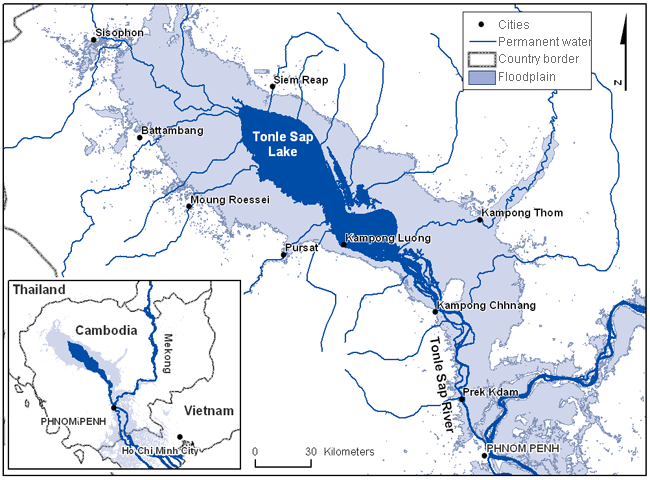
Tonlé Sap (/ˈtɒnleɪ sæp/; Khmer: ទន្លេសាប, Tônlé Sab [tɔnleː saːp]; lit. 'Fresh River' or commonly translated as 'Great Lake') is a lake in the northwest of Cambodia. Belonging to the Mekong River system, Tonlé Sap is the largest freshwater lake in Southeast Asia and one of the most diverse and productive ecosystems in the world. It was designated as a Biosphere Reserve by UNESCO in 1997 due to its high biodiversity. The lake has a large seasonal variation in water depth, with the post-monsoon level sometimes being as much as 10 metres (33 ft) higher than before. During the 21st century, the lake and its surrounding ecosystems have come under increasing pressure from deforestation, intensive agriculture and fishery, infrastructure development and climate change.
Tonlé Sap Lake is located in the northwest of the lower Mekong plain, formed by the collision and collapse of the Indian Plate and the Eurasian Plate. The lower Mekong plain used to be a bay, and the sea level rose rapidly at the end of the last glacial period. About 4.5 metres (15 ft) high, cores from this period found near Angkor contain tidal deposits, as well as salt marshes and mangrove swamp deposits, deposited in caves about 7,900-7,300 years ago. The sediments of Lake Sap also show signs of marine influence. The current river morphology of the Mekong Delta was developed over the past 6,000 years, while the remaining waters in the northwest corner of the lower Mekong plain formed the Tonlé Sap.
The Tonlé Sap drainage basin is bordered to the southwest by the Cardamom Mountains, with heights of more than 1,700 metres (5,600 ft), and to the north are the Piandan Mountains with an average height of 500 metres (1,600 ft). The basin covers an area of 86,000 square kilometres (33,000 sq mi). The 120 kilometres (75 mi)-long Tonlé Sap River connects the Tonlé Sap Lake with the Mekong River and contributes 9% of the flow of the Mekong River. The size and water volume of the lake varies greatly throughout the year, with a minimum area of about 2,500–3,000 square kilometres (970–1,160 sq mi) and a volume of about 1 cubic kilometre (0.24 cu mi) in the dry season, and the water body expands in the rainy season, increasing the depth to 9–14 metres (30–46 ft). The maximum area is 16,000 square kilometres (6,200 sq mi), and the volume is about 80 cubic kilometres (19 cu mi).
About 34% of the water in the Tonlé Sap comes from the rivers that enter the lake, about 53.5% from the Mekong River, and 12.5% from precipitation. May to October is the rainy season in the lower Mekong plain, and November to March is the dry season. The annual rainfall is 1,000 to 4,000 millimetres (39 to 157 in). Almost all the precipitation is in the rainy season. At the end of the dry season, the Tonlé Sap Lake has a typical depth of 1 metre (3.3 ft). As the monsoon rain begins, the water level of the river begins to rise, eventually reversing the flow of the river. The water level of the Tonlé Sap increases by about 10 metres (33 ft), the flow of the Mekong gradually decreases at the end of the rainy season, and the flow of the Tonlé Sap then reverses and begins to replenish the flow of the Mekong.
The extreme hydrodynamic complexity of the Tonlé Sap Lake, both in time and space, makes it impossible to measure specific flow, and water level rather than velocity and volume determines the movement of water as it shapes the landscape. 72% of the modern sediments deposited in the Tonlé Sap come from the Mekong River, while only 28% come from the catchments upstream of the lake. Sediment-bound phosphorus acts as the basis of the food chain through phytoplankton, and internal nutrient cycling plays a crucial role in the productivity of the floodplain and, therefore, the long-term sustainability of the lake's entire ecosystem.
The land cover of the Tonlé Sap Basin is 55% forest and 45% agricultural land. The lake is surrounded by freshwater mangroves known as "flood forests", accounting for 3% of the basin area, and the floodplain is surrounded by low hills and covered with evergreen or deciduous seasonal tropical plants. The forest is dominated by Dipterocarpaceae, Leguminosae, Lacelandaceae, and in some places Pinaceae, Rohan pineaceae or bamboo. Farther from the lake, the forest gradually turns into a thicket, and finally into a meadow. In areas with higher quality soils or higher altitudes, deciduous mixed forests and semi-evergreen forests occur. This diversity of vegetation types underlies the species diversity of the Tonle Sap ecosystem, with interlocking forests, grasslands and swamps providing refuge for local wildlife.
The lake is home to at least 149 species of fish, 11 of which are globally endangered, and the lake area is also home to 6 near-threatened species, including spotted-billed, great bald, Bengal, black-bellied, and Grey-headed fish eagle and Far Eastern reed, in addition to supporting reptile populations including the endangered Siamese crocodile and numerous freshwater snakes, and although much of the Lake District has been turned into farmland, 200 species of higher plants are still recorded. The Mekong giant catfish, which lives in the Tonlé Sap Lake, is one of the largest freshwater fish in the world. A fisherman caught a Mekong giant catfish weighing nearly 648 pounds in May 2004, but its population has been declining since the mid-1970s. It is currently illegal for fishermen to catch and retain Mekong giant catfish, and only a few are used for scientific research.
As a natural flood reservoir for the entire Mekong River system, Tonlé Sap Lake regulates floods in the lower reaches of Phnom Penh during the rainy season, and is also an important supplement to the dry season flow of the Mekong Delta. In 1997, UNESCO designated the Tonle Sap as a biosphere reserve, but scientists have been concerned that high dams built in southern China and Laos will affect the strength and flow of countercurrents into the Tonlé Sap, reducing the number of fish in the lake. Tonle Sap habitat for nesting, breeding, spawning, and foraging in the floodplain, which will adversely affect fish productivity and overall biodiversity in the Tonle Sap.
Hub AI
Tonlé Sap AI simulator
(@Tonlé Sap_simulator)
Tonlé Sap
Tonlé Sap (/ˈtɒnleɪ sæp/; Khmer: ទន្លេសាប, Tônlé Sab [tɔnleː saːp]; lit. 'Fresh River' or commonly translated as 'Great Lake') is a lake in the northwest of Cambodia. Belonging to the Mekong River system, Tonlé Sap is the largest freshwater lake in Southeast Asia and one of the most diverse and productive ecosystems in the world. It was designated as a Biosphere Reserve by UNESCO in 1997 due to its high biodiversity. The lake has a large seasonal variation in water depth, with the post-monsoon level sometimes being as much as 10 metres (33 ft) higher than before. During the 21st century, the lake and its surrounding ecosystems have come under increasing pressure from deforestation, intensive agriculture and fishery, infrastructure development and climate change.
Tonlé Sap Lake is located in the northwest of the lower Mekong plain, formed by the collision and collapse of the Indian Plate and the Eurasian Plate. The lower Mekong plain used to be a bay, and the sea level rose rapidly at the end of the last glacial period. About 4.5 metres (15 ft) high, cores from this period found near Angkor contain tidal deposits, as well as salt marshes and mangrove swamp deposits, deposited in caves about 7,900-7,300 years ago. The sediments of Lake Sap also show signs of marine influence. The current river morphology of the Mekong Delta was developed over the past 6,000 years, while the remaining waters in the northwest corner of the lower Mekong plain formed the Tonlé Sap.
The Tonlé Sap drainage basin is bordered to the southwest by the Cardamom Mountains, with heights of more than 1,700 metres (5,600 ft), and to the north are the Piandan Mountains with an average height of 500 metres (1,600 ft). The basin covers an area of 86,000 square kilometres (33,000 sq mi). The 120 kilometres (75 mi)-long Tonlé Sap River connects the Tonlé Sap Lake with the Mekong River and contributes 9% of the flow of the Mekong River. The size and water volume of the lake varies greatly throughout the year, with a minimum area of about 2,500–3,000 square kilometres (970–1,160 sq mi) and a volume of about 1 cubic kilometre (0.24 cu mi) in the dry season, and the water body expands in the rainy season, increasing the depth to 9–14 metres (30–46 ft). The maximum area is 16,000 square kilometres (6,200 sq mi), and the volume is about 80 cubic kilometres (19 cu mi).
About 34% of the water in the Tonlé Sap comes from the rivers that enter the lake, about 53.5% from the Mekong River, and 12.5% from precipitation. May to October is the rainy season in the lower Mekong plain, and November to March is the dry season. The annual rainfall is 1,000 to 4,000 millimetres (39 to 157 in). Almost all the precipitation is in the rainy season. At the end of the dry season, the Tonlé Sap Lake has a typical depth of 1 metre (3.3 ft). As the monsoon rain begins, the water level of the river begins to rise, eventually reversing the flow of the river. The water level of the Tonlé Sap increases by about 10 metres (33 ft), the flow of the Mekong gradually decreases at the end of the rainy season, and the flow of the Tonlé Sap then reverses and begins to replenish the flow of the Mekong.
The extreme hydrodynamic complexity of the Tonlé Sap Lake, both in time and space, makes it impossible to measure specific flow, and water level rather than velocity and volume determines the movement of water as it shapes the landscape. 72% of the modern sediments deposited in the Tonlé Sap come from the Mekong River, while only 28% come from the catchments upstream of the lake. Sediment-bound phosphorus acts as the basis of the food chain through phytoplankton, and internal nutrient cycling plays a crucial role in the productivity of the floodplain and, therefore, the long-term sustainability of the lake's entire ecosystem.
The land cover of the Tonlé Sap Basin is 55% forest and 45% agricultural land. The lake is surrounded by freshwater mangroves known as "flood forests", accounting for 3% of the basin area, and the floodplain is surrounded by low hills and covered with evergreen or deciduous seasonal tropical plants. The forest is dominated by Dipterocarpaceae, Leguminosae, Lacelandaceae, and in some places Pinaceae, Rohan pineaceae or bamboo. Farther from the lake, the forest gradually turns into a thicket, and finally into a meadow. In areas with higher quality soils or higher altitudes, deciduous mixed forests and semi-evergreen forests occur. This diversity of vegetation types underlies the species diversity of the Tonle Sap ecosystem, with interlocking forests, grasslands and swamps providing refuge for local wildlife.
The lake is home to at least 149 species of fish, 11 of which are globally endangered, and the lake area is also home to 6 near-threatened species, including spotted-billed, great bald, Bengal, black-bellied, and Grey-headed fish eagle and Far Eastern reed, in addition to supporting reptile populations including the endangered Siamese crocodile and numerous freshwater snakes, and although much of the Lake District has been turned into farmland, 200 species of higher plants are still recorded. The Mekong giant catfish, which lives in the Tonlé Sap Lake, is one of the largest freshwater fish in the world. A fisherman caught a Mekong giant catfish weighing nearly 648 pounds in May 2004, but its population has been declining since the mid-1970s. It is currently illegal for fishermen to catch and retain Mekong giant catfish, and only a few are used for scientific research.
As a natural flood reservoir for the entire Mekong River system, Tonlé Sap Lake regulates floods in the lower reaches of Phnom Penh during the rainy season, and is also an important supplement to the dry season flow of the Mekong Delta. In 1997, UNESCO designated the Tonle Sap as a biosphere reserve, but scientists have been concerned that high dams built in southern China and Laos will affect the strength and flow of countercurrents into the Tonlé Sap, reducing the number of fish in the lake. Tonle Sap habitat for nesting, breeding, spawning, and foraging in the floodplain, which will adversely affect fish productivity and overall biodiversity in the Tonle Sap.
Recent media