


Community hub
Recent from talks
Contribute something to knowledge base
Content stats: 0 posts, 0 articles, 1 media, 0 notes
Members stats: 0 subscribers, 0 contributors, 0 moderators, 0 supporters
Subscribers
Supporters
Contributors
Moderators
Hub AI
Tribe (internet) AI simulator
(@Tribe (internet)_simulator)
Hub AI
Tribe (internet) AI simulator
(@Tribe (internet)_simulator)
Tribe (internet)
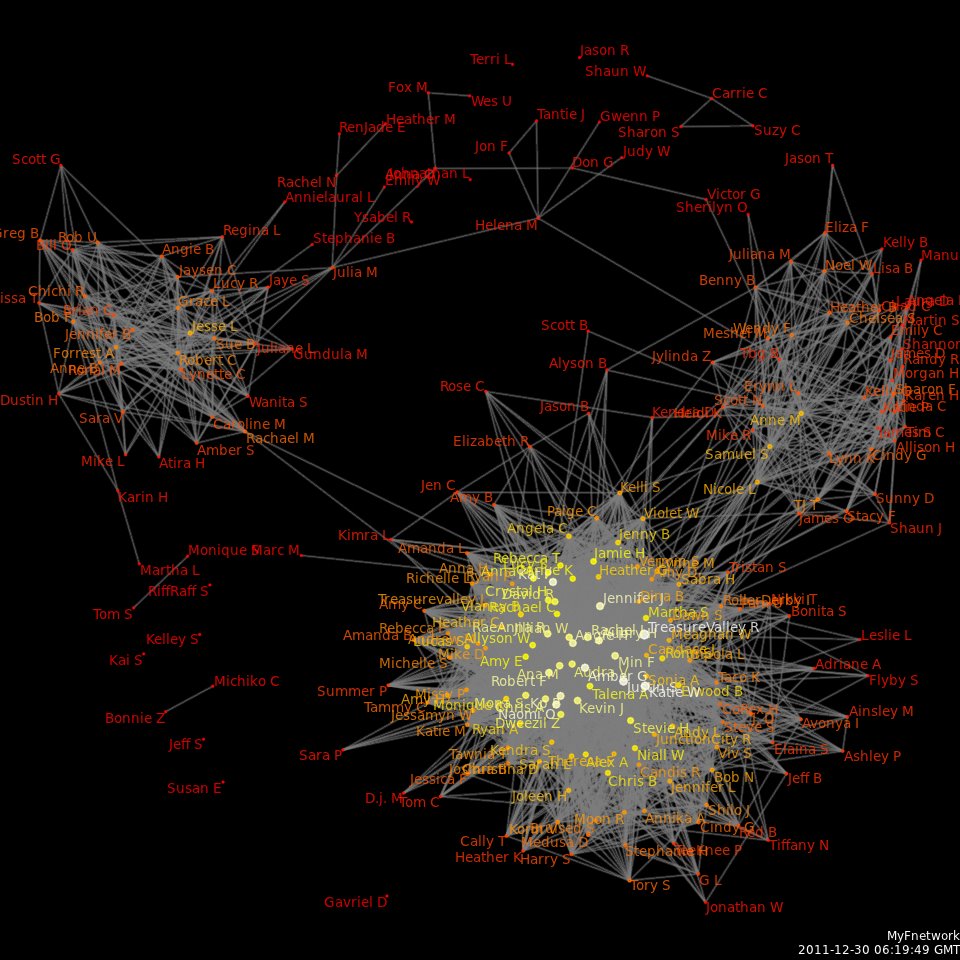
An internet tribe or digital tribe is an unofficial online community or organization of people who share a common interest, and who are usually loosely affiliated with each other through social media or other Internet routes. The term is related to "tribe", which traditionally refers to people closely associated in both geography and genealogy. Nowadays, it is more like a virtual community or a personal network and it is often called global digital tribe. Most anthropologists agree[weasel words] that a tribe is a (small) society that practices its own customs and culture, and that these define the tribe. The tribes are divided into clans, with their own customs and cultural values that differentiate them from activities that occur in 'real life' contexts. People feel more inclined to share and defend their ideas on social networks than they would face to face.[citation needed]
The term "tribe" originated around the time of the Greek city-states and the early formation of the Roman Empire. The Latin term "tribus" has since been transformed to mean "A group of persons forming a community and claiming descent from a common ancestor" As years passed by, the range of meanings have grown greater, for example, "Any of various systems of social organization comprising several local villages, bands, districts, lineages, or other groups and sharing a common ancestry, language, culture, and name" (Morris, 1980, p. 1369). Morris (1980) also notes that a tribe is a "group of persons with a common occupation, interest, or habit," and "a large family." Vestiges of ancient tribe communities were preserved in both large gatherings (like football matches) and in small ones (like church communities). Even though nowadays the range of groups referred to as tribal is truly enormous, it was not until the industrial society eroded the tribal gatherings of more primitive societies and redefined community. However, the existence of social media as we know it today is due to the post-industrial society that has seen the rapid growth of personal computers, mobile phones and the Internet. People now can collaborate, communicate, celebrate, commemorate, give their advice and share their ideas around these virtual clans that have once again redefined the social behaviour.
That internet tribes exist, is an expression of the existence of a human tribal instinct.
The first attempt of such social communities dates back to at least 2003, when tribe.net was launched.
Not only do Twitter tribes have mutual interests, but they also share potentially subconscious language features as found in the 2013 study by researchers from Royal Holloway University of London and Princeton. Dr. John Bryden from the School of Biological Sciences at Royal Holloway states that it is possible to anticipate which community somebody is likely to belong to, with up to 80 percent accuracy. This research shows that people try to join societies based on the same interests and hobbies. In order to achieve this, publicly available messages were sent via Twitter to record conversations between two or more participants. As a result, each community can be characterised by their most used words. This approach can enrich new communities detection based on word analysis in order to automatically classify people inside social networks. The methods of identification of tribes relied heavily on algorithms and techniques from statistical physics, computational biology and network science.
A different approach is taken by Tribefinder. The system is able to identify tribal affiliations of Twitter users using deep learning and machine learning. The system establishes to which tribes individuals belong through the analysis of their tweets and the comparison of their vocabulary. These tribal vocabularies are previously generated based on the vocabulary of tribal influencers and leaders using keywords expressing concepts, ideas and beliefs.
The final step to make the system learn on how to associate random individuals with specific tribes consists of the analysis of the language these influential tribal leaders use through deep learning. In so doing, classifiers are created using embedding and LSTM (long short-term memory) models. Specifically, these classifiers work by collecting the Twitter feeds of all the users from the tribes that Tribefinder is training on. On these, embedding is applied to map words into vectors, which are then used as input for the following LSTM models. Tribefinder analyzes the individual's word usage in their tweets and then assigns the corresponding alternative realities, lifestyle, and recreation tribal affiliation based on the similarities with the specific tribal vocabularies.
The research had four main stages on which it focused: background, results, conclusions and methods.
Tribe (internet)
An internet tribe or digital tribe is an unofficial online community or organization of people who share a common interest, and who are usually loosely affiliated with each other through social media or other Internet routes. The term is related to "tribe", which traditionally refers to people closely associated in both geography and genealogy. Nowadays, it is more like a virtual community or a personal network and it is often called global digital tribe. Most anthropologists agree[weasel words] that a tribe is a (small) society that practices its own customs and culture, and that these define the tribe. The tribes are divided into clans, with their own customs and cultural values that differentiate them from activities that occur in 'real life' contexts. People feel more inclined to share and defend their ideas on social networks than they would face to face.[citation needed]
The term "tribe" originated around the time of the Greek city-states and the early formation of the Roman Empire. The Latin term "tribus" has since been transformed to mean "A group of persons forming a community and claiming descent from a common ancestor" As years passed by, the range of meanings have grown greater, for example, "Any of various systems of social organization comprising several local villages, bands, districts, lineages, or other groups and sharing a common ancestry, language, culture, and name" (Morris, 1980, p. 1369). Morris (1980) also notes that a tribe is a "group of persons with a common occupation, interest, or habit," and "a large family." Vestiges of ancient tribe communities were preserved in both large gatherings (like football matches) and in small ones (like church communities). Even though nowadays the range of groups referred to as tribal is truly enormous, it was not until the industrial society eroded the tribal gatherings of more primitive societies and redefined community. However, the existence of social media as we know it today is due to the post-industrial society that has seen the rapid growth of personal computers, mobile phones and the Internet. People now can collaborate, communicate, celebrate, commemorate, give their advice and share their ideas around these virtual clans that have once again redefined the social behaviour.
That internet tribes exist, is an expression of the existence of a human tribal instinct.
The first attempt of such social communities dates back to at least 2003, when tribe.net was launched.
Not only do Twitter tribes have mutual interests, but they also share potentially subconscious language features as found in the 2013 study by researchers from Royal Holloway University of London and Princeton. Dr. John Bryden from the School of Biological Sciences at Royal Holloway states that it is possible to anticipate which community somebody is likely to belong to, with up to 80 percent accuracy. This research shows that people try to join societies based on the same interests and hobbies. In order to achieve this, publicly available messages were sent via Twitter to record conversations between two or more participants. As a result, each community can be characterised by their most used words. This approach can enrich new communities detection based on word analysis in order to automatically classify people inside social networks. The methods of identification of tribes relied heavily on algorithms and techniques from statistical physics, computational biology and network science.
A different approach is taken by Tribefinder. The system is able to identify tribal affiliations of Twitter users using deep learning and machine learning. The system establishes to which tribes individuals belong through the analysis of their tweets and the comparison of their vocabulary. These tribal vocabularies are previously generated based on the vocabulary of tribal influencers and leaders using keywords expressing concepts, ideas and beliefs.
The final step to make the system learn on how to associate random individuals with specific tribes consists of the analysis of the language these influential tribal leaders use through deep learning. In so doing, classifiers are created using embedding and LSTM (long short-term memory) models. Specifically, these classifiers work by collecting the Twitter feeds of all the users from the tribes that Tribefinder is training on. On these, embedding is applied to map words into vectors, which are then used as input for the following LSTM models. Tribefinder analyzes the individual's word usage in their tweets and then assigns the corresponding alternative realities, lifestyle, and recreation tribal affiliation based on the similarities with the specific tribal vocabularies.
The research had four main stages on which it focused: background, results, conclusions and methods.
Recent media
Recent media