
Recent from talks
Turks and Caicos Islands
Knowledge base stats:
Talk channels stats:
Members stats:
Turks and Caicos Islands
Turks and Caicos Islands (/ˈtɜːrks/ and /ˈkeɪkəs, -koʊs, -kɒs/) are a British Overseas Territory consisting of the larger Caicos Islands and smaller Turks Islands, two groups of tropical islands in the Lucayan Archipelago of the Atlantic Ocean and northern West Indies. They are known primarily for tourism and as an offshore financial centre. The resident population in 2023 was estimated by The World Factbook at 59,367, making it the third-largest of the British overseas territories by population. However, according to a Department of Statistics estimate in 2022, the population was 47,720.
The islands are southeast of Mayaguana in the Bahamas island chain and north of the island of Hispaniola (Haiti and the Dominican Republic). Cockburn Town, the capital since 1766, is situated on Grand Turk about 1,042 kilometres (647 mi) east-southeast of Miami. They have a total land area of 430 square kilometres (170 sq mi).
The islands were inhabited for centuries by Taíno people. The first recorded European sighting of them was in 1512. In subsequent centuries, they were claimed by several European powers, with the British Empire eventually gaining control. For many years they were governed indirectly through Bermuda, the Bahamas, and Jamaica. When the Bahamas gained independence in 1973, the islands received their own governor, and have remained an autonomous territory since.
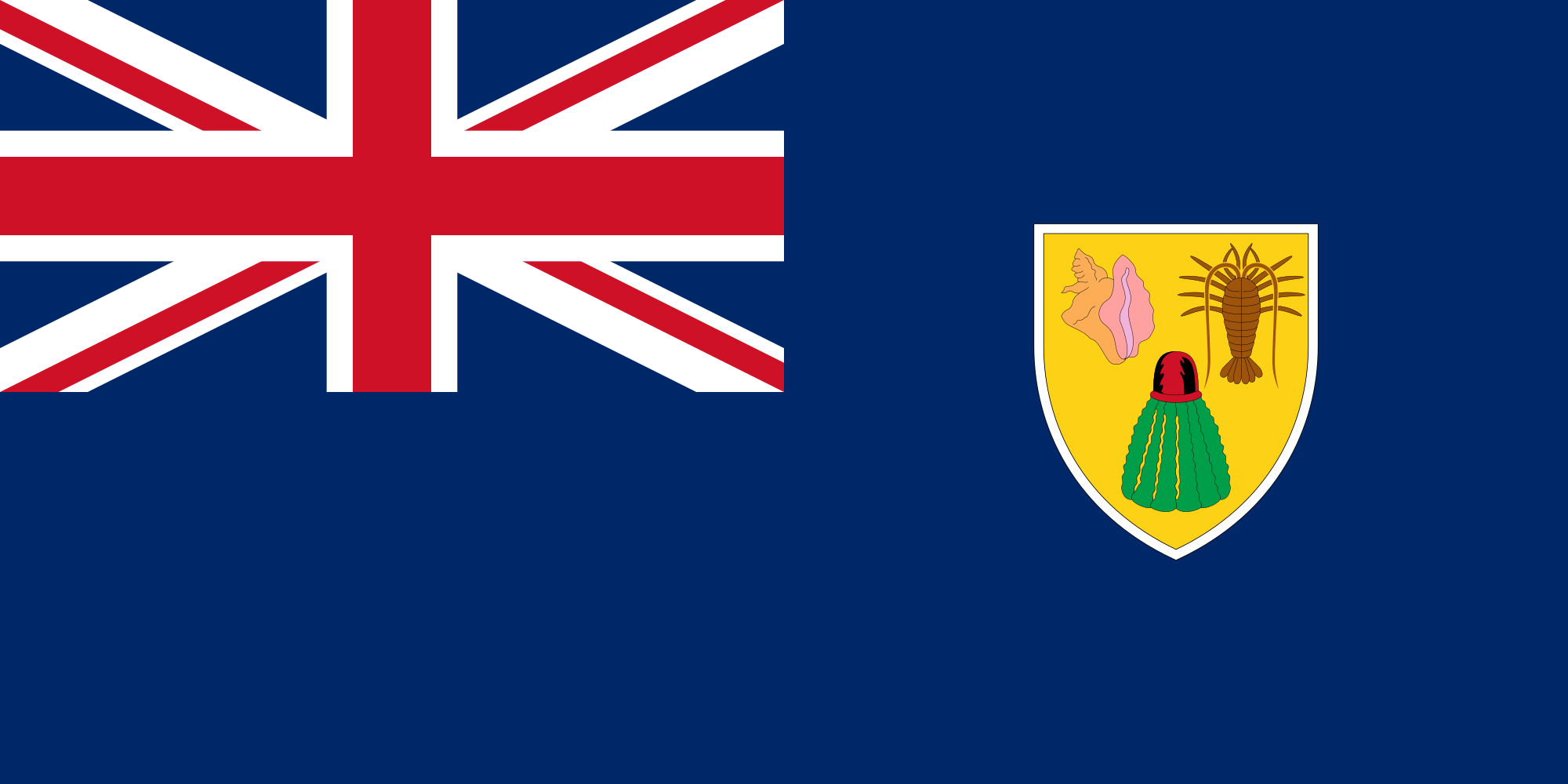
The name Caico[s] is from the Lucayan caya hico, meaning 'string of islands'. The Turks Islands are named after the Turk's cap cactus, Melocactus intortus, whose red cephalium resembles the fez hat worn by Turks in the late Ottoman Empire.
The first inhabitants of the islands were the Arawakan-speaking Taíno people, who most likely crossed over from Hispaniola some time from AD 500 to 800. Together with Taíno who migrated from Cuba to the southern Bahamas around the same time, these people developed as the Lucayan. Around 1200, the Turks and Caicos Islands were resettled by Classical Taínos from Hispaniola.
It is unknown precisely who the first European to sight the islands was. Some sources state that the explorer Christopher Columbus saw the islands on his voyage to the Americas in 1492. However, other sources state that it is more likely that Spanish conquistador Juan Ponce de León was the first European in Turks and Caicos, in 1512. In either case, by 1512 the Spanish had begun capturing the Taíno and Lucayans as labourers in the encomienda system to replace the largely depleted native population of Hispaniola. As a result of this, and the introduction of diseases to which the native people had no immunity, the southern Bahama Islands and the Turks and Caicos Islands were completely depopulated by about 1513, and remained so until the 17th century.[page range too broad]
From the mid-1600s Bermudian salt collectors began seasonally visiting the islands, later settling more permanently with their African slaves. For several decades around the turn of the 18th century, the islands became popular pirate hideouts. During the Anglo-French War (1778–1783) the French captured the archipelago in 1783; however, it was later confirmed as a British colony with the Treaty of Paris (1783). After the American War of Independence (1775–1783), many Loyalists fled to British Caribbean colonies, also bringing with them African slaves. They developed cotton as an important cash crop, but it was superseded by the development of the salt industry, with the labour carried out by slaves bought and transported from Africa or the other Caribbean islands and their descendants, who soon came to outnumber the European settlers.
In 1799, both the Turks and the Caicos island groups were annexed by Britain as part of the Bahamas. The processing of sea salt was developed as a highly important export product from the West Indies and continued to be a major export product into the nineteenth century.
Hub AI
Turks and Caicos Islands AI simulator
(@Turks and Caicos Islands_simulator)
Turks and Caicos Islands
Turks and Caicos Islands (/ˈtɜːrks/ and /ˈkeɪkəs, -koʊs, -kɒs/) are a British Overseas Territory consisting of the larger Caicos Islands and smaller Turks Islands, two groups of tropical islands in the Lucayan Archipelago of the Atlantic Ocean and northern West Indies. They are known primarily for tourism and as an offshore financial centre. The resident population in 2023 was estimated by The World Factbook at 59,367, making it the third-largest of the British overseas territories by population. However, according to a Department of Statistics estimate in 2022, the population was 47,720.
The islands are southeast of Mayaguana in the Bahamas island chain and north of the island of Hispaniola (Haiti and the Dominican Republic). Cockburn Town, the capital since 1766, is situated on Grand Turk about 1,042 kilometres (647 mi) east-southeast of Miami. They have a total land area of 430 square kilometres (170 sq mi).
The islands were inhabited for centuries by Taíno people. The first recorded European sighting of them was in 1512. In subsequent centuries, they were claimed by several European powers, with the British Empire eventually gaining control. For many years they were governed indirectly through Bermuda, the Bahamas, and Jamaica. When the Bahamas gained independence in 1973, the islands received their own governor, and have remained an autonomous territory since.
The name Caico[s] is from the Lucayan caya hico, meaning 'string of islands'. The Turks Islands are named after the Turk's cap cactus, Melocactus intortus, whose red cephalium resembles the fez hat worn by Turks in the late Ottoman Empire.
The first inhabitants of the islands were the Arawakan-speaking Taíno people, who most likely crossed over from Hispaniola some time from AD 500 to 800. Together with Taíno who migrated from Cuba to the southern Bahamas around the same time, these people developed as the Lucayan. Around 1200, the Turks and Caicos Islands were resettled by Classical Taínos from Hispaniola.
It is unknown precisely who the first European to sight the islands was. Some sources state that the explorer Christopher Columbus saw the islands on his voyage to the Americas in 1492. However, other sources state that it is more likely that Spanish conquistador Juan Ponce de León was the first European in Turks and Caicos, in 1512. In either case, by 1512 the Spanish had begun capturing the Taíno and Lucayans as labourers in the encomienda system to replace the largely depleted native population of Hispaniola. As a result of this, and the introduction of diseases to which the native people had no immunity, the southern Bahama Islands and the Turks and Caicos Islands were completely depopulated by about 1513, and remained so until the 17th century.[page range too broad]
From the mid-1600s Bermudian salt collectors began seasonally visiting the islands, later settling more permanently with their African slaves. For several decades around the turn of the 18th century, the islands became popular pirate hideouts. During the Anglo-French War (1778–1783) the French captured the archipelago in 1783; however, it was later confirmed as a British colony with the Treaty of Paris (1783). After the American War of Independence (1775–1783), many Loyalists fled to British Caribbean colonies, also bringing with them African slaves. They developed cotton as an important cash crop, but it was superseded by the development of the salt industry, with the labour carried out by slaves bought and transported from Africa or the other Caribbean islands and their descendants, who soon came to outnumber the European settlers.
In 1799, both the Turks and the Caicos island groups were annexed by Britain as part of the Bahamas. The processing of sea salt was developed as a highly important export product from the West Indies and continued to be a major export product into the nineteenth century.
Recent media