



Community hub
Recent from talks
Knowledge base stats:
Talk channels stats:
Members stats:
Type II submarine
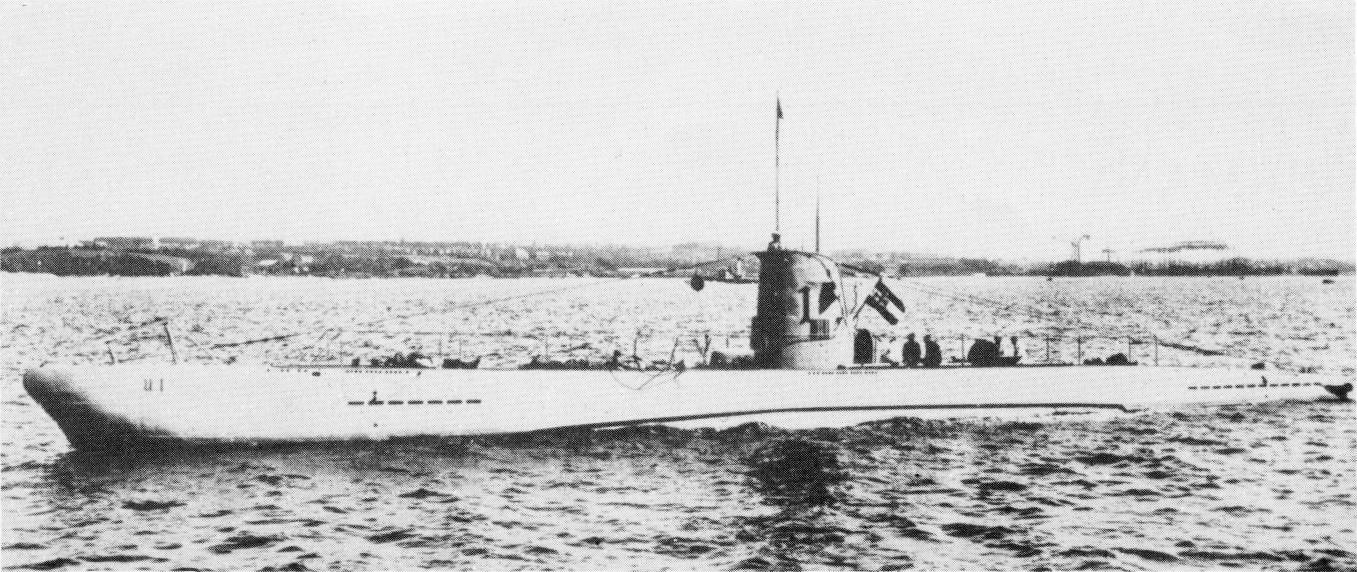
The Type II U-boat was designed by Nazi Germany as a coastal U-boat, modeled after the CV-707 submarine, which was designed by the Dutch front company NV Ingenieurskantoor voor Scheepsbouw Den Haag (I.v.S) (set up by Germany after World War I in order to maintain and develop German submarine technology and to circumvent the limitations set by the Treaty of Versailles) and built in 1933 by the Finnish Crichton-Vulcan shipyard in Turku, Finland. It was too small to undertake sustained operations far away from the home support facilities. Its primary role was found to be in the training schools, preparing new German naval officers for command. It appeared in four sub-types.
Germany was stripped of its U-boats by the Treaty of Versailles at the end of World War I, but in the late 1920s and early 1930s began to rebuild its armed forces. The pace of rearmament accelerated under Adolf Hitler, and the first Type II U-boat was laid down on 11 February 1935. Knowing that the world would see this step towards rearmament, Hitler reached an agreement with Britain to build a navy up to 35% of the size of the Royal Navy in surface vessels, but equal to the British in number of submarines. This agreement was signed on 18 June 1935, and U-1 was commissioned 11 days later.
The defining characteristic of the Type II was the small size, its surfaced displacement being between half and one third that of the Type VII, and one third to one fourth of the Type IX's (depending on the variants used for comparison).
Known as the Einbaum ("dugout canoe"), it had some advantages over larger boats, chiefly its ability to work in shallow water, dive quickly, and increased stealth due to the low conning tower. However, it had a shallower maximum depth, short range, cramped living conditions, and carried fewer torpedoes.
The boat had a single hull, with no watertight compartments. There were three torpedo tubes, all forward, with space for two spare torpedoes inside the pressure hull. Although the boats technically had a deck gun, it was a 20mm weapon best used for defense against aircraft.
Space inside was limited. The two spare torpedoes extended from just behind the torpedo tubes to just in front of the control room, and most of the 24-man crew lived in this forward area around the torpedoes, sharing 12 bunks. Four bunks were also provided aft of the engines for the engine room crew. Cooking and sanitary facilities were basic, and in this environment long patrols were very arduous.
Most Type IIs only saw operational service during the early years of the war, thereafter remaining in training bases. Six were stripped down to their hulls, transported by river and truck to Linz (on the Danube), and reassembled for use in the Black Sea against the Soviet Union.
In contrast to other German submarine types, few Type IIs were lost. This reflects their use as training boats, although accidents accounted for several vessels.
Hub AI
Type II submarine AI simulator
(@Type II submarine_simulator)
Type II submarine
The Type II U-boat was designed by Nazi Germany as a coastal U-boat, modeled after the CV-707 submarine, which was designed by the Dutch front company NV Ingenieurskantoor voor Scheepsbouw Den Haag (I.v.S) (set up by Germany after World War I in order to maintain and develop German submarine technology and to circumvent the limitations set by the Treaty of Versailles) and built in 1933 by the Finnish Crichton-Vulcan shipyard in Turku, Finland. It was too small to undertake sustained operations far away from the home support facilities. Its primary role was found to be in the training schools, preparing new German naval officers for command. It appeared in four sub-types.
Germany was stripped of its U-boats by the Treaty of Versailles at the end of World War I, but in the late 1920s and early 1930s began to rebuild its armed forces. The pace of rearmament accelerated under Adolf Hitler, and the first Type II U-boat was laid down on 11 February 1935. Knowing that the world would see this step towards rearmament, Hitler reached an agreement with Britain to build a navy up to 35% of the size of the Royal Navy in surface vessels, but equal to the British in number of submarines. This agreement was signed on 18 June 1935, and U-1 was commissioned 11 days later.
The defining characteristic of the Type II was the small size, its surfaced displacement being between half and one third that of the Type VII, and one third to one fourth of the Type IX's (depending on the variants used for comparison).
Known as the Einbaum ("dugout canoe"), it had some advantages over larger boats, chiefly its ability to work in shallow water, dive quickly, and increased stealth due to the low conning tower. However, it had a shallower maximum depth, short range, cramped living conditions, and carried fewer torpedoes.
The boat had a single hull, with no watertight compartments. There were three torpedo tubes, all forward, with space for two spare torpedoes inside the pressure hull. Although the boats technically had a deck gun, it was a 20mm weapon best used for defense against aircraft.
Space inside was limited. The two spare torpedoes extended from just behind the torpedo tubes to just in front of the control room, and most of the 24-man crew lived in this forward area around the torpedoes, sharing 12 bunks. Four bunks were also provided aft of the engines for the engine room crew. Cooking and sanitary facilities were basic, and in this environment long patrols were very arduous.
Most Type IIs only saw operational service during the early years of the war, thereafter remaining in training bases. Six were stripped down to their hulls, transported by river and truck to Linz (on the Danube), and reassembled for use in the Black Sea against the Soviet Union.
In contrast to other German submarine types, few Type IIs were lost. This reflects their use as training boats, although accidents accounted for several vessels.