Hubbry Logo
Battle of SinhagadBattle of SinhagadMain
Open search
Battle of Sinhagad
Community hub
Battle of Sinhagad
logo
8 pages, 0 posts
0 subscribers
Be the first to start a discussion here.
Battle of Sinhagad
Battle of Sinhagad
from Wikipedia

Battle of Sinhagad (Kondhana)
Part of The Maratha rebellion

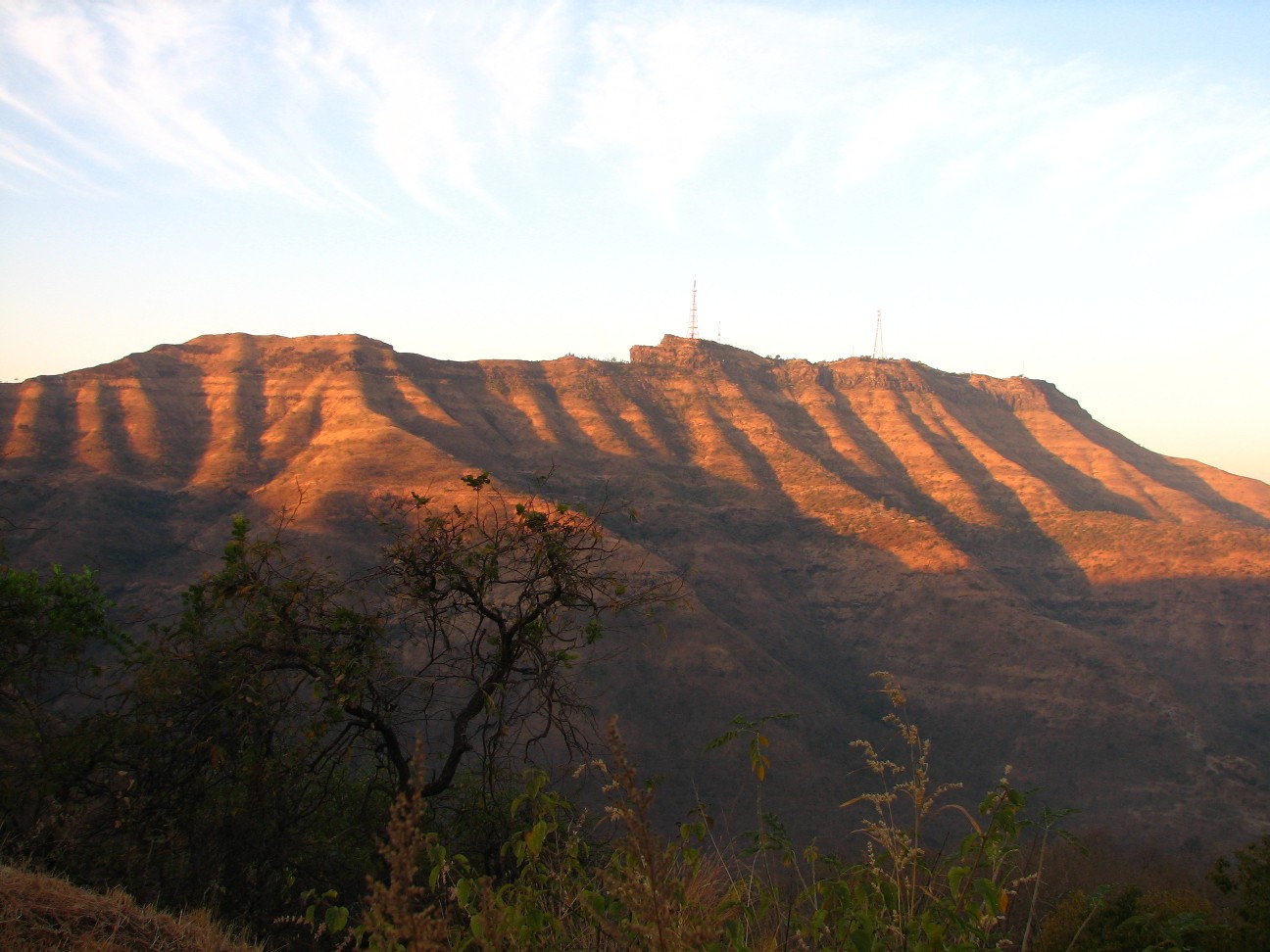
The Fort of Sinhagad
Date4 February 1670
Location
Fort Sinhagad, near Pune, India
Result Maratha victory[1]
Territorial
changes
Fort Sinhagad (then, Kondhana fort) captured by Marathas
Belligerents
Maratha kingdom Mughal Empire
Commanders and leaders
Tanaji Malusare 

The Battle of Sinhagad, also known as Battle of Kondhana, involved an attack by Marathas during the night of 4 February 1670 on the Mughal fort of Sinhagad (then Kondhana), near the city of Pune, Maharashtra. The Marathas captured the fort.

Battle

[edit]

Sinhagad was one of the first forts which Shivaji recaptured from the Mughals following the treaty of Purandar. The capture was made possible by scaling the walls at night with rope ladders. Tanaji Malusare was killed, but the fort was captured by the Marathas. The battle and Tanaji's exploits are the basis of a popular Marathi ballad.[2]

Aftermath

[edit]

When Shivaji was informed about the victory and the loss of Tanaji's life during the battle, he is said to have exclaimed "गड आला पण सिंह गेला" (IAST: Gaḍa ālā paṇa siṃha gela English: The fort has been captured but we lost the lion). A bust of Tanaji Malusare was installed at the fort in memory of his contribution and sacrifice.[3]

[edit]

References

[edit]
Revisions and contributorsEdit on WikipediaRead on Wikipedia
from Grokipedia
The Battle of Sinhagad, also known as the Battle of Kondhana, was a nighttime on 4 February 1670 in which Maratha commander led a small force to recapture the strategically vital Sinhagad Fort from Mughal control near in present-day , , achieving victory through a daring cliff but at the price of Malusare's death in combat. The fort, originally called Kondhana, had been surrendered to the Mughals under the terms of the 1665 Treaty of Purandar, which compelled Maharaj to yield 23 strongholds as part of a truce following earlier conflicts. prioritized its recovery to secure his southwestern frontier and bolster defenses ahead of his impending coronation as a sovereign king, tasking his trusted lieutenant Malusare with the mission despite the fort's near-impregnable position atop sheer cliffs rising over 1,300 meters. Malusare's contingent, numbering around 300 to 1,000 men according to varying accounts from Maratha chronicles known as bakhars, approached under cover of darkness and scaled the fort's western using ropes anchored by exploiting the grip of a named Yashwanti—a detail preserved in traditional narratives that underscores the ingenuity born of necessity against the fort's natural defenses. Once atop, the Marathas engaged in fierce hand-to-hand fighting with the Mughal under Udaybhan Rathod, whose forces were entrenched but outnumbered in the surprise ; Malusare personally slew Rathod in , securing the breach before succumbing to his injuries. The Marathas hoisted their saffron banner to signal triumph to waiting below, though the victory came at significant cost, with estimates of dozens of Maratha casualties amid the fort's recapture. In the battle's aftermath, Shivaji mourned Malusare's sacrifice with the famed utterance, "The fort has been gained, but the lion is lost," renaming the stronghold —"Lion's Fort"—to immortalize his commander's valor and renaming Malusare's son as his own heir in recognition of the feat. This success galvanized Maratha resolve, enabling the swift reclamation of nearby forts like Purandar and within months and weakening Mughal hold in the Deccan region through demonstrated tactical audacity over superior fortifications. Accounts of the battle, drawn primarily from bakhars—semi-historical Maratha compositions compiled decades later—blend empirical military outcomes with elements of , reflecting the challenges of verifying details from pre-modern South Asian warfare where written records favored victors' perspectives over neutral chronicles.

Historical Background

Maratha-Mughal Rivalry and Fort's Prior Loss

The Maratha-Mughal rivalry intensified in the mid-17th century as Chhatrapati Shivaji Maharaj expanded his influence in the Deccan through innovative , exploiting the rugged Sahyadri terrain for hit-and-run raids that disrupted Mughal supply lines and avoided direct confrontations with their numerically superior conventional forces. Under Emperor , the Mughals sought to consolidate control over southern , viewing Shivaji's independent kingdom as a direct challenge to imperial authority, which prompted repeated campaigns to subdue the Marathas. This escalation culminated in the Mughal siege of Purandar Fort in 1665, led by Mirza Raja Jai Singh I, who employed a strategy of encirclement and blockade to force Shivaji into negotiations. On June 11, 1665, the Treaty of Purandar was signed, under which Shivaji surrendered 23 forts, including Kondhana (later known as Sinhagad), while retaining 12 others, and committed to providing military assistance to the Mughals against Bijapur. The treaty represented a temporary setback for Maratha expansion, averting immediate defeat but transferring strategic assets like Kondhana to Mughal control. Following the , the Mughals fortified Kondhana as a key defensive outpost overlooking the region, appointing Uday Bhan Rathore, a loyal under Jai , to it with approximately 1,400 troops. Uday Bhan's command emphasized robust defenses, leveraging the fort's elevated position and natural barriers to secure Mughal dominance in the area against potential Maratha resurgence.

Strategic Value of Sinhagad Fort

Sinhagad Fort, formerly known as Kondhana, occupies a commanding position on an isolated peak in the Sahyadri Mountains, approximately 35 kilometers southwest of at an elevation of 1,312 meters. Its geography features sheer cliffs and steep slopes on all sides, rendering it naturally impregnable and requiring minimal artificial fortifications beyond key gates and bastions. These natural barriers provided exceptional defensibility, allowing a small force to repel large-scale assaults while offering panoramic surveillance over the surrounding and approaches from the north. The fort's proximity to , the emerging Maratha heartland, made it essential for safeguarding core territories against incursions, particularly from Mughal forces advancing southward. Control of enabled oversight of vital routes traversing the Sahyadri range and facilitated early detection of enemy movements, supporting Maratha guerrilla tactics and raids into adversarial lands. Surrendered to the Mughals in 1665 under the Treaty of Purandar—wherein ceded 23 forts including Kondhana—the site was reinforced with a substantial under commander Udaybhan Rathod, underscoring its perceived tactical worth. Recapturing was prioritized to restore Maratha dominance in the region, bolstering defensive posture and enabling subsequent offensives that consolidated Shivaji's power ahead of his coronation as in 1674. Its recovery symbolized and practically advanced the of Maratha frontiers, countering Mughal expansionism in the Deccan.

Prelude to the Assault

Shivaji's Reconquest Strategy

Following his escape from Mughal custody in on August 17, 1666, Maharaj pursued a reconquest strategy centered on opportunistic recovery of key forts ceded under the Treaty of Purandar signed on June 11, 1665, which transferred control of 23 strategic strongholds—including (formerly Kondhana)—to Mughal forces under . This methodical approach aimed to incrementally erode Mughal administrative and military footholds in the Deccan without committing to resource-intensive full-scale campaigns, thereby preserving Maratha manpower and finances while reasserting sovereignty over contested territories. By late 1669, as Mughal Aurangzeb's attention shifted to internal religious policies and northern consolidations—such as the 1669 decree mandating temple destructions—and Deccan garrisons remained understrength due to reluctance among Mughal princes to escalate commitments, timed his offensives to exploit these vulnerabilities. The operation, launched as an inaugural strike in this phase on February 4, 1670, exemplified his preference for deploying compact elite units of 300 to 1,000 mawalas over cumbersome large armies, enabling rapid maneuvers that neutralized Mughal numerical advantages in pitched engagements. Core to this was Ganimi Kava (), which harnessed the rugged Sahyadri topography for ambushes and withdrawals, as demonstrated in prior localized reconquests that had already reclaimed select outposts post-escape. Shivaji's planning for relied on from a pervasive spy network that mapped routines, troop dispositions, and structural weaknesses, pinpointing the fort's sheer eastern cliffs as a feasible infiltration route despite their apparent impregnability. Opting for a nocturnal assault capitalized on darkness to evade sentries and leverage the terrain's natural concealment, reflecting a first-principles evaluation that such precision strikes could achieve outsized impact. The rationale extended to denying Mughals a dominant hilltop commanding routes to and Rajgad, while fostering psychological uplift among Maratha ranks through demonstrable defiance, all calibrated to avoid immediate retaliation amid broader imperial overextension.

Tanaji Malusare's Role and Preparations

served as a key military commander under Chhatrapati Maharaj, renowned for his unwavering loyalty and combat expertise honed through prior campaigns against Mughal forces. Selected for the operation due to these qualities, he exemplified the Maratha reliance on capable sardars for high-risk missions. While occupied with arrangements for his son Rayaba's in Umrathe village, Tanaji received Shivaji's urgent and deferred the festivities to lead the assault force. He mobilized roughly 300 mavlas—lightly equipped irregular warriors skilled in mobility and close-quarters fighting—prioritizing speed and discretion over numerical strength to counter the fort's defenses. Logistical preparations centered on breaching the fort's precipitous 1,000-foot cliffs, including the assembly of long ropes for ladders and iron spikes crafted to emulate the tenacious grip of ghorpad ( lizard) claws, enabling climbers to secure footing on near-vertical rock faces. These adaptations reflected practical engineering drawn from local fauna observation, tested for durability against the terrain's slick . Prior to the advance, Tanaji directed nighttime on February 4, 1670, to map ascent paths while evading detection by the estimated 1,000-strong Mughal-Rajput garrison under Udaybhan Rathod, leveraging darkness and terrain knowledge for surprise in an inherently asymmetric engagement. This approach underscored Maratha tactical flexibility, pitting elite stealth units against a fortified but complacent defender force.

Course of the Battle

The Nighttime Approach and Scaling

On the night of 4 February 1670, Tanaji Malusare led a Maratha force of approximately 300 warriors in a stealthy approach to the base of Sinhagad Fort, exploiting the cover of darkness and the fort's encircling hills to avoid detection by Mughal patrols. At the foot of the eastern cliff, considered the least defended yet most formidable due to its near-vertical rise, the Marathas deployed rope ladders fitted with iron hooks—known as ghorpad dand, inspired by the clinging claws of the monitor lizard (ghorpad)—to ascend the sheer rock face exceeding 1,000 feet in height. Tanaji and a small vanguard initiated the climb, methodically securing handholds and footholds amid the peril of dislodged stones or slips that could precipitate fatal falls, thereby establishing an initial bridgehead atop the escarpment before the operation risked full exposure. This phase demanded precise coordination to silence outpost sentries through brief, muffled engagements, as any premature alarm would have mobilized the fort's garrison of several hundred Mughal troops, turning the precarious scaling into an untenable assault against prepared defenses.

Intense Combat and Key Engagements

Upon breaching the walls at Kalyan Darwaza, Tanaji Malusare's Maratha force of approximately 300 Mavlas encountered immediate chaos as Mughal defenders, alerted by the intrusion, mounted a fierce led by Udaybhan Rathod. The Mughals ignited torches to illuminate the nighttime , transforming the fort's narrow gates and walls into contested chokepoints where superior Maratha cohesion exploited the element of surprise against the numerically comparable but disorganized . Key engagements unfolded in brutal , with Mavlas employing swords, shields, and hurled rocks to overwhelm outer defenses, leveraging the momentum of their clandestine ascent to disrupt Mughal formations before reinforcements could coalesce. This tactical advantage stemmed from Maratha discipline in low-visibility night fighting, contrasting with Mughal disarray amid the sudden , which prevented effective rallying or external aid from nearby troops. The ferocity of these clashes resulted in roughly 300 Mughal casualties from close-quarters engagements, underscoring how initial neutralized the fort's defensive depth despite the Marathas' limited numbers.

Fall of the Fort and Commanders' Duel

As the Maratha troops, having scaled the sheer cliffs under cover of darkness, overwhelmed the outer Mughal sentries and breached the initial ramparts, Tanaji Malusare confronted the fort's commander, Udaybhan Rathod, in close-quarters combat near the main gate. The duel unfolded amid chaotic hand-to-hand fighting, with Tanaji reportedly losing his shield early in the exchange yet pressing the attack using his sword and reportedly improvising with his turban as a makeshift guard. Udaybhan struck a fatal blow to Tanaji, killing the Maratha leader, but Tanaji's relative—either his brother Suryaji Malusare or uncle Shelar Mama—immediately assumed command and avenged him by slaying Udaybhan in the ensuing melee. The commanders' mutual demise shattered Mughal morale, as the loss of their leader amid the surprise assault left the defenders leaderless and disorganized, enabling the Marathas to rapidly overrun the inner bastions and secure the gates despite fierce resistance. By dawn on , 1670, the Marathas had fully captured the fort, hoisting their saffron standard over the ramparts as a signal of victory, followed by lighting bonfires to alert Maharaj's main forces waiting below. Maratha casualties in the final push numbered approximately 50, underscoring the high cost of the assault even in its successful climax, though the fort's strategic heights were now under Maratha control.

Immediate Aftermath

Casualties and Maratha Consolidation

The Maratha assault on Fort resulted in approximately 300 Mughal and defenders killed, with nearly 4,000 additional troops surrendering or fleeing, while Maratha losses totaled around 50, including the commander . These figures reflect the intensity of close-quarters combat following the surprise scaling of the walls, where the smaller Maratha force of roughly 300 elite warriors overwhelmed a estimated at 1,000. The fort's armory, stores, and supplies were captured largely intact, providing immediate logistical value without significant destruction from prolonged siege. Following Tanaji's death in with the Mughal commander Udaybhan, his brother Suryaji Malusare assumed leadership and directed the consolidation efforts, securing the perimeter gates and bastions against residual resistance. Maratha troops methodically cleared pockets of defenders, treated their wounded under field conditions, and began basic fortifications to deter potential Mughal counterattacks from nearby positions. This rapid stabilization minimized vulnerabilities in the hours after the fort's fall on February 4, 1670, allowing the Marathas to hold the elevated stronghold despite their high proportional casualties—about 17% of the attacking force—highlighting the inherent risks of audacious, low-manpower infiltration tactics against a numerically superior but surprised foe. The victory's cost-benefit ratio favored the Marathas empirically, as the recapture of Sinhagad's commanding position over the Pune plateau was achieved with losses far below those of conventional sieges, enabling swift integration into their defensive network without depleting broader reserves. This outcome underscored the efficacy of surprise and mobility in , where elite unit sacrifices yielded disproportionate strategic returns against a static .

Shivaji's Response and Renaming

Upon learning of the fort's capture by Tanaji Malusare's forces on February 4, 1670, Maharaj received word of the victory and Tanaji's death shortly thereafter, prompting a response that balanced triumph with personal loss. According to traditional Maratha narratives documented in later chronicles and literature, lamented the sacrifice with the phrase "Gad aala pan sinh gela" ("The fort is won, but the lion is lost"), highlighting Tanaji's lion-like valor as irreplaceable despite the strategic gain. This expression, while rooted in rather than contemporary records like the Sabhasad , reflects the pragmatic acknowledgment of human cost in 's reconquest efforts. In recognition of Tanaji's role, is credited with renaming the fort ("Lion's Fort") from its prior designation as Kondhana, a change that solidified its symbolic association with martial prowess in Maratha lore, though some historical analyses suggest the name's usage predated the event or evolved gradually. promptly reinforced the position by dispatching additional troops under reliable commanders to fortify defenses against anticipated Mughal retaliation, ensuring the site's retention amid the broader 1670 campaign that reclaimed over 20 forts ceded under the 1665 Treaty of Purandar. This consolidation at not only secured a key vantage overlooking but also catalyzed immediate follow-up operations, such as the capture of nearby, invigorating Maratha forces and morale as escalated defiance against Mughal authority en route to his 1674 .

Long-Term Significance

Military and Political Ramifications

The recapture of on 4 February 1670 delivered a strategic setback to Mughal forces in the Deccan, eroding their defensive perimeter around and facilitating subsequent Maratha seizures of nearby forts, which incrementally expanded 's territorial base amid ongoing . This outcome strained Mughal logistics and overextension under , as the fort's elevated position denied easy access routes from the north, compelling imperial commanders to divert resources without mounting an immediate large-scale reclamation effort. Militarily, the operation validated the viability of clandestine night raids combined with improvised cliff-scaling maneuvers against fortified positions, refining Maratha doctrines in asymmetric engagements that prioritized mobility and terrain exploitation over conventional sieges. These tactics exemplified causal leverage through surprise and elite commitment, influencing persistent guerrilla patterns that protracted Mughal commitments in the region without decisive battlefield superiority. Politically, Sinhagad's retention defied strategies post-Treaty of Purandar (1665), signaling Shivaji's operational resurgence and contributing to the accrual of attributes—such as consolidated hill fortifications—that underpinned his as on 6 June 1674, formalizing Maratha independence amid imperial distractions elsewhere. The absence of effective Mughal reprisals underscored administrative inertia in the Deccan suba, accelerating the erosion of centralized authority against decentralized Maratha resilience.

Symbolism in Maratha Resistance

The recapture of Fort on February 4, 1670, epitomized Maratha martial ingenuity and unyielding resolve against Mughal overlordship, as Tanaji Malusare's improvised ascent using a crocodile's to scale sheer cliffs enabled a force of approximately 300 to dislodge a of over 1,000 defenders. This tactical audacity, executed under cover of night, symbolized the archetype of sacrificial leadership in safeguarding swarajya free from imperial subjugation—with Tanaji's fatal against the Mughal Udaybhan underscoring personal valor subordinated to collective liberation. Marathi powadas, epic ballads composed in the tradition shortly after the event, extolled the battle as a triumph of , where Maratha mobility and surprise overcame Mughal fortifications, thereby embedding it in as a beacon of resistance to centralized . These narratives, drawn from eyewitness accounts and preserved in oral , faced scant historical contestation, affirming the battle's role in valorizing decentralized tactics over brute imperial strength. In causal terms, Sinhagad's fall precipitated a shift by eroding Mughal prestige in the Deccan, as the fort's strategic vantage facilitated subsequent Maratha raids that strained imperial logistics and finances, ultimately contributing to the empire's fragmentation. This sequence refuted dismissals of Maratha efforts as mere , evidencing how localized victories harnessed terrain mastery and rapid strikes to forge an empire-challenging confederacy grounded in martial self-reliance.

Cultural Legacy

Folklore and Historical Narratives

The narratives of the Battle of Sinhagad emerged primarily through 17th-century Marathi bakhars, with Krishnaji Anant Sabhasad's Siva (composed c. 1694) offering the earliest detailed chronicle of Tanaji Malusare's capture of Kondana fort on February 4, 1670. This account describes Tanaji leading roughly 500 mawlas in a nocturnal , where two climbers ascended the sheer cliffs mimicking monkeys to secure a rope ladder, enabling the force to breach the defenses held by 1,200 Rajputs under Udebhan. The ensuing combat lasted one prahar (about three hours), with Maratha fighters invoking Sri Mahadev amid close-quarters fighting, anchored by the verifiable duel in which Tanaji mortally wounded Udebhan but perished after his shield broke, using his hand as substitute. These bakhars intertwined with oral traditions in powadas, epic ballads recited by shahirs to commemorate warriors, which amplified Tanaji's exploit as emblematic of Maratha grit, including Shivaji's apocryphal response upon learning of the victory from Rajgad's fire signals: "The fort is gained, but the lion (sinh) is lost" (Gad aala pan sinh gela). Sabhasad privileges empirical tactics like rope-assisted scaling over embellishments, establishing factual cores such as the cliff breach and amid the fort's natural fortifications. Subsequent historiography, drawing on these primaries, has refined the tradition by affirming the operation's strategic ingenuity—exploiting and surprise against a numerically superior —while distinguishing verifiable elements from later accretions, notably the ghorpad () legend of tying its tail to a for ascent, absent in Sabhasad but introduced in 18th-19th-century bakhars like Chitnis, likely as symbolic for ingenuity rather than literal history. Maratha sources thus lean hagiographic in portraying Tanaji's sacrifice as transcendent heroism, whereas the paucity of Mughal records—confined to broader tallies of post-Purandar fort losses—frames the event as an irksome lapse in oversight, underscoring defensive overconfidence without glorifying the engagement.

Modern Commemorations and Media Depictions

The Battle of is commemorated annually on February 4, coinciding with the death anniversary of , through events highlighting Maratha valor. The Regiment of the observes this date as Maratha Day to honor the fort's capture. At the fort itself, a to , including his site, draws visitors, reinforcing the site's role in preserving Maratha heritage narratives. Sinhagad Fort has become a popular destination for annual treks, especially among youth groups and history enthusiasts in Maharashtra, with paths leading to viewpoints like Tanaji's Kada, symbolizing the cliff scaled during the assault. These activities, supported by state tourism initiatives, emphasize the battle's embodiment of resistance against Mughal control, integrated into educational programs on regional history without significant archaeological reinterpretations altering core events. In media, the 2020 Hindi film Tanhaji: The Unsung Warrior, directed by and starring as Tanaji, dramatizes the battle, accurately depicting the night assault and use of climbing aids akin to historical accounts of ropes and improvised tools, though it incorporates fictional elements such as expanded personal backstories and duel choreography for cinematic effect. Earlier literary and theatrical works, including Marathi plays, have similarly perpetuated the , often prioritizing inspirational heroism over precise tactical details. These depictions maintain fidelity to the fort's recapture as a pivotal Maratha success but amplify dramatic confrontations, reflecting popular rather than strictly evidentiary reconstructions.

References

Add your contribution
Related Hubs
User Avatar
No comments yet.