
Recent from talks
Uluburun shipwreck
Knowledge base stats:
Talk channels stats:
Members stats:
Uluburun shipwreck
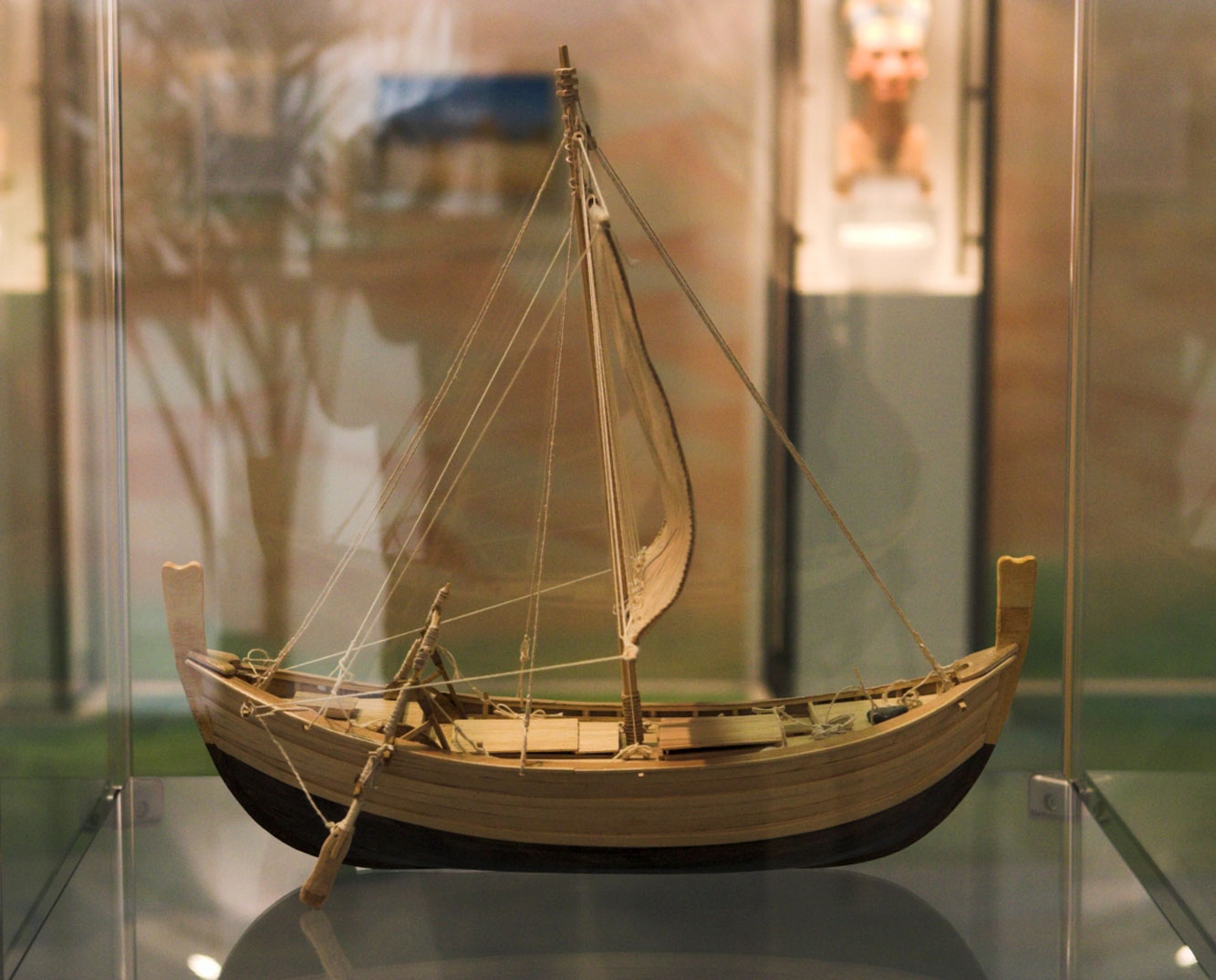
The Uluburun Shipwreck is a Late Bronze Age shipwreck dated to the late 14th century BC, discovered close to the east shore of Uluburun (Grand Cape), Turkey, in the Mediterranean Sea. The shipwreck was discovered in the summer of 1982 by Mehmed Çakir, a local sponge diver from Yalıkavak, a village near Bodrum.
Eleven consecutive campaigns of three to four months' duration took place from 1984 to 1994 totaling 22,413 dives, revealing one of the most spectacular Late Bronze Age assemblages to have emerged from the Mediterranean Sea.
The shipwreck site was discovered in the summer of 1982 due to Mehmet Çakir's sketching of "the metal biscuits with ears" recognized as oxhide ingots. Turkish sponge divers were often consulted by the Institute of Nautical Archaeology's (INA) survey team on how to identify ancient wrecks while diving for sponges. Çakir's findings urged Oğuz Alpözen, Director of the Bodrum Museum of Underwater Archaeology, to send out an inspection team of the Museum and INA archaeologists to locate the wreck site. The inspection team was able to locate several amounts of copper ingots just 50 metres from the shore of Uluburun.
With the evidence provided from the cargo on the ship it can be assumed that the ship set sail from either a Cypriot or Syro-Palestinian port. The Uluburun ship was undoubtedly sailing to the region west of Cyprus, but her ultimate destination can be concluded only from the distribution of objects matching the types carried on board. It has been proposed that ship's destination was a port somewhere in the Aegean Sea. Rhodes, at the time an important redistribution centre for the Aegean, has been suggested as a possible destination. According to the excavators of the shipwreck, the probable final destination of the ship was one of the Mycenaean palaces, in mainland Greece.
Peter Kuniholm of Cornell University was assigned the task of dendrochronological dating in order to obtain a date for the ship. A branch loaded on the ship was determined to exhibit tree-rings as late as 1305 BC; but given that no bark has survived it is impossible to determine if it had further, younger rings. It has been assumed that the ship sank not long after that date. Kuniholm later cautioned that the low quality of the sample does not allow an "especially strong" dating. After a radiocarbon calibration of the entire Anatolian dendrochronological sequence, Kuniholm suggested a new date, ca. 1327 BC.
Manning et al. made Radiocarbon dating tests on several samples of plant material from the site. A sample from the cedar keel of the ship was construed as providing a terminus post quem for the construction phase. Other samples, including perishable items from short-lived species, like rope and dunnage, were construed to have come on board the ship in the phase of the last voyage. The two phases constrained each other, and Bayesian statistics was used to produce date ranges of varying probabilities. The most likely date of the sinking of the ship was rounded up to 1320±15 years.
Based on ceramic evidence, it appears that the Uluburun sank toward the end of the Amarna period, but could not have sunk before the time of Nefertiti due to the unique gold scarab engraved with her name found aboard the ship. For now, a conclusion that the ship sank at the end of the 14th century BC is accepted.
The origins of the objects aboard the ship range geographically from northern Europe to Africa, as far west as Sicily and Sardinia, and as far east as Mesopotamia. They appear to be the products of nine or ten cultures. These proveniences indicate that the Late Bronze Age Aegean was the medium of an international trade perhaps based on royal gift-giving in the Near East.
Hub AI
Uluburun shipwreck AI simulator
(@Uluburun shipwreck_simulator)
Uluburun shipwreck
The Uluburun Shipwreck is a Late Bronze Age shipwreck dated to the late 14th century BC, discovered close to the east shore of Uluburun (Grand Cape), Turkey, in the Mediterranean Sea. The shipwreck was discovered in the summer of 1982 by Mehmed Çakir, a local sponge diver from Yalıkavak, a village near Bodrum.
Eleven consecutive campaigns of three to four months' duration took place from 1984 to 1994 totaling 22,413 dives, revealing one of the most spectacular Late Bronze Age assemblages to have emerged from the Mediterranean Sea.
The shipwreck site was discovered in the summer of 1982 due to Mehmet Çakir's sketching of "the metal biscuits with ears" recognized as oxhide ingots. Turkish sponge divers were often consulted by the Institute of Nautical Archaeology's (INA) survey team on how to identify ancient wrecks while diving for sponges. Çakir's findings urged Oğuz Alpözen, Director of the Bodrum Museum of Underwater Archaeology, to send out an inspection team of the Museum and INA archaeologists to locate the wreck site. The inspection team was able to locate several amounts of copper ingots just 50 metres from the shore of Uluburun.
With the evidence provided from the cargo on the ship it can be assumed that the ship set sail from either a Cypriot or Syro-Palestinian port. The Uluburun ship was undoubtedly sailing to the region west of Cyprus, but her ultimate destination can be concluded only from the distribution of objects matching the types carried on board. It has been proposed that ship's destination was a port somewhere in the Aegean Sea. Rhodes, at the time an important redistribution centre for the Aegean, has been suggested as a possible destination. According to the excavators of the shipwreck, the probable final destination of the ship was one of the Mycenaean palaces, in mainland Greece.
Peter Kuniholm of Cornell University was assigned the task of dendrochronological dating in order to obtain a date for the ship. A branch loaded on the ship was determined to exhibit tree-rings as late as 1305 BC; but given that no bark has survived it is impossible to determine if it had further, younger rings. It has been assumed that the ship sank not long after that date. Kuniholm later cautioned that the low quality of the sample does not allow an "especially strong" dating. After a radiocarbon calibration of the entire Anatolian dendrochronological sequence, Kuniholm suggested a new date, ca. 1327 BC.
Manning et al. made Radiocarbon dating tests on several samples of plant material from the site. A sample from the cedar keel of the ship was construed as providing a terminus post quem for the construction phase. Other samples, including perishable items from short-lived species, like rope and dunnage, were construed to have come on board the ship in the phase of the last voyage. The two phases constrained each other, and Bayesian statistics was used to produce date ranges of varying probabilities. The most likely date of the sinking of the ship was rounded up to 1320±15 years.
Based on ceramic evidence, it appears that the Uluburun sank toward the end of the Amarna period, but could not have sunk before the time of Nefertiti due to the unique gold scarab engraved with her name found aboard the ship. For now, a conclusion that the ship sank at the end of the 14th century BC is accepted.
The origins of the objects aboard the ship range geographically from northern Europe to Africa, as far west as Sicily and Sardinia, and as far east as Mesopotamia. They appear to be the products of nine or ten cultures. These proveniences indicate that the Late Bronze Age Aegean was the medium of an international trade perhaps based on royal gift-giving in the Near East.
Recent media