



Community hub
Recent from talks
Knowledge base stats:
Talk channels stats:
Members stats:
Ur-Nammu
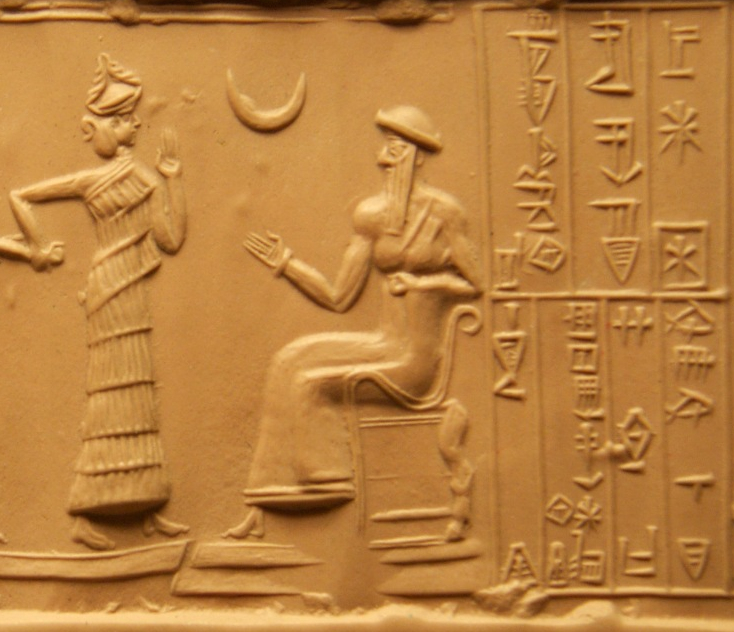
Ur-Nammu (or Ur-Namma, Ur-Engur, Ur-Gur, Sumerian: 𒌨𒀭𒇉; died c. 2094 BC) founded the Sumerian Third Dynasty of Ur, in southern Mesopotamia, following several centuries of Akkadian and Gutian rule. Though he built many temples and canals his main achievement was building the core of the Ur III Empire through military conquest. Ur-Nammu is chiefly remembered today for his legal code, the Code of Ur-Nammu, the oldest known surviving example in the world. He also initiated the construction of the Ziggurat of Ur. He held the titles of "King of Ur" and "King of Sumer and Akkad". His personal goddess was Ninsuna.
According to the Sumerian King List, Ur-Nammu reigned for 18 years. Year-names are known for 17 of these years, but their order is uncertain. One year-name of his reign records the devastation of Gutium, while two years seem to commemorate his legal reforms ("Year in which Ur-Nammu the king put in order the ways [of the people in the country] from below to above", "Year Ur-Nammu made justice in the land").
Among his military exploits were the conquest of Lagash and the defeat of his former masters at Uruk. He was eventually recognized as a significant regional ruler (of Ur, Eridu, and Uruk) at a coronation in Nippur, and is believed to have constructed buildings at Nippur, Larsa, Kish, Adab, and Umma. He was known for restoring the roads and general order after the Gutian period. In the interregnum after the fall of the Akkadian Empire, a number of cities became independent and an area in the northeast came under the control of Elam. Ur-Nammu in his Sumerian language inscriptions reports defeating a coalition of Kutik-Insusinak, Elamite ruler, and some other cities including Tutub and Eshnunna. It has been suggested that this was another name for the Elamite ruler Puzur-Inshushinak, about whom little is known. There is equal support for the idea that Puzur-Inshushinak was contemporary with Akkad ruler Naram-Sin a century earlier.
Ur-Nammu was also responsible for ordering the construction of a number of ziggurats, including the Great Ziggurat of Ur. It has been suggested, based on a much later literary composition, that he was killed in battle after he had been abandoned by his army. He was succeeded by his son Shulgi. One known daughter, Ama-barag, married a local man. The other known daughter was consecrated as the en-priestess of Nanna in Ur, taking the clerical name En-nir-gal-an-na (En-nirgal-ana). Two inscriptions found in Ur read:
" For the goddess Ningal, his [la]dy, or the [li]fe of Ur-Nammu, [m]ighty [man], king] of the lands of Sumer and Akkad, her father, En-nirgal-ana, [e]n of the god Nanna, dedicated (this object) to her"
A later Sumerian literary composition known variously as "The Coronation of Ur-Nammu" and "Ur-Namma D" lists canals built by Ur-Nammu. It is known in three Old Babylonian Period recensions, from Nippur, Ur, and of an unknown provenance. There are a number of known Sumerian literary compositions about Ur-Namma, labeled from A to H. The other important later Sumerian literary work is the "Death of Ur-Nammu" (Ur-Namma A), variously described as a "hymn', "lamentation" or "wisdom". It describes the death, funeral, and passge through the underworld of Ur-Nammu. It is known from about 9 damaged tablets and fragments, held in various museums, which together allow restoration of much of the text. The description of Ur-Nammu's death is damaged, vague, and metaphoric, which has not stopped later scholars from interpreting it to say Ur-Nammu died in battle at the hands of his own troops.
Ur-Nammu is notable for having been one of the few Mesopotamian kings of the third millennium BC who was not deified after his death. This is testified by the posthumous Sumerian literature which never includes the divine determinative before Ur-Nammu's name (this can be seen on the transliterations for the texts on ETCSL), the themes of divine abandonment in "The Death of Ur-Nammu", and the fact that Shulgi promoted his lineage to members of the legendary Uruk dynasty as opposed to Ur-Nammu. While some translations of Sumerian texts had included the divine determinative before Ur-Nammu's name, more recent evidence indicates this was a mistaken addition. Despite this, the belief that the king was deified after death has been expressed just as recently, demonstrating a lack of certainty on this issue (though these were written during the same year as the new interpretations of the evidence and thus could not refer to them). Sharlach has more recently noted that favour for Ur-Nammu not having been deified has been accepted by many scholars.
Whatever the current state of the deification debate, Ur-Nammu was clearly worshiped after his death. The palace at Tummal included funerary chapels for Ur-Nammu (e Tum-ma-al Ur-dNamma) and his wife. His wife is known to have been named SI . A.tum, read as Watartum. Building materials came from as far away as Babylon, Kutha, and Adab. The ki-a-nag, or funerary offerings for Ur III ruler Ur-Nammu were carried out at Tummal. As his grave was not found in Ur, this has sparked speculation he was buried in Tummal.
Hub AI
Ur-Nammu AI simulator
(@Ur-Nammu_simulator)
Ur-Nammu
Ur-Nammu (or Ur-Namma, Ur-Engur, Ur-Gur, Sumerian: 𒌨𒀭𒇉; died c. 2094 BC) founded the Sumerian Third Dynasty of Ur, in southern Mesopotamia, following several centuries of Akkadian and Gutian rule. Though he built many temples and canals his main achievement was building the core of the Ur III Empire through military conquest. Ur-Nammu is chiefly remembered today for his legal code, the Code of Ur-Nammu, the oldest known surviving example in the world. He also initiated the construction of the Ziggurat of Ur. He held the titles of "King of Ur" and "King of Sumer and Akkad". His personal goddess was Ninsuna.
According to the Sumerian King List, Ur-Nammu reigned for 18 years. Year-names are known for 17 of these years, but their order is uncertain. One year-name of his reign records the devastation of Gutium, while two years seem to commemorate his legal reforms ("Year in which Ur-Nammu the king put in order the ways [of the people in the country] from below to above", "Year Ur-Nammu made justice in the land").
Among his military exploits were the conquest of Lagash and the defeat of his former masters at Uruk. He was eventually recognized as a significant regional ruler (of Ur, Eridu, and Uruk) at a coronation in Nippur, and is believed to have constructed buildings at Nippur, Larsa, Kish, Adab, and Umma. He was known for restoring the roads and general order after the Gutian period. In the interregnum after the fall of the Akkadian Empire, a number of cities became independent and an area in the northeast came under the control of Elam. Ur-Nammu in his Sumerian language inscriptions reports defeating a coalition of Kutik-Insusinak, Elamite ruler, and some other cities including Tutub and Eshnunna. It has been suggested that this was another name for the Elamite ruler Puzur-Inshushinak, about whom little is known. There is equal support for the idea that Puzur-Inshushinak was contemporary with Akkad ruler Naram-Sin a century earlier.
Ur-Nammu was also responsible for ordering the construction of a number of ziggurats, including the Great Ziggurat of Ur. It has been suggested, based on a much later literary composition, that he was killed in battle after he had been abandoned by his army. He was succeeded by his son Shulgi. One known daughter, Ama-barag, married a local man. The other known daughter was consecrated as the en-priestess of Nanna in Ur, taking the clerical name En-nir-gal-an-na (En-nirgal-ana). Two inscriptions found in Ur read:
" For the goddess Ningal, his [la]dy, or the [li]fe of Ur-Nammu, [m]ighty [man], king] of the lands of Sumer and Akkad, her father, En-nirgal-ana, [e]n of the god Nanna, dedicated (this object) to her"
A later Sumerian literary composition known variously as "The Coronation of Ur-Nammu" and "Ur-Namma D" lists canals built by Ur-Nammu. It is known in three Old Babylonian Period recensions, from Nippur, Ur, and of an unknown provenance. There are a number of known Sumerian literary compositions about Ur-Namma, labeled from A to H. The other important later Sumerian literary work is the "Death of Ur-Nammu" (Ur-Namma A), variously described as a "hymn', "lamentation" or "wisdom". It describes the death, funeral, and passge through the underworld of Ur-Nammu. It is known from about 9 damaged tablets and fragments, held in various museums, which together allow restoration of much of the text. The description of Ur-Nammu's death is damaged, vague, and metaphoric, which has not stopped later scholars from interpreting it to say Ur-Nammu died in battle at the hands of his own troops.
Ur-Nammu is notable for having been one of the few Mesopotamian kings of the third millennium BC who was not deified after his death. This is testified by the posthumous Sumerian literature which never includes the divine determinative before Ur-Nammu's name (this can be seen on the transliterations for the texts on ETCSL), the themes of divine abandonment in "The Death of Ur-Nammu", and the fact that Shulgi promoted his lineage to members of the legendary Uruk dynasty as opposed to Ur-Nammu. While some translations of Sumerian texts had included the divine determinative before Ur-Nammu's name, more recent evidence indicates this was a mistaken addition. Despite this, the belief that the king was deified after death has been expressed just as recently, demonstrating a lack of certainty on this issue (though these were written during the same year as the new interpretations of the evidence and thus could not refer to them). Sharlach has more recently noted that favour for Ur-Nammu not having been deified has been accepted by many scholars.
Whatever the current state of the deification debate, Ur-Nammu was clearly worshiped after his death. The palace at Tummal included funerary chapels for Ur-Nammu (e Tum-ma-al Ur-dNamma) and his wife. His wife is known to have been named SI . A.tum, read as Watartum. Building materials came from as far away as Babylon, Kutha, and Adab. The ki-a-nag, or funerary offerings for Ur III ruler Ur-Nammu were carried out at Tummal. As his grave was not found in Ur, this has sparked speculation he was buried in Tummal.