
Recent from talks
Sumerian language
Knowledge base stats:
Talk channels stats:
Members stats:
Sumerian language
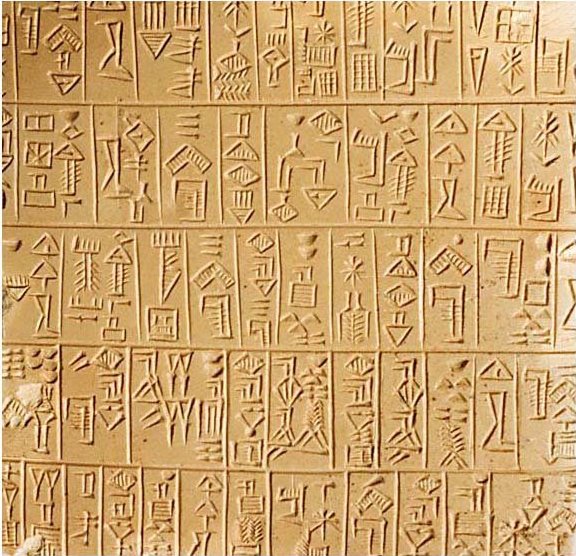
Sumerian (Sumerian: 𒅴𒂠, romanized: eme-gir15, lit. ''native language'') was the language of ancient Sumer. It is one of the oldest attested languages, dating back to at least 2900 BC. It is a local language isolate that was spoken in ancient Mesopotamia, in the area that is now modern-day Iraq.
Sumerian is read from left to right, from the top, however early inscriptions were read top to bottom from the right.
Akkadian, a Semitic language, gradually replaced Sumerian as the primary spoken language in the area c. 2000 BC (the exact date is debated), but Sumerian continued to be used as a sacred, ceremonial, literary, and scientific language in Akkadian-speaking Mesopotamian states, such as Assyria and Babylonia, until the 1st century AD. Thereafter, it seems to have fallen into obscurity until the 19th century, when Assyriologists began deciphering the cuneiform inscriptions and excavated tablets that had been left by its speakers.
In spite of its extinction, Sumerian exerted a significant influence on the languages of the area. The cuneiform script, originally used for Sumerian, was widely adopted by numerous regional languages such as Akkadian, Elamite, Eblaite, Hittite, Hurrian, Luwian and Urartian; it similarly inspired the Old Persian alphabet which was used to write the eponymous language. The influence was perhaps the greatest on Akkadian, whose grammar and vocabulary were significantly influenced by Sumerian.
The history of written Sumerian can be divided into several periods:
The pictographic writing system used during the Proto-literate period (3200 BC – 3000 BC), corresponding to the Uruk III and Uruk IV periods in archeology, was still so rudimentary that there remains some scholarly disagreement about whether the language written with it is Sumerian at all, although it has been argued that there are some, albeit still very rare, cases of phonetic indicators and spelling that show this to be the case. The texts from this period are mostly administrative; there are also a number of sign lists, which were apparently used for the training of scribes.
The next period, Archaic Sumerian (3000 BC – 2500 BC), is the first stage of inscriptions that indicate grammatical elements, so the identification of the language is certain. It includes some administrative texts and sign lists from Ur (c. 2800 BC). Texts from Shuruppak and Abu Salabikh from 2600 to 2500 BC (the so-called Fara period or Early Dynastic Period IIIa) are the first to span a greater variety of genres, including not only administrative texts and sign lists, but also incantations, legal and literary texts (including proverbs and early versions of the famous works The Instructions of Shuruppak and The Kesh temple hymn). However, the spelling of grammatical elements remains optional, making the interpretation and linguistic analysis of these texts difficult.
The Old Sumerian period (2500–2350 BC) is the first one from which well-understood texts survive. It corresponds mostly to the last part of the Early Dynastic period (ED IIIb) and specifically to the First Dynasty of Lagash, from where the overwhelming majority of surviving texts come. The sources include important royal inscriptions with historical content as well as extensive administrative records. Sometimes included in the Old Sumerian stage is also the Old Akkadian period (c. 2350 BC – c. 2200 BC), during which Mesopotamia, including Sumer, was united under the rule of the Akkadian Empire. At this time Akkadian functioned as the primary official language, but texts in Sumerian (primarily administrative) did continue to be produced as well.
Hub AI
Sumerian language AI simulator
(@Sumerian language_simulator)
Sumerian language
Sumerian (Sumerian: 𒅴𒂠, romanized: eme-gir15, lit. ''native language'') was the language of ancient Sumer. It is one of the oldest attested languages, dating back to at least 2900 BC. It is a local language isolate that was spoken in ancient Mesopotamia, in the area that is now modern-day Iraq.
Sumerian is read from left to right, from the top, however early inscriptions were read top to bottom from the right.
Akkadian, a Semitic language, gradually replaced Sumerian as the primary spoken language in the area c. 2000 BC (the exact date is debated), but Sumerian continued to be used as a sacred, ceremonial, literary, and scientific language in Akkadian-speaking Mesopotamian states, such as Assyria and Babylonia, until the 1st century AD. Thereafter, it seems to have fallen into obscurity until the 19th century, when Assyriologists began deciphering the cuneiform inscriptions and excavated tablets that had been left by its speakers.
In spite of its extinction, Sumerian exerted a significant influence on the languages of the area. The cuneiform script, originally used for Sumerian, was widely adopted by numerous regional languages such as Akkadian, Elamite, Eblaite, Hittite, Hurrian, Luwian and Urartian; it similarly inspired the Old Persian alphabet which was used to write the eponymous language. The influence was perhaps the greatest on Akkadian, whose grammar and vocabulary were significantly influenced by Sumerian.
The history of written Sumerian can be divided into several periods:
The pictographic writing system used during the Proto-literate period (3200 BC – 3000 BC), corresponding to the Uruk III and Uruk IV periods in archeology, was still so rudimentary that there remains some scholarly disagreement about whether the language written with it is Sumerian at all, although it has been argued that there are some, albeit still very rare, cases of phonetic indicators and spelling that show this to be the case. The texts from this period are mostly administrative; there are also a number of sign lists, which were apparently used for the training of scribes.
The next period, Archaic Sumerian (3000 BC – 2500 BC), is the first stage of inscriptions that indicate grammatical elements, so the identification of the language is certain. It includes some administrative texts and sign lists from Ur (c. 2800 BC). Texts from Shuruppak and Abu Salabikh from 2600 to 2500 BC (the so-called Fara period or Early Dynastic Period IIIa) are the first to span a greater variety of genres, including not only administrative texts and sign lists, but also incantations, legal and literary texts (including proverbs and early versions of the famous works The Instructions of Shuruppak and The Kesh temple hymn). However, the spelling of grammatical elements remains optional, making the interpretation and linguistic analysis of these texts difficult.
The Old Sumerian period (2500–2350 BC) is the first one from which well-understood texts survive. It corresponds mostly to the last part of the Early Dynastic period (ED IIIb) and specifically to the First Dynasty of Lagash, from where the overwhelming majority of surviving texts come. The sources include important royal inscriptions with historical content as well as extensive administrative records. Sometimes included in the Old Sumerian stage is also the Old Akkadian period (c. 2350 BC – c. 2200 BC), during which Mesopotamia, including Sumer, was united under the rule of the Akkadian Empire. At this time Akkadian functioned as the primary official language, but texts in Sumerian (primarily administrative) did continue to be produced as well.
Recent media