Hubbry Logo
VajazzleVajazzleMain
Open search
Vajazzle
Community hub
Vajazzle
logo
8 pages, 0 posts
0 subscribers
Be the first to start a discussion here.
Vajazzle
Vajazzle
from Wikipedia
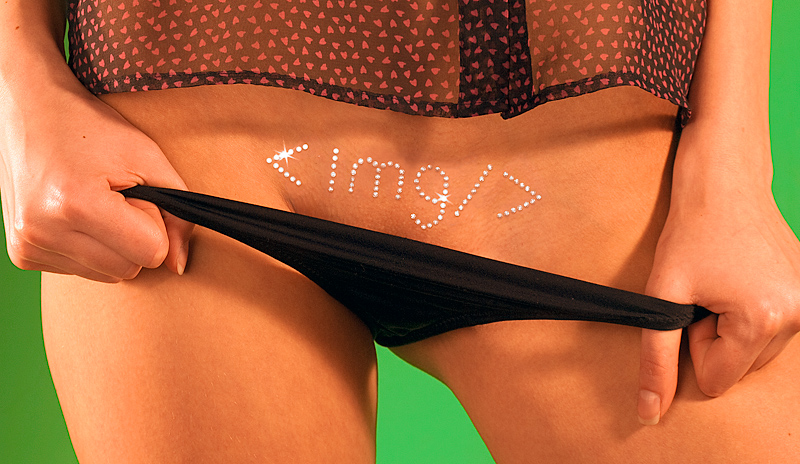
A vajazzle of an HTML tag

A vajazzle, also occasionally spelled vagazzle and sometimes nicknamed glitter pubes, is a form of genital decoration. The word is a portmanteau of vajayjay[1] (a euphemism for vagina)[2] and bedazzle.[a] The process of creating a vajazzle is known as vajazzling. It involves the application of crystal ornaments onto the shaved mons pubis of a woman.

Vajazzling is typically carried out at beauty salons. Initially any pubic hair is removed from the mons pubis, typically by a bikini wax, after which rhinestones, Swarovski crystals or gemstones are glued onto the area.[3] The result can last for up to seven days. The purpose of vajazzling is the visual aesthetic. There are no benefits in terms of sexual pleasure. Bruising or cuts can occur from the crystals during sexual intercourse. If glue is applied too soon after the pubic hair removal, it can cause an allergic reaction[4] or bacterial infection.[3] Vajazzling can also increase the risks of infection if it is not properly cleaned.[5]

History

[edit]

Vajazzling was popularized by the American actress Jennifer Love Hewitt, who devoted a chapter in her book The Day I Shot Cupid to vajazzling.[1] During a promotional interview on Lopez Tonight in 2010, she encouraged the female members of her audience "to vajazzle their vajayjays".[6] In the United Kingdom, this concept was popularized when beautician Amy Childs appeared in a television show The Only Way Is Essex in 2010.[7] By 2011, an Internet rating site for vajazzling called Rate My Vajazzle had been set up.[8][9]

See also

[edit]

Notes

[edit]

References

[edit]
[edit]
Revisions and contributorsEdit on WikipediaRead on Wikipedia
from Grokipedia
Vajazzling is a cosmetic procedure in which small crystals, rhinestones, gems, or are applied with to a woman's shaved or waxed pubic area, often forming designs such as hearts or . The term, a portmanteau of "" and "bedazzle," emerged in the and initially referred to various forms of genital decoration including piercings and tattoos before focusing on crystalline embellishments. The practice gained mainstream prominence in January 2010 when actress Jennifer Love Hewitt described it on Lopez Tonight, promoting a chapter in her book The Day I Shot Cupid: Hello, Better Love! Hello, Bigger Boobs! where she detailed decorating her pubic mound with Swarovski crystals after a bikini wax, calling it a "sparkly secret" that lasts up to five days and costs around $75. Hewitt's appearance sparked widespread media coverage, including TV segments and articles, turning vajazzling into a short-lived fad associated with early 2010s celebrity culture and low-rise fashion trends. New York City's Completely Bare spa, founded by Cindy Barshop, became a key provider under the name "Completely Bare With a Flair," attracting hundreds of clients weekly at its peak and contributing to the trend's commercialization. In the , vajazzling spread in 2011 through star on , where she demonstrated the procedure and earned the nickname "Vajazzle Queen," further boosting its popularity across the Atlantic. Though claims of earlier origins exist—such as body jewelry designer Arezoo Kaviani's work from the late 1990s—the 2010 surge marked its defining moment as a playful, empowering tied to post-waxing . By the mid-2010s, interest waned amid shifting cultural attitudes toward and wellness movements, but it persists for special occasions like weddings or as a novelty service in select salons.

Definition and Overview

Definition

Vajazzling is a cosmetic practice involving the temporary decoration of the pubic mound with non-permanent embellishments such as jewels, crystals, glitter, or rhinestones, typically applied to smooth skin following like or . The term itself is a portmanteau of "" and "bedazzle," reflecting its inspiration from the act of adorning intimate areas with sparkling elements to create eye-catching designs. The primary purpose of vajazzling is aesthetic enhancement, aimed at boosting personal , adding a playful or festive element to one's appearance, and serving as a form of intimate or self-expression, often during special occasions, typically lasting 3 to 7 days. It is likened to "bedazzling" other body parts but focuses on the area for a whimsical, bling-filled look without intending to provide . Unlike permanent body modifications such as tattoos or piercings, vajazzling uses skin-safe adhesives for short-term application, allowing easy removal after a few days to a week. This practice gained brief mainstream attention through celebrity endorsements in the early .

Terminology and Variations

The term "vajazzle" originated as a portmanteau combining "" with "bedazzle," referring to the act of embellishing something with sparkling decorations. It first appeared in during the early , initially describing various forms of genital adornment such as piercings, tattoos, or even references on erotic websites, before evolving to specifically denote the application of or decorations on the pubic area. Over time, the terminology has expanded to include related terms like "vajazzling," which denotes the process or practice itself, often involving the adhesion of rhinestones, crystals, or to the skin. Variations in style frequently feature themed designs, such as hearts, , , or custom patterns like swirls, allowing for personalized aesthetic expressions that last about a week before removal. Colloquial synonyms include " crystals," emphasizing the sparkling, jewel-like elements applied post-depilation. Modern adaptations have introduced DIY approaches, utilizing temporary tattoos, body-safe , or self-adhesive gem stickers for at-home application, making the trend more accessible without professional services. Vajazzling remains predominantly a phenomenon within Western beauty culture, particularly in the United States and United Kingdom, where it gained traction through media and celebrity endorsements in the 2010s. Its influence has extended to broader pop culture trends, such as festival body glitter applications at events like Coachella, which echo the emphasis on temporary, shimmering pubic or body adornments as a form of playful self-expression. While less common in non-Western contexts, adaptations appear in global media discussions of beauty rituals, often tied to bikini waxing practices in regions with similar grooming norms.

Procedure

Preparation

The preparation for vajazzling begins with ensuring the pubic area is completely hair-free to provide a smooth canvas for the decorations, typically achieved through a full or Brazilian performed by a professional esthetician. Alternatives such as or sugaring may be used for those who prefer to avoid , though is recommended for longer-lasting smoothness. Prior to , gently exfoliate the area 24-48 hours in advance using a mild scrub to remove dead skin cells and facilitate , but avoid exfoliation on the day of the procedure. Following hair removal, allow the skin to heal for 24-48 hours to reduce irritation and redness before applying any decorations, during which time the area should be kept clean and dry. Hygiene involves cleansing the bikini area with a gentle, fragrance-free to remove oils, sweat, and residues that could interfere with , followed by patting dry. Exfoliation can resume 2-3 days post-wax if needed to prevent ingrown hairs, using soft tools like a loofah or chemical exfoliants with AHAs in moderation. Essential tools and materials include , skin-safe adhesive specifically formulated for temporary body application, which is dermatologist-tested to minimize irritation. Decorative elements consist of small, flat-backed gems or crystals, often Swarovski-quality for brilliance, along with optional design templates such as hearts or patterns to guide placement. These can be obtained through at spas, where estheticians handle the process, or via at-home kits for DIY application, though professionals advise beginners to opt for salon treatments to ensure proper hygiene and adhesion.

Application

The application of a vajazzle involves affixing decorative elements, such as or rhinestones, to the pubic area using a skin-safe , typically after the skin has been prepared through methods like . The process begins by applying a thin layer of , such as body adhesive or glue, directly to the clean, dry in the desired pattern outline. Individual gems are then arranged onto the using for precision, starting from the center and working outward to form designs like hearts, bows, or custom motifs. The gems are pressed firmly into place with a tool or finger to ensure adhesion, and the area is left undisturbed for 10-20 minutes to allow the to set fully. An optional clear sealant, such as a top coat, may be applied over the design to enhance durability and waterproofing. Alternatively, pre-designed crystal tattoos or adhesive-backed strips can be used for simpler application: the backing is peeled off, and the entire motif is pressed onto the skin for 10 seconds before removing the transfer sheet and pressing again to secure. In professional settings, such as salons or med spas, the procedure is performed by trained estheticians and typically takes 15-30 minutes, allowing for intricate, custom designs using high-quality crystals. These designs generally last 3-7 days, varying based on factors like , sweating, and skin type, though some sources report up to 10 days with proper avoidance of oils or . For DIY applications, home kits often include pre-cut stencils, adhesive, and gems for straightforward placement, enabling users to achieve basic patterns in under 10 minutes without professional assistance.

History

Origins

Vajazzling is often credited to Cindy Barshop, the owner of the Completely Bare spa in , who claims to have introduced the practice in the early 2000s as an extension of her spa's waxing services. Initially offered under the name "Completely Bare with a Flair," it involved applying small, self-adhesive crystals to the pubic area following a Brazilian wax to provide a decorative, temporary embellishment. Barshop's innovation built on her spa's focus on intimate grooming, charging clients between $65 and $105 for the procedure, which typically lasted a few days. However, the origins are disputed, with body jewelry designer Arezoo Kaviani claiming to have pioneered similar genital decorations in the late . The practice emerged during a period of expanding culture and increasing popularity of trends in the early 2000s, particularly after bikini wax gained traction in the late . Vajazzling served as a novel "something special" for clients seeking to enhance their post-wax appearance, aligning with broader shifts toward personalized beauty treatments in urban salons. The earliest documented reference to such crystal application appeared in a 2001 New York Observer article, describing it as a gimmick ripe for New York women experimenting with intimate . Prior to 2010, vajazzling remained largely obscure, confined to niche beauty circles within high-end spas like Completely Bare, with minimal media attention throughout most of the decade. It was not yet a standalone trend but rather an add-on service appreciated by a select clientele interested in discreet glamour.

Popularization and Peak

The popularization of vajazzling gained significant momentum in early , largely catalyzed by actress Jennifer Love Hewitt's endorsement. In her dating advice book The Day I Shot Cupid, published in March , Hewitt dedicated a chapter to the practice, describing it as a fun way to enhance one's intimate area after a breakup, likening the result to "a little down there." This was preceded by her January appearance on , where she enthusiastically explained the trend to host , sparking widespread curiosity and a surge in searches for the term. The trend reached its peak between 2010 and 2012, marked by high demand at salons and extensive media coverage. At Completely Bare, the New York City spa where vajazzling originated as "Completely Bare with a Flair," hundreds of women sought the $75 service weekly during this period, often following Brazilian waxes. In the UK, the practice exploded in popularity after reality TV star Amy Childs featured it on The Only Way Is Essex in late 2010, leading to a reported sales boom of over 350,000 vajazzle kits by her associated brand. Mainstream outlets amplified the buzz, with Time magazine covering Hewitt's endorsement in March 2010 as a "new trend in ladies' intimate fashion," while late-night TV parodies, such as Jennifer Love Hewitt's 2012 appearance on Conan where she humorously "vajazzled" host Conan O'Brien's face, further embedded it in pop culture. By the mid-2010s, vajazzling had largely faded from prominence, influenced by evolving beauty standards emphasizing natural and holistic wellness. Spa owner Cindy Barshop noted a decline around 2017, attributing it to a broader feminist shift toward and away from elaborate grooming rituals. Though brief resurgences occurred in the amid Y2K fashion revivals, the practice remained niche, with salons reporting only occasional requests for special events like weddings.

Cultural Impact

Celebrity and Media Influence

The popularity of vajazzling gained significant traction through celebrity endorsements, most notably from actress , who popularized the trend in 2010 via her book The Day I Shot Cupid: Hello, My Name Is Jennifer Love Hewitt and I'm a Love-aholic and an interview on , where she described applying crystals to the pubic area as a post-breakup confidence booster. Hewitt reinforced this during a 2012 appearance on Conan, likening it to "having a sparkly secret in your pants" and confirming she still practiced it for special occasions. Reality television further amplified its visibility, as seen with Cindy Barshop, a cast member on The Real Housewives of , who promoted vajazzling through her Completely Bare spas and on-air discussions starting in 2010. Media outlets portrayed vajazzling as both an empowering aesthetic choice and a campy , contributing to its cultural footprint. Cosmopolitan featured explanatory pieces like "What Is Vajazzling," framing it as a glamorous, customizable decoration for the bikini line akin to jewelry for intimate areas, often tied to events like date nights or vacations. Vogue contextualized it within genital beautification trends in a 2014 article on vajacials, noting its role in the evolving spa industry for enhancing personal sensuality. Satirical takes emerged in comedy, including the 2013 parody "NuvaBling," which mocked the concept through a fictional jeweled , highlighting its perceived excess. Vajazzling's pop culture legacy endures in nostalgia trends, evoking the quirky boldness of beauty fads amid Y2K revivals. Beauty resources have observed its resurgence, with modern kits featuring designs like hearts and bows gaining popularity for their playful, era-specific vibe. This positions it as a lighthearted emblem of celebrity-fueled experimentation, occasionally revisited in media retrospectives on early-aughts glamour.

Societal Reception

Vajazzling garnered positive reception in and wellness circles as a playful avenue for self-expression and enhancing body confidence, particularly during its heyday when personalization in grooming became a hallmark of . Proponents viewed it as a whimsical way to celebrate and boost , aligning with broader cultural shifts toward individualized beauty rituals that encouraged women to adorn their bodies on their own terms. Criticisms, however, centered on its role in perpetuating the of women's bodies, reinforcing ideals of hairlessness, and turning intimate areas into commercialized spectacles. Feminist analyses positioned vajazzling within neoliberal and post-feminist frameworks that commodify the for aesthetic enhancement, often at the expense of and in service to patriarchal , as seen in discussions of "designer vagina" trends. Over time, societal views have shifted toward ironic nostalgia for the trend's excesses, especially as movements gained traction, favoring natural over embellishment. In contemporary contexts, some reinterpretations link vajazzling to inclusive beauty practices that embrace diverse expressions of self, though its popularity has largely waned in favor of holistic wellness approaches.

Health and Safety

Potential Risks

Vajazzling, which typically involves applying adhesive-backed gems to the freshly waxed pubic area, can lead to skin irritation due to allergic reactions to the adhesives or metals in the gems. in the genital region may manifest as redness, itching, swelling, or blisters, as the sensitive vulvar skin is particularly prone to such responses from allergens like fragrances or preservatives in adhesives. Similarly, or other metals in decorative gems can trigger in sensitized individuals, exacerbating irritation in this delicate area. The procedure heightens infection risks, particularly following waxing, which creates micro-abrasions that leave the skin vulnerable to bacteria such as or group A . Unclean application tools or gems can introduce pathogens directly, while the post-wax state increases susceptibility to or other infections. Additionally, the micro-tears from waxing may heighten the risk of contracting sexually transmitted infections (STIs) like or human papillomavirus (HPV). removal practices, including waxing, have been associated with elevated risk of urinary tract infections (UTIs) and vulvovaginal infections such as . Physical complications often arise from the adornments themselves, including exacerbated ingrown hairs where gem designs cover or obstruct hair follicles, promoting bacterial trapping and . Waxing alone frequently causes , presenting as erythematous papules or pustules, and the added gems may intensify this by creating points during movement or clothing contact, leading to discomfort or chafing. Adhesive residue left on the skin can further contribute to by irritating hair follicles. Individuals with sensitive skin or conditions like eczema face heightened unsuitability for vajazzling, as the procedure can worsen dermatitis through prolonged moisture exposure or adhesive contact, increasing risks of erosion or secondary infections. Low-quality adhesives may rarely cause chemical irritation resembling burns, though this is less common than allergic responses.

Aftercare and Recommendations

Following the application of a vajazzle, immediate aftercare is essential to minimize and ensure the design adheres properly while protecting the sensitive vulvar . Individuals should avoid tight clothing, , hot showers, excessive sweating, , and oil-based products for at least 24-48 hours to prevent premature detachment of or increased risk of . Gentle cleansing with warm and fragrance-free soap, without scrubbing, is recommended, followed by patting the area dry to maintain cleanliness and reduce moisture buildup. Monitoring for signs of redness, itching, or unusual discomfort is advised, with application of gel if mild occurs, and consultation with a healthcare professional if symptoms persist. For removal, which typically occurs after 3-7 days or when the design begins to loosen, a gentle approach is crucial to avoid skin tears or further irritation in the delicate bikini area. Soak the area with a skin-safe emollient like or a commercial adhesive remover for several minutes to soften the bond, then peel the crystals off slowly at a low while supporting the surrounding with your free hand. Afterward, cleanse the area thoroughly with mild and warm to remove any residue, and apply a to restore hydration and soothe the . General recommendations emphasize selecting high-quality, skin-safe materials to reduce potential allergic reactions or complications. Opt for , salon-grade adhesives and crystals, such as those using medical-grade formulations, and always choose a reputable professional service for application, particularly for first-time experiences. Perform a on a less sensitive area of 24-48 hours prior to application to check for allergies, and follow all provider-specific instructions for optimal safety. loose, breathable post-procedure to promote airflow and minimize friction.

References

Add your contribution
Related Hubs
User Avatar
No comments yet.