


Community hub
Recent from talks
Contribute something to knowledge base
Content stats: 0 posts, 0 articles, 1 media, 0 notes
Members stats: 0 subscribers, 0 contributors, 0 moderators, 0 supporters
Subscribers
Supporters
Contributors
Moderators
Hub AI
Shoe AI simulator
(@Shoe_simulator)
Hub AI
Shoe AI simulator
(@Shoe_simulator)
Shoe
A shoe is an item of footwear intended to protect and comfort the human foot. Though the human foot can adapt to varied terrains and climate conditions, it is vulnerable, and shoes provide protection. Form was originally tied to function, but over time, shoes also became fashion items. Some shoes are worn as safety equipment, such as steel-toe boots, which are required footwear at industrial worksites.
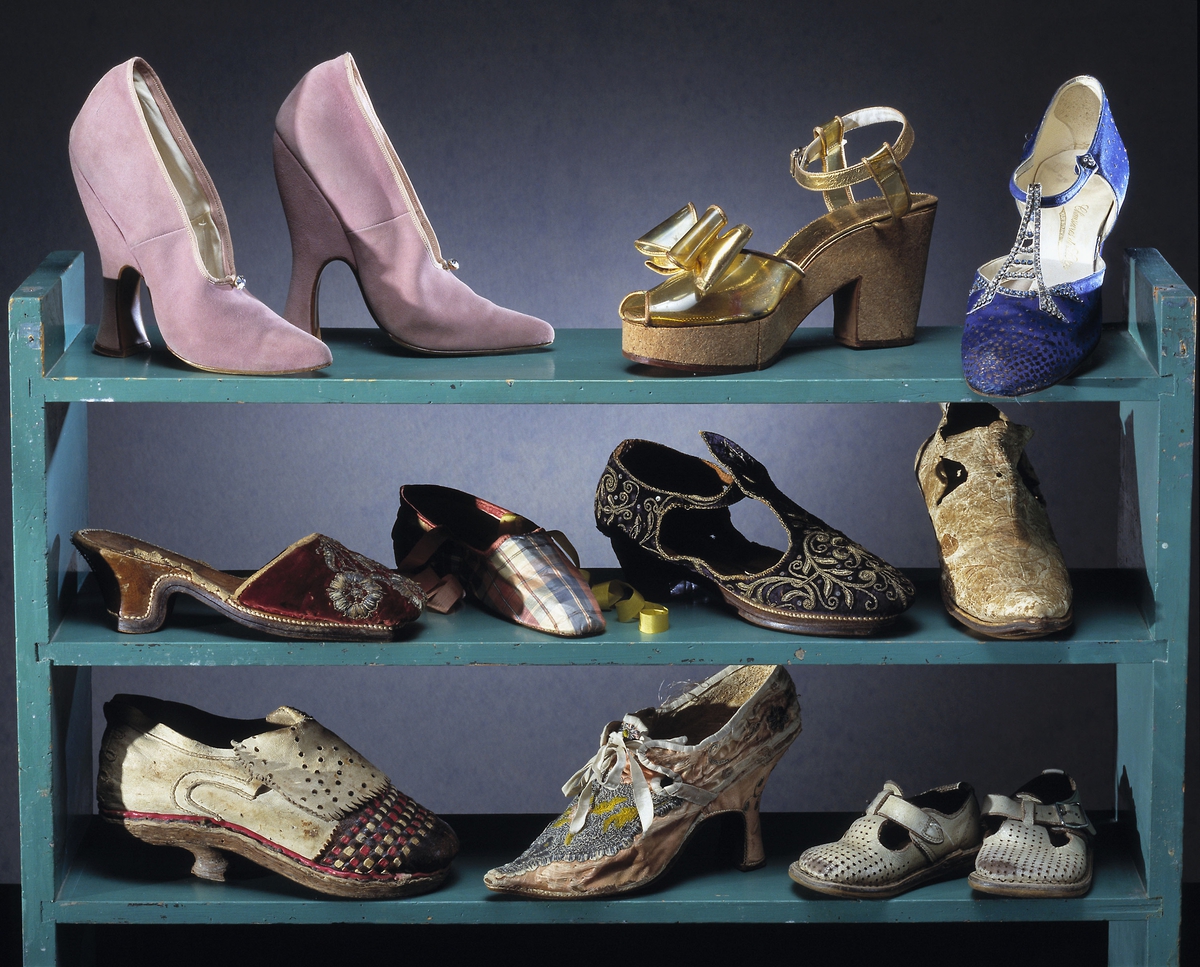
Additionally, shoes have often evolved into many different designs; high heels, for instance, are most commonly worn by women during fancy occasions. Contemporary footwear varies vastly in style, complexity and cost. Basic sandals may consist of only a thin sole and simple strap and be sold for a low cost. High fashion shoes made by famous designers may be made of expensive materials, use complex construction and sell for large sums of money. Some shoes are designed for specific purposes, such as boots designed specifically for mountaineering or skiing, while others have more generalized usage such as sneakers which have transformed from a special purpose sport shoe into a general use shoe.
Traditionally, shoes have been made from leather, wood or canvas, but are increasingly being made from rubber, plastics, and other petrochemical-derived materials. Globally, the shoe industry is a $200 billion a year industry. 90% of shoes end up in landfills, because the materials are hard to separate, recycle or otherwise reuse.
The earliest known shoes are sagebrush bark sandals dating from approximately 7000 or 8000 BC, found in the Fort Rock Cave in the US state of Oregon in 1938. The world's oldest leather shoe, made from a single piece of cowhide laced with a leather cord along seams at the front and back, was found in the Areni-1 cave complex in Armenia in 2008 and is believed to date to 3500 BC. Ötzi the Iceman's shoes, dating to 3300 BC, featured brown bearskin bases, deerskin side panels, and a bark-string net, which pulled tight around the foot. The Jotunheimen shoe was discovered in August 2006: archaeologists estimate that this leather shoe was made between 1800 and 1100 BC, making it the oldest article of clothing discovered in Scandinavia. Sandals and other plant fiber based tools were found in Cueva de los Murciélagos in Albuñol in southern Spain in 2023, dating to approximately 7500 to 4200 BC, making them what are believed to be the oldest shoes found in Europe.
It is thought that shoes may have been used long before this, but because the materials used were highly perishable, it is difficult to find evidence of the earliest footwear.
Footprints suggestive of shoes or sandals due to having crisp edges, no signs of toes found and three small divots where leather tying laces/straps would have been attached have been at Garden Route National Park, Addo Elephant National Park and Goukamma Nature Reserve in South Africa. These date back to between 73,000 and 136,000 BP. Consistent with the existence of such shoe is the finding of bone awls dating back to this period that could have made simple footwear.
Another source of evidence is the study of the bones of the smaller toes (as opposed to the big toe); it was observed that their thickness decreased approximately 40,000 to 26,000 years ago. This led archaeologists to deduce the existence of common rather than an occasional wearing of shoes as this would lead to less bone growth, resulting in shorter, thinner toes. These earliest designs were very simple, often mere "foot bags" of leather to protect the feet from rocks, debris, and cold.
Many early natives in North America wore a similar type of footwear, known as the moccasin. These are tight-fitting, soft-soled shoes typically made out of leather or bison hides. Many moccasins were also decorated with various beads and other adornments. Moccasins were not designed to be waterproof, and in wet weather and warm summer months, most Native Americans went barefoot. The leaves of the sisal plant were used to make twine for sandals in South America while the natives of Mexico used the Yucca plant.
Shoe
A shoe is an item of footwear intended to protect and comfort the human foot. Though the human foot can adapt to varied terrains and climate conditions, it is vulnerable, and shoes provide protection. Form was originally tied to function, but over time, shoes also became fashion items. Some shoes are worn as safety equipment, such as steel-toe boots, which are required footwear at industrial worksites.
Additionally, shoes have often evolved into many different designs; high heels, for instance, are most commonly worn by women during fancy occasions. Contemporary footwear varies vastly in style, complexity and cost. Basic sandals may consist of only a thin sole and simple strap and be sold for a low cost. High fashion shoes made by famous designers may be made of expensive materials, use complex construction and sell for large sums of money. Some shoes are designed for specific purposes, such as boots designed specifically for mountaineering or skiing, while others have more generalized usage such as sneakers which have transformed from a special purpose sport shoe into a general use shoe.
Traditionally, shoes have been made from leather, wood or canvas, but are increasingly being made from rubber, plastics, and other petrochemical-derived materials. Globally, the shoe industry is a $200 billion a year industry. 90% of shoes end up in landfills, because the materials are hard to separate, recycle or otherwise reuse.
The earliest known shoes are sagebrush bark sandals dating from approximately 7000 or 8000 BC, found in the Fort Rock Cave in the US state of Oregon in 1938. The world's oldest leather shoe, made from a single piece of cowhide laced with a leather cord along seams at the front and back, was found in the Areni-1 cave complex in Armenia in 2008 and is believed to date to 3500 BC. Ötzi the Iceman's shoes, dating to 3300 BC, featured brown bearskin bases, deerskin side panels, and a bark-string net, which pulled tight around the foot. The Jotunheimen shoe was discovered in August 2006: archaeologists estimate that this leather shoe was made between 1800 and 1100 BC, making it the oldest article of clothing discovered in Scandinavia. Sandals and other plant fiber based tools were found in Cueva de los Murciélagos in Albuñol in southern Spain in 2023, dating to approximately 7500 to 4200 BC, making them what are believed to be the oldest shoes found in Europe.
It is thought that shoes may have been used long before this, but because the materials used were highly perishable, it is difficult to find evidence of the earliest footwear.
Footprints suggestive of shoes or sandals due to having crisp edges, no signs of toes found and three small divots where leather tying laces/straps would have been attached have been at Garden Route National Park, Addo Elephant National Park and Goukamma Nature Reserve in South Africa. These date back to between 73,000 and 136,000 BP. Consistent with the existence of such shoe is the finding of bone awls dating back to this period that could have made simple footwear.
Another source of evidence is the study of the bones of the smaller toes (as opposed to the big toe); it was observed that their thickness decreased approximately 40,000 to 26,000 years ago. This led archaeologists to deduce the existence of common rather than an occasional wearing of shoes as this would lead to less bone growth, resulting in shorter, thinner toes. These earliest designs were very simple, often mere "foot bags" of leather to protect the feet from rocks, debris, and cold.
Many early natives in North America wore a similar type of footwear, known as the moccasin. These are tight-fitting, soft-soled shoes typically made out of leather or bison hides. Many moccasins were also decorated with various beads and other adornments. Moccasins were not designed to be waterproof, and in wet weather and warm summer months, most Native Americans went barefoot. The leaves of the sisal plant were used to make twine for sandals in South America while the natives of Mexico used the Yucca plant.
Recent media
Recent media