
Recent from talks
Vichy
Knowledge base stats:
Talk channels stats:
Members stats:
Vichy
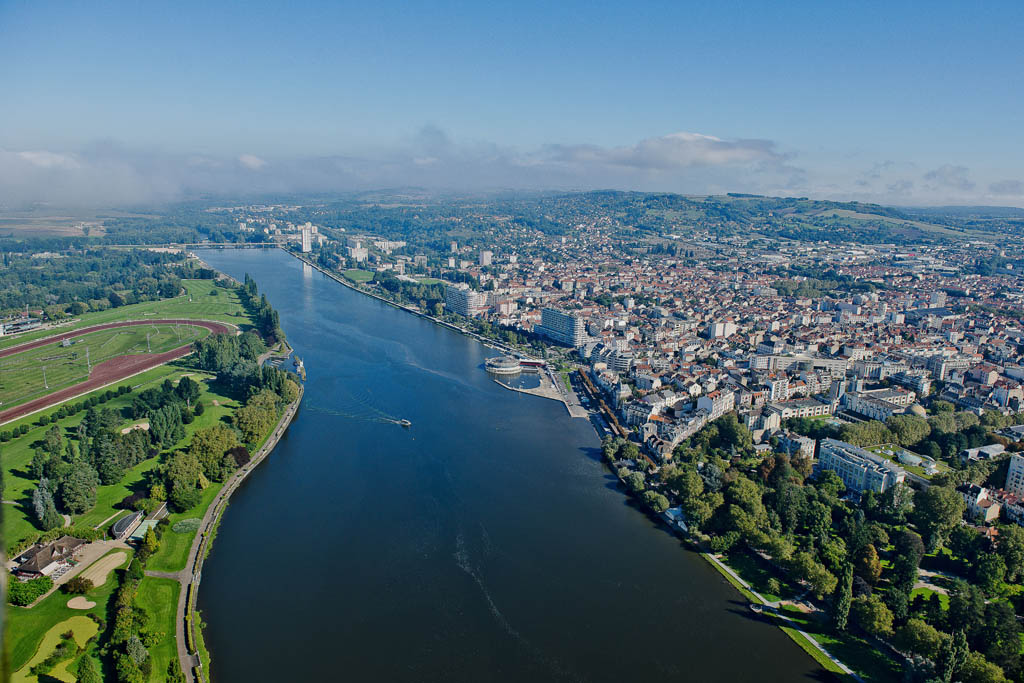
Vichy (/ˈvɪʃi, ˈviːʃi/, French: [viʃi] ⓘ; Occitan: Vichèi [viˈtʃɛj]) is a city in the central French department of Allier. Located on the Allier river, it is a major spa and resort town and during World War II was the capital of Vichy France. As of 2021, Vichy has a population of 25,789.
Known for its mineral springs since the Roman times, Vichy had become a major destination for the French nobility and the wealthy by the late 18th century. The town developed further under the patronage of Napoleon III. Following the 1940 armistice, the pro-German collaborationist government headed by Philippe Pétain was set up at Vichy, which remained the de facto capital of the French rump state for the next four years. After the war, the city experienced a period of great prosperity but went into decline from the 1960s.
In 2021, the town became part of the transnational UNESCO World Heritage Site under the name "Great Spa Towns of Europe" because of its famous baths and its architectural testimony to the popularity of spa towns in Europe from the 18th through 20th centuries.
Vichy is the French form of the Occitan name of the town, Vichèi, of uncertain etymology. Dauzat & al. have proposed that it derived from an unattested Latin name (Vippiacus) referencing the most important regional landowner (presumably a "Vippius") during the time of the Roman emperor Diocletian's administrative reorganizations and land surveys at the end of the 3rd century AD.
The name Vichy may be pronounced /ˈvɪʃi/ or /ˈviːʃi/ in either American or British English; its usual French pronunciation is [viʃi].[citation needed] The pronunciation of the Occitan name Vichèi is [viˈʃe].[citation needed]
In French, the present-day demonym for a female resident or native of Vichy is Vichyssoise, f sg (Vichyssoises, f pl) and Vichyssois, m sg for a male, and Vichyssois m pl for a mixed group of both sexes. Until the 18th century, it was also common to use Vichois(e), which derived from the Occitan name of the town. The cold soup vichyssoise is also named after the town.
Vichy lies on the banks of the river Allier. The source of the Allier is in the nearby Massif Central plateau which lies only a few miles to the south, near the region's capital, Clermont-Ferrand.
The historical existence of volcanic activity in the Massif Central is somewhat visually evident. Volcanic eruptions have happened for at least 150,000 years, but all volcanoes there have been dormant for at least 112 years.[citation needed] Volcanic activity in the area is the direct cause of the many thermal springs that exist in and around Vichy.
Hub AI
Vichy AI simulator
(@Vichy_simulator)
Vichy
Vichy (/ˈvɪʃi, ˈviːʃi/, French: [viʃi] ⓘ; Occitan: Vichèi [viˈtʃɛj]) is a city in the central French department of Allier. Located on the Allier river, it is a major spa and resort town and during World War II was the capital of Vichy France. As of 2021, Vichy has a population of 25,789.
Known for its mineral springs since the Roman times, Vichy had become a major destination for the French nobility and the wealthy by the late 18th century. The town developed further under the patronage of Napoleon III. Following the 1940 armistice, the pro-German collaborationist government headed by Philippe Pétain was set up at Vichy, which remained the de facto capital of the French rump state for the next four years. After the war, the city experienced a period of great prosperity but went into decline from the 1960s.
In 2021, the town became part of the transnational UNESCO World Heritage Site under the name "Great Spa Towns of Europe" because of its famous baths and its architectural testimony to the popularity of spa towns in Europe from the 18th through 20th centuries.
Vichy is the French form of the Occitan name of the town, Vichèi, of uncertain etymology. Dauzat & al. have proposed that it derived from an unattested Latin name (Vippiacus) referencing the most important regional landowner (presumably a "Vippius") during the time of the Roman emperor Diocletian's administrative reorganizations and land surveys at the end of the 3rd century AD.
The name Vichy may be pronounced /ˈvɪʃi/ or /ˈviːʃi/ in either American or British English; its usual French pronunciation is [viʃi].[citation needed] The pronunciation of the Occitan name Vichèi is [viˈʃe].[citation needed]
In French, the present-day demonym for a female resident or native of Vichy is Vichyssoise, f sg (Vichyssoises, f pl) and Vichyssois, m sg for a male, and Vichyssois m pl for a mixed group of both sexes. Until the 18th century, it was also common to use Vichois(e), which derived from the Occitan name of the town. The cold soup vichyssoise is also named after the town.
Vichy lies on the banks of the river Allier. The source of the Allier is in the nearby Massif Central plateau which lies only a few miles to the south, near the region's capital, Clermont-Ferrand.
The historical existence of volcanic activity in the Massif Central is somewhat visually evident. Volcanic eruptions have happened for at least 150,000 years, but all volcanoes there have been dormant for at least 112 years.[citation needed] Volcanic activity in the area is the direct cause of the many thermal springs that exist in and around Vichy.
Recent media