
Recent from talks
Vireo
Knowledge base stats:
Talk channels stats:
Members stats:
Vireo
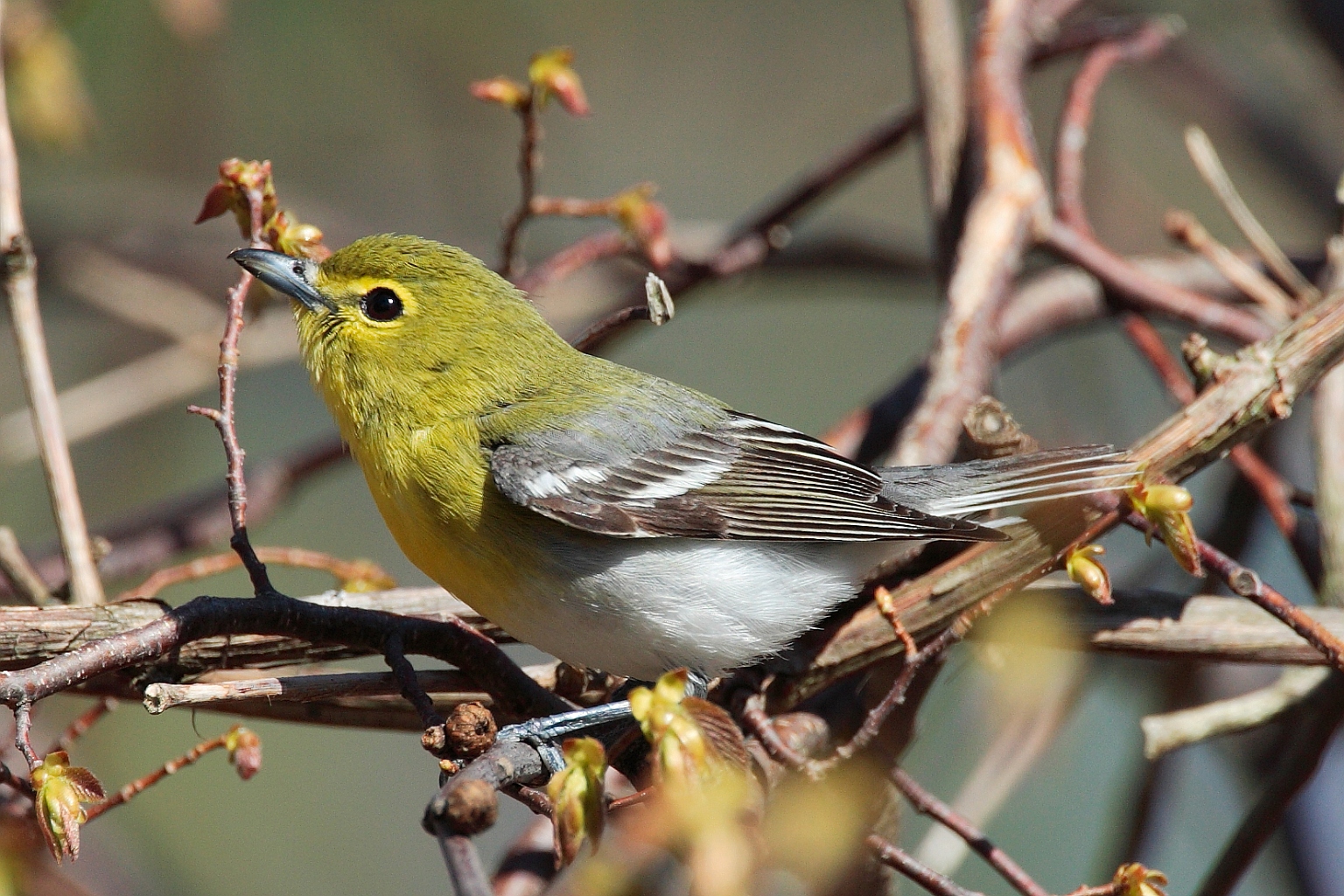
The vireos /ˈvɪrioʊz/ make up a family, Vireonidae, of small to medium-sized passerine birds found in the New World (Canada to Argentina, including Bermuda and the West Indies) and Southeast Asia. The family contains 62 species and is divided into eight genera. "Vireo" is a Latin word referring to a green migratory bird, perhaps the female golden oriole, possibly the European greenfinch.
They are typically dull-plumaged and greenish in color, the smaller species resembling wood warblers apart from their heavier bills. They range in size from the Chocó vireo, dwarf vireo and lesser greenlet, all at around 10 cm and 8g, to the peppershrikes and shrike-vireos at up to 17 cm and 40g.
Most species are found in Middle America and northern South America. Thirteen species of true vireos occur farther north, in the United States, Bermuda and Canada; of these all but Hutton's vireo are migratory. Members of the family seldom fly long distances except in migration. They inhabit forest environments, with different species preferring forest canopies, undergrowth, or mangrove swamps.
A few species in the genus Vireo have appeared on the eastern side of the Atlantic as vagrants to the Western Palearctic.
The resident species occur in pairs or family groups that maintain territories all year (except Hutton's vireo, which joins mixed feeding flocks). Most of the migrants defend winter territories against conspecifics. The exceptions are the complex comprising the red-eyed vireo, the yellow-green vireo, the black-whiskered vireo, and the Yucatan vireo, which winter in small wandering flocks.
Males of most species are persistent singers. Songs are usually rather simple, monotonous in some species of the Caribbean littoral and islands, and most elaborate and pleasant to human ears in the Chocó vireo and the peppershrikes.
The nests of many tropical species are unknown. Of those that are known, all build a cup-shaped nest that hangs from branches. The female does most of the incubation, spelled by the male except in the red-eyed vireo complex.
All members of the family eat some fruit but mostly insects and other arthropods. They take prey from leaves and branches; true vireos also flycatch, and the gray vireo takes 5 percent of its prey from the ground.
Hub AI
Vireo AI simulator
(@Vireo_simulator)
Vireo
The vireos /ˈvɪrioʊz/ make up a family, Vireonidae, of small to medium-sized passerine birds found in the New World (Canada to Argentina, including Bermuda and the West Indies) and Southeast Asia. The family contains 62 species and is divided into eight genera. "Vireo" is a Latin word referring to a green migratory bird, perhaps the female golden oriole, possibly the European greenfinch.
They are typically dull-plumaged and greenish in color, the smaller species resembling wood warblers apart from their heavier bills. They range in size from the Chocó vireo, dwarf vireo and lesser greenlet, all at around 10 cm and 8g, to the peppershrikes and shrike-vireos at up to 17 cm and 40g.
Most species are found in Middle America and northern South America. Thirteen species of true vireos occur farther north, in the United States, Bermuda and Canada; of these all but Hutton's vireo are migratory. Members of the family seldom fly long distances except in migration. They inhabit forest environments, with different species preferring forest canopies, undergrowth, or mangrove swamps.
A few species in the genus Vireo have appeared on the eastern side of the Atlantic as vagrants to the Western Palearctic.
The resident species occur in pairs or family groups that maintain territories all year (except Hutton's vireo, which joins mixed feeding flocks). Most of the migrants defend winter territories against conspecifics. The exceptions are the complex comprising the red-eyed vireo, the yellow-green vireo, the black-whiskered vireo, and the Yucatan vireo, which winter in small wandering flocks.
Males of most species are persistent singers. Songs are usually rather simple, monotonous in some species of the Caribbean littoral and islands, and most elaborate and pleasant to human ears in the Chocó vireo and the peppershrikes.
The nests of many tropical species are unknown. Of those that are known, all build a cup-shaped nest that hangs from branches. The female does most of the incubation, spelled by the male except in the red-eyed vireo complex.
All members of the family eat some fruit but mostly insects and other arthropods. They take prey from leaves and branches; true vireos also flycatch, and the gray vireo takes 5 percent of its prey from the ground.
Recent media