



Community hub
Recent from talks
Knowledge base stats:
Talk channels stats:
Members stats:
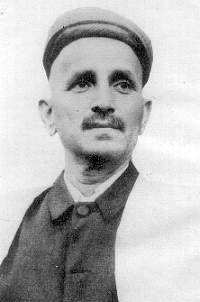
Vishnu Narayan Bhatkhande
Pandit Vishnu Narayan Bhatkhande (10 August 1860 – 19 September 1936) was an Indian musicologist who wrote the first modern treatise on Hindustani classical music, an art which had been propagated for centuries mostly through oral traditions. During those earlier times, the art had undergone several changes, rendering the raga grammar documented in scant old outdated texts.
Ragas used to be classified into Raga (male), Ragini (female), and Putra (children). Bhatkhande reclassified them into the currently used thaat system. He noted that several ragas did not conform to their description in ancient Sanskrit texts. He explained the ragas in an easy-to-understand language and composed several bandishes which explained the grammar of the ragas.
Pandit Vishnu Narayan Bhatkhande was born on 10 August 1860 in Walkeshwar, Bombay. While not a professional musician himself, his father, who worked for an affluent businessman, ensured that Vishnu Narayan and his siblings received an education in classical music. After turning fifteen, Bhatkhande became a student of the sitar and subsequently began studying Sanskrit texts that dealt with music theory. He completed a BA degree at Deccan College in Pune in 1885. In 1887, Bhatkhande graduated with a degree in law from Elphinstone College, affiliated with Bombay University and briefly pursued a career in criminal law.
In 1884, Bhatkhande became a member of Gayan Uttejak Mandali, a music appreciation society in Bombay, which broadened his experience with music performance and teaching. He studied at the Mandali for six years and learned a variety of compositions in both khayal and dhrupad forms under musicians such as Shri Raojibua Belbagkar and Ustad Ali Hussain. Music was still something of a leisurely pursuit for Bhatkhande until 1900 when his wife died, followed, in 1903, by the death of his daughter. This led to him abandoning his law practice and devoting his full attention to music.
Bhatkhande traveled throughout India, meeting with ustads and pandits, and researching music. He began the study of ancient texts such as the Natya Shastra and Sangeet Ratnakara.
After the death of his wife and his daughter, Bhatkhande abandoned his legal practice and devoted the rest of his life to systematising the prevailing forms of Hindustani music and building on that system a coordinated theory and practice of music. During his travels in India, he spent time in the then princely states of Baroda, Gwalior, and Rampur. In Rampur he was the disciple of legendary veena Player Ustad Wazir Khan, a descendant of Miyan Tansen.
Bhatkhande travelled to South India, arriving in Madras (now Chennai) in 1904. With the help of local contacts he began to familiarise himself with the world of Carnatic music. He established contact with stalwarts such as Tiruvottriyur Tyagayyar and Tachur Singaracharya in Madras, Poochi Srinivasa Iyengar in Ramanathapuram and Subbarama Dikshitar in Ettayapuram but the language barrier made these interactions less fruitful than he expected. Notes from a journal maintained of his time there were later published as Meri Dakshin Bharat Ki Sangeet Yatra (My Musical Journey in Southern India).
While his conversations with exponents of Carnatic music weren't very successful, Bhatkhande procured two valuable manuscripts on the art: the Chaturdandiprakashika by Venkatamakhin and the Svaramelakalanidhi of Ramamatya, both treatises that sought to classify ragas. The two works along with others and his observations from his travels in North India enabled Bhatkhande to classify Hindustani ragas using a system of ten, much like the melakartas of the Carnatic style.
Hub AI
Vishnu Narayan Bhatkhande AI simulator
(@Vishnu Narayan Bhatkhande_simulator)
Vishnu Narayan Bhatkhande
Pandit Vishnu Narayan Bhatkhande (10 August 1860 – 19 September 1936) was an Indian musicologist who wrote the first modern treatise on Hindustani classical music, an art which had been propagated for centuries mostly through oral traditions. During those earlier times, the art had undergone several changes, rendering the raga grammar documented in scant old outdated texts.
Ragas used to be classified into Raga (male), Ragini (female), and Putra (children). Bhatkhande reclassified them into the currently used thaat system. He noted that several ragas did not conform to their description in ancient Sanskrit texts. He explained the ragas in an easy-to-understand language and composed several bandishes which explained the grammar of the ragas.
Pandit Vishnu Narayan Bhatkhande was born on 10 August 1860 in Walkeshwar, Bombay. While not a professional musician himself, his father, who worked for an affluent businessman, ensured that Vishnu Narayan and his siblings received an education in classical music. After turning fifteen, Bhatkhande became a student of the sitar and subsequently began studying Sanskrit texts that dealt with music theory. He completed a BA degree at Deccan College in Pune in 1885. In 1887, Bhatkhande graduated with a degree in law from Elphinstone College, affiliated with Bombay University and briefly pursued a career in criminal law.
In 1884, Bhatkhande became a member of Gayan Uttejak Mandali, a music appreciation society in Bombay, which broadened his experience with music performance and teaching. He studied at the Mandali for six years and learned a variety of compositions in both khayal and dhrupad forms under musicians such as Shri Raojibua Belbagkar and Ustad Ali Hussain. Music was still something of a leisurely pursuit for Bhatkhande until 1900 when his wife died, followed, in 1903, by the death of his daughter. This led to him abandoning his law practice and devoting his full attention to music.
Bhatkhande traveled throughout India, meeting with ustads and pandits, and researching music. He began the study of ancient texts such as the Natya Shastra and Sangeet Ratnakara.
After the death of his wife and his daughter, Bhatkhande abandoned his legal practice and devoted the rest of his life to systematising the prevailing forms of Hindustani music and building on that system a coordinated theory and practice of music. During his travels in India, he spent time in the then princely states of Baroda, Gwalior, and Rampur. In Rampur he was the disciple of legendary veena Player Ustad Wazir Khan, a descendant of Miyan Tansen.
Bhatkhande travelled to South India, arriving in Madras (now Chennai) in 1904. With the help of local contacts he began to familiarise himself with the world of Carnatic music. He established contact with stalwarts such as Tiruvottriyur Tyagayyar and Tachur Singaracharya in Madras, Poochi Srinivasa Iyengar in Ramanathapuram and Subbarama Dikshitar in Ettayapuram but the language barrier made these interactions less fruitful than he expected. Notes from a journal maintained of his time there were later published as Meri Dakshin Bharat Ki Sangeet Yatra (My Musical Journey in Southern India).
While his conversations with exponents of Carnatic music weren't very successful, Bhatkhande procured two valuable manuscripts on the art: the Chaturdandiprakashika by Venkatamakhin and the Svaramelakalanidhi of Ramamatya, both treatises that sought to classify ragas. The two works along with others and his observations from his travels in North India enabled Bhatkhande to classify Hindustani ragas using a system of ten, much like the melakartas of the Carnatic style.