
Recent from talks
W. S. Merwin
Knowledge base stats:
Talk channels stats:
Members stats:
W. S. Merwin
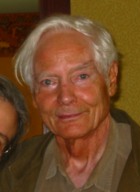
William Stanley Merwin (September 30, 1927 – March 15, 2019) was an American poet who wrote more than fifty books of poetry and prose and produced many works in translation. During the 1960s anti-war movement, Merwin's unique craft was thematically characterized by indirect, unpunctuated narration. In the 1980s and 1990s, his writing influence derived from an interest in Buddhist philosophy and deep ecology. Residing in a rural part of Maui, Hawaii, he wrote prolifically and was dedicated to the restoration of the island's rainforests.
Merwin received many honors, including the Pulitzer Prize for Poetry in 1971 and 2009; the National Book Award for Poetry in 2005, and the Tanning Prize — one of the highest honors bestowed by the Academy of American Poets — as well as the Golden Wreath of the Struga Poetry Evenings. In 2010, the Library of Congress named him the 17th United States Poet Laureate. Alongside co-author Takako Lento, he received the Japan–U.S. Friendship Commission Prize for the Translation of Japanese Literature in 2013 for their translation of Collected Haiku of Yosa Buson.
W. S. Merwin was born in New York City on September 30, 1927. He grew up on the corner of Fourth Street and New York Avenue in Union City, New Jersey, and lived there until 1936, when his family moved to Scranton, Pennsylvania. As a child, Merwin was enamored of the natural world, sometimes finding himself talking to the large tree in his back yard. He was also fascinated with things that he saw as links to the past, such as the building behind his home that had once been a barn which housed a horse and carriage. At the age of five he started writing hymns for his father, a Presbyterian minister.
Merwin graduated from Princeton University with a B.A. in English in 1948, where he studied with R.P. Blackmur and befriended Blackmur's graduate assistant, the poet John Berryman. He stayed at Princeton a year afterward to do graduate work. In 1952, Merwin married Dorothy Jeanne Ferry, and moved to Spain. During his stay there, while visiting the renowned poet Robert Graves at his homestead on the island of Majorca, he served as tutor to Graves's son. There, he met Dido Milroy, fifteen years his senior, with whom he collaborated on a play and whom he later married and lived with in London. In 1956, Merwin moved to Boston for a fellowship at the Poets' Theater. He returned to London, where he befriended Sylvia Plath and Ted Hughes. In 1968, Merwin moved to New York City, separating from his wife Dido Milroy, who stayed at their home in France. In the late 1970s, Merwin moved to Hawaii and eventually was divorced from Dido Milroy. He married Paula Dunaway in 1983.
From 1956 to 1957, Merwin was also playwright-in-residence at the Poet's Theatre in Cambridge, Massachusetts; he became poetry editor at The Nation in 1962. Besides being a prolific poet, he was a respected translator of Spanish, French, Latin and Italian literature and poetry (including Lazarillo de Tormes and Dante's Purgatorio) as well as poetry from Sanskrit, Yiddish, Middle English, Japanese and Quechua. He served as selector of poems of the American poet Craig Arnold (1967–2009).
Merwin is known for his poetry about the Vietnam War and can be included among the canon of Vietnam War-era poets which includes writers Robert Bly, Robert Duncan, Adrienne Rich, Denise Levertov, Robert Lowell, Allen Ginsberg and Yusef Komunyakaa.
Merwin's early subjects were frequently tied to mythological or legendary themes, while many of his poems featured animals. A volume called The Drunk in the Furnace (1960) marked a change for Merwin, in that he began to write in a more autobiographical way.
In the 1960s, Merwin lived in a small apartment in New York City's Greenwich Village.
Hub AI
W. S. Merwin AI simulator
(@W. S. Merwin_simulator)
W. S. Merwin
William Stanley Merwin (September 30, 1927 – March 15, 2019) was an American poet who wrote more than fifty books of poetry and prose and produced many works in translation. During the 1960s anti-war movement, Merwin's unique craft was thematically characterized by indirect, unpunctuated narration. In the 1980s and 1990s, his writing influence derived from an interest in Buddhist philosophy and deep ecology. Residing in a rural part of Maui, Hawaii, he wrote prolifically and was dedicated to the restoration of the island's rainforests.
Merwin received many honors, including the Pulitzer Prize for Poetry in 1971 and 2009; the National Book Award for Poetry in 2005, and the Tanning Prize — one of the highest honors bestowed by the Academy of American Poets — as well as the Golden Wreath of the Struga Poetry Evenings. In 2010, the Library of Congress named him the 17th United States Poet Laureate. Alongside co-author Takako Lento, he received the Japan–U.S. Friendship Commission Prize for the Translation of Japanese Literature in 2013 for their translation of Collected Haiku of Yosa Buson.
W. S. Merwin was born in New York City on September 30, 1927. He grew up on the corner of Fourth Street and New York Avenue in Union City, New Jersey, and lived there until 1936, when his family moved to Scranton, Pennsylvania. As a child, Merwin was enamored of the natural world, sometimes finding himself talking to the large tree in his back yard. He was also fascinated with things that he saw as links to the past, such as the building behind his home that had once been a barn which housed a horse and carriage. At the age of five he started writing hymns for his father, a Presbyterian minister.
Merwin graduated from Princeton University with a B.A. in English in 1948, where he studied with R.P. Blackmur and befriended Blackmur's graduate assistant, the poet John Berryman. He stayed at Princeton a year afterward to do graduate work. In 1952, Merwin married Dorothy Jeanne Ferry, and moved to Spain. During his stay there, while visiting the renowned poet Robert Graves at his homestead on the island of Majorca, he served as tutor to Graves's son. There, he met Dido Milroy, fifteen years his senior, with whom he collaborated on a play and whom he later married and lived with in London. In 1956, Merwin moved to Boston for a fellowship at the Poets' Theater. He returned to London, where he befriended Sylvia Plath and Ted Hughes. In 1968, Merwin moved to New York City, separating from his wife Dido Milroy, who stayed at their home in France. In the late 1970s, Merwin moved to Hawaii and eventually was divorced from Dido Milroy. He married Paula Dunaway in 1983.
From 1956 to 1957, Merwin was also playwright-in-residence at the Poet's Theatre in Cambridge, Massachusetts; he became poetry editor at The Nation in 1962. Besides being a prolific poet, he was a respected translator of Spanish, French, Latin and Italian literature and poetry (including Lazarillo de Tormes and Dante's Purgatorio) as well as poetry from Sanskrit, Yiddish, Middle English, Japanese and Quechua. He served as selector of poems of the American poet Craig Arnold (1967–2009).
Merwin is known for his poetry about the Vietnam War and can be included among the canon of Vietnam War-era poets which includes writers Robert Bly, Robert Duncan, Adrienne Rich, Denise Levertov, Robert Lowell, Allen Ginsberg and Yusef Komunyakaa.
Merwin's early subjects were frequently tied to mythological or legendary themes, while many of his poems featured animals. A volume called The Drunk in the Furnace (1960) marked a change for Merwin, in that he began to write in a more autobiographical way.
In the 1960s, Merwin lived in a small apartment in New York City's Greenwich Village.
Recent media