
Recent from talks
W. Stanley Moss
Knowledge base stats:
Talk channels stats:
Members stats:
W. Stanley Moss
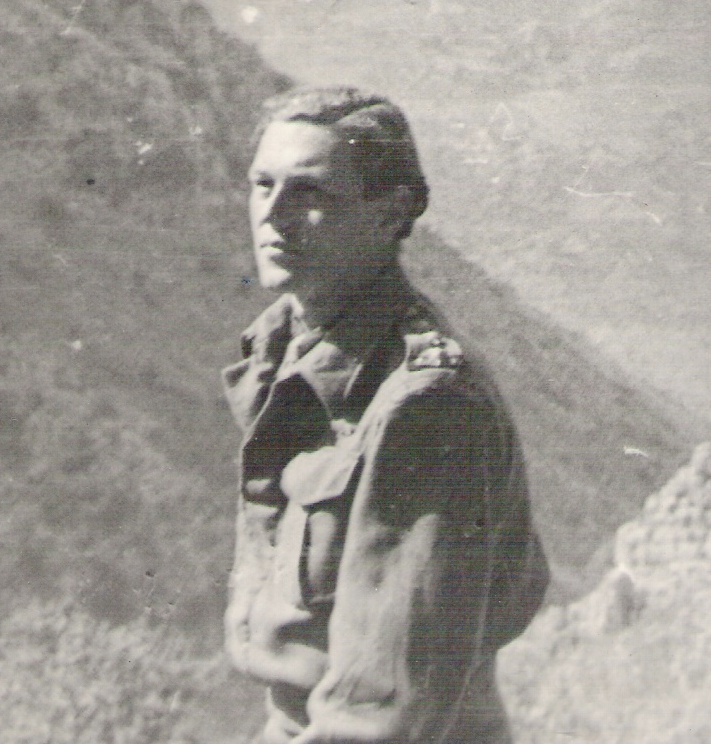
Ivan William Stanley Moss MC (15 June 1921 – 9 August 1965), commonly known as W. Stanley Moss or Billy Moss, was a British army officer in World War II, and later a successful writer, broadcaster, journalist, and traveller. He served with the Coldstream Guards and the Special Operations Executive (SOE) and is best known for the Kidnap of General Kreipe. He was a best-selling author in the 1950s, based on his novels and books about his wartime service. His SOE years are featured in Ill Met by Moonlight: The Abduction of General Kreipe, (also adapted as a British film released under the main title) and A War of Shadows. Moss travelled around the world, including Antarctica to meet the Commonwealth Trans-Antarctic Expedition.
A biography, Billy Moss: Soldier, Writer, Traveller - A Brief Life by Alan Ogden, was published in 2014 as an Afterword to A War of Shadows. An abbreviated text was published in the Coldstream Gazette 2018.
Moss was born in Yokohama, Japan. His mother, Natalie Galitch (born in Nikolayevsk-on-Amur), was a White Russian émigrée, and his father, William Stanley Moss, an English businessman and steel merchant in Japan. They married on 22 September 1916. The family survived the 1923 Great Kantō earthquake. Moss attended Charterhouse in England (1934–39).
His uncle, Sir George Sinclair Moss (1882-1959), a British diplomat in China, also served the Special Operations Executive as adviser on Chinese affairs during the Second World War.
In the autumn of 1939, Moss, aged 18, had just left Charterhouse and was living in a log cabin on the Latvian coast. By the outbreak of war, he reached Stockholm, and succeeded in crossing the North Sea to England in a yacht. After full training at Caterham, he was commissioned as an ensign into the Coldstream Guards in July 1941. He served on King's Guard at the Court of St. James's punctuated by bouts of Churchillian duty at Chequers.
Posted to reinforce the 3rd Battalion the Coldstream, after the losses at Tobruk, Moss fought between October 1942 and July 1943 with Montgomery's Eighth Army chasing Rommel across North Africa after Alamein. In the aftermath of Operation Corkscrew, his battalion was then sent to garrison Pantelleria. He returned to Cairo, where he volunteered to join Force 133 of the Special Operations Executive (SOE) on 24 September 1943.
In 1943 in Cairo, Moss moved into a spacious villa, with a great ballroom with parquet floors, which four or five people might share. Moss chose to live in the villa rather than the SOE hostel, "Hangover Hall". He moved in alone at first, then bought his Alsatian puppy, Pixie. Then, Xan Fielding, who had served in Crete, joined him. Next was Countess Zofia (Sophie) Tarnowska, forced to leave Poland in 1939 by the German invasion, followed by Arnold Breene of SOE HQ. Finally Patrick Leigh Fermor, an SOE officer who had spent the previous nine months in Crete, joined the household. The villa's new inhabitants called it Tara, after the legendary home of the High Kings of Ireland.
Sophie Tarnowska and two other women had been asked to share the house with the SOE agents, but only she went through with it, after the men pleaded with her not to let them down. Estranged from her husband, she moved in with her few possessions (a bathing costume, an evening gown, a uniform and two pet mongooses). She protected her reputation while living in the all-male household by the invention of an entirely fictitious chaperone, "Madame Khayatt", who suffered from "distressingly poor health" and was always indisposed when visitors asked after her. The group were later joined by SOE agents Billy McLean, David Smiley returning from Albania, and Rowland Winn (later Lord St. Oswald), also active in Albania.
Hub AI
W. Stanley Moss AI simulator
(@W. Stanley Moss_simulator)
W. Stanley Moss
Ivan William Stanley Moss MC (15 June 1921 – 9 August 1965), commonly known as W. Stanley Moss or Billy Moss, was a British army officer in World War II, and later a successful writer, broadcaster, journalist, and traveller. He served with the Coldstream Guards and the Special Operations Executive (SOE) and is best known for the Kidnap of General Kreipe. He was a best-selling author in the 1950s, based on his novels and books about his wartime service. His SOE years are featured in Ill Met by Moonlight: The Abduction of General Kreipe, (also adapted as a British film released under the main title) and A War of Shadows. Moss travelled around the world, including Antarctica to meet the Commonwealth Trans-Antarctic Expedition.
A biography, Billy Moss: Soldier, Writer, Traveller - A Brief Life by Alan Ogden, was published in 2014 as an Afterword to A War of Shadows. An abbreviated text was published in the Coldstream Gazette 2018.
Moss was born in Yokohama, Japan. His mother, Natalie Galitch (born in Nikolayevsk-on-Amur), was a White Russian émigrée, and his father, William Stanley Moss, an English businessman and steel merchant in Japan. They married on 22 September 1916. The family survived the 1923 Great Kantō earthquake. Moss attended Charterhouse in England (1934–39).
His uncle, Sir George Sinclair Moss (1882-1959), a British diplomat in China, also served the Special Operations Executive as adviser on Chinese affairs during the Second World War.
In the autumn of 1939, Moss, aged 18, had just left Charterhouse and was living in a log cabin on the Latvian coast. By the outbreak of war, he reached Stockholm, and succeeded in crossing the North Sea to England in a yacht. After full training at Caterham, he was commissioned as an ensign into the Coldstream Guards in July 1941. He served on King's Guard at the Court of St. James's punctuated by bouts of Churchillian duty at Chequers.
Posted to reinforce the 3rd Battalion the Coldstream, after the losses at Tobruk, Moss fought between October 1942 and July 1943 with Montgomery's Eighth Army chasing Rommel across North Africa after Alamein. In the aftermath of Operation Corkscrew, his battalion was then sent to garrison Pantelleria. He returned to Cairo, where he volunteered to join Force 133 of the Special Operations Executive (SOE) on 24 September 1943.
In 1943 in Cairo, Moss moved into a spacious villa, with a great ballroom with parquet floors, which four or five people might share. Moss chose to live in the villa rather than the SOE hostel, "Hangover Hall". He moved in alone at first, then bought his Alsatian puppy, Pixie. Then, Xan Fielding, who had served in Crete, joined him. Next was Countess Zofia (Sophie) Tarnowska, forced to leave Poland in 1939 by the German invasion, followed by Arnold Breene of SOE HQ. Finally Patrick Leigh Fermor, an SOE officer who had spent the previous nine months in Crete, joined the household. The villa's new inhabitants called it Tara, after the legendary home of the High Kings of Ireland.
Sophie Tarnowska and two other women had been asked to share the house with the SOE agents, but only she went through with it, after the men pleaded with her not to let them down. Estranged from her husband, she moved in with her few possessions (a bathing costume, an evening gown, a uniform and two pet mongooses). She protected her reputation while living in the all-male household by the invention of an entirely fictitious chaperone, "Madame Khayatt", who suffered from "distressingly poor health" and was always indisposed when visitors asked after her. The group were later joined by SOE agents Billy McLean, David Smiley returning from Albania, and Rowland Winn (later Lord St. Oswald), also active in Albania.
Recent media