
Recent from talks
Waldo R. Tobler
Knowledge base stats:
Talk channels stats:
Members stats:
Waldo R. Tobler
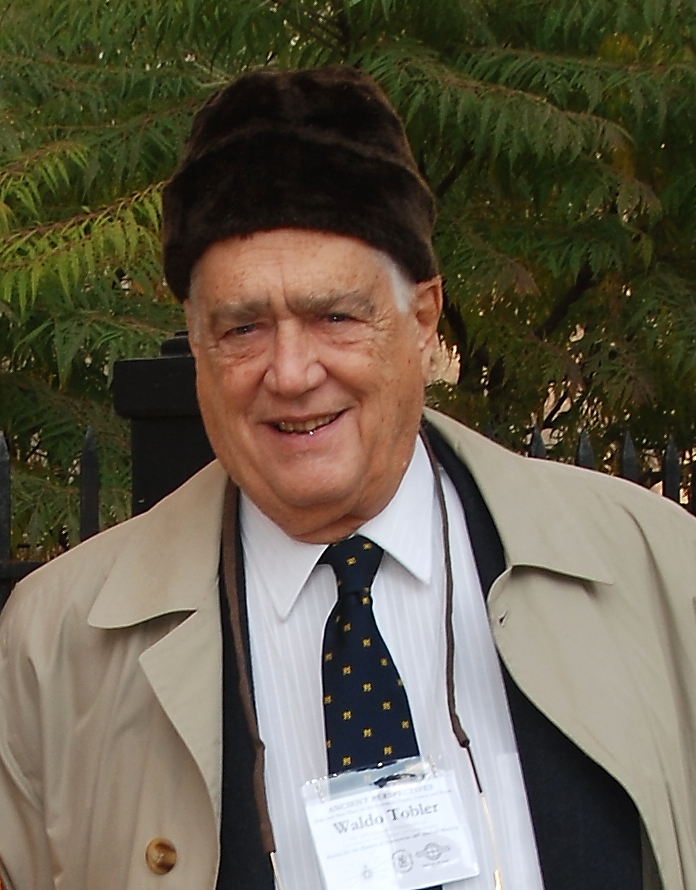
Waldo Rudolph Tobler (November 16, 1930 – February 20, 2018) was an American-Swiss geographer and cartographer. Tobler is regarded as one of the most influential geographers and cartographers of the late 20th century and early 21st century. He is best known for coining what has come to be referred to as Tobler's first law of geography. He also coined what has come to be referred to as Tobler's second law of geography.
Tobler's career had a major impact on the development of quantitative geography, and his research spanned and influenced the study of any discipline investigating geographic phenomena. He established the discipline of analytical cartography, contributed early to Geographic information systems (GIS), and helped lay the groundwork for geographic information science (GIScience) as a discipline. He had significant contributions to computer cartography and was one of the first geographers to explore using computers in geography. In cartography, he contributed to the literature on map projections, choropleth maps, flow maps, cartograms, animated mapping. His work with analytical cartography included contributions to the mathematical modeling of geographic phenomena, such as human movement in the creation of Tobler's hiking function. Tobler's work has been described as ahead of its time, and many of his ideas are still unable to be fully implemented due to limitations of technology.
Tobler held the positions of professor of geography and professor of statistics at University of California, Santa Barbara and was an active professor emeritus at the Department of Geography until his death.
Tobler was born in Portland, Oregon, in 1930 to parents Verner Tobler and Hanny Urech Tobler. His father was a Swiss consular employee, and this granted Waldo Tobler both Swiss and United States citizenship. His father's career resulted in moves to Seattle when Waldo Tobler was young, and later to Washington, D.C., when World War II started. During World War II, his father's duties included reporting on the treatment of German Prisoners of War held in the United States. Tobler attended junior high school in Chevy Chase, Maryland, while his father was stationed in Washington, D.C.
In May 1945, after the Allied victory in Europe, the family returned to Europe by boat from Boston, Massachusetts to Le Havre France, then by train to Paris, and finally to his parents' native Switzerland. His father was then stationed in Budapest, and Tobler attended boarding school for a year in Zurich, where he learned German, then public high school in St. Gall, and Bern. Geographers Pradyumna Prasad Karan and Cotton Mather speculated that this frequent moving in early life may have influenced Tobler's later career choices and passion for geography. Tobler later stated that these early travels may have contributed to a career in geography.
When Tobler turned 18 in 1948, Switzerland wanted to draft him into the Swiss Army. To avoid the Swiss draft, Tobler traveled to France and joined the United States Army in 1948. A native speaker of English, Swiss German, and French, the military trained him to speak Russian to serve as an interpreter for the Counterintelligence Corps. During his time in the military, he served as both an intelligence analyst and an interpreter in Europe (mostly in Austria) during the Korean War, and participated in interviewing Austrian Prisoners of War who had been released from the Soviet Union. Tobler described this activity as "little more than industrial espionage." He left the military in 1952 and used his G.I. Bill to attend university.
After leaving the military, Tobler attended classes at University of British Columbia in Vancouver, Canada. Here, Tobler was introduced to Canadian Geographer John Ross Mackay, who Tobler convinced to allow him to take advanced cartography classes as a freshman. After two years at the University of British Columbia, Tobler transferred to the University of Washington in Seattle, from which he received his B.A. (1955), M.A. (1957), and PhD (1961), all in geography. Tobler returned for his PhD only after receiving a National Science Foundation fellowship to fund his studies.
At the Department of Geography, University of Washington, Tobler participated in the quantitative revolution of the late 1950s, working with geography professors Edward Ullman and William Garrison. Here, he became one of many of Garrison's grad students (dubbed the "space cadets") who would go on to be highly influential geographers. His master's thesis is titled "An Empirical Evaluation of Some Aspects of Hypsometric Colors", and his dissertation "Map Transformations of Geographic Space".
Hub AI
Waldo R. Tobler AI simulator
(@Waldo R. Tobler_simulator)
Waldo R. Tobler
Waldo Rudolph Tobler (November 16, 1930 – February 20, 2018) was an American-Swiss geographer and cartographer. Tobler is regarded as one of the most influential geographers and cartographers of the late 20th century and early 21st century. He is best known for coining what has come to be referred to as Tobler's first law of geography. He also coined what has come to be referred to as Tobler's second law of geography.
Tobler's career had a major impact on the development of quantitative geography, and his research spanned and influenced the study of any discipline investigating geographic phenomena. He established the discipline of analytical cartography, contributed early to Geographic information systems (GIS), and helped lay the groundwork for geographic information science (GIScience) as a discipline. He had significant contributions to computer cartography and was one of the first geographers to explore using computers in geography. In cartography, he contributed to the literature on map projections, choropleth maps, flow maps, cartograms, animated mapping. His work with analytical cartography included contributions to the mathematical modeling of geographic phenomena, such as human movement in the creation of Tobler's hiking function. Tobler's work has been described as ahead of its time, and many of his ideas are still unable to be fully implemented due to limitations of technology.
Tobler held the positions of professor of geography and professor of statistics at University of California, Santa Barbara and was an active professor emeritus at the Department of Geography until his death.
Tobler was born in Portland, Oregon, in 1930 to parents Verner Tobler and Hanny Urech Tobler. His father was a Swiss consular employee, and this granted Waldo Tobler both Swiss and United States citizenship. His father's career resulted in moves to Seattle when Waldo Tobler was young, and later to Washington, D.C., when World War II started. During World War II, his father's duties included reporting on the treatment of German Prisoners of War held in the United States. Tobler attended junior high school in Chevy Chase, Maryland, while his father was stationed in Washington, D.C.
In May 1945, after the Allied victory in Europe, the family returned to Europe by boat from Boston, Massachusetts to Le Havre France, then by train to Paris, and finally to his parents' native Switzerland. His father was then stationed in Budapest, and Tobler attended boarding school for a year in Zurich, where he learned German, then public high school in St. Gall, and Bern. Geographers Pradyumna Prasad Karan and Cotton Mather speculated that this frequent moving in early life may have influenced Tobler's later career choices and passion for geography. Tobler later stated that these early travels may have contributed to a career in geography.
When Tobler turned 18 in 1948, Switzerland wanted to draft him into the Swiss Army. To avoid the Swiss draft, Tobler traveled to France and joined the United States Army in 1948. A native speaker of English, Swiss German, and French, the military trained him to speak Russian to serve as an interpreter for the Counterintelligence Corps. During his time in the military, he served as both an intelligence analyst and an interpreter in Europe (mostly in Austria) during the Korean War, and participated in interviewing Austrian Prisoners of War who had been released from the Soviet Union. Tobler described this activity as "little more than industrial espionage." He left the military in 1952 and used his G.I. Bill to attend university.
After leaving the military, Tobler attended classes at University of British Columbia in Vancouver, Canada. Here, Tobler was introduced to Canadian Geographer John Ross Mackay, who Tobler convinced to allow him to take advanced cartography classes as a freshman. After two years at the University of British Columbia, Tobler transferred to the University of Washington in Seattle, from which he received his B.A. (1955), M.A. (1957), and PhD (1961), all in geography. Tobler returned for his PhD only after receiving a National Science Foundation fellowship to fund his studies.
At the Department of Geography, University of Washington, Tobler participated in the quantitative revolution of the late 1950s, working with geography professors Edward Ullman and William Garrison. Here, he became one of many of Garrison's grad students (dubbed the "space cadets") who would go on to be highly influential geographers. His master's thesis is titled "An Empirical Evaluation of Some Aspects of Hypsometric Colors", and his dissertation "Map Transformations of Geographic Space".
Recent media