



Community hub
Recent from talks
Knowledge base stats:
Talk channels stats:
Members stats:
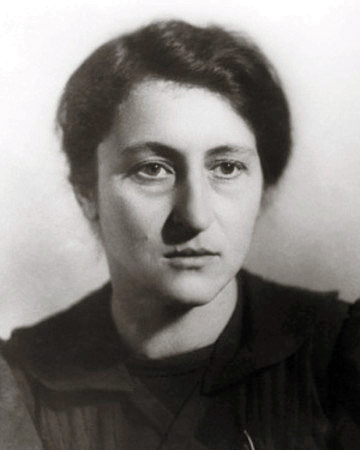
Wanda Wasilewska
Wanda Wasilewska (Polish pronunciation: [ˈvanda vaɕiˈlɛfska]), also known by her Russian name Vanda Lvovna Vasilevskaya (Russian: Ва́нда Льво́вна Василе́вская) (21 January 1905 – 29 July 1964), was a Polish and Soviet novelist and journalist and a left-wing political activist.
She was a socialist who became a devoted communist. She fled the German attack on Warsaw in September 1939 and took up residence in Soviet-occupied Lviv and eventually in the Soviet Union.
She was a founding member of the Union of Polish Patriots and played an important role in the creation of the 1st Tadeusz Kościuszko Infantry Division. The division developed into the Polish People's Army and fought on the Eastern Front during World War II.
Wasilewska was a trusted consultant to Joseph Stalin, and her influence was essential to the establishment of the Polish Committee of National Liberation in July 1944 and to the formation of the Polish People's Republic.
Wasilewska was born, the second of three daughters, on 25 January 1905 in Kraków, Austrian Poland. Her father was Leon Wasilewski, a Polish Socialist Party (PPS) politician and first foreign minister of the newly re-emerging independent Poland. Her mother, Wanda Zieleniewska, was also a PPS member and the young Wasilewska had gotten to know the party leaders at home. From 1923, she studied Polish language and Polish literature at the Jagiellonian University in Kraków, where several years later she acquired her doctorate. While studying, she became involved with the Union of Independent Socialist Youth (ZNMS, allied with the PPS) and the Society of Workers' Universities. From the early 1930s, Wasilewska was strongly involved in women's issues and gender equality. Her attitude was exemplified by her own personal conduct as well as her work in the Women's Section of the PPS. However, she eventually chose to emphasize in her activism the broader class issues, remarked that it was easier to deal with men and criticized Warsaw feminists for coloring their movement with "feminism of half a century ago".
Wasilewska joined the PPS as a student. She was a member of the main party council in 1934–37. She served there with her father, whose connections turned out helpful at the various stages and vicissitudes of her career in Poland. Wasilewska later wrote of her student PPS years: "We had a lot of trouble with the communists because they were adamant about carrying out actions that could lead to bloodshed and we thought that was something that should not be done. Rather, we were into innocent skirmishes with the police ... ". Her radicalism grew gradually from the early 1930s and she began viewing the socialists as former revolutionaries turned conformists, compromised by collaboration with state authorities. Writing to her mother in November 1931, Wasilewska characterized herself as "turning increasingly Bolshevik", and in the spring of 1932, she joined a radical youth faction that pushed for confrontation with the Sanation regime and advocated joint action with the communists within the newly established Popular Front alliance. At that time she wrote to her mother of the "desperation of the people" and concluded: "the communists will do something or we will, or we together with the communists". As Wasilewska drew closer to the communists, her relations with the PPS deteriorated and she lost her seat in the party council, but never left the organization.
Having finished her studies, Wasilewska started working as a secondary school teacher in Kraków, but lost her job when the school authorities refused to extend her contract because of her leftist views. With her husband Marian Bogatko, also dismissed from work as a strike organizer, in autumn 1934, they moved to Warsaw, where Wasilewska became involved with the Polish section of the International Red Aid, an organization concerned with helping political prisoners and their families, and the Polish League for the Defense of Human and Citizens' Rights. Wasilewska found employment in the Editorial Division of the Polish Teachers' Union. She met there and befriended Janina Broniewska, the wife of revolutionary poet Władysław Broniewski; Janina's radical views would significantly influence Wasilewska. Wasilewska was a journalist for various left-wing newspapers, among them Naprzód, Robotnik, Dziennik Popularny, Oblicze Dnia and Lewar, and the chairperson of the Płomyk and Płomyczek monthlies for children. Płomyk was published under the auspices of the Teachers' Union and its March 1936 issue, Wasilewska devoted entirely to the promotion of communist models of upbringing as practised in the Soviet Union. In the aftermath, she was attacked in the Polish parliament by Prime Minister Felicjan Sławoj Składkowski, the printing ended up confiscated by the authorities, government restrictions and oversight were imposed on the activities of the Teachers' Union, and Wasilewska lost her job at the Editorial Division. Following this she was offered employment as the editor of the short lived Gazetka Miki for which, due to her notoriety, she wrote under the pen name Wanda Woskowska. Wasilewska was often criticised for her radical left-wing views and supported an alliance of all the left-wing parties, including the communists, against the ruling Sanation. Wasilewska was closely associated with the communists from the mid-1930s. In May 1936 Wasilewska, among other left-wing Polish and Western Ukrainian writers, participated in the Lviv Anti-Fascist Congress of Cultural Workers. The gathering of intellectuals and cultural activists passed a resolution declaring their support for international humanist values and opposition to fascism, nationalism, capitalism, imperialism and war; it did not invoke a Soviet leadership. Wasilewska left the congress convinced that "today the place of the writer, of the artist is among the proletariat of towns and villages, fighting for its liberation". Among the labour actions actively supported by Wasilewska was the 1937 strike of the Polish Teachers' Union, coordinated by her together with Janina Broniewska.
In Poland Wasilewska, despite her own established position, was known as "Leon's daughter". Leon Wasilewski died in December 1936. Wasilewska recounted her comrades and communists bringing to his funeral a wreath with an inscription that read: "For Wanda's father". It is not clear what Wasilewska's position was on Stalin's persecution and extermination of Polish communists and the 1938 dissolution of the Communist Party of Poland ordered by the Comintern (she seems to have justified a "necessity" of "certain actions", given the pressure and isolation that the Soviet state was subjected to), but on the eve of World War II she was a firm supporter of the Soviet Union, which she saw as the only force capable of stopping fascism. Wasilewska was highly regarded and accomplished in the field of social work. Helping the needy, especially children, was her natural inclination and passion. Early in the period of her studies Wasilewska met Roman Szymański, a mathematics student and popular PPS activist. They married and had a daughter Ewa. Szymański, however, died of typhus in August 1931. Later the same year Wasilewska met Marian Bogatko, a construction worker active in the PPS. Their successful relationship, purposely not sanctioned by traditional marriage, became a formal marriage in late 1936, when Wasilewska and Bogatko needed documents to travel to the Soviet Union. Bogatko was murdered by Soviet agents in May 1940 in Lviv. At that time Wasilewska was already a delegate to the Supreme Soviet of the Soviet Union. There are different versions of what had happened or who was the actual target. Nikita Khrushchev later wrote: "Wasilewska believed that it was not the case of premeditation and continued active work"; according to him, Bogatko was killed by mistake.
Hub AI
Wanda Wasilewska AI simulator
(@Wanda Wasilewska_simulator)
Wanda Wasilewska
Wanda Wasilewska (Polish pronunciation: [ˈvanda vaɕiˈlɛfska]), also known by her Russian name Vanda Lvovna Vasilevskaya (Russian: Ва́нда Льво́вна Василе́вская) (21 January 1905 – 29 July 1964), was a Polish and Soviet novelist and journalist and a left-wing political activist.
She was a socialist who became a devoted communist. She fled the German attack on Warsaw in September 1939 and took up residence in Soviet-occupied Lviv and eventually in the Soviet Union.
She was a founding member of the Union of Polish Patriots and played an important role in the creation of the 1st Tadeusz Kościuszko Infantry Division. The division developed into the Polish People's Army and fought on the Eastern Front during World War II.
Wasilewska was a trusted consultant to Joseph Stalin, and her influence was essential to the establishment of the Polish Committee of National Liberation in July 1944 and to the formation of the Polish People's Republic.
Wasilewska was born, the second of three daughters, on 25 January 1905 in Kraków, Austrian Poland. Her father was Leon Wasilewski, a Polish Socialist Party (PPS) politician and first foreign minister of the newly re-emerging independent Poland. Her mother, Wanda Zieleniewska, was also a PPS member and the young Wasilewska had gotten to know the party leaders at home. From 1923, she studied Polish language and Polish literature at the Jagiellonian University in Kraków, where several years later she acquired her doctorate. While studying, she became involved with the Union of Independent Socialist Youth (ZNMS, allied with the PPS) and the Society of Workers' Universities. From the early 1930s, Wasilewska was strongly involved in women's issues and gender equality. Her attitude was exemplified by her own personal conduct as well as her work in the Women's Section of the PPS. However, she eventually chose to emphasize in her activism the broader class issues, remarked that it was easier to deal with men and criticized Warsaw feminists for coloring their movement with "feminism of half a century ago".
Wasilewska joined the PPS as a student. She was a member of the main party council in 1934–37. She served there with her father, whose connections turned out helpful at the various stages and vicissitudes of her career in Poland. Wasilewska later wrote of her student PPS years: "We had a lot of trouble with the communists because they were adamant about carrying out actions that could lead to bloodshed and we thought that was something that should not be done. Rather, we were into innocent skirmishes with the police ... ". Her radicalism grew gradually from the early 1930s and she began viewing the socialists as former revolutionaries turned conformists, compromised by collaboration with state authorities. Writing to her mother in November 1931, Wasilewska characterized herself as "turning increasingly Bolshevik", and in the spring of 1932, she joined a radical youth faction that pushed for confrontation with the Sanation regime and advocated joint action with the communists within the newly established Popular Front alliance. At that time she wrote to her mother of the "desperation of the people" and concluded: "the communists will do something or we will, or we together with the communists". As Wasilewska drew closer to the communists, her relations with the PPS deteriorated and she lost her seat in the party council, but never left the organization.
Having finished her studies, Wasilewska started working as a secondary school teacher in Kraków, but lost her job when the school authorities refused to extend her contract because of her leftist views. With her husband Marian Bogatko, also dismissed from work as a strike organizer, in autumn 1934, they moved to Warsaw, where Wasilewska became involved with the Polish section of the International Red Aid, an organization concerned with helping political prisoners and their families, and the Polish League for the Defense of Human and Citizens' Rights. Wasilewska found employment in the Editorial Division of the Polish Teachers' Union. She met there and befriended Janina Broniewska, the wife of revolutionary poet Władysław Broniewski; Janina's radical views would significantly influence Wasilewska. Wasilewska was a journalist for various left-wing newspapers, among them Naprzód, Robotnik, Dziennik Popularny, Oblicze Dnia and Lewar, and the chairperson of the Płomyk and Płomyczek monthlies for children. Płomyk was published under the auspices of the Teachers' Union and its March 1936 issue, Wasilewska devoted entirely to the promotion of communist models of upbringing as practised in the Soviet Union. In the aftermath, she was attacked in the Polish parliament by Prime Minister Felicjan Sławoj Składkowski, the printing ended up confiscated by the authorities, government restrictions and oversight were imposed on the activities of the Teachers' Union, and Wasilewska lost her job at the Editorial Division. Following this she was offered employment as the editor of the short lived Gazetka Miki for which, due to her notoriety, she wrote under the pen name Wanda Woskowska. Wasilewska was often criticised for her radical left-wing views and supported an alliance of all the left-wing parties, including the communists, against the ruling Sanation. Wasilewska was closely associated with the communists from the mid-1930s. In May 1936 Wasilewska, among other left-wing Polish and Western Ukrainian writers, participated in the Lviv Anti-Fascist Congress of Cultural Workers. The gathering of intellectuals and cultural activists passed a resolution declaring their support for international humanist values and opposition to fascism, nationalism, capitalism, imperialism and war; it did not invoke a Soviet leadership. Wasilewska left the congress convinced that "today the place of the writer, of the artist is among the proletariat of towns and villages, fighting for its liberation". Among the labour actions actively supported by Wasilewska was the 1937 strike of the Polish Teachers' Union, coordinated by her together with Janina Broniewska.
In Poland Wasilewska, despite her own established position, was known as "Leon's daughter". Leon Wasilewski died in December 1936. Wasilewska recounted her comrades and communists bringing to his funeral a wreath with an inscription that read: "For Wanda's father". It is not clear what Wasilewska's position was on Stalin's persecution and extermination of Polish communists and the 1938 dissolution of the Communist Party of Poland ordered by the Comintern (she seems to have justified a "necessity" of "certain actions", given the pressure and isolation that the Soviet state was subjected to), but on the eve of World War II she was a firm supporter of the Soviet Union, which she saw as the only force capable of stopping fascism. Wasilewska was highly regarded and accomplished in the field of social work. Helping the needy, especially children, was her natural inclination and passion. Early in the period of her studies Wasilewska met Roman Szymański, a mathematics student and popular PPS activist. They married and had a daughter Ewa. Szymański, however, died of typhus in August 1931. Later the same year Wasilewska met Marian Bogatko, a construction worker active in the PPS. Their successful relationship, purposely not sanctioned by traditional marriage, became a formal marriage in late 1936, when Wasilewska and Bogatko needed documents to travel to the Soviet Union. Bogatko was murdered by Soviet agents in May 1940 in Lviv. At that time Wasilewska was already a delegate to the Supreme Soviet of the Soviet Union. There are different versions of what had happened or who was the actual target. Nikita Khrushchev later wrote: "Wasilewska believed that it was not the case of premeditation and continued active work"; according to him, Bogatko was killed by mistake.