



Community hub
Recent from talks
Knowledge base stats:
Talk channels stats:
Members stats:
War of the Pyrenees
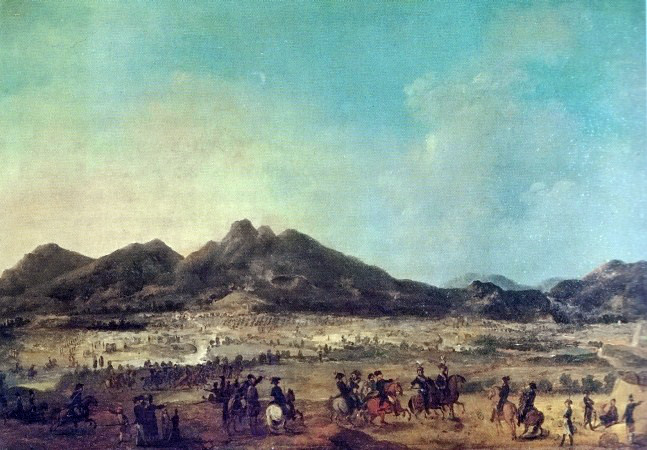
The War of the Pyrenees, also known as War of Roussillon or War of the Convention, was the Pyrenean front of the First Coalition's war against the First French Republic. It pitted Revolutionary France against the kingdoms of Spain and Portugal from March 1793 to July 1795 during the French Revolutionary Wars.
The war was fought in the eastern and western Pyrenees, at the French port of Toulon, and at sea. In 1793, a Spanish army invaded Roussillon in the eastern Pyrenees and maintained itself on French soil through April 1794. The French Revolutionary Army drove the Spanish Army back into Catalonia and inflicted a serious defeat in November 1794. After February 1795, the war in the eastern Pyrenees became a stalemate. In the western Pyrenees, the French began to win in 1794. By 1795, the French army controlled a portion of northeast Spain.
The war was brutal in at least two ways. The Committee of Public Safety decreed that all French royalist prisoners be executed. Also, French generals who lost battles or otherwise displeased the representatives-on-mission often faced prison or execution. Commanders of the Army of the Eastern Pyrenees were especially unlucky in this regard.
On 21 January 1793, the National Convention of France executed Louis XVI by guillotine, enraging the other monarchs of Europe. France was already at war with the Habsburg monarchy, the Kingdom of Prussia and the Kingdom of Sardinia. After winning the Battle of Jemappes, the French army occupied the Austrian Netherlands. Emboldened, the French government decreed annexation of the territory (modern Belgium), provoking a diplomatic break with Great Britain. On 1 February, France declared war on Britain and the Dutch Republic. On 7 March, France declared war on its former ally, Spain.
Spanish forces took part in the Siege of Toulon, which lasted from 18 September to 18 December 1793. The French were led by Jacques François Dugommier, and the Anglo-Spanish defenders were commanded by admirals Juan de Lángara, Federico Gravina, Samuel Hood and General Charles O'Hara. The Allies abandoned the port after a young officer of artillery, Napoleon Bonaparte, brought the fleet's anchorage under cannon fire. The French navy lost 14 ships of the line burned and 15 more captured. French casualties numbered 2,000, and Allied losses were twice as great. Afterward, the victors massacred up to 2,000 French royalists, who had been taken prisoner.
The Action of 14 February 1795 in the Gulf of Roses was a defeat for the French navy.
At the outbreak of war, King Charles IV of Spain appointed Captain General Antonio Ricardos to command the Army of Catalonia in the eastern Pyrenees. Ricardos invaded the Cerdagne and captured Saint-Laurent-de-Cerdans on 17 April 1793. Three days later, he routed a French force at Céret on the Tech. In despair, the elderly French commander in charge of Roussillon, Mathieu Henri Marchant de La Houlière, committed suicide. On 30 April, the French government divided the Army of the Pyrenees into the Army of the Eastern Pyrenees and the Army of the Western Pyrenees.
In the Battle of Mas Deu on 19 May 1793, Ricardos defeated Louis-Charles de Flers, which allowed the Spanish to invest the Fort de Bellegarde on 23 May. The Siege of Bellegarde ended by the French garrison surrendering on 24 June. During the Battle of Perpignan on 17 July, de Flers turned back the Spanish though French losses were heavier. On 28 August, Luc Siméon Auguste Dagobert defeated a Spanish force under Manuel la Peña at Puigcerdà in the Cerdagne.
Hub AI
War of the Pyrenees AI simulator
(@War of the Pyrenees_simulator)
War of the Pyrenees
The War of the Pyrenees, also known as War of Roussillon or War of the Convention, was the Pyrenean front of the First Coalition's war against the First French Republic. It pitted Revolutionary France against the kingdoms of Spain and Portugal from March 1793 to July 1795 during the French Revolutionary Wars.
The war was fought in the eastern and western Pyrenees, at the French port of Toulon, and at sea. In 1793, a Spanish army invaded Roussillon in the eastern Pyrenees and maintained itself on French soil through April 1794. The French Revolutionary Army drove the Spanish Army back into Catalonia and inflicted a serious defeat in November 1794. After February 1795, the war in the eastern Pyrenees became a stalemate. In the western Pyrenees, the French began to win in 1794. By 1795, the French army controlled a portion of northeast Spain.
The war was brutal in at least two ways. The Committee of Public Safety decreed that all French royalist prisoners be executed. Also, French generals who lost battles or otherwise displeased the representatives-on-mission often faced prison or execution. Commanders of the Army of the Eastern Pyrenees were especially unlucky in this regard.
On 21 January 1793, the National Convention of France executed Louis XVI by guillotine, enraging the other monarchs of Europe. France was already at war with the Habsburg monarchy, the Kingdom of Prussia and the Kingdom of Sardinia. After winning the Battle of Jemappes, the French army occupied the Austrian Netherlands. Emboldened, the French government decreed annexation of the territory (modern Belgium), provoking a diplomatic break with Great Britain. On 1 February, France declared war on Britain and the Dutch Republic. On 7 March, France declared war on its former ally, Spain.
Spanish forces took part in the Siege of Toulon, which lasted from 18 September to 18 December 1793. The French were led by Jacques François Dugommier, and the Anglo-Spanish defenders were commanded by admirals Juan de Lángara, Federico Gravina, Samuel Hood and General Charles O'Hara. The Allies abandoned the port after a young officer of artillery, Napoleon Bonaparte, brought the fleet's anchorage under cannon fire. The French navy lost 14 ships of the line burned and 15 more captured. French casualties numbered 2,000, and Allied losses were twice as great. Afterward, the victors massacred up to 2,000 French royalists, who had been taken prisoner.
The Action of 14 February 1795 in the Gulf of Roses was a defeat for the French navy.
At the outbreak of war, King Charles IV of Spain appointed Captain General Antonio Ricardos to command the Army of Catalonia in the eastern Pyrenees. Ricardos invaded the Cerdagne and captured Saint-Laurent-de-Cerdans on 17 April 1793. Three days later, he routed a French force at Céret on the Tech. In despair, the elderly French commander in charge of Roussillon, Mathieu Henri Marchant de La Houlière, committed suicide. On 30 April, the French government divided the Army of the Pyrenees into the Army of the Eastern Pyrenees and the Army of the Western Pyrenees.
In the Battle of Mas Deu on 19 May 1793, Ricardos defeated Louis-Charles de Flers, which allowed the Spanish to invest the Fort de Bellegarde on 23 May. The Siege of Bellegarde ended by the French garrison surrendering on 24 June. During the Battle of Perpignan on 17 July, de Flers turned back the Spanish though French losses were heavier. On 28 August, Luc Siméon Auguste Dagobert defeated a Spanish force under Manuel la Peña at Puigcerdà in the Cerdagne.