Hubbry Logo
search
logo
2205583

Wayne David

logo
Community Hub0 Subscribers
Read side by side
from Wikipedia

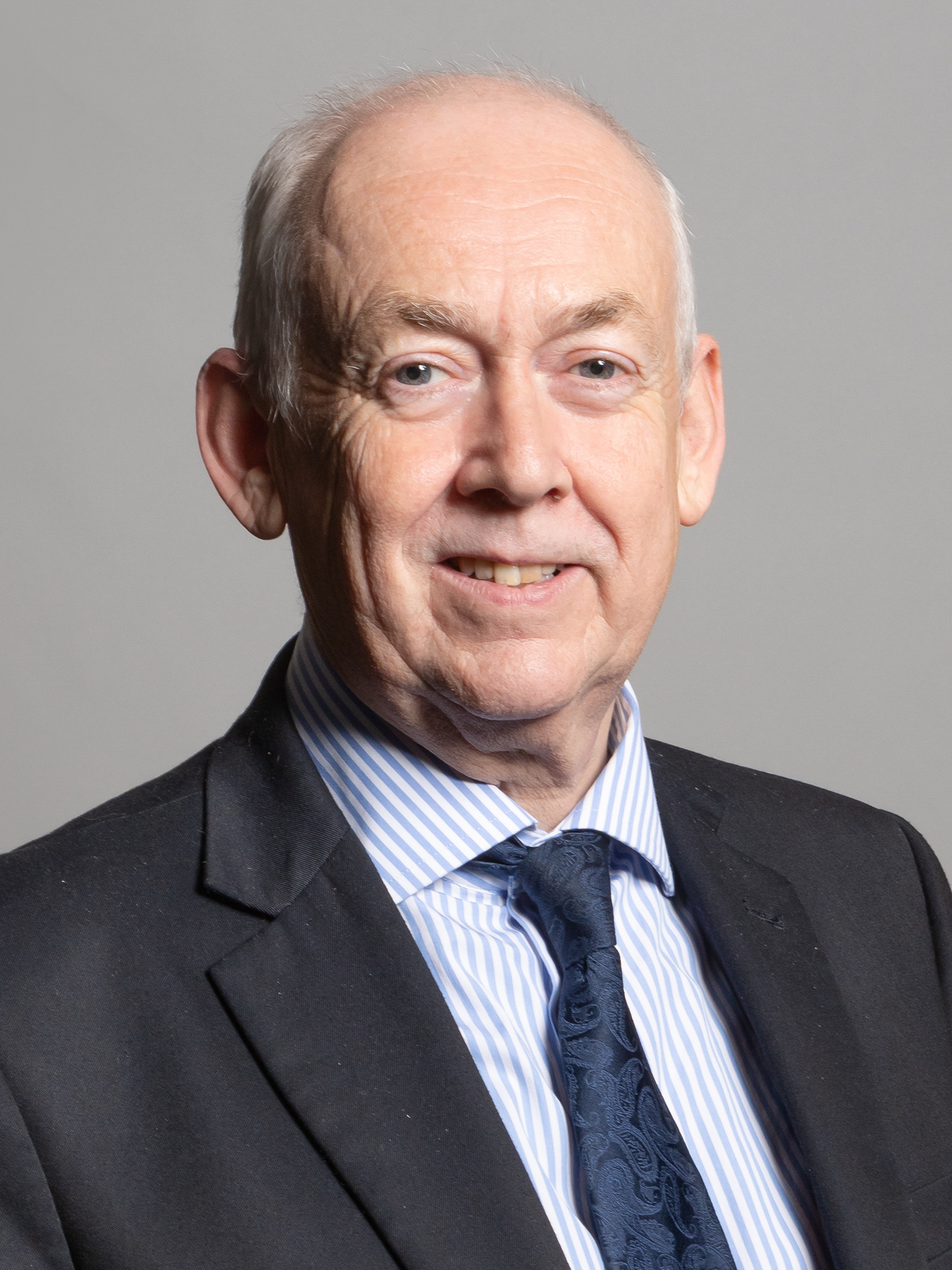
Sir Wayne David (born 1 July 1957) is a Welsh politician who served as Member of Parliament (MP) for Caerphilly from 2001 to 2024. A member of the Labour Party, he was Leader of the European Parliamentary Labour Party from 1994 to 1998. As a Member of the European Parliament, he represented South Wales from 1989 to 1994 and South Wales Central from 1994 to 1999.

Key Information

David served in government as an Assistant Whip from 2007 to 2008 and Parliamentary Under-Secretary of State for Wales from 2008 to 2010. He was a Shadow Minister under every Leader of the Opposition from 2010 to 2021, and Parliamentary Private Secretary to Ed Miliband during his tenure in the role. He was ranked as the best MP in the United Kingdom by constituents in Change.org's People-Power Index in 2019.[1] He was knighted in the 2024 Birthday Honours for Parliamentary and political service.[2]

Early life and education

[edit]

Wayne David was born in Bridgend, the son of a teacher and grandson of a coal miner. He grew up in the village of Cefn Cribwr and later attended Cynffig Comprehensive School before attending Cardiff University, where he was awarded a BA in History and Welsh History in 1979. After studying Economic History at Swansea University, he returned to Cardiff and qualified as a teacher in 1983 with a PGCE from University College Cardiff. He was awarded the Charles Morgan Prize for Welsh history in 1979.

Professional career

[edit]

David taught history at the Brynteg Comprehensive School, Bridgend from 1983 to 1985, when he left to work for the Workers' Educational Association. He became the chairman of War on Want Cymru in 1987, stepping aside in 1989. He joined the United Nations Association's Cardiff branch in 1989.

Political career

[edit]

David was an elected representative on the Welsh Executive of the Labour Party from 1981 to 1982 and 1986 to 1989. He was served as a councillor to the Cefn Cribwr Community Council in 1985, and was its chairman from 1986 until 1990. He was a member of the Labour Party National Executive Committee from 1994 to 1998.

European Parliament

[edit]

David was elected as Member of the European Parliament for South Wales in 1989, and re-elected to South Wales Central in 1994 following constituency boundary changes. He served as Leader of the European Parliamentary Labour Party from 1994 to 1998, and was previously treasurer of the group from 1989 to 1991.

He stood down as an MEP to contest the Rhondda in the first National Assembly for Wales elections in 1999. David lost to the Plaid Cymru candidate by over 2,000 votes.

UK Parliament

[edit]

David was first elected to the House of Commons at the 2001 general election, when he was elected as MP for Caerphilly with 58.2% of the vote and a majority of 14,425.[3][4] He made his maiden speech on 17 June 2001, in which he called for a new hospital in his constituency.[5]

David was a member of the European Scrutiny Committee from 2001 to 2007. In 2005, he was appointed as Parliamentary Private Secretary (PPS) to the Ministry of Defence team and then subsequently to Adam Ingram, Minister of State for the Armed Forces. He resigned as a PPS on 6 September 2006, along with a number of others, citing Prime Minister Tony Blair's refusal to name a departure date.

At the 2005 general election, David was re-elected as MP for Caerphilly, with a decreased vote share of 56.6% and an increased majority of 15,359.[6][7]

After Gordon Brown became Prime Minister, David was appointed as an Assistant Whip to the Department for Work and Pensions and Wales Office in July 2007. Following the October 2008 government reshuffle, he was promoted to Parliamentary Under-Secretary of State for Wales.

At the 2010 general election, David was again re-elected, with a decreased vote share of 44.9% and a decreased majority of 10,755.[8][9]

Following Labour's defeat at the 2010 general election, he served as Shadow Wales Minister from May to October 2010. David was appointed Shadow Europe Minister in October 2011. He served as Shadow Political and Constitutional Reform Minister from October 2011 until October 2013, when he became PPS to opposition leader Ed Miliband alongside Karen Buck. At the 2015 general election, David was again re-elected with a decreased vote share of 44.3% and a decreased majority of 10,073.[10][11][12]

In July 2015, he was appointed to shadow the Cabinet Office, Scotland Office, and Justice Department with three portfolios; Political and Constitutional Reform, Scotland, and Youth Justice. David was re-appointed to the roles by Labour Leader Jeremy Corbyn in September 2015, but resigned the following June after losing confidence in his leadership. He supported Owen Smith in the 2016 Labour leadership election.[13]

David re-joined the Corbyn's front bench in October 2016 as Shadow Armed Forces and Defence Procurement Minister. He was re-elected at the snap 2017 general election, with an increased vote share of 54.5% and an increased majority of 12,078.[14][15] He was again re-elected at the 2019 general election, with a decreased vote share of 44.9% and a decreased majority of 6,833.[16][17]

David briefly departed the front bench from January until April 2020, when he became Shadow Middle East and North Africa Minister. He stood down from the position in December 2021,[18] and announced in February 2022 his intention to retire at the 2024 general election.[19] He chose not to seek re-election due to his age.[20] He returned to the position of Shadow Middle East and North Africa Minister in June 2023.[21]

David is a member of Labour Friends of Israel.[22]

He stood down as an MP at the 2024 general election.

Special Advisor

[edit]

In 2025 he replaced former Labour MP Kevin Brenan as Chief Special Adviser to First Minister Eluned Morgan. He stepped down on 25 July 2025 for health reasons saying there was "no political reason whatsoever" for his resignation.[23]

Personal life

[edit]

David was to married Catherine Thomas from 1991 until their divorce in 2007. Thomas was employed by David during his tenure in the European Parliament, and later served as a Welsh Assembly member. He married Jayne Edwards in 2016.[24]

Publications

[edit]
  • Building on Maastricht: A Left Agenda for Europe by Wayne David, 1993, Tribune Group of Euro MPs
  • Going Forward in Europe by Wayne David, 1994
  • Contributor to The Future of Europe: Problems and Issues for the Twenty-First Century by Wayne David, 1996, St Martin's Press, ISBN 0-333-66600-3
  • Remaining True: A biography of Ness Edwards by Wayne David, Foreword by Neil Kinnock, 2006, Published by the Caerphilly Local History Society, ISBN 0-9542782-1-6

References

[edit]
[edit]
Revisions and contributorsEdit on WikipediaRead on Wikipedia
from Grokipedia
Sir Wayne David (born 1 July 1957) is a Welsh Labour Party politician who served as Member of Parliament for Caerphilly from 2001 to 2024.[1][2] David began his political career as a Member of the European Parliament for South Wales East from 1984 to 1994, where he acted as leader of the Labour delegation.[3][4] Elected to the House of Commons in 2001, he held junior government positions under the Labour administration, including Assistant Whip from 2007 to 2008 and Parliamentary Under-Secretary of State in the Wales Office from 2008 to 2010.[1] In opposition, he occupied several shadow ministerial roles, notably in foreign affairs, defence, and the Middle East and North Africa portfolio from 2023 until his retirement.[1] His parliamentary service emphasized scrutiny of international relations and Welsh affairs, culminating in his knighthood for political and public service.[5] David's tenure included alignment with Labour's centrist wing, evidenced by his resignation from the shadow cabinet in 2016 amid opposition to Jeremy Corbyn's leadership.[6] He faced brief controversy in 2016 over remarks during a radio interview suggesting that individuals with "coloured skin" in his constituency primarily operated takeaways, for which he promptly apologised, clarifying it reflected local demographics rather than prejudice.[7][8] Post-retirement from Parliament, he briefly served as chief special adviser to the Welsh First Minister before stepping down for health reasons in 2025.[9]

Personal background

Early life

Wayne David was born on 1 July 1957 in Bridgend, Wales.[10] He grew up in the nearby village of Cefn Cribwr, a former mining community in the South Wales Valleys.[3] David's family background was rooted in the region's industrial heritage; both of his grandfathers worked as coal miners, while his father was a school teacher and local councillor.[5] From an early age, David was exposed to political discourse within his Labour-supporting household, which he later described as being "born into politics."[5] This environment, shaped by his father's civic involvement and the legacy of mining trade unionism, fostered an early interest in public affairs amid the socio-economic challenges of post-industrial Wales.[3]

Education

David attended Cynffig Comprehensive School in Kenfig Hill, Bridgend County Borough.[11][12] He subsequently enrolled at University College Cardiff, where he studied history alongside music and obtained a Bachelor of Arts degree in history.[13][12] David then pursued teacher training at University College of Wales, Swansea, earning a Postgraduate Certificate in Education (PGCE) that qualified him to teach history.[12]

Pre-political career

Academic and organizational roles

David taught history for 18 months at Brynteg Comprehensive School in Bridgend from 1983 to 1985 before transitioning to adult education.[5] In that capacity, he served as a tutor organiser, delivering courses on music alongside various other subjects.[5] He later worked as a lecturer and organiser for the Workers' Educational Association in the Rhymney Valley, focusing on adult learning initiatives.[4] [3] Prior to entering elected politics, David was employed by the Youth Service in Caerphilly, where he held special responsibility for supporting voluntary youth organisations.[3] [4]

Involvement in the Labour Party

David began his involvement with the Labour Party through local activism and organizational roles in Wales. Prior to entering elected office, he served as Policy Director for the Welsh Labour Party, contributing to policy development during the late 1980s.[4] He was elected as a district and county councillor in the Ogmore Valley, representing Labour interests in community governance.[4] In 1989, David was elected as a Member of the European Parliament for South Wales, marking his entry into supranational politics while remaining active in Labour structures.[10] During his initial term as an MEP (1989–1994), he aligned with the Party of European Socialists group.[10] From August 1994 to July 1998, David served on the Labour Party's National Executive Committee (NEC), the party's governing body responsible for policy oversight and organizational decisions.[14] This role overlapped with his continued service in the European Parliament, where he represented South Wales Central until 1999.[10] As Leader of the European Parliamentary Labour Party from 1994 to 1998, he coordinated Labour MEPs' activities and advocated for party positions within the European institutions.[3]

Parliamentary career

European Parliament service

David was elected as a Member of the European Parliament (MEP) for the South Wales constituency in the 1989 European Parliament election, serving until 1994.[15] He was re-elected in 1994 for the South Wales Central constituency, continuing his service until 1999.[10] During this period, he represented the Labour Party and focused on foreign affairs, development cooperation, and institutional matters. As leader of the European Parliamentary Labour Party, David coordinated the Labour MEPs' positions and activities within the broader Group of the Party of European Socialists (PES), where he served as Vice-Chair from July 1994 to July 1998.[4] [10] In committee assignments, he was a member of the Committee on Foreign Affairs, Security and Defence Policy from July 1994 to January 1997, followed by membership in the Committee on Development and Cooperation from January 1997 to July 1999.[10] He also participated in various delegations, including those for relations with Bulgaria and Romania (1994–1997) and Slovenia (1997–1999), as well as substitute roles in regional policy and South American relations.[10] David declined to stand for re-election in 1999 to contest the Rhondda seat in the UK House of Commons, though he was unsuccessful in that bid.[5] His European Parliament tenure emphasized parliamentary diplomacy and policy scrutiny in areas aligned with Labour's priorities on international cooperation and security.[10]

UK Parliament representation

Wayne David served as the Member of Parliament (MP) for the Caerphilly constituency in Wales from 7 June 2001 until 30 May 2024.[14] He was first elected in the 2001 general election, succeeding Labour's Ron Davies who had resigned amid personal scandal.[16] Caerphilly, a safe Labour seat centered on the town of Caerphilly in South Wales, encompassed areas with strong industrial heritage and working-class communities. David was re-elected in every subsequent general election: 2005, 2010, 2015, 2017, and 2019, securing his sixth victory in the latter.[17] In the 2019 election, he polled 18,018 votes, comprising 44.9% of the valid votes cast—a decrease of 9.5 percentage points from 2017—while his majority narrowed from the prior contest where he had received 22,491 votes.[18][17] Despite national shifts, Labour retained dominance in the constituency throughout his tenure. In February 2022, David announced he would not contest the next election, citing a desire to step down after 23 years of service.[15][5] The Caerphilly constituency was abolished ahead of the 2024 general election as part of boundary reviews redistributing Welsh seats from 40 to 32, with its areas incorporated into new constituencies such as Caerphilly and Islwyn.[19] David did not stand in 2024, marking the end of his parliamentary representation.[20]

Government and opposition roles

David served in junior ministerial positions during the Labour governments of Tony Blair and Gordon Brown. He acted as a Government Whip from 2007 to 2008, assisting in the management of parliamentary business and party discipline.[21][22] He was then appointed Parliamentary Under-Secretary of State for Wales in the Wales Office from October 2008 to June 2010, where he handled responsibilities including constitutional affairs and relations with the Welsh Assembly Government.[14][4] Following the 2010 general election and the formation of the Conservative-Liberal Democrat coalition government, David returned to the opposition frontbench. He served as Shadow Minister for Wales from May to October 2010, scrutinizing the coalition's devolution policies.[14][20] Subsequent roles included Shadow Minister for Europe from October 2010 to October 2011, focusing on EU relations and foreign policy coordination.[3][4] David held further opposition positions under successive Labour leaders. From July 2015 to June 2016, he was Shadow Minister for the Cabinet Office, covering constitutional reform and Scotland-related matters, before resigning amid the leadership crisis following the EU referendum.[20][6] He rejoined the frontbench in October 2016 as Shadow Minister for Defence (Armed Forces and Defence Procurement), serving until January 2020.[23][20] Later appointments included Shadow Minister for the Middle East and North Africa from April 2020 to September 2021, and again from September 2023 until his retirement from Parliament in May 2024.[3][14] These roles involved critiquing government policies on international security, regional conflicts, and defence procurement.[5]

Post-parliamentary activities

Special advisory position

Following his resignation as Member of Parliament for Caerphilly on 30 May 2024, Wayne David was appointed Chief Special Adviser to Eluned Morgan, First Minister of Wales, on 20 December 2024.[24][25] In this role, he succeeded Kevin, serving as the senior adviser providing strategic counsel on policy, political strategy, and governmental operations within the Welsh Government.[9] The position, held from early 2025, involved direct support to the First Minister amid ongoing devolved governance challenges in Wales, including economic development and public service delivery.[26] David's tenure lasted approximately six months, ending on 18 July 2025, when he stepped down citing health reasons.[9] He was replaced by Luke Young, a former campaigns manager, in the same advisory capacity.[27] During his time in the role, David participated in key cabinet-level discussions, as evidenced by his listing among special advisers at a 31 March 2025 Welsh Government cabinet meeting.[26] The appointment drew on his extensive prior experience in Labour politics, including ministerial roles in the Wales Office, though it occurred outside formal parliamentary service.[24]

Policy positions and views

European Union and Brexit

David served as a Member of the European Parliament (MEP) for South Wales from 1984 to 1994, representing the Labour Party during a period of advancing European integration.[10] In this role, he contributed to Labour's efforts to enhance the European Parliament's legislative influence and supported policies aligning with the party's commitment to EU cooperation on economic and social issues.[15] His tenure reflected a preference for deeper UK involvement in EU institutions over isolationist alternatives. Prior to the 2016 referendum, David opposed calls for an in-out vote on EU membership, arguing in October 2011 that public concerns about the EU warranted internal reforms rather than withdrawal, stating, "My answer to that concern is not to leave Europe, but to reform it from within."[28] He campaigned for the Remain side in the June 2016 referendum, despite his Caerphilly constituency voting 55.1% to Leave.[29] Following the referendum, David accepted the result while advocating for the closest possible post-Brexit ties with the EU. Appointed Shadow Minister for Europe in October 2016, he pushed for retention of single market access and customs union alignment to mitigate economic disruption, criticizing harder exit options for risking sovereignty without influence.[30] In July 2017, he described the Norway model—retaining single market membership without formal decision-making power—as entailing a "massive loss of sovereignty" and difficult for the UK public to accept, favoring a bespoke deal that preserved regulatory input.[30] In Parliament, David consistently opposed no-deal scenarios, voting in favor of extending Article 50 in March 2019 to allow negotiation time and prevent abrupt departure.[31] During debates on the European Union (Withdrawal) Act 2018, he highlighted deficiencies in the proposed political declaration, noting it lacked commitments on key areas like citizens' rights and future trade, and urged substantive assurances beyond vague promises.[32] His positions emphasized pragmatic alignment with EU standards to safeguard Welsh industries reliant on European markets, while respecting the referendum mandate for departure.

Foreign affairs and security

David has held multiple shadow ministerial roles in foreign affairs, including Shadow Minister for Europe from 2010 to 2016, Shadow Minister for Foreign and Commonwealth Affairs from April to September 2020 and September 2020 to December 2021, and Shadow Minister for the Middle East and North Africa from September 2023 to May 2024.[14][33] In security matters, David has advocated for strengthening NATO commitments, emphasizing the alliance's role in countering threats to the rules-based international order. During a 2022 debate on NATO and international security, he endorsed Finland's and Sweden's accession to NATO and supported the UK's commitment to increase defence spending to 2% of GDP by 2022, highlighting the need for robust allied responses to aggression.[34] He has described the defence industry as vital to national security and equipping NATO forces.[35] David has consistently criticized Russian actions, urging firm international support for Ukraine following its 2022 invasion and warning of broader destabilization efforts in the Balkans and Baltic states. In 2023, he stated that NATO allies must stand with Estonia against Russian aggression, linking it to Putin's broader imperial ambitions. He has called for long-term measures beyond military aid to deter Putin, including economic and diplomatic pressure.[36][37][38] On Middle East policy, David has supported initiatives for peace, including an international fund to foster stability and a two-state solution between Israel and Palestine. In January 2024, he warned of escalation risks in Gaza and the region, advocating conflict prevention. As Shadow Minister, he affirmed Labour's independence from Israeli influence while backing humanitarian pauses in hostilities rather than immediate ceasefires, prioritizing de-escalation.[39][40][41]

Domestic and economic policies

David consistently supported Labour's approach to macroeconomic stability, praising in 2001 the party's policies since 1997 for achieving low inflation, low interest rates, and a stable economy free from previous boom-and-bust cycles.[42] He advocated devolving economic decision-making powers from central government to local levels, arguing in 2016 that top-down reforms fail to address regional disparities and that enhancing local democracy is essential for sustainable economic progress and political engagement.[43] On welfare policy, David opposed Conservative-led reforms, highlighting their disproportionate impact on deprived areas like the Welsh Valleys. In a 2014 debate, he criticized delays in personal independence payment processing—sometimes lasting nine months—and flawed work capability assessments by contractors like Atos, which assigned zero points to genuinely disabled constituents.[44] He condemned the bedroom tax for causing widespread unfairness and cited a Sheffield Hallam University report estimating an annual £430 million loss to the Valleys economy, equivalent to £650 per working-age adult, amid a weak local jobs market lacking quality opportunities.[44] David called for a Labour government to repeal the bedroom tax and implement fairer welfare changes that mitigate poverty without disincentivizing work.[44] His domestic policy focus as Shadow Minister for Political and Constitutional Reform included strengthening devolution to empower Welsh communities economically, aligning with Labour's broader commitment to regional regeneration in post-industrial areas like Caerphilly.[3]

Criticisms and controversies

David participated in parliamentary debates on the European Union (Withdrawal) Bill in September 2017, contending that the legislation represented the "wrong way for Britain to leave the European Union" due to its approach to converting EU law into domestic law and reserving powers to amend retained EU law post-Brexit.[45] His contributions emphasized the need for a managed transition and close future alignment with the EU, aligning with Labour's policy of seeking a customs union and single market access, which clashed with Conservative advocates for a clean break.[46] These positions drew opposition from Brexit hardliners, who viewed Labour's stance as undermining the referendum result by prioritizing economic ties over sovereignty.[47] In foreign policy debates on Israel and Palestine, David, as Shadow Middle East Minister, advocated a balanced approach supporting Israel's right to self-defense against groups like Hamas while calling for proportionate responses and condemning actions such as the Gaza blockade.[48] This drew criticism from pro-Palestinian activists, including those affiliated with Jewish Voice for Labour, who accused him of overlooking alleged biases in Israeli educational materials portraying Palestinians negatively and questioned whether he had raised such issues in his role.[49] David rejected claims of Labour bias toward Israel, describing suggestions of undue influence from pro-Israel groups as "ridiculous" and affirming the party's commitment to a two-state solution, including opposition to the UK's Economic Activity of Public Bodies (Overseas Matters) Bill, which he argued threatened impartiality in foreign policy.[41] Critics from the Labour left viewed his positions as insufficiently critical of Israeli actions, contributing to broader internal party tensions over Palestine policy under Keir Starmer.[50] David's sponsorship of the Strategic Litigation Against Public Participation Bill in 2024 addressed debates on protecting free speech from abusive lawsuits by wealthy individuals, such as oligarchs using courts to silence critics. While praised for tackling an under-regulated issue, the policy sparked concerns among some free speech advocates about potential overreach in judicial processes, with broader critiques of Labour's approach to balancing defamation laws and expression rights.[51] Proponents, including David, argued it prevented the weaponization of legal systems against public participation, citing cases where claims were deemed "scandalous, frivolous and vexatious."[52]

Party loyalty and internal conflicts

David has demonstrated consistent adherence to Labour Party positions across most of his parliamentary career, with a voting record showing minimal overall rebellions against the whip, but he clashed with party leadership during Jeremy Corbyn's tenure from 2015 onward.[53] In November 2015, David voted in favor of authorizing UK airstrikes against ISIS in Syria, opposing Corbyn's recommendation for Labour MPs to abstain; he publicly stated that Corbyn was "wrong" on the issue, aligning with the majority of Labour MPs who supported the motion.[54][55] A leaked internal Labour document in March 2016, compiled by Corbyn allies, ranked David among MPs deemed "hostile" to the leadership based on perceived disloyalty.[56] The escalating leadership crisis post-Brexit referendum prompted David's resignation in June 2016 from his shadow ministerial roles covering the Cabinet Office, Scotland, and justice; he explicitly called for Corbyn to resign, citing the need for party unity amid widespread shadow cabinet departures.[57][6] By July 2016, as Corbyn faced a no-confidence motion from 172 MPs, David warned that unresolved internal divisions placed Labour at a "crucial point" in its history, potentially threatening its existence as a viable opposition force.[58] Following Corbyn's re-election later in 2016, David refrained from further public challenges and resumed frontbench duties under subsequent leaders, including appointments in Keir Starmer's shadow cabinet from 2020, where he exhibited no recorded rebellions or criticisms of the leadership.[53]

Personal life

Relationships and family

David was born into a Labour-supporting family in Bridgend, Wales, with both grandfathers employed as coal miners, which shaped his early political outlook.[5] He married Catherine Thomas in 1991.[11] The couple divorced prior to 2013.[59] David later met his current wife, Jayne, through involvement with the Caerphilly Ladies Choir, bonded by a mutual interest in choral music.[5] [60]

Health challenges

David resigned from his role as special adviser to Welsh First Minister Eluned Morgan on 18 July 2025, attributing the decision to health reasons while stating explicitly that it was unrelated to political factors.[9] No further details on the nature of his health condition were publicly disclosed at the time. Prior to this, David had been active in parliamentary advocacy on health matters, including chairing the All-Party Parliamentary Group on Liver Disease and Liver Cancer, though this involvement pertained to policy rather than personal medical history.[61]

Publications

Key works and contributions

Wayne David has primarily contributed to historical scholarship through biographical works on early Labour politicians associated with his Caerphilly constituency, emphasizing their roles in Welsh political and trade union movements.[5] In 2013, he published Remaining True: A Biography of Ness Edwards, detailing the life of Ness Edwards, who represented Caerphilly as Labour MP from 1939 to 1968 and served as Minister of Transport from 1950 to 1951. The book draws on Edwards's background as a railway trade unionist and his contributions to post-war nationalization efforts, based on archival research and personal accounts from David's early exposure to Edwards's legacy.[62] David's 2019 book, Morgan Jones: Man of Conscience, provides the first full biography of Morgan Jones, Labour MP for Caerphilly and earlier constituencies, who pioneered Welsh education policy as Minister for Education from 1935 to 1936. It covers Jones's imprisonment as the first conscientious objector elected to release from Wormwood Scrubs during World War I, his pacifist activism, and influence on Labour's interwar reforms, sourced from primary documents and Jones's unpublished papers.[63][64][65] These publications reflect David's focused archival efforts to document overlooked figures in Labour's Welsh branch, aiding preservation of constituency-specific political history amid broader 20th-century party narratives.[5][66]

References

User Avatar
No comments yet.