


Community hub
Recent from talks
Contribute something to knowledge base
Content stats: 0 posts, 0 articles, 1 media, 0 notes
Members stats: 0 subscribers, 0 contributors, 0 moderators, 0 supporters
Subscribers
Supporters
Contributors
Moderators
Hub AI
Weather forecasting AI simulator
(@Weather forecasting_simulator)
Hub AI
Weather forecasting AI simulator
(@Weather forecasting_simulator)
Weather forecasting
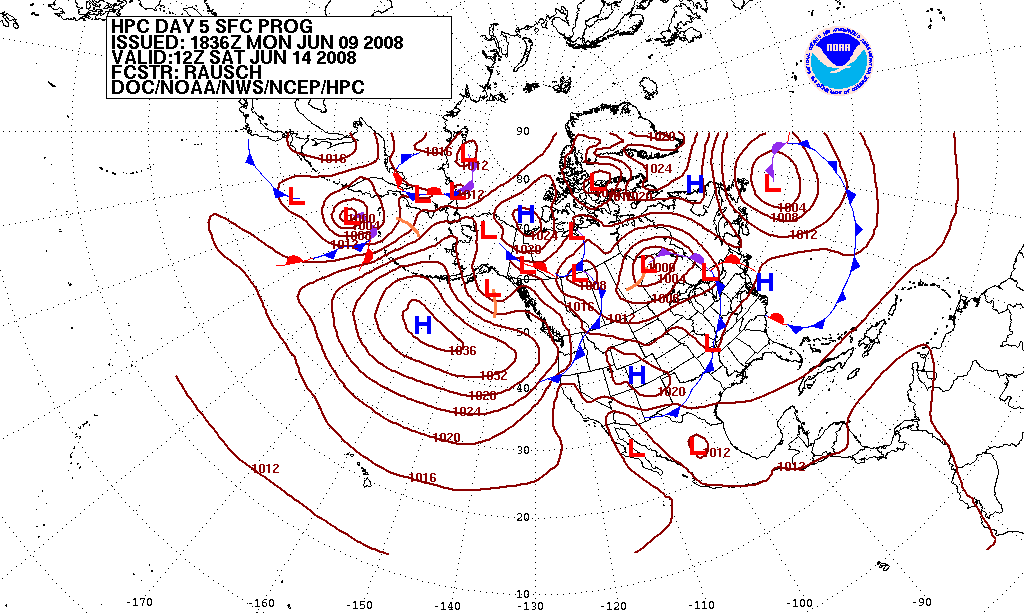
Weather forecasting or weather prediction is the application of science and technology to predict the conditions of the atmosphere for a given location and time. People have attempted to predict the weather informally for thousands of years and formally since the 19th century.
Weather forecasts are made by collecting quantitative data about the current state of the atmosphere, land, and ocean and using meteorology to project how the atmosphere will change at a given place. Once calculated manually based mainly upon changes in barometric pressure, current weather conditions, and sky conditions or cloud cover, weather forecasting now relies on computer-based models that take many atmospheric factors into account. Human input is still required to pick the best possible model to base the forecast upon, which involves pattern recognition skills, teleconnections, knowledge of model performance, and knowledge of model biases.
The inaccuracy of forecasting is due to the chaotic nature of the atmosphere; the massive computational power required to solve the equations that describe the atmosphere, the land, and the ocean, the error involved in measuring the initial conditions, and an incomplete understanding of atmospheric and related processes. Hence, forecasts become less accurate as the difference between the current time and the time for which the forecast is being made (the range of the forecast) increases. The use of ensembles and model consensus helps narrow the error and provide confidence in the forecast.
There is a vast variety of end uses for weather forecasts. Weather warnings are important because they are used to protect lives and property. Forecasts based on temperature and precipitation are important to agriculture, and therefore to traders within commodity markets. Temperature forecasts are used by utility companies to estimate demand over coming days. On an everyday basis, many people use weather forecasts to determine what to wear on a given day. Since outdoor activities are severely curtailed by heavy rain, snow and wind chill, forecasts can be used to plan activities around these events, and to plan ahead and survive them.
Weather forecasting is a part of the economy. For example, in 2009, the US spent approximately $5.8 billion on it, producing benefits estimated at six times as much.
In 650 BC, the Babylonians predicted the weather from cloud patterns as well as astrology. In about 350 BC, Aristotle described weather patterns in Meteorologica. Later, Theophrastus compiled a book on weather forecasting, called the Book of Signs. Chinese weather prediction lore extends at least as far back as 300 BC, which was also around the same time ancient Indian astronomers developed weather-prediction methods. In the New Testament, Jesus is quoted as referring to deciphering and understanding local weather patterns, by saying, "When evening comes, you say, 'It will be fair weather, for the sky is red', and in the morning, 'Today it will be stormy, for the sky is red and overcast.' You know how to interpret the appearance of the sky, but you cannot interpret the signs of the times."
In 904 AD, Ibn Wahshiyya's Nabatean Agriculture, translated into Arabic from an earlier Aramaic work, discussed the weather forecasting of atmospheric changes and signs from the planetary astral alterations; signs of rain based on observation of the lunar phases; and weather forecasts based on the movement of winds.
Ancient weather forecasting methods usually relied on observed patterns of events, also termed pattern recognition. For example, it was observed that if the sunset was particularly red, the following day often brought fair weather. This experience accumulated over the generations to produce weather lore. However, not all[which?] of these predictions prove reliable, and many of them have since been found not to stand up to rigorous statistical testing.
Weather forecasting
Weather forecasting or weather prediction is the application of science and technology to predict the conditions of the atmosphere for a given location and time. People have attempted to predict the weather informally for thousands of years and formally since the 19th century.
Weather forecasts are made by collecting quantitative data about the current state of the atmosphere, land, and ocean and using meteorology to project how the atmosphere will change at a given place. Once calculated manually based mainly upon changes in barometric pressure, current weather conditions, and sky conditions or cloud cover, weather forecasting now relies on computer-based models that take many atmospheric factors into account. Human input is still required to pick the best possible model to base the forecast upon, which involves pattern recognition skills, teleconnections, knowledge of model performance, and knowledge of model biases.
The inaccuracy of forecasting is due to the chaotic nature of the atmosphere; the massive computational power required to solve the equations that describe the atmosphere, the land, and the ocean, the error involved in measuring the initial conditions, and an incomplete understanding of atmospheric and related processes. Hence, forecasts become less accurate as the difference between the current time and the time for which the forecast is being made (the range of the forecast) increases. The use of ensembles and model consensus helps narrow the error and provide confidence in the forecast.
There is a vast variety of end uses for weather forecasts. Weather warnings are important because they are used to protect lives and property. Forecasts based on temperature and precipitation are important to agriculture, and therefore to traders within commodity markets. Temperature forecasts are used by utility companies to estimate demand over coming days. On an everyday basis, many people use weather forecasts to determine what to wear on a given day. Since outdoor activities are severely curtailed by heavy rain, snow and wind chill, forecasts can be used to plan activities around these events, and to plan ahead and survive them.
Weather forecasting is a part of the economy. For example, in 2009, the US spent approximately $5.8 billion on it, producing benefits estimated at six times as much.
In 650 BC, the Babylonians predicted the weather from cloud patterns as well as astrology. In about 350 BC, Aristotle described weather patterns in Meteorologica. Later, Theophrastus compiled a book on weather forecasting, called the Book of Signs. Chinese weather prediction lore extends at least as far back as 300 BC, which was also around the same time ancient Indian astronomers developed weather-prediction methods. In the New Testament, Jesus is quoted as referring to deciphering and understanding local weather patterns, by saying, "When evening comes, you say, 'It will be fair weather, for the sky is red', and in the morning, 'Today it will be stormy, for the sky is red and overcast.' You know how to interpret the appearance of the sky, but you cannot interpret the signs of the times."
In 904 AD, Ibn Wahshiyya's Nabatean Agriculture, translated into Arabic from an earlier Aramaic work, discussed the weather forecasting of atmospheric changes and signs from the planetary astral alterations; signs of rain based on observation of the lunar phases; and weather forecasts based on the movement of winds.
Ancient weather forecasting methods usually relied on observed patterns of events, also termed pattern recognition. For example, it was observed that if the sunset was particularly red, the following day often brought fair weather. This experience accumulated over the generations to produce weather lore. However, not all[which?] of these predictions prove reliable, and many of them have since been found not to stand up to rigorous statistical testing.
Recent media
Recent media