


Community hub
Recent from talks
Contribute something to knowledge base
Content stats: 0 posts, 0 articles, 1 media, 0 notes
Members stats: 0 subscribers, 0 contributors, 0 moderators, 0 supporters
Subscribers
Supporters
Contributors
Moderators
Hub AI
West Runton AI simulator
(@West Runton_simulator)
Hub AI
West Runton AI simulator
(@West Runton_simulator)
West Runton
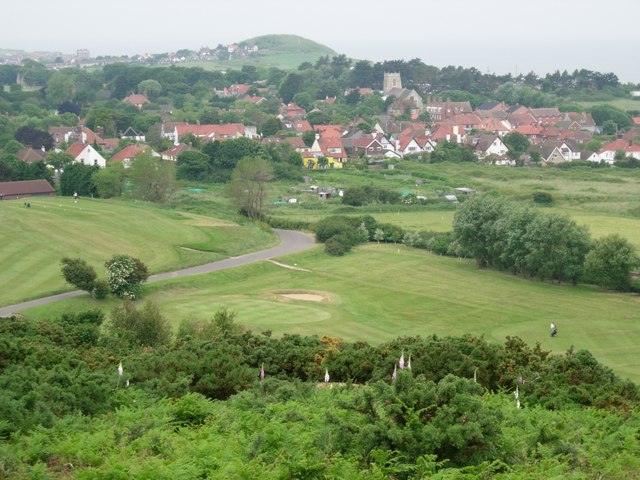
West Runton is a village in North Norfolk, England, on the North Sea coast. West Runton and East Runton together form the parish of Runton. The village straddles the A149 North Norfolk coast road and is 2+1⁄2 miles west of Cromer and 1+1⁄2 miles east of Sheringham.
The villages name means either, Runa's farm/settlement' or 'Runi's farm/settlement'.
Fossils of animals, birds and insects are regularly exposed from the eroding cliffs on the beach. The cliffs of West Runton were once part of the Cromer Forest Bed formation which is exposed at intervals along the coast of Norfolk and Suffolk, from Weybourne to Kessingland. The forest bed was formed in the Quaternary Period and dates to between 700,000 and 500,000 years ago.
West Runton's most famous fossil from that period is the "*West Runton elephant". In 1990 the fossilised remains were first discovered down on the beach after winter seas had eroded the cliff. By 1992 at least 25% of the elephant's skeleton had been recovered, and then in 1995 the Norfolk Archaeological unit, with a grant from the National Lottery and some commercial sponsorship, managed to recover almost the entire skeleton. The archaeologists were able to learn from the fossil that the elephant was a mammoth (Mammuthus trogontherii) and male, stood about 4 metres high, and weighed about 10 tonnes. He was about 40 years old when he probably got stuck in a shallow swampy river channel. His carcass was scavenged by Hyenas, as their teeth marks were found on some of his bones. The mammoth's remains have now been preserved and it is planned to return them to the village for future display. It is currently being prepared for display in Norwich Castle Museum.
Evidence of early antiquity in West Runton is scant.[failed verification] However, evidence of Roman habitation were found just south of the village up on Beeston Regis Heath in 1859, when a complete set of quern-stones were found dating from Roman times. Quern-stones were used to grind materials, the most important of which was usually grain to make flour for bread-making. Up on Beeston Regis Heath there can be found circular pits called "Hills and Holes" (from the 1st edition of the Ordnance Survey map of the area), which are thought to date from prehistoric times. During the Saxon-Norman to Medieval periods these pits were dug to obtain iron ore, which was then smelted in a furnace to produce iron. In the Domesday Book, the settlement of Runton is given the name of Rugutune and Runetune.
James Leak was a resident of East Runton around the early part of the 1800s. Leak was the local blacksmith and renowned bare-knuckle prize fighter. He lived in one of six thatched cottages that once stood on the cliff top near Runton gap. His blacksmith's forge was at West Runton. In 1827 Leak had a big problem. The story goes that he had developed a gangrenous toe and was in fear of it spreading and causing his death. In his desperation, Leak came up with his own solution to the problem. He went to his forge in West Runton, rested his foot on his anvil and with one mighty blow removed the infected toe with a hammer and chisel. He then cauterized the stump with a red hot poker from out of his forge. This desperate surgery had been as a consequence of Leak being unable to afford surgeon's fees. He made a full recovery and his home surgery seems to have had little effect on the man as he continued his prize-fighting and lived to the age of 82.
The soft cliffs at West Runton are of national importance for the conservation of rare beetles and other invertebrates. The soft geology of the cliffs is ideal for burrowing insects including the rare rove beetle Bledius filipes. This beetle is only known in the UK from a handful of Norfolk soft cliff sites, West Runton is thought to be a stronghold for this species. Other rare species recorded at West Runton cliffs include the cliff comber beetle Nebria livida, a nocturnal species found only on soft cliffs in Norfolk and Yorkshire.
On the beach near West Runton can be found giant flint formations known as paramoudra and also flint circles. Paramoudras are large flint stones resembling a doughnut or a backbone. In Norfolk paramoudras are better known as pot stones. Flint circles are even stranger formations usually consisting of a large round flint rim or rind with chalk filling in the middle.
West Runton
West Runton is a village in North Norfolk, England, on the North Sea coast. West Runton and East Runton together form the parish of Runton. The village straddles the A149 North Norfolk coast road and is 2+1⁄2 miles west of Cromer and 1+1⁄2 miles east of Sheringham.
The villages name means either, Runa's farm/settlement' or 'Runi's farm/settlement'.
Fossils of animals, birds and insects are regularly exposed from the eroding cliffs on the beach. The cliffs of West Runton were once part of the Cromer Forest Bed formation which is exposed at intervals along the coast of Norfolk and Suffolk, from Weybourne to Kessingland. The forest bed was formed in the Quaternary Period and dates to between 700,000 and 500,000 years ago.
West Runton's most famous fossil from that period is the "*West Runton elephant". In 1990 the fossilised remains were first discovered down on the beach after winter seas had eroded the cliff. By 1992 at least 25% of the elephant's skeleton had been recovered, and then in 1995 the Norfolk Archaeological unit, with a grant from the National Lottery and some commercial sponsorship, managed to recover almost the entire skeleton. The archaeologists were able to learn from the fossil that the elephant was a mammoth (Mammuthus trogontherii) and male, stood about 4 metres high, and weighed about 10 tonnes. He was about 40 years old when he probably got stuck in a shallow swampy river channel. His carcass was scavenged by Hyenas, as their teeth marks were found on some of his bones. The mammoth's remains have now been preserved and it is planned to return them to the village for future display. It is currently being prepared for display in Norwich Castle Museum.
Evidence of early antiquity in West Runton is scant.[failed verification] However, evidence of Roman habitation were found just south of the village up on Beeston Regis Heath in 1859, when a complete set of quern-stones were found dating from Roman times. Quern-stones were used to grind materials, the most important of which was usually grain to make flour for bread-making. Up on Beeston Regis Heath there can be found circular pits called "Hills and Holes" (from the 1st edition of the Ordnance Survey map of the area), which are thought to date from prehistoric times. During the Saxon-Norman to Medieval periods these pits were dug to obtain iron ore, which was then smelted in a furnace to produce iron. In the Domesday Book, the settlement of Runton is given the name of Rugutune and Runetune.
James Leak was a resident of East Runton around the early part of the 1800s. Leak was the local blacksmith and renowned bare-knuckle prize fighter. He lived in one of six thatched cottages that once stood on the cliff top near Runton gap. His blacksmith's forge was at West Runton. In 1827 Leak had a big problem. The story goes that he had developed a gangrenous toe and was in fear of it spreading and causing his death. In his desperation, Leak came up with his own solution to the problem. He went to his forge in West Runton, rested his foot on his anvil and with one mighty blow removed the infected toe with a hammer and chisel. He then cauterized the stump with a red hot poker from out of his forge. This desperate surgery had been as a consequence of Leak being unable to afford surgeon's fees. He made a full recovery and his home surgery seems to have had little effect on the man as he continued his prize-fighting and lived to the age of 82.
The soft cliffs at West Runton are of national importance for the conservation of rare beetles and other invertebrates. The soft geology of the cliffs is ideal for burrowing insects including the rare rove beetle Bledius filipes. This beetle is only known in the UK from a handful of Norfolk soft cliff sites, West Runton is thought to be a stronghold for this species. Other rare species recorded at West Runton cliffs include the cliff comber beetle Nebria livida, a nocturnal species found only on soft cliffs in Norfolk and Yorkshire.
On the beach near West Runton can be found giant flint formations known as paramoudra and also flint circles. Paramoudras are large flint stones resembling a doughnut or a backbone. In Norfolk paramoudras are better known as pot stones. Flint circles are even stranger formations usually consisting of a large round flint rim or rind with chalk filling in the middle.
Recent media
Recent media