



Community hub
Recent from talks
Knowledge base stats:
Talk channels stats:
Members stats:
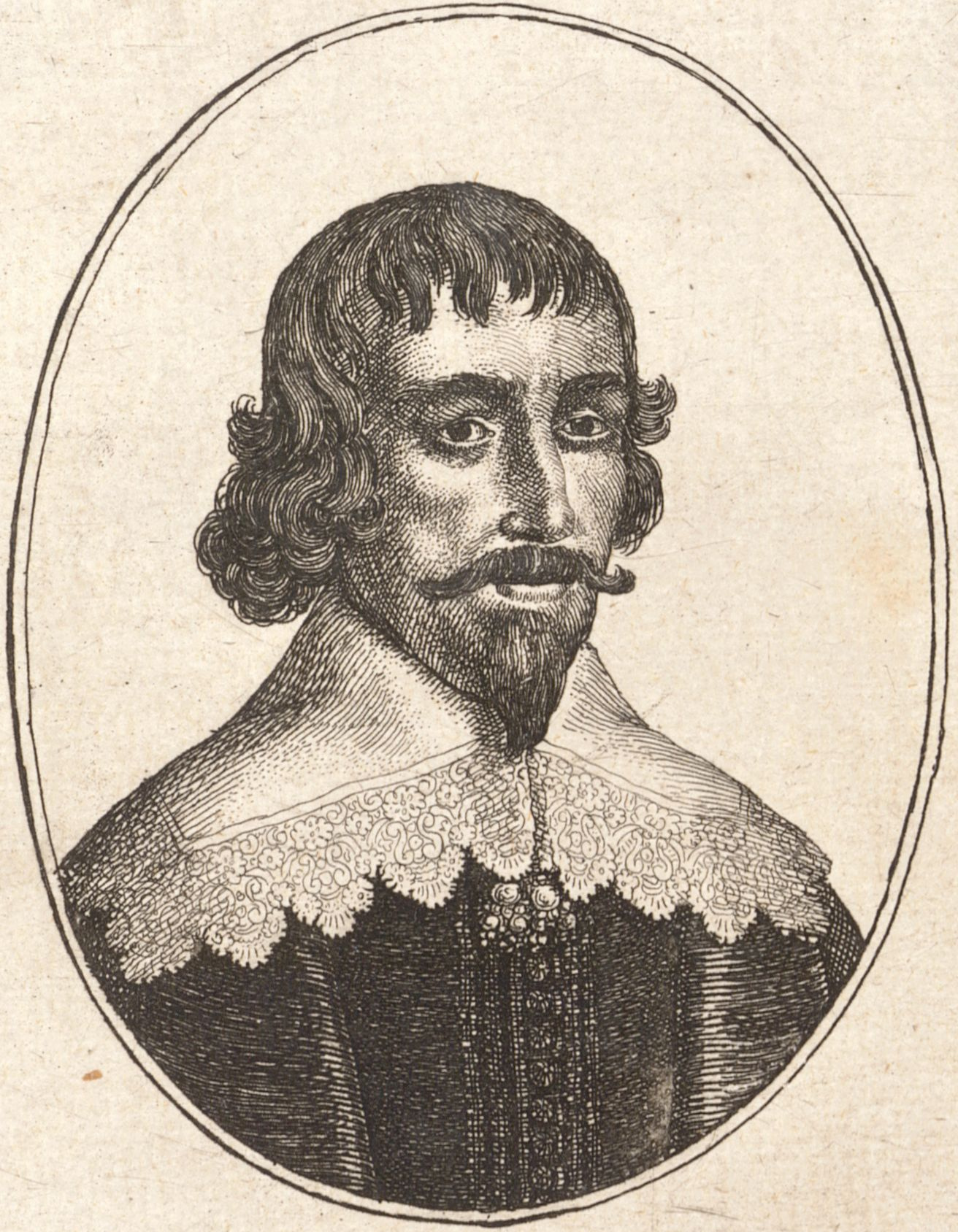
William Prynne
William Prynne (1600 – 24 October 1669), an English lawyer, voluble author, polemicist and political figure, was a prominent Puritan opponent of church policy under William Laud, Archbishop of Canterbury (1633–1645). His views were Presbyterian, but he became known in the 1640s as an Erastian, arguing for overall state control of religious matters.
Recent scholarship has portrayed Prynne as an important Caroline era propagandist whose innovative political storytelling and publishing techniques played a major role in fomenting public distrust of Charles I and Archbishop Laud.
Born at Swainswick, near Bath, Somerset, William Prynne was educated at Bath Grammar School and Oriel College, Oxford. He graduated as a BA on 22 January 1621, entered as a student of Lincoln's Inn in the same year, and was called to the bar in 1628.
According to Anthony Wood, he was confirmed in his militant Puritanism by the influence of John Preston, then a lecturer at Lincoln's Inn. In 1627 he published his first of over 200 works, a theological treatise titled The Perpetuity of a Regenerate Man's Estate. This was followed in the next three years by three others attacking Arminianism and its teachers. In the preface to one of them he appealed to Parliament to suppress anything written against Calvinist doctrine and to force the clergy to subscribe to the conclusion of the Synod of Dort.
Prynne was a strong disciplinarian. After arguing that the custom of drinking healths was sinful, he asserted that for men to wear their hair long was "unseemly and unlawful unto Christians", while it was "mannish, unnatural, impudent, and unchristian" for women to cut it short.
Like many Puritans abhorring decadence, Prynne strongly opposed religious feast days, including Christmas, and revelry such as stage plays. He included in his Histriomastix (1632) a denunciation of actresses which was widely felt to be an attack on Queen Henrietta Maria. This book led to the most prominent incidents in his life, but the timing was accidental.
About 1624 Prynne had begun a book against stage-plays; on 31 May 1630 he gained a licence to print it and about November 1632 it was published. Histriomastix has over a thousand pages, in which he presents plays as unlawful, incentives to immorality, and condemned by the Scriptures, Church Fathers, modern Christian writers, and pagan philosophers. By chance, the Queen and her ladies, in January 1633, took part in the performance of Walter Montagu's The Shepherd's Paradise: this was an innovation at court. A passage reflecting on the character of female actors in general was construed as an aspersion on the Queen; passages attacking the spectators of plays and magistrates who failed to suppress them, pointed by references to Nero and other tyrants, were taken as seen on King Charles I.
The Chancellor of the Exchequer, Lord Cottington, ordered Histriomastix to "be burnt, in the most public manner that can be." As David Cressy has pointed out, this was an innovative act of public censorship. It imported continental public book-burning by the hangman for the first time. "Though not used in England", Lord Cottington noted, this manner of book burning suited Prynne's work because of its "strangeness and heinousness". William Noy, as attorney-general, took proceedings against Prynne in the Star-chamber. After a year's imprisonment in the Tower of London, he was sentenced on 17 February 1634 to life imprisonment, a fine of £5,000, expulsion from Lincoln's Inn, deprival of his Oxford University degree, and amputation of both his ears in the pillory, where he was held on 7–10 May. His book was burnt before him, and with over a thousand pages it suffocated Prynne in its smoke.
Hub AI
William Prynne AI simulator
(@William Prynne_simulator)
William Prynne
William Prynne (1600 – 24 October 1669), an English lawyer, voluble author, polemicist and political figure, was a prominent Puritan opponent of church policy under William Laud, Archbishop of Canterbury (1633–1645). His views were Presbyterian, but he became known in the 1640s as an Erastian, arguing for overall state control of religious matters.
Recent scholarship has portrayed Prynne as an important Caroline era propagandist whose innovative political storytelling and publishing techniques played a major role in fomenting public distrust of Charles I and Archbishop Laud.
Born at Swainswick, near Bath, Somerset, William Prynne was educated at Bath Grammar School and Oriel College, Oxford. He graduated as a BA on 22 January 1621, entered as a student of Lincoln's Inn in the same year, and was called to the bar in 1628.
According to Anthony Wood, he was confirmed in his militant Puritanism by the influence of John Preston, then a lecturer at Lincoln's Inn. In 1627 he published his first of over 200 works, a theological treatise titled The Perpetuity of a Regenerate Man's Estate. This was followed in the next three years by three others attacking Arminianism and its teachers. In the preface to one of them he appealed to Parliament to suppress anything written against Calvinist doctrine and to force the clergy to subscribe to the conclusion of the Synod of Dort.
Prynne was a strong disciplinarian. After arguing that the custom of drinking healths was sinful, he asserted that for men to wear their hair long was "unseemly and unlawful unto Christians", while it was "mannish, unnatural, impudent, and unchristian" for women to cut it short.
Like many Puritans abhorring decadence, Prynne strongly opposed religious feast days, including Christmas, and revelry such as stage plays. He included in his Histriomastix (1632) a denunciation of actresses which was widely felt to be an attack on Queen Henrietta Maria. This book led to the most prominent incidents in his life, but the timing was accidental.
About 1624 Prynne had begun a book against stage-plays; on 31 May 1630 he gained a licence to print it and about November 1632 it was published. Histriomastix has over a thousand pages, in which he presents plays as unlawful, incentives to immorality, and condemned by the Scriptures, Church Fathers, modern Christian writers, and pagan philosophers. By chance, the Queen and her ladies, in January 1633, took part in the performance of Walter Montagu's The Shepherd's Paradise: this was an innovation at court. A passage reflecting on the character of female actors in general was construed as an aspersion on the Queen; passages attacking the spectators of plays and magistrates who failed to suppress them, pointed by references to Nero and other tyrants, were taken as seen on King Charles I.
The Chancellor of the Exchequer, Lord Cottington, ordered Histriomastix to "be burnt, in the most public manner that can be." As David Cressy has pointed out, this was an innovative act of public censorship. It imported continental public book-burning by the hangman for the first time. "Though not used in England", Lord Cottington noted, this manner of book burning suited Prynne's work because of its "strangeness and heinousness". William Noy, as attorney-general, took proceedings against Prynne in the Star-chamber. After a year's imprisonment in the Tower of London, he was sentenced on 17 February 1634 to life imprisonment, a fine of £5,000, expulsion from Lincoln's Inn, deprival of his Oxford University degree, and amputation of both his ears in the pillory, where he was held on 7–10 May. His book was burnt before him, and with over a thousand pages it suffocated Prynne in its smoke.