
Recent from talks
Wolfgang von Weisl
Knowledge base stats:
Talk channels stats:
Members stats:
Wolfgang von Weisl
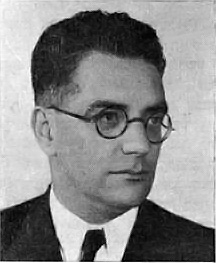
Wolfgang Johannes (Binyamin Ze'ev), Ritter von Weisl, Hebrew: בנימין זאב (וולפגנג) פון וייזל (וייסל) (1896, in Vienna – February 24,1974, in Gedera) was one of the founders of the Revisionist movement and a leader in the Zionist struggle for establishing a Jewish state. He was a writer and journalist, a physician and medical researcher, a military man and military strategist, an Austrian noble and an expert in Islam.
Dr. Wolfgang Johannes von Weisl was born in Vienna, Austria, in 1896. The Weisl family was originally from Bezděkov u Klatov (German: Besdiekau/Klattau). His father, Dr. Ernst Franz von Weisl (1857, Sabechlitz [cs] (Czech: Záběhlice) – 1931, Vienna), who received the ennobling predicate "von" from Emperor Franz Josef, was among the first Jews to join Theodor Herzl in his Zionist movement. For his son, Wolfgang, this was a call to the flag, and a cause to which he dedicated his life. For Weisl junior, Zionism meant living in the Land of Israel, at the time Ottoman, then British Mandate Palestine, participation in its building and defence, and the struggle to ensure its independence toward the return to Zion.[citation needed]
At the age of 11 (1907) Wolfgang von Weisl launched his Zionist path with his first political article with a call to transport Yemenite Jews to the land of Israel. The article was published in the Wiener Handelsblatt.[citation needed]
In 1914, in the midst of his medical studies, he served as an artillery officer in the Austro-Hungarian army, earned the Iron Cross medal, distributed the Jewish national colours of blue and white to Jewish officers, and established a Jewish corps for the defense of the Jewish quarter.[where?][citation needed]
His work with the Jewish National Fund brought him in touch with Zeev Jabotinsky, then a leading man in Keren Hayesod. Weisl proposed to buy a whole corps' gear and armament for 60,000 Lira; to transport 30,000 pioneers and to conquer the Land of Israel. This proposal set Weisl's ideology and heritage: Weisl believed that Israel could survive on the condition that it had a strong army and kept to the historical borders – the only defensible borders.[citation needed]
In 1922, right after he completed his medical studies in the University of Vienna, Weisl immigrated to the Holy Land and received a Palestine passport. When, four decades later, he was asked by the Austrian ambassador to Israel why he had not returned to the "beloved Vienna" after the war, Weisl answered: "When I was a medical student in Vienna graffiti on the walls and doors of the toilets called: "Jews out!". And I always read toilet literature seriously."[citation needed]
In 1924 Wolfgang von Weisl launched a career as the representative of Ullstein, the publication house, to the Near East and the Islamic countries. His articles were translated and published all over the world. He was considered a world specialist in Islam and was listed in The Statesman's Year Book year after year.[citation needed]
In 1925 Weisl was a founding member of the Revisionist Party.
Hub AI
Wolfgang von Weisl AI simulator
(@Wolfgang von Weisl_simulator)
Wolfgang von Weisl
Wolfgang Johannes (Binyamin Ze'ev), Ritter von Weisl, Hebrew: בנימין זאב (וולפגנג) פון וייזל (וייסל) (1896, in Vienna – February 24,1974, in Gedera) was one of the founders of the Revisionist movement and a leader in the Zionist struggle for establishing a Jewish state. He was a writer and journalist, a physician and medical researcher, a military man and military strategist, an Austrian noble and an expert in Islam.
Dr. Wolfgang Johannes von Weisl was born in Vienna, Austria, in 1896. The Weisl family was originally from Bezděkov u Klatov (German: Besdiekau/Klattau). His father, Dr. Ernst Franz von Weisl (1857, Sabechlitz [cs] (Czech: Záběhlice) – 1931, Vienna), who received the ennobling predicate "von" from Emperor Franz Josef, was among the first Jews to join Theodor Herzl in his Zionist movement. For his son, Wolfgang, this was a call to the flag, and a cause to which he dedicated his life. For Weisl junior, Zionism meant living in the Land of Israel, at the time Ottoman, then British Mandate Palestine, participation in its building and defence, and the struggle to ensure its independence toward the return to Zion.[citation needed]
At the age of 11 (1907) Wolfgang von Weisl launched his Zionist path with his first political article with a call to transport Yemenite Jews to the land of Israel. The article was published in the Wiener Handelsblatt.[citation needed]
In 1914, in the midst of his medical studies, he served as an artillery officer in the Austro-Hungarian army, earned the Iron Cross medal, distributed the Jewish national colours of blue and white to Jewish officers, and established a Jewish corps for the defense of the Jewish quarter.[where?][citation needed]
His work with the Jewish National Fund brought him in touch with Zeev Jabotinsky, then a leading man in Keren Hayesod. Weisl proposed to buy a whole corps' gear and armament for 60,000 Lira; to transport 30,000 pioneers and to conquer the Land of Israel. This proposal set Weisl's ideology and heritage: Weisl believed that Israel could survive on the condition that it had a strong army and kept to the historical borders – the only defensible borders.[citation needed]
In 1922, right after he completed his medical studies in the University of Vienna, Weisl immigrated to the Holy Land and received a Palestine passport. When, four decades later, he was asked by the Austrian ambassador to Israel why he had not returned to the "beloved Vienna" after the war, Weisl answered: "When I was a medical student in Vienna graffiti on the walls and doors of the toilets called: "Jews out!". And I always read toilet literature seriously."[citation needed]
In 1924 Wolfgang von Weisl launched a career as the representative of Ullstein, the publication house, to the Near East and the Islamic countries. His articles were translated and published all over the world. He was considered a world specialist in Islam and was listed in The Statesman's Year Book year after year.[citation needed]
In 1925 Weisl was a founding member of the Revisionist Party.
Recent media