
Recent from talks
Wonder Stories
Knowledge base stats:
Talk channels stats:
Members stats:
Wonder Stories
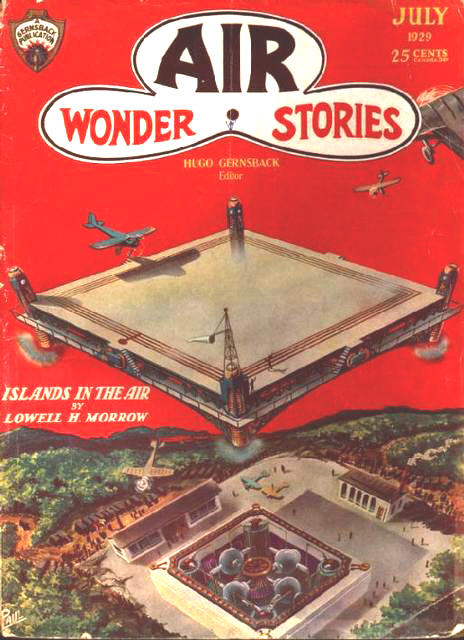
Wonder Stories was an early American science fiction magazine which was published under several titles from 1929 to 1955. It was founded by Hugo Gernsback in 1929 after he had lost control of his first science fiction magazine, Amazing Stories, when his media company Experimenter Publishing went bankrupt. Within a few months of the bankruptcy, Gernsback launched three new magazines: Air Wonder Stories, Science Wonder Stories, and Science Wonder Quarterly.
Air Wonder Stories and Science Wonder Stories were merged in 1930 as Wonder Stories, and the quarterly was renamed Wonder Stories Quarterly. The magazines were not financially successful, and in 1936 Gernsback sold Wonder Stories to Ned Pines at Beacon Publications, where, retitled Thrilling Wonder Stories, it continued for nearly 20 years. The last issue was dated Winter 1955, and the title was then merged with Startling Stories, another of Pines' science fiction magazines. Startling itself lasted only to the end of 1955 before finally succumbing to the decline of the pulp magazine industry.
The editors under Gernsback's ownership were David Lasser, who worked hard to improve the quality of the fiction, and, from mid-1933, Charles Hornig. Both Lasser and Hornig published some well-received fiction, such as Stanley Weinbaum's "A Martian Odyssey", but Hornig's efforts in particular were overshadowed by the success of Astounding Stories, which had become the leading magazine in the new field of science fiction. Under its new title, Thrilling Wonder Stories was initially unable to improve its quality. For a period in the early 1940s it was aimed at younger readers, with a juvenile editorial tone and covers that depicted beautiful women in implausibly revealing spacesuits. Later editors began to improve the fiction, and by the end of the 1940s, in the opinion of science fiction historian Mike Ashley, the magazine briefly rivaled Astounding.
By the end of the 19th century, stories centered on scientific inventions and set in the future, in the tradition of Jules Verne, were appearing regularly in popular fiction magazines. Magazines such as Munsey's Magazine and The Argosy, launched in 1889 and 1896 respectively, carried a few science fiction stories each year. Some upmarket "slicks" such as McClure's, which paid well and were aimed at a more literary audience, also carried scientific stories, but by the early years of the 20th century, science fiction (though it was not yet called that) was appearing more often in the pulp magazines than in the slicks. The first science fiction magazine, Amazing Stories, was launched in 1926 by Hugo Gernsback at the height of the pulp magazine era. It helped to form science fiction as a separately marketed genre, and by the end of the 1930s a "Golden Age of Science Fiction" had begun, inaugurated by the efforts of John W. Campbell, the editor of Astounding Science Fiction. Wonder Stories was launched in the pulp era, not long after Amazing Stories, and lasted through the Golden Age and well into the 1950s. The publisher was Stellar Publishing company based in New York City.
Gernsback's new magazine, Amazing Stories, was successful, but Gernsback lost control of the publisher when it went bankrupt in February 1929. By April he had formed a new company, Gernsback Publications Incorporated, and created two subsidiaries: Techni-Craft Publishing Corporation and Stellar Publishing Corporation. Gernsback sent out letters advertising his plans for new magazines; the mailing lists he used almost certainly were compiled from the subscription lists of Amazing Stories. This would have been illegal, as the lists were owned by Irving Trust, the receiver of the bankruptcy. Gernsback denied using the lists under oath, but historians have generally agreed that he must have done so. The letters also asked potential subscribers to decide the name of the new magazine; they voted for "Science Wonder Stories", which became the name of one of Gernsback's new magazines.
Gernsback's recovery from the bankruptcy judgment was remarkably quick. By early June he had launched three new magazines, two of which published science fiction. The June 1929 issue of Science Wonder Stories appeared on newsstands on 5 May 1929, and was followed on 5 June by the July 1929 issue of Air Wonder Stories. Both magazines were monthly, with Gernsback as editor-in-chief and David Lasser as editor. Lasser had no prior editing experience and knew little about science fiction, but his recently acquired degree from MIT convinced Gernsback to hire him.
Gernsback claimed that science fiction was educational. He repeatedly made this assertion in Amazing Stories, and continued to do so in his editorials for the new magazines, stating, for example, that "teachers encourage the reading of this fiction because they know that it gives the pupil a fundamental knowledge of science and aviation." He also recruited a panel of "nationally known educators [who] pass upon the scientific principles of all stories". Science fiction historian Everett Bleiler describes this as "fakery, pure and simple", asserting that there is no evidence that the men on the panel—some of whom, such as Lee De Forest, were well-known scientists—had any editorial influence. However, Donald Menzel, the astrophysicist on the panel, said that Gernsback sent him manuscripts and made changes to stories as a result of Menzel's commentary.
In 1930, Gernsback decided to merge Science Wonder Stories and Air Wonder Stories into Wonder Stories. The reason for the merger is unknown, although it may have been that he needed the space in the printing schedule for his new Aviation Mechanics magazine. Bleiler has suggested that the merger was caused by poor sales and a consequent need to downsize. In addition, Air Wonder Stories was probably focused on too specialized a niche to succeed. In an editorial just before Science Wonder Stories changed its name, Gernsback commented that the word "Science" in the title "has tended to retard the progress of the magazine, because many people had the impression that it is a sort of scientific periodical rather than a fiction magazine". Ironically, the inclusion of "science" in the title was the reason that science fiction writer Isaac Asimov began reading the magazine; when he saw the August 1929 issue he obtained permission to read it from his father on the grounds that it was clearly educational. Concerns about the marketability of titles seem to have surfaced in the last two issues of Science Wonder, which had the word "Science" printed in a color that made it difficult to read. On the top of the cover appeared the words "Mystery-Adventure-Romance", the last of which was a surprising way to advertise a science fiction magazine.
Hub AI
Wonder Stories AI simulator
(@Wonder Stories_simulator)
Wonder Stories
Wonder Stories was an early American science fiction magazine which was published under several titles from 1929 to 1955. It was founded by Hugo Gernsback in 1929 after he had lost control of his first science fiction magazine, Amazing Stories, when his media company Experimenter Publishing went bankrupt. Within a few months of the bankruptcy, Gernsback launched three new magazines: Air Wonder Stories, Science Wonder Stories, and Science Wonder Quarterly.
Air Wonder Stories and Science Wonder Stories were merged in 1930 as Wonder Stories, and the quarterly was renamed Wonder Stories Quarterly. The magazines were not financially successful, and in 1936 Gernsback sold Wonder Stories to Ned Pines at Beacon Publications, where, retitled Thrilling Wonder Stories, it continued for nearly 20 years. The last issue was dated Winter 1955, and the title was then merged with Startling Stories, another of Pines' science fiction magazines. Startling itself lasted only to the end of 1955 before finally succumbing to the decline of the pulp magazine industry.
The editors under Gernsback's ownership were David Lasser, who worked hard to improve the quality of the fiction, and, from mid-1933, Charles Hornig. Both Lasser and Hornig published some well-received fiction, such as Stanley Weinbaum's "A Martian Odyssey", but Hornig's efforts in particular were overshadowed by the success of Astounding Stories, which had become the leading magazine in the new field of science fiction. Under its new title, Thrilling Wonder Stories was initially unable to improve its quality. For a period in the early 1940s it was aimed at younger readers, with a juvenile editorial tone and covers that depicted beautiful women in implausibly revealing spacesuits. Later editors began to improve the fiction, and by the end of the 1940s, in the opinion of science fiction historian Mike Ashley, the magazine briefly rivaled Astounding.
By the end of the 19th century, stories centered on scientific inventions and set in the future, in the tradition of Jules Verne, were appearing regularly in popular fiction magazines. Magazines such as Munsey's Magazine and The Argosy, launched in 1889 and 1896 respectively, carried a few science fiction stories each year. Some upmarket "slicks" such as McClure's, which paid well and were aimed at a more literary audience, also carried scientific stories, but by the early years of the 20th century, science fiction (though it was not yet called that) was appearing more often in the pulp magazines than in the slicks. The first science fiction magazine, Amazing Stories, was launched in 1926 by Hugo Gernsback at the height of the pulp magazine era. It helped to form science fiction as a separately marketed genre, and by the end of the 1930s a "Golden Age of Science Fiction" had begun, inaugurated by the efforts of John W. Campbell, the editor of Astounding Science Fiction. Wonder Stories was launched in the pulp era, not long after Amazing Stories, and lasted through the Golden Age and well into the 1950s. The publisher was Stellar Publishing company based in New York City.
Gernsback's new magazine, Amazing Stories, was successful, but Gernsback lost control of the publisher when it went bankrupt in February 1929. By April he had formed a new company, Gernsback Publications Incorporated, and created two subsidiaries: Techni-Craft Publishing Corporation and Stellar Publishing Corporation. Gernsback sent out letters advertising his plans for new magazines; the mailing lists he used almost certainly were compiled from the subscription lists of Amazing Stories. This would have been illegal, as the lists were owned by Irving Trust, the receiver of the bankruptcy. Gernsback denied using the lists under oath, but historians have generally agreed that he must have done so. The letters also asked potential subscribers to decide the name of the new magazine; they voted for "Science Wonder Stories", which became the name of one of Gernsback's new magazines.
Gernsback's recovery from the bankruptcy judgment was remarkably quick. By early June he had launched three new magazines, two of which published science fiction. The June 1929 issue of Science Wonder Stories appeared on newsstands on 5 May 1929, and was followed on 5 June by the July 1929 issue of Air Wonder Stories. Both magazines were monthly, with Gernsback as editor-in-chief and David Lasser as editor. Lasser had no prior editing experience and knew little about science fiction, but his recently acquired degree from MIT convinced Gernsback to hire him.
Gernsback claimed that science fiction was educational. He repeatedly made this assertion in Amazing Stories, and continued to do so in his editorials for the new magazines, stating, for example, that "teachers encourage the reading of this fiction because they know that it gives the pupil a fundamental knowledge of science and aviation." He also recruited a panel of "nationally known educators [who] pass upon the scientific principles of all stories". Science fiction historian Everett Bleiler describes this as "fakery, pure and simple", asserting that there is no evidence that the men on the panel—some of whom, such as Lee De Forest, were well-known scientists—had any editorial influence. However, Donald Menzel, the astrophysicist on the panel, said that Gernsback sent him manuscripts and made changes to stories as a result of Menzel's commentary.
In 1930, Gernsback decided to merge Science Wonder Stories and Air Wonder Stories into Wonder Stories. The reason for the merger is unknown, although it may have been that he needed the space in the printing schedule for his new Aviation Mechanics magazine. Bleiler has suggested that the merger was caused by poor sales and a consequent need to downsize. In addition, Air Wonder Stories was probably focused on too specialized a niche to succeed. In an editorial just before Science Wonder Stories changed its name, Gernsback commented that the word "Science" in the title "has tended to retard the progress of the magazine, because many people had the impression that it is a sort of scientific periodical rather than a fiction magazine". Ironically, the inclusion of "science" in the title was the reason that science fiction writer Isaac Asimov began reading the magazine; when he saw the August 1929 issue he obtained permission to read it from his father on the grounds that it was clearly educational. Concerns about the marketability of titles seem to have surfaced in the last two issues of Science Wonder, which had the word "Science" printed in a color that made it difficult to read. On the top of the cover appeared the words "Mystery-Adventure-Romance", the last of which was a surprising way to advertise a science fiction magazine.
Recent media