
Recent from talks
XTC
Knowledge base stats:
Talk channels stats:
Members stats:
XTC
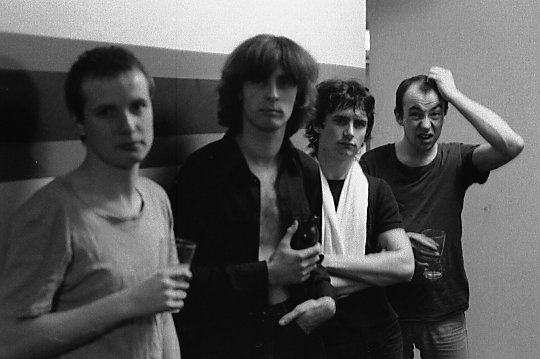
XTC were an English rock band formed in Swindon in 1972. Fronted by songwriters Andy Partridge (vocals, guitars) and Colin Moulding (vocals, bass), the band gained popularity during the rise of punk and new wave in the 1970s, later playing in a variety of styles that ranged from angular guitar riffs to elaborately arranged pop. Partly because the group did not fit into contemporary trends, they achieved only sporadic commercial success in the UK and US, but attracted a considerable cult following. They have since been recognised for their influence on post-punk, Britpop and later power pop acts.
Partridge and Moulding first met in the early 1970s and subsequently formed a glam outfit with drummer Terry Chambers. The band's name and line-up changed frequently, and it was not until 1975 that the band was known as XTC. In 1977, the group debuted on Virgin Records and were subsequently noted for their energetic live performances and their refusal to play conventional punk rock, instead synthesizing influences from ska, 1960s pop, dub music and avant-garde. The single "Making Plans for Nigel" (1979) marked their commercial breakthrough and heralded the reverberating drum sound associated with 1980s popular music.
Between 1979 and 1992, XTC had a total of 10 albums and 6 singles that reached the UK top 40, including "Sgt. Rock (Is Going to Help Me)" (1980) and "Senses Working Overtime" (1982). After 1982's English Settlement, the band stopped concert touring and became a studio-based project centred on Partridge, Moulding and guitarist Dave Gregory. A spin-off group, the Dukes of Stratosphear, was invented as a one-off excursion into 1960s-style psychedelia, but as XTC's music evolved, the distinctions between the two bands lessened. XTC continued to produce more progressive records, including the albums Skylarking (1986), Oranges & Lemons (1989) and Nonsuch (1992). In the US, "Mayor of Simpleton" (1989) was their highest-charting single, while "Dear God" (1986) was controversial for its anti-religious message.
Due to poor management, XTC never received a share of profits from record sales (of which there were millions), nor from touring revenue, forcing them into debt throughout the 1980s and 1990s. In 1993, they went on strike against Virgin, citing an unfair recording contract, and soon extricated themselves from the label. Gregory left the band during the making of Apple Venus Volume 1 (1999), after which the XTC name was used by the duo of Partridge and Moulding. In 2006, Partridge announced that his creative partnership with Moulding had disintegrated, leaving XTC "in the past tense". Moulding and Chambers briefly reunited as the duo TC&I in the late 2010s. Partridge and Gregory remain musically active.
Andy Partridge and Colin Moulding grew up on Penhill council estate in Swindon. Partridge jokingly characterised the community as being populated almost entirely by people with physical, mental or emotional defects. In the 1960s, he was a fan of contemporary pop groups like the Beatles, but was intimidated by the process of learning guitar. When the Monkees grew popular, he became interested in joining a music group. He recalled watching local guitarist Dave Gregory performing Jimi Hendrix-style songs at churches and youth clubs: "Sort of acid-skiffle. I thought, 'Ah, one day I'll play guitar!' But I didn't think I would be in the same band as this kid on the stage." Partridge eventually obtained a guitar and taught himself how to play it with no formal training. At the age of 15, he wrote his first song, titled "Please Help Me", and attracted the nickname "Rocky" for his early guitar mastery of the Beatles' "Rocky Raccoon" (1968). By the early 1970s, his music tastes had transitioned "from the Monkees to having a big binge on this Euro-avant-garde stuff. I got really in deep." One of his first bands was called "Stiff Beach", formed in August 1970. In early 1972, Partridge's constantly evolving group settled into "Star Park", a four-piece that featured himself with guitarist Dave Cartner, drummer Paul Wilson, and a bassist nicknamed "Nervous Steve".
In 1972, Partridge became closer acquainted with Gregory, a diabetic then suffering from a bout of depression, while working as an assistant at the Bon Marche record shop in Swindon. Gregory was playing the Mahavishnu Orchestra's album The Inner Mounting Flame (1971), which he later called "one of the watershed moments in my musical education." Partridge met Colin Moulding at the Stage Bar on Swindon's Old Town's Union Row, later known as Long's. Moulding had been playing bass since 1970 "because I liked music [and] I thought that playing a bass, with four strings, would be infinitely easier than playing a guitar, with six strings. That was a horrible misconception!" At the end of 1972, Moulding and drummer Terry Chambers joined Partridge's band, replacing Nervous Steve and Paul Wilson, and the group was renamed "Star Park (Mark II)". Other members would frequently join and leave the group.
After Star Park opened for Thin Lizzy in May 1973, the band renamed themselves the Helium Kidz. Partridge's musical conceptions were "blown away" upon hearing the New York Dolls: "I suddenly just wanted to play three chords again and get out my mum's makeup and stuff." He subsequently wrote hundreds of songs for the Helium Kidz, and some demo tapes were sent to Decca Records. NME ran a small profile on the "up and coming" band, which consisted of Partridge, Moulding, Chambers and guitarist Dave Cartner: "They aspire to attain the impossible dream of being able to throw a TV or two out of the window of an American hotel and have no one complain." This version of the group lasted until 1975, when the Helium Kidz decided to rebrand themselves and change their music to "three-minute pop songs that were fast and inventive." Gregory auditioned for the band at this juncture, but did not end up joining. His musicianship was determined to be "too good".
It was decided that the band have another name change. "The Dukes of Stratosphear" was considered, but Partridge thought it was too "flowery" and "psychedelic". He derived "XTC" from Jimmy Durante's exclamation upon discovering the lost chord: "That's it! I'm in ecstasy!" The name was chosen mainly for its emphatic appearance in print. Meanwhile, owing to creative differences with Partridge, synthesizer player Jonathan Perkins quit the band. In search of his replacement, Partridge found Barry Andrews through a "keyboard player seeks band" advertisement. Instead of a formal audition, the two went out drinking together. Andrews was immediately hired. During the first band rehearsal, Partridge recalled, "He sounded like Jon Lord from Deep Purple; fuzz box, wah wah pedal, bluesy runs. I said, You don't have to play like that, you can play like us if you want. The next rehearsal, he was like a maniac, like if Miró had played electric organ. Fantastic." December 1976 officially marked the beginning of the Partridge–Moulding–Chambers–Andrews line-up. The members cut their long hair and, for a time, wore "kung-fu mechanic" outfits on stage.
Hub AI
XTC AI simulator
(@XTC_simulator)
XTC
XTC were an English rock band formed in Swindon in 1972. Fronted by songwriters Andy Partridge (vocals, guitars) and Colin Moulding (vocals, bass), the band gained popularity during the rise of punk and new wave in the 1970s, later playing in a variety of styles that ranged from angular guitar riffs to elaborately arranged pop. Partly because the group did not fit into contemporary trends, they achieved only sporadic commercial success in the UK and US, but attracted a considerable cult following. They have since been recognised for their influence on post-punk, Britpop and later power pop acts.
Partridge and Moulding first met in the early 1970s and subsequently formed a glam outfit with drummer Terry Chambers. The band's name and line-up changed frequently, and it was not until 1975 that the band was known as XTC. In 1977, the group debuted on Virgin Records and were subsequently noted for their energetic live performances and their refusal to play conventional punk rock, instead synthesizing influences from ska, 1960s pop, dub music and avant-garde. The single "Making Plans for Nigel" (1979) marked their commercial breakthrough and heralded the reverberating drum sound associated with 1980s popular music.
Between 1979 and 1992, XTC had a total of 10 albums and 6 singles that reached the UK top 40, including "Sgt. Rock (Is Going to Help Me)" (1980) and "Senses Working Overtime" (1982). After 1982's English Settlement, the band stopped concert touring and became a studio-based project centred on Partridge, Moulding and guitarist Dave Gregory. A spin-off group, the Dukes of Stratosphear, was invented as a one-off excursion into 1960s-style psychedelia, but as XTC's music evolved, the distinctions between the two bands lessened. XTC continued to produce more progressive records, including the albums Skylarking (1986), Oranges & Lemons (1989) and Nonsuch (1992). In the US, "Mayor of Simpleton" (1989) was their highest-charting single, while "Dear God" (1986) was controversial for its anti-religious message.
Due to poor management, XTC never received a share of profits from record sales (of which there were millions), nor from touring revenue, forcing them into debt throughout the 1980s and 1990s. In 1993, they went on strike against Virgin, citing an unfair recording contract, and soon extricated themselves from the label. Gregory left the band during the making of Apple Venus Volume 1 (1999), after which the XTC name was used by the duo of Partridge and Moulding. In 2006, Partridge announced that his creative partnership with Moulding had disintegrated, leaving XTC "in the past tense". Moulding and Chambers briefly reunited as the duo TC&I in the late 2010s. Partridge and Gregory remain musically active.
Andy Partridge and Colin Moulding grew up on Penhill council estate in Swindon. Partridge jokingly characterised the community as being populated almost entirely by people with physical, mental or emotional defects. In the 1960s, he was a fan of contemporary pop groups like the Beatles, but was intimidated by the process of learning guitar. When the Monkees grew popular, he became interested in joining a music group. He recalled watching local guitarist Dave Gregory performing Jimi Hendrix-style songs at churches and youth clubs: "Sort of acid-skiffle. I thought, 'Ah, one day I'll play guitar!' But I didn't think I would be in the same band as this kid on the stage." Partridge eventually obtained a guitar and taught himself how to play it with no formal training. At the age of 15, he wrote his first song, titled "Please Help Me", and attracted the nickname "Rocky" for his early guitar mastery of the Beatles' "Rocky Raccoon" (1968). By the early 1970s, his music tastes had transitioned "from the Monkees to having a big binge on this Euro-avant-garde stuff. I got really in deep." One of his first bands was called "Stiff Beach", formed in August 1970. In early 1972, Partridge's constantly evolving group settled into "Star Park", a four-piece that featured himself with guitarist Dave Cartner, drummer Paul Wilson, and a bassist nicknamed "Nervous Steve".
In 1972, Partridge became closer acquainted with Gregory, a diabetic then suffering from a bout of depression, while working as an assistant at the Bon Marche record shop in Swindon. Gregory was playing the Mahavishnu Orchestra's album The Inner Mounting Flame (1971), which he later called "one of the watershed moments in my musical education." Partridge met Colin Moulding at the Stage Bar on Swindon's Old Town's Union Row, later known as Long's. Moulding had been playing bass since 1970 "because I liked music [and] I thought that playing a bass, with four strings, would be infinitely easier than playing a guitar, with six strings. That was a horrible misconception!" At the end of 1972, Moulding and drummer Terry Chambers joined Partridge's band, replacing Nervous Steve and Paul Wilson, and the group was renamed "Star Park (Mark II)". Other members would frequently join and leave the group.
After Star Park opened for Thin Lizzy in May 1973, the band renamed themselves the Helium Kidz. Partridge's musical conceptions were "blown away" upon hearing the New York Dolls: "I suddenly just wanted to play three chords again and get out my mum's makeup and stuff." He subsequently wrote hundreds of songs for the Helium Kidz, and some demo tapes were sent to Decca Records. NME ran a small profile on the "up and coming" band, which consisted of Partridge, Moulding, Chambers and guitarist Dave Cartner: "They aspire to attain the impossible dream of being able to throw a TV or two out of the window of an American hotel and have no one complain." This version of the group lasted until 1975, when the Helium Kidz decided to rebrand themselves and change their music to "three-minute pop songs that were fast and inventive." Gregory auditioned for the band at this juncture, but did not end up joining. His musicianship was determined to be "too good".
It was decided that the band have another name change. "The Dukes of Stratosphear" was considered, but Partridge thought it was too "flowery" and "psychedelic". He derived "XTC" from Jimmy Durante's exclamation upon discovering the lost chord: "That's it! I'm in ecstasy!" The name was chosen mainly for its emphatic appearance in print. Meanwhile, owing to creative differences with Partridge, synthesizer player Jonathan Perkins quit the band. In search of his replacement, Partridge found Barry Andrews through a "keyboard player seeks band" advertisement. Instead of a formal audition, the two went out drinking together. Andrews was immediately hired. During the first band rehearsal, Partridge recalled, "He sounded like Jon Lord from Deep Purple; fuzz box, wah wah pedal, bluesy runs. I said, You don't have to play like that, you can play like us if you want. The next rehearsal, he was like a maniac, like if Miró had played electric organ. Fantastic." December 1976 officially marked the beginning of the Partridge–Moulding–Chambers–Andrews line-up. The members cut their long hair and, for a time, wore "kung-fu mechanic" outfits on stage.
Recent media