



Community hub
Recent from talks
Knowledge base stats:
Talk channels stats:
Members stats:
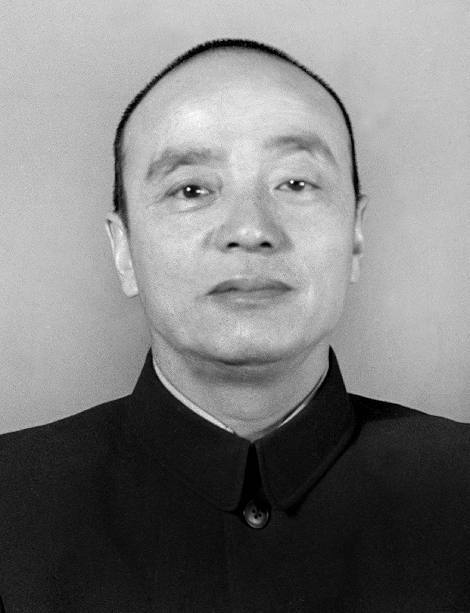
Yang Shangkun
Yang Shangkun (3 August 1907 – 14 September 1998) was a Chinese Communist military and political leader, president of China from 1988 to 1993, and one of the Eight Elders that dominated the party after the death of Mao Zedong.
Born to a prosperous land-owning family, Yang studied politics at Shanghai University and Marxist philosophy and revolutionary tactics at Moscow Sun Yat-sen University he was one of the 28 Bolsheviks. He went on to hold high office under both Mao Zedong and later Deng Xiaoping; from 1945 to 1965 he was Director of the General Office and from 1945 to 1956 Secretary–General of the Central Military Commission (CMC). In these positions, Yang oversaw much of the day-to-day running of government and Party affairs, both political and military, amassing a great deal of bureaucratic power by controlling things like the flow of documents, the keeping of records, and the approval and allocation of funds. Purged, arrested and imprisoned during the Cultural Revolution, he spent 12 years in prison but staged a comeback in 1978, becoming a key ally of Deng, serving as Mayor of Guangzhou (1979–81), and returning to the CMC as Secretary–General and also Vice Chairman (1981–89), before assuming the presidency.
One of the earliest supporters of reform and opening up, Yang justified it with references to Vladimir Lenin and the New Economic Policy. However, he strongly opposed any form of political reform, and, despite his own suffering during the Cultural Revolution, actively defended the image and record of Mao. Throughout the 1980s and early 1990s, Yang and his half-brother, General Yang Baibing, were among the most powerful figures in the People's Liberation Army (PLA). Despite his initial hesitation, he went on to play a leading role in crushing the 1989 Tiananmen Square protests and was actually the one who planned and supervised the operations to clear the square and surrounding streets. Yang's downfall came in 1993, when he failed in his attempts to undermine the new leadership of Jiang Zemin and to retain control of the PLA, and was forced to retire by a coalition of Party elders, including Deng himself.
Yang was born to a land-owning family in Shuangjiang, Tongnan County, near the city of Chongqing in Sichuan, and studied at Chengdu Higher Normal School and its affiliated secondary school in 1920–25, and then returned to Chongqing. His older brother, Yang Yingong was one of the founding Executive Committee members of the Chinese Communist Party (CCP) in Sichuan, and influenced Yang Shangkun's ideological orientation. After joining the Communist Youth League in 1925, and the CCP in 1926, he enrolled in Shanghai University, where he studied politics. Later in 1927 Yang traveled to the Soviet Union and enrolled at the Moscow Sun Yat-sen University, where he studied Marxist theory and techniques of political organization and mobilization.
Yang was a member of a group of Chinese students who studied in Moscow and returned to China to take a leading role in the CCP, later known as the 28 Bolsheviks. The Comintern sent Yang back to China to assist and support other pro-Comintern CCP leaders, including Bo Gu, Wang Ming, and Zhang Guotao, but Yang and some of the other 28 Bolsheviks, including Ye Jianying, Wang Jiaxiang and Zhang Wentian supported Mao Zedong instead. On his return from Moscow in 1931, Yang Shangkun started his military career in the Chinese Red Army, serving as Director of the Political Department in the 1st Red Army and moving around different battle areas under the command of Zhu De and Zhou Enlai. In January 1934, he was appointed Political Commissar of the 3rd Red Army, commanded by Peng Dehuai.
During the Second Sino–Japanese War Yang Shangkun was Deputy Secretary of the CCP North China Bureau and worked with Liu Shaoqi behind the Japanese lines. In January 1939, Yang became Secretary of the North China Bureau and worked with Zhu De and Peng Dehuai to cooperate with the military operations of the Eighth Route Army, including the Hundred Regiments Campaign. In 1941, Yang returned to Yan'an and worked as personal aide to Mao. In 1945, he became the Director of the General Office of the Party, as well as Secretary–General of the Central Military Commission, that was chaired by Mao himself. In these capacities, he was responsible for much of the day-to-day administration of the Party's military and political work, and carried out this duty with much success.
In the subsequent Chinese Civil War, Yang was Commander of the "Central Security Force" protecting the Party Center and, in his roles as Director of the General Office and Secretary–General of the CMC, played a significant role in the ultimate Communist victory and the establishment of the People's Republic of China in 1949.
After the founding of the PRC in October 1949 and until the outbreak of the Cultural Revolution in 1966, Yang Shangkun was one of very few CCP leaders who worked closely with Mao Zedong at Zhongnanhai on a daily basis. As the Director of the General Office and Secretary–General of the CMC, he oversaw much of the actual day-to-day work of most party activities and military affairs. On the eve of the Cultural Revolution Yang was identified as a supporter of Liu Shaoqi and Deng Xiaoping, and was purged as a counter-revolutionary. After being ejected from the Communist Party and removed from all positions, Yang was persecuted by Red Guards, who accused Yang of planting a covert listening device to spy on Mao, the same accusation shared by Deng Xiaoping.
Hub AI
Yang Shangkun AI simulator
(@Yang Shangkun_simulator)
Yang Shangkun
Yang Shangkun (3 August 1907 – 14 September 1998) was a Chinese Communist military and political leader, president of China from 1988 to 1993, and one of the Eight Elders that dominated the party after the death of Mao Zedong.
Born to a prosperous land-owning family, Yang studied politics at Shanghai University and Marxist philosophy and revolutionary tactics at Moscow Sun Yat-sen University he was one of the 28 Bolsheviks. He went on to hold high office under both Mao Zedong and later Deng Xiaoping; from 1945 to 1965 he was Director of the General Office and from 1945 to 1956 Secretary–General of the Central Military Commission (CMC). In these positions, Yang oversaw much of the day-to-day running of government and Party affairs, both political and military, amassing a great deal of bureaucratic power by controlling things like the flow of documents, the keeping of records, and the approval and allocation of funds. Purged, arrested and imprisoned during the Cultural Revolution, he spent 12 years in prison but staged a comeback in 1978, becoming a key ally of Deng, serving as Mayor of Guangzhou (1979–81), and returning to the CMC as Secretary–General and also Vice Chairman (1981–89), before assuming the presidency.
One of the earliest supporters of reform and opening up, Yang justified it with references to Vladimir Lenin and the New Economic Policy. However, he strongly opposed any form of political reform, and, despite his own suffering during the Cultural Revolution, actively defended the image and record of Mao. Throughout the 1980s and early 1990s, Yang and his half-brother, General Yang Baibing, were among the most powerful figures in the People's Liberation Army (PLA). Despite his initial hesitation, he went on to play a leading role in crushing the 1989 Tiananmen Square protests and was actually the one who planned and supervised the operations to clear the square and surrounding streets. Yang's downfall came in 1993, when he failed in his attempts to undermine the new leadership of Jiang Zemin and to retain control of the PLA, and was forced to retire by a coalition of Party elders, including Deng himself.
Yang was born to a land-owning family in Shuangjiang, Tongnan County, near the city of Chongqing in Sichuan, and studied at Chengdu Higher Normal School and its affiliated secondary school in 1920–25, and then returned to Chongqing. His older brother, Yang Yingong was one of the founding Executive Committee members of the Chinese Communist Party (CCP) in Sichuan, and influenced Yang Shangkun's ideological orientation. After joining the Communist Youth League in 1925, and the CCP in 1926, he enrolled in Shanghai University, where he studied politics. Later in 1927 Yang traveled to the Soviet Union and enrolled at the Moscow Sun Yat-sen University, where he studied Marxist theory and techniques of political organization and mobilization.
Yang was a member of a group of Chinese students who studied in Moscow and returned to China to take a leading role in the CCP, later known as the 28 Bolsheviks. The Comintern sent Yang back to China to assist and support other pro-Comintern CCP leaders, including Bo Gu, Wang Ming, and Zhang Guotao, but Yang and some of the other 28 Bolsheviks, including Ye Jianying, Wang Jiaxiang and Zhang Wentian supported Mao Zedong instead. On his return from Moscow in 1931, Yang Shangkun started his military career in the Chinese Red Army, serving as Director of the Political Department in the 1st Red Army and moving around different battle areas under the command of Zhu De and Zhou Enlai. In January 1934, he was appointed Political Commissar of the 3rd Red Army, commanded by Peng Dehuai.
During the Second Sino–Japanese War Yang Shangkun was Deputy Secretary of the CCP North China Bureau and worked with Liu Shaoqi behind the Japanese lines. In January 1939, Yang became Secretary of the North China Bureau and worked with Zhu De and Peng Dehuai to cooperate with the military operations of the Eighth Route Army, including the Hundred Regiments Campaign. In 1941, Yang returned to Yan'an and worked as personal aide to Mao. In 1945, he became the Director of the General Office of the Party, as well as Secretary–General of the Central Military Commission, that was chaired by Mao himself. In these capacities, he was responsible for much of the day-to-day administration of the Party's military and political work, and carried out this duty with much success.
In the subsequent Chinese Civil War, Yang was Commander of the "Central Security Force" protecting the Party Center and, in his roles as Director of the General Office and Secretary–General of the CMC, played a significant role in the ultimate Communist victory and the establishment of the People's Republic of China in 1949.
After the founding of the PRC in October 1949 and until the outbreak of the Cultural Revolution in 1966, Yang Shangkun was one of very few CCP leaders who worked closely with Mao Zedong at Zhongnanhai on a daily basis. As the Director of the General Office and Secretary–General of the CMC, he oversaw much of the actual day-to-day work of most party activities and military affairs. On the eve of the Cultural Revolution Yang was identified as a supporter of Liu Shaoqi and Deng Xiaoping, and was purged as a counter-revolutionary. After being ejected from the Communist Party and removed from all positions, Yang was persecuted by Red Guards, who accused Yang of planting a covert listening device to spy on Mao, the same accusation shared by Deng Xiaoping.