
Recent from talks
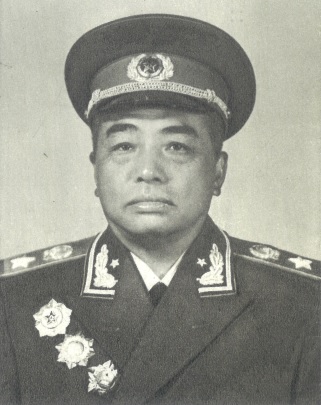
Peng Dehuai
Knowledge base stats:
Talk channels stats:
Members stats:
Peng Dehuai
Peng Dehuai (October 24, 1898 – November 29, 1974; also spelled as Peng Teh-Huai) was a Chinese general and politician who was the Minister of National Defense from 1954 to 1959.
Born into a poor peasant family, and received several years of primary education before his family's poverty forced him to suspend his education at the age of ten, and to work for several years as a manual laborer. When he was sixteen, Peng became a professional soldier. Over the next ten years Peng served in the armies of several Hunan-based warlord armies, raising himself from the rank of private second class to major. In 1926, Peng's forces joined the Kuomintang, and Peng also got introduced to communism during this time. Peng participated in the Northern Expedition, and supported Wang Jingwei's attempt to form a left-leaning Kuomintang government based in Wuhan. After Wang was defeated, Peng briefly rejoined Chiang Kai-shek's forces before joining the Chinese Communist Party (CCP), allying himself with Mao Zedong and Zhu De.
Peng was one of the most senior generals who defended the Jiangxi Soviet from Chiang's attempts to capture it, and his successes were rivaled only by Lin Biao. Peng participated in the Long March, and supported Mao Zedong at the Zunyi Conference, which was critical for Mao's rise to power. During the 1937–1945 Second Sino-Japanese War, Peng was one of the strongest supporters of pursuing a ceasefire with the Kuomintang in order to concentrate China's collective resources on resisting the Empire of Japan. Peng was the senior commander in the combined Kuomintang-Communist efforts to resist the Japanese occupation of Shanxi in 1937; and, by 1938, was in command of two-thirds of the Eighth Route Army. In 1940, Peng conducted the Hundred Regiments Offensive, a massive Communist effort to disrupt Japanese logistical networks across northern China. The Hundred Regiments Offensive was modestly successful, but political disputes within the Communist Party led to Peng being recalled to Yan'an, and he spent the rest of the war without being in active command. After the Japanese surrendered, in 1945, Peng was given command of Communist forces in Northwest China. He was the most senior commander responsible for defending the Communist leadership in Shaanxi from Kuomintang forces, saving Mao from being captured at least once. Peng eventually defeated the Kuomintang in Northwest China, captured huge amounts of military supplies, and actively incorporated the huge area, including Xinjiang, into the People's Republic of China.
Peng was one of the few senior military leaders who supported Mao's suggestion to involve China directly in the 1950–1953 Korean War, and he served as the direct commander of the Chinese People's Volunteer Army for the first half of the war (though Mao and Zhou Enlai were technically more senior). Peng's experiences in the Korean War convinced him that the Chinese military had to become more professional, organized, and well-equipped in order to prepare itself for the conditions of modern technical warfare. Because the Soviet Union was the only communist country then equipped with a fully modern, professional army, Peng attempted to reform China's military on the Soviet model over the next several years, making the army less political and more professional (contrary to the political goals of Mao). Peng resisted Mao's attempts to develop a personality cult throughout the 1950s; and, when Mao's economic policies associated with the Great Leap Forward caused a nationwide famine, Peng became critical of Mao's leadership. The rivalry between Peng and Mao culminated in an open confrontation between the two at the 1959 Lushan Conference. Mao won the confrontation, labeling Peng as a leader of an "anti-Party clique", and purging Peng from all influential positions for the rest of his life.
Peng lived in virtual obscurity until 1965, when the reformers Liu Shaoqi and Deng Xiaoping supported Peng's limited return to government for developing military industries in Southwest China. In 1966, during the advent of the Cultural Revolution, Peng was arrested by the Red Guards. From 1966 to 1970, radical factions within the CCP, led by Lin Biao and Mao's wife, Jiang Qing, singled out Peng for national persecution, and Peng was publicly humiliated in numerous large-scale struggle sessions and subjected to physical and psychological torture in organized efforts to force Peng to confess his "crimes" against Mao Zedong and the CCP. In 1970, Peng was formally tried and sentenced to life imprisonment, and he died in prison in 1974. After Mao died in 1976, Peng's old ally, Deng Xiaoping, emerged as China's paramount leader. Deng led an effort to formally rehabilitate people who he believed to have been unjustly persecuted during the Cultural Revolution, and Peng was one of the first leaders to be posthumously rehabilitated, in 1978. In modern China, Peng is considered one of the most successful and highly respected generals in the history of the CCP.
Peng was born on October 24, 1898, in the village of Shixiang, Xiangtan County, Hunan. His birth name was "Peng Dehua". Peng's family lived in a thatched-straw hut and owned approximately 1.5 acres of irrigated land on which the family grew bamboo, sweet potatoes, tea, cotton, and various vegetables. His father also operated a bean curd shop. The income from the land and shop supported an extended family of eight people, including Peng, his three brothers, his parents, his grandmother, and a grand-uncle. Peng's grand-uncle had joined and fought for the Taiping rebellion and used to tell Peng about the old Taiping ideals: everyone should have enough food to eat, women should not bind their feet, and land should be redistributed equally. Peng later described his own class background as "lower-middle peasant."
From 1905 to 1907, Peng was enrolled in a traditional Confucian primary school. In 1908, Peng attended a modern primary school but at the age of ten was forced to withdraw from this school because of his family's deteriorating financial situation. In 1905 to 1906, there was a severe drought in Hunan. Peng's mother died in 1905, and Peng's six-month-old brother died of hunger. Peng's father was forced to sell most of his family possessions for food and to pawn most of his family's land. When Peng was withdrawn from school in 1908, he and his brothers were sent to beg for food in their village. From 1908 to 1910, Peng took work on looking after a pair of water buffaloes.
When Peng's grand-uncle died in 1911, Peng left home and worked at a coalmine in Xiangtan, where he pushed carts of coal for a wage of nine yuan a month. In 1912, shortly after the founding of the Republic of China, the mine went bankrupt and the owners fled, which cheated Peng out of half his annual wages. Peng returned home in 1912 and took a number of odd jobs. In 1913, Hunan suffered another drought and famine, and Peng participated in a public demonstration that escalated into the seizure of a grain merchant's storehouse and the redistribution of grain among the peasants. Village police issued a warrant for Peng's arrest, and he fled to northern Hunan, where he worked for two years as a construction laborer for the construction of a dam near Dongting Lake. When the dam was completed in 1916, Peng assumed that he was no longer in danger of being arrested and returned home and joined the army of a local Kuomintang-aligned warlord, Tang Xiangming.
Hub AI
Peng Dehuai AI simulator
(@Peng Dehuai_simulator)
Peng Dehuai
Peng Dehuai (October 24, 1898 – November 29, 1974; also spelled as Peng Teh-Huai) was a Chinese general and politician who was the Minister of National Defense from 1954 to 1959.
Born into a poor peasant family, and received several years of primary education before his family's poverty forced him to suspend his education at the age of ten, and to work for several years as a manual laborer. When he was sixteen, Peng became a professional soldier. Over the next ten years Peng served in the armies of several Hunan-based warlord armies, raising himself from the rank of private second class to major. In 1926, Peng's forces joined the Kuomintang, and Peng also got introduced to communism during this time. Peng participated in the Northern Expedition, and supported Wang Jingwei's attempt to form a left-leaning Kuomintang government based in Wuhan. After Wang was defeated, Peng briefly rejoined Chiang Kai-shek's forces before joining the Chinese Communist Party (CCP), allying himself with Mao Zedong and Zhu De.
Peng was one of the most senior generals who defended the Jiangxi Soviet from Chiang's attempts to capture it, and his successes were rivaled only by Lin Biao. Peng participated in the Long March, and supported Mao Zedong at the Zunyi Conference, which was critical for Mao's rise to power. During the 1937–1945 Second Sino-Japanese War, Peng was one of the strongest supporters of pursuing a ceasefire with the Kuomintang in order to concentrate China's collective resources on resisting the Empire of Japan. Peng was the senior commander in the combined Kuomintang-Communist efforts to resist the Japanese occupation of Shanxi in 1937; and, by 1938, was in command of two-thirds of the Eighth Route Army. In 1940, Peng conducted the Hundred Regiments Offensive, a massive Communist effort to disrupt Japanese logistical networks across northern China. The Hundred Regiments Offensive was modestly successful, but political disputes within the Communist Party led to Peng being recalled to Yan'an, and he spent the rest of the war without being in active command. After the Japanese surrendered, in 1945, Peng was given command of Communist forces in Northwest China. He was the most senior commander responsible for defending the Communist leadership in Shaanxi from Kuomintang forces, saving Mao from being captured at least once. Peng eventually defeated the Kuomintang in Northwest China, captured huge amounts of military supplies, and actively incorporated the huge area, including Xinjiang, into the People's Republic of China.
Peng was one of the few senior military leaders who supported Mao's suggestion to involve China directly in the 1950–1953 Korean War, and he served as the direct commander of the Chinese People's Volunteer Army for the first half of the war (though Mao and Zhou Enlai were technically more senior). Peng's experiences in the Korean War convinced him that the Chinese military had to become more professional, organized, and well-equipped in order to prepare itself for the conditions of modern technical warfare. Because the Soviet Union was the only communist country then equipped with a fully modern, professional army, Peng attempted to reform China's military on the Soviet model over the next several years, making the army less political and more professional (contrary to the political goals of Mao). Peng resisted Mao's attempts to develop a personality cult throughout the 1950s; and, when Mao's economic policies associated with the Great Leap Forward caused a nationwide famine, Peng became critical of Mao's leadership. The rivalry between Peng and Mao culminated in an open confrontation between the two at the 1959 Lushan Conference. Mao won the confrontation, labeling Peng as a leader of an "anti-Party clique", and purging Peng from all influential positions for the rest of his life.
Peng lived in virtual obscurity until 1965, when the reformers Liu Shaoqi and Deng Xiaoping supported Peng's limited return to government for developing military industries in Southwest China. In 1966, during the advent of the Cultural Revolution, Peng was arrested by the Red Guards. From 1966 to 1970, radical factions within the CCP, led by Lin Biao and Mao's wife, Jiang Qing, singled out Peng for national persecution, and Peng was publicly humiliated in numerous large-scale struggle sessions and subjected to physical and psychological torture in organized efforts to force Peng to confess his "crimes" against Mao Zedong and the CCP. In 1970, Peng was formally tried and sentenced to life imprisonment, and he died in prison in 1974. After Mao died in 1976, Peng's old ally, Deng Xiaoping, emerged as China's paramount leader. Deng led an effort to formally rehabilitate people who he believed to have been unjustly persecuted during the Cultural Revolution, and Peng was one of the first leaders to be posthumously rehabilitated, in 1978. In modern China, Peng is considered one of the most successful and highly respected generals in the history of the CCP.
Peng was born on October 24, 1898, in the village of Shixiang, Xiangtan County, Hunan. His birth name was "Peng Dehua". Peng's family lived in a thatched-straw hut and owned approximately 1.5 acres of irrigated land on which the family grew bamboo, sweet potatoes, tea, cotton, and various vegetables. His father also operated a bean curd shop. The income from the land and shop supported an extended family of eight people, including Peng, his three brothers, his parents, his grandmother, and a grand-uncle. Peng's grand-uncle had joined and fought for the Taiping rebellion and used to tell Peng about the old Taiping ideals: everyone should have enough food to eat, women should not bind their feet, and land should be redistributed equally. Peng later described his own class background as "lower-middle peasant."
From 1905 to 1907, Peng was enrolled in a traditional Confucian primary school. In 1908, Peng attended a modern primary school but at the age of ten was forced to withdraw from this school because of his family's deteriorating financial situation. In 1905 to 1906, there was a severe drought in Hunan. Peng's mother died in 1905, and Peng's six-month-old brother died of hunger. Peng's father was forced to sell most of his family possessions for food and to pawn most of his family's land. When Peng was withdrawn from school in 1908, he and his brothers were sent to beg for food in their village. From 1908 to 1910, Peng took work on looking after a pair of water buffaloes.
When Peng's grand-uncle died in 1911, Peng left home and worked at a coalmine in Xiangtan, where he pushed carts of coal for a wage of nine yuan a month. In 1912, shortly after the founding of the Republic of China, the mine went bankrupt and the owners fled, which cheated Peng out of half his annual wages. Peng returned home in 1912 and took a number of odd jobs. In 1913, Hunan suffered another drought and famine, and Peng participated in a public demonstration that escalated into the seizure of a grain merchant's storehouse and the redistribution of grain among the peasants. Village police issued a warrant for Peng's arrest, and he fled to northern Hunan, where he worked for two years as a construction laborer for the construction of a dam near Dongting Lake. When the dam was completed in 1916, Peng assumed that he was no longer in danger of being arrested and returned home and joined the army of a local Kuomintang-aligned warlord, Tang Xiangming.
Recent media