



Community hub
Recent from talks
Knowledge base stats:
Talk channels stats:
Members stats:
Yellowstone National Park
Yellowstone National Park is a national park of the United States located in the northwest corner of the state of Wyoming, with small portions extending into Montana and Idaho. It was established by the 42nd U.S. Congress through the Yellowstone National Park Protection Act and signed into law by President Ulysses S. Grant on March 1, 1872. Yellowstone was the first national park in the US, and is also widely understood to be the first national park in the world. The park is known for its wildlife and its many geothermal features, especially the Old Faithful geyser, one of its most popular. While it represents many types of biomes, subalpine forest is the most abundant. It is part of the South Central Rockies forests ecoregion.
While Native Americans have lived in the Yellowstone region for at least 11,000 years, aside from visits by mountain men during the early-to-mid-19th century, organized exploration did not begin until the late 1860s. Management and control of the park originally fell under the jurisdiction of the U.S. Department of the Interior, the first secretary of the interior to supervise the park being Columbus Delano. However, the U.S. Army was eventually commissioned to oversee the management of Yellowstone for 30 years between 1886 and 1916. In 1917, the administration of the park was transferred to the National Park Service, which had been created the previous year. Hundreds of structures have been built and are protected for their architectural and historical significance, and researchers have examined more than one thousand indigenous archaeological sites.
Yellowstone National Park spans an area of 3,468.4 sq mi (8,983 km2), with lakes, canyons, rivers, and mountain ranges. Yellowstone Lake is one of the largest high-elevation lakes in North America and covers part of the Yellowstone Caldera, the largest super volcano on the continent. The caldera is considered a dormant volcano. It has erupted with tremendous force twice in the last two million years. Well over half of the world's geysers and hydrothermal features are in Yellowstone, fueled by this ongoing volcanism. Lava flows and rocks from volcanic eruptions cover most of the land area of Yellowstone. The park is the centerpiece of the Greater Yellowstone Ecosystem, the largest remaining nearly intact ecosystem in the Earth's northern temperate zone. In 1978, Yellowstone was named a UNESCO World Heritage Site.
Hundreds of species of mammals, birds, fish, reptiles, and amphibians have been documented, including several that are either endangered or threatened. The vast forests and grasslands also include unique species of plants. Yellowstone Park is the largest and most famous megafauna location in the contiguous United States. The park is inhabited by grizzly bears, cougars, wolves, and free-ranging herds of bison and elk. The Yellowstone Park bison herd is the oldest and largest public bison herd in the United States. Forest fires occur in the park each year; in the large forest fires of 1988, over one-third of the park was burnt. Yellowstone has numerous recreational opportunities, including hiking, camping, boating, fishing, and sightseeing. Paved roads provide close access to the major geothermal areas as well as some of the lakes and waterfalls. During the winter, visitors often access the park by way of guided tours that use either snow coaches or snowmobiles.
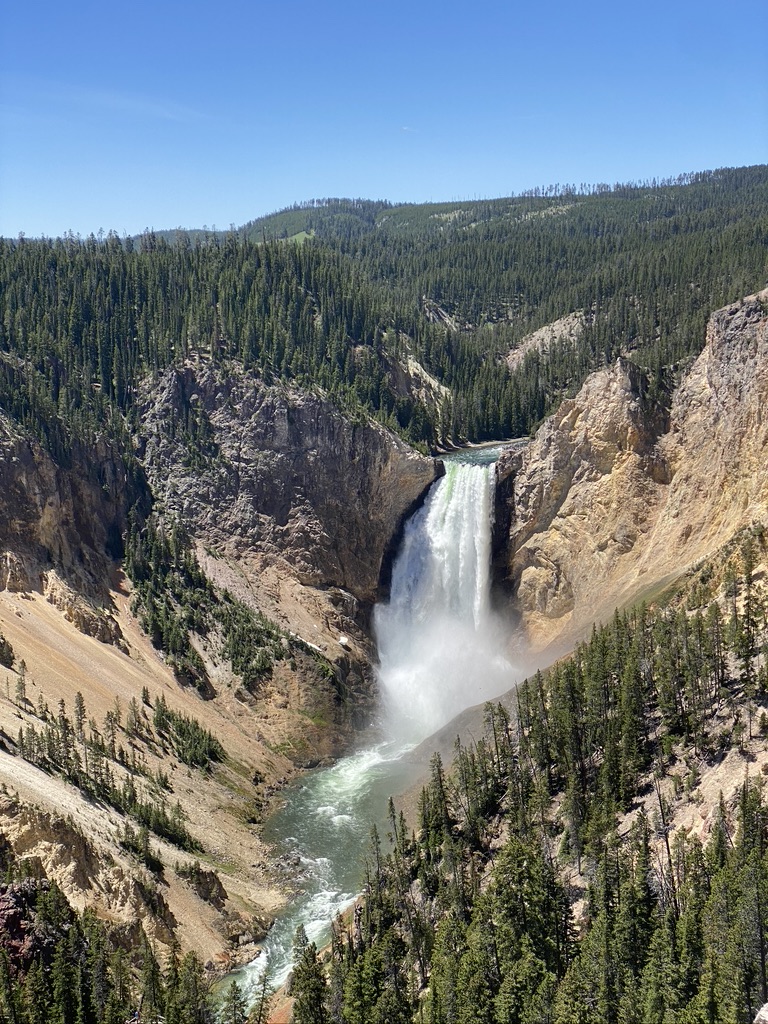
The park is roughly bisected by the Yellowstone River, from which it takes its name. Near the end of the 18th century, French trappers named the river Roche Jaune, likely a translation of the Hidatsa name Mi tsi a-da-zi ("Yellow Stone River"). Later, American trappers rendered the French name in English as "Yellow Stone". Although it is commonly believed that the river was named for the yellow rocks seen in the Grand Canyon of the Yellowstone, the Native American name source is unclear.
The human history of the park began at least 11,000 years ago when Native Americans began to hunt and fish in the region. During the construction of the post office in Gardiner, Montana, in the 1950s, an obsidian point of Clovis origin was found that dated from approximately 11,000 years ago. These Paleo-Indians, of the Clovis culture, used the region's abundant obsidian to make cutting tools and weapons. Arrowheads made of Yellowstone obsidian have been found as far away as the Mississippi Valley, indicating that a regular obsidian trade existed between local tribes and tribes farther east. When the Lewis and Clark Expedition entered present-day Montana in 1805 they encountered the Nez Perce, Crow, and Shoshone tribes who described to them the Yellowstone region to the south, but they chose not to investigate.
In 1806, John Colter, a member of the Lewis and Clark Expedition, left to join a group of fur trappers. After splitting up with the other trappers in 1807, Colter passed through a portion of what later became the park, during the winter of 1807–1808. He observed at least one geothermal area in the northeastern section of the park, near Tower Fall. After surviving wounds he suffered in a battle with members of the Crow and Blackfoot tribes in 1809, Colter described a place of "fire and brimstone" that most people dismissed as delirium; the supposedly mystical place was nicknamed "Colter's Hell". Over the next 40 years, numerous reports from mountain men and trappers told of boiling mud, steaming rivers, and petrified trees, yet most of these reports were believed to be a myth.
After an 1856 exploration, mountain man Jim Bridger reported observing boiling springs, spouting water, and a mountain of glass and yellow rock. These reports were largely ignored because Bridger was a known "spinner of yarns". In 1859, a U.S. Army Surveyor named Captain William F. Raynolds embarked on a two-year survey of the southern central Rockies. After wintering in Wyoming, in May 1860, Raynolds and his party—which included geologist Ferdinand V. Hayden and guide Jim Bridger—attempted to cross the Continental Divide over Two Ocean Plateau from the Wind River drainage in northwest Wyoming. Heavy spring snows prevented their passage but had they been able to traverse the divide, the party would have been the first organized survey to enter the Yellowstone region. The American Civil War hampered further organized explorations until the late 1860s.
Hub AI
Yellowstone National Park AI simulator
(@Yellowstone National Park_simulator)
Yellowstone National Park
Yellowstone National Park is a national park of the United States located in the northwest corner of the state of Wyoming, with small portions extending into Montana and Idaho. It was established by the 42nd U.S. Congress through the Yellowstone National Park Protection Act and signed into law by President Ulysses S. Grant on March 1, 1872. Yellowstone was the first national park in the US, and is also widely understood to be the first national park in the world. The park is known for its wildlife and its many geothermal features, especially the Old Faithful geyser, one of its most popular. While it represents many types of biomes, subalpine forest is the most abundant. It is part of the South Central Rockies forests ecoregion.
While Native Americans have lived in the Yellowstone region for at least 11,000 years, aside from visits by mountain men during the early-to-mid-19th century, organized exploration did not begin until the late 1860s. Management and control of the park originally fell under the jurisdiction of the U.S. Department of the Interior, the first secretary of the interior to supervise the park being Columbus Delano. However, the U.S. Army was eventually commissioned to oversee the management of Yellowstone for 30 years between 1886 and 1916. In 1917, the administration of the park was transferred to the National Park Service, which had been created the previous year. Hundreds of structures have been built and are protected for their architectural and historical significance, and researchers have examined more than one thousand indigenous archaeological sites.
Yellowstone National Park spans an area of 3,468.4 sq mi (8,983 km2), with lakes, canyons, rivers, and mountain ranges. Yellowstone Lake is one of the largest high-elevation lakes in North America and covers part of the Yellowstone Caldera, the largest super volcano on the continent. The caldera is considered a dormant volcano. It has erupted with tremendous force twice in the last two million years. Well over half of the world's geysers and hydrothermal features are in Yellowstone, fueled by this ongoing volcanism. Lava flows and rocks from volcanic eruptions cover most of the land area of Yellowstone. The park is the centerpiece of the Greater Yellowstone Ecosystem, the largest remaining nearly intact ecosystem in the Earth's northern temperate zone. In 1978, Yellowstone was named a UNESCO World Heritage Site.
Hundreds of species of mammals, birds, fish, reptiles, and amphibians have been documented, including several that are either endangered or threatened. The vast forests and grasslands also include unique species of plants. Yellowstone Park is the largest and most famous megafauna location in the contiguous United States. The park is inhabited by grizzly bears, cougars, wolves, and free-ranging herds of bison and elk. The Yellowstone Park bison herd is the oldest and largest public bison herd in the United States. Forest fires occur in the park each year; in the large forest fires of 1988, over one-third of the park was burnt. Yellowstone has numerous recreational opportunities, including hiking, camping, boating, fishing, and sightseeing. Paved roads provide close access to the major geothermal areas as well as some of the lakes and waterfalls. During the winter, visitors often access the park by way of guided tours that use either snow coaches or snowmobiles.
The park is roughly bisected by the Yellowstone River, from which it takes its name. Near the end of the 18th century, French trappers named the river Roche Jaune, likely a translation of the Hidatsa name Mi tsi a-da-zi ("Yellow Stone River"). Later, American trappers rendered the French name in English as "Yellow Stone". Although it is commonly believed that the river was named for the yellow rocks seen in the Grand Canyon of the Yellowstone, the Native American name source is unclear.
The human history of the park began at least 11,000 years ago when Native Americans began to hunt and fish in the region. During the construction of the post office in Gardiner, Montana, in the 1950s, an obsidian point of Clovis origin was found that dated from approximately 11,000 years ago. These Paleo-Indians, of the Clovis culture, used the region's abundant obsidian to make cutting tools and weapons. Arrowheads made of Yellowstone obsidian have been found as far away as the Mississippi Valley, indicating that a regular obsidian trade existed between local tribes and tribes farther east. When the Lewis and Clark Expedition entered present-day Montana in 1805 they encountered the Nez Perce, Crow, and Shoshone tribes who described to them the Yellowstone region to the south, but they chose not to investigate.
In 1806, John Colter, a member of the Lewis and Clark Expedition, left to join a group of fur trappers. After splitting up with the other trappers in 1807, Colter passed through a portion of what later became the park, during the winter of 1807–1808. He observed at least one geothermal area in the northeastern section of the park, near Tower Fall. After surviving wounds he suffered in a battle with members of the Crow and Blackfoot tribes in 1809, Colter described a place of "fire and brimstone" that most people dismissed as delirium; the supposedly mystical place was nicknamed "Colter's Hell". Over the next 40 years, numerous reports from mountain men and trappers told of boiling mud, steaming rivers, and petrified trees, yet most of these reports were believed to be a myth.
After an 1856 exploration, mountain man Jim Bridger reported observing boiling springs, spouting water, and a mountain of glass and yellow rock. These reports were largely ignored because Bridger was a known "spinner of yarns". In 1859, a U.S. Army Surveyor named Captain William F. Raynolds embarked on a two-year survey of the southern central Rockies. After wintering in Wyoming, in May 1860, Raynolds and his party—which included geologist Ferdinand V. Hayden and guide Jim Bridger—attempted to cross the Continental Divide over Two Ocean Plateau from the Wind River drainage in northwest Wyoming. Heavy spring snows prevented their passage but had they been able to traverse the divide, the party would have been the first organized survey to enter the Yellowstone region. The American Civil War hampered further organized explorations until the late 1860s.