


Community hub
Recent from talks
Contribute something
Nothing was collected or created yet.
Yuri Senkevich
View on Wikipedia
Key Information


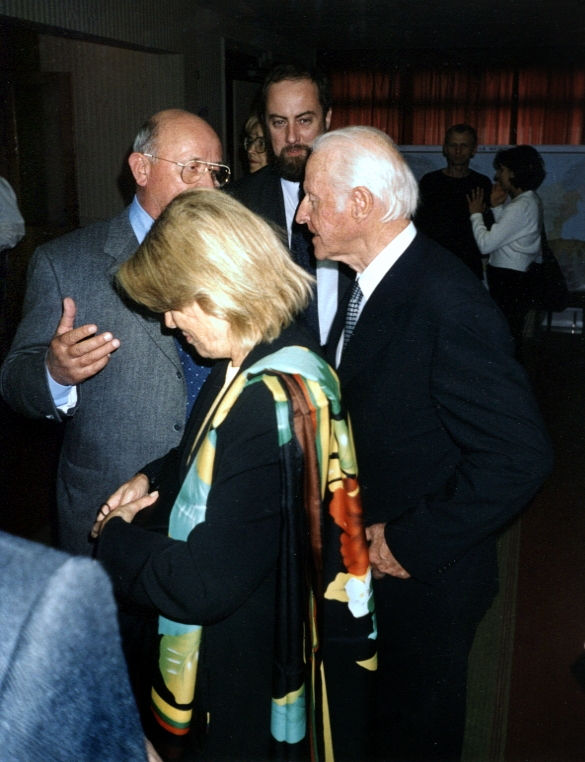
Yuri Aleksandrovich Senkevich (Russian: Юрий Александрович Сенкевич) (March 4, 1937 in Choibalsan, Mongolia – September 25, 2003 in Moscow, Russia[1]) was a Soviet physician, voyager, scientist, and Candidate of Sciences (PhD equivalent degree).
Senkevich became famous in the USSR and worldwide for sailing with Thor Heyerdahl on the Ra Expedition.[2]
Senkevich was born to Russian parents in Mongolia. In 1960, he graduated from the Military Medical Academy in Leningrad.[3] After his graduation, he received an assignment as a military doctor. In 1962, Senkevich started at the Ministry of Defence's Moscow Institute of Aviation and Cosmic Medicine. On June 1, 1965, he was selected into Medical Group 2 (along with Yevgeni Illyin, Aleksandr Kiselyov) for the long-duration Voskhod flights in space, all of which were subsequently canceled to make way for the Soviet Moon program. All three were dismissed at the beginning of the following year. He continued his career in that field at the Institute of Medical and Biological Problems of the Ministry of Public Health. From 1966 to 1967, he participated in the twelfth Soviet Antarctic expedition at Vostok station.
In 1969, Thor Heyerdahl invited Senkevich to sail on the Ra papyrus boat, and later on Ra II in 1970. Yuri Senkevich also sailed on the Tigris across the Indian Ocean.
In 1973, Senkevich began his career as a host of the "Travelers' Club" (Клуб путешественников), a show on Soviet Central Television. Over the following 30 years, he visited more than 200 countries as a journalist. For his lifetime contribution to television, he was awarded the "TEFI" prizeby the Russian Academy of Television in 1997. Yuri Senkevich is in the Guinness Book of Records as "the world's longest serving TV anchorman".
He had a son, Nikolay Senkevich, who later became head of NTV. Senkevich died of heart failure.[4][5]
Other
[edit]The species of mites (family Spinturnicidae) Spinturnix senkevitchi is named in honor of Dr. Yuri A. Senkevitch (described by Maria Orlova and Nikolay Anisimov, leg. V.S. Lebedev)
References
[edit]- ^ Умер Юрий Сенкевич
- ^ "Когда в гостях был целый мир. Статья о Юрии Сенкевиче и «Клубе путешественников». Официальный сайт Всемирной энциклопедии путешествий". Archived from the original on 2016-06-22. Retrieved 2016-02-26.
- ^ Юрий Александрович Сенкевич. Московский Государственный Институт Индустрии Туризма
- ^ Yuri Senkevich, 66; Host of Russian TV Show Made Documentaries
- ^ В Новодевичьем монастыре состоялось отпевание Юрия Сенкевича
External links
[edit]- Книга Юрия Сенкевича «На „Ра“ через Атлантику»
- Astronaut.ru — Юрий Александрович Сенкевич
- Maria V. Orlova and Nikolay V. Anisimov. Three new species of bat-parasitic gamasid mites of the genera Spinturnix, Macronyssus and Steatonyssus (Acari: Mesostigmata: Spinturnicidae, Macronyssidae) from Siberia and Mongolia, with keys to species of Russia and adjacent countries. Persian J. Acarol., 2023, Vol. 12, No. 2, pp. 211–239.
| International | |
|---|---|
| National | |
| People | |

Yuri Senkevich
View on GrokipediaEarly life and education
Birth and family background
Yuri Alexandrovich Senkevich was born on March 4, 1937, in Bayan-Tumen (now Choybalsan) in the Mongolian People's Republic. [5] [6] He was born into a family of medical professionals, with his father, Alexander Osipovich Senkevich, working as a physician at the time, and his mother, Anna Kupriyanovna Machulskaya, serving as a medical nurse in the same small Mongolian town. [5] His parents had met earlier in Leningrad, where Alexander Osipovich held the position of deputy head at the Kirov Military Medical Academy, and Anna Kupriyanovna worked as an operating room nurse in the same institution. [5] Following their marriage and the birth of their son, the family relocated back to Leningrad (now Saint Petersburg) due to the father's military medical career, where Yuri spent his childhood. [5] In Leningrad, he attended school No. 107 and grew up in an environment shaped by his family's medical traditions. [5] His father's role as a military doctor influenced the family's movements, including the temporary posting in Mongolia during his early infancy. [5]Medical training and early professional work
Yuri Senkevich enrolled in the Military Medical Academy named after S.M. Kirov in Leningrad in 1954 after completing secondary school and graduated in 1960 with the qualification of physician in therapeutic affairs, having received training in the specialty of aviation and space medicine. [7] Following graduation, he was assigned to serve as chief of the medical point in a military unit, where he worked as a military doctor providing medical care in a unit setting. [7] [8] In 1962, he was transferred to Moscow to work at the Institute of Aviation and Space Medicine under the Ministry of Defense of the USSR, shifting his early career toward specialized research in extreme environment medicine. [7] His practical experience and expertise as a physician in military and aviation medicine contributed to his selection as a doctor for the 12th Soviet Antarctic Expedition. [9]Exploration career
12th Soviet Antarctic Expedition
Yuri Senkevich served as a physician and researcher during the 12th Soviet Antarctic Expedition at Vostok Station in 1967. [10] Selected from the Institute of Medico-Biological Problems, he focused on physiological studies modeling conditions for long-duration space flight. [10] He arrived at the station on 15 January 1967 after transport via Il-18 to Mirny and onward to Vostok, remaining there until late December 1967 for a duration of nearly one year, including approximately 300 days on the ice dome. [10] Vostok Station, positioned at an altitude of 3,488 meters, exposed the team to chronic hypoxia from low barometric pressure around 450 mmHg, equivalent to roughly 4,000 meters in mid-latitudes. [10] Temperatures fell to -85 °C during their stay, with the station's 10 sled-mounted baloks linked under a shared roof and heated by hot water circulated from the diesel generator cooling system to maintain indoor conditions above +18 °C. [10] Water was obtained by sawing and melting snow blocks under severe rationing, while sewage was managed through deep shafts melted 30–40 meters into the ice. [10] As one of three physicians at Vostok alongside Alexander Zavadovsky and Vladimir Medvedkov, Senkevich handled general medical duties and conducted a research program involving veloergometry to assess physical working capacity, orthostatic tolerance testing, gas exchange measurements for oxygen and carbon dioxide, low-pressure adaptations, and trials of bactericidal underwear. [10] He collaborated with Zavadovsky to equip and operate the station's medical-laboratory facility for these space-medicine-oriented experiments. [10] The wintering brought psychological strains from prolonged isolation and confined living, with team members forming small groups and relying heavily on cinema screenings for recreation amid monotonous routines and occasional irritability. [10] Morale was supported through collective celebrations, including the 10th anniversary of Vostok Station's establishment and Senkevich's 30th birthday. [10] Food supplies remained adequate until May, featuring meat, butter, and flour from Leningrad alongside fruits and vegetables from Australia, though daily life included routine chores like growing green onions and maintaining equipment. [10]Ra I and Ra II expeditions
In 1969, Thor Heyerdahl invited Soviet physician Yuri Senkevich to join the Ra expedition as the onboard doctor, reaching out through academician Mstislav Keldysh and specifying that the candidate must speak English and possess a good sense of humor. [11] Senkevich, then 32 years old, accepted and served as the expedition's medical officer on the multinational crew. [11] The Ra I expedition departed from Morocco in May 1969 aboard a papyrus reed boat constructed in Egypt, aiming to demonstrate the possibility of ancient transatlantic contact between civilizations using such vessels. [2] The boat sailed approximately 5,000 km over eight weeks despite structural challenges, but the papyrus absorbed large amounts of water, causing the vessel to become increasingly submerged and raising fears it would sink completely. [2] The expedition was abandoned just one week short of the intended destination of Barbados, with the crew rescued before total loss. [2] For the follow-up Ra II expedition in 1970, Heyerdahl rebuilt the craft with improved techniques learned from Aymara boatbuilders of Lake Titicaca, resulting in a shorter but stronger vessel. [2] Senkevich returned as one of the few repeat crew members and again served as physician. [2] Ra II departed Safi, Morocco on May 17, 1970, and successfully completed the crossing to Barbados after 57 days and approximately 6,100 km, proving the feasibility of ancient ocean voyages on reed boats. [2] [12]Later expeditions and travels
After the Ra expeditions, Yuri Senkevich participated in several notable international and Soviet expeditions as a physician and explorer. In 1977–1978, he joined Thor Heyerdahl's crew on the reed boat Tigris, sailing under the United Nations flag as part of an international team of 11 men.[13] The expedition departed from the Shatt al-Arab waterway in southern Iraq and covered approximately 6,800 km across the Persian Gulf, Arabian Sea, and Indian Ocean, reaching the Indus Valley region before arriving at Djibouti in the Horn of Africa after 143 days at sea.[13] The voyage demonstrated the seaworthiness of ancient reed vessels and supported the possibility of early maritime contacts between Mesopotamia, the Indus Valley, and Egypt; Heyerdahl deliberately set the Tigris ablaze in Djibouti as a protest against war and global militarization.[13] Senkevich continued his involvement in polar and high-altitude explorations. In 1979, he served as medical adviser for a Soviet expedition that reached the North Pole.[14] In 1982, he acted as expedition doctor and television reporter during the first Soviet ascent of Mount Everest via the southwest face, a previously unclimbed route.[15] Operating from base camp at 5,340 meters near the Khumbu Icefall, he treated numerous cases of frostbite, injuries, and other medical issues among the team, who ascended without supplemental oxygen and all 11 members successfully reached the summit before returning safely.[14] Throughout the subsequent decades, Senkevich's travels were extensive and often linked to his fieldwork and broadcasting, taking him to more than 100 countries across all continents and to many remote regions.[16] In April 2003, while filming on an expedition in Tanzania, he was seriously injured in a car accident, which exacerbated existing heart problems in his final months.[17]Television career
Appointment as host of Travellers' Club
In 1973, following the death of the program's founder and original host Vladimir Shneiderov, Yuri Senkevich was invited by Soviet Central Television to take over as host of the travel documentary series originally titled «Клуб кинопутешествий». [18] After a brief interim period under zoologist Andrei Bannikov, who stepped down due to conflicting commitments, the editors selected Senkevich based on his memorable guest appearance discussing his Atlantic crossings on papyrus boats with Thor Heyerdahl during the Ra and Ra II expeditions, which had generated significant viewer interest and letters of support. [18] [19] Senkevich accepted the invitation on the condition that his hosting duties would not interfere with his ongoing scientific work at the Institute of Medico-Biological Problems or potential future expeditions. [18] Upon his appointment, the program was renamed «Клуб путешественников» (Travellers' Club) and continued in its established format as a documentary series presenting footage, narratives, and insights from global explorations and expeditions. [18] Senkevich became the permanent presenter from 1973, bringing his firsthand experience as a polar explorer and participant in international expeditions, including the Ra voyages, to the show's early content. [19] [20]Long-running tenure and program impact
Yuri Senkevich hosted the television program "Travellers' Club" ("Клуб путешественников") for approximately 30 years, from 1973 until his death in 2003. [21] This extended tenure transformed the show into one of the most enduring and recognizable programs on Soviet and Russian television, with Senkevich serving as its central figure and guiding its direction throughout the late Soviet era and into the post-Soviet period. [22] Under Senkevich's leadership, the program achieved unprecedented popularity, with his name becoming virtually synonymous with travel and adventure in the public mind. [23] It played a major role in popularizing geography, exploration, and tourism among Soviet and Russian audiences, inspiring widespread interest in travel at a time when international journeys were limited for most citizens, and encouraging viewers to engage with distant cultures and landscapes vicariously through the screen. [24] Senkevich's on-screen style—marked by enthusiastic, knowledgeable narration drawn from his own extensive expedition experience—contributed significantly to the program's appeal as educational television. [21] He brought authenticity and warmth to stories of global exploration, making complex subjects accessible and engaging for a broad audience, and helping to establish the show as a key source of cultural and geographical enlightenment in Soviet and Russian media. [25] The program's impact endured through its consistent focus on real adventurers and scientific expeditions, fostering a sense of wonder and curiosity about the world among generations of viewers. [1] Following Senkevich's death, the program was discontinued. [26]Other television and media appearances
Yuri Senkevich made limited appearances in media projects outside his long-running role on Travellers' Club, mostly connected to his participation in the Ra expeditions. He appeared as himself in the documentary film Ra (1972), directed by Thor Heyerdahl, which chronicled the Ra II expedition's successful crossing of the Atlantic Ocean on a papyrus reed boat. The film featured Senkevich prominently as the expedition's medical doctor and Soviet representative, capturing his contributions to health management and scientific observations during the voyage. [27] Beyond this, Senkevich occasionally participated in interviews and programs discussing his expedition experiences and travels, though specific additional credits remain sparse in available records. [27] These appearances typically focused on themes of exploration and adventure, reinforcing his public image as a prominent Soviet-era traveler.Awards and honors
State and professional recognitions
Yuri Senkevich received multiple high-ranking state awards from the Soviet Union and the Russian Federation in recognition of his contributions to scientific research, exploration, and public education. He was awarded the Order of Friendship of Peoples in 1978 for his role in international expeditions. [28] In 1982, he received the Order of the Badge of Honour. [28] On May 6, 2000, he was decorated with the Order "For Merit to the Fatherland" of the IV degree for his services to the state and his active research and educational work. [28] [7] Additionally, he was a laureate of the USSR State Prize for his participation in complex scientific research during the Antarctic expeditions. [28] [7] Senkevich also earned foreign state honors early in his exploration career. In 1971, he was awarded the Order of Officer of the Alaouite Dynasty by Morocco and the Order of Merit by Egypt. [28] In the professional domain, particularly related to his television and journalistic work, Senkevich was elected an academician of the Russian Television Academy in 1997. [7] That same year, his program "Traveler's Club" ("Klub Puteshestvennikov") received the TEFI prize, the highest award in Russian broadcasting. [7] In 2002, he became a laureate of the Russian National Olymp prize. [7] He held leadership roles in relevant organizations, including serving as President of the Association of Travelers of the USSR and as Vice-President of the Society of Friendship "USSR - Norway," and was a member of the Union of Journalists of the USSR and Russia. [28]Personal life
Family and personal interests
Yuri Senkevich was married twice. His first wife was Irma Alexandrovna Pomchalova, a dancer with the renowned Beryozka folk dance ensemble.[5] The couple had one daughter, Darya Yurievna Senkevich, born on April 16, 1962, who later became a cardiologist.[29] The marriage ended in divorce, primarily due to the demanding and incompatible schedules of both partners, with Irma's touring commitments and Senkevich's frequent expeditions and professional travels.[5] In his second marriage to Ksenia Nikolaevna Mikhailova, a linguist who worked as a senior consultant in the foreign commission of the Union of Theater Workers of the USSR and later taught English, Senkevich found a stable family life.[5] Ksenia had a son, Nikolai Yurievich, born on June 17, 1968, from her previous marriage; Senkevich adopted him, and Nikolai grew up in the family, eventually pursuing a career in medicine before serving as general director of the NTV television company from 2003 to 2004.[29][5] The couple had no biological children together. After the first divorce, Darya initially lived with her grandparents but was later fully integrated into the household with Ksenia, whom she came to call mother.[5] Senkevich's personal interests included a lifelong passion for reading, particularly adventure literature that shaped his early fascination with exploration; in childhood, he was especially drawn to the works of Alexandre Dumas, Jules Verne, and Jack London.[6]Death
Final years and cause of death
In his final years, Yuri Senkevich continued hosting the long-running television program Travellers' Club, maintaining his active involvement in travel journalism and expeditions despite declining health. [30] In 2002, he suffered a heart attack shortly after the death of his close friend Thor Heyerdahl, which required hospitalization and marked a significant health setback. [31] [32] On September 25, 2003, Senkevich died in Moscow at the age of 66 from a heart attack. [1] [30] He collapsed at his studio during preparations for a recording of Travellers' Club, with emergency services unable to revive him. [26] [33] The sudden cardiac event occurred amid his ongoing work, ending a career defined by exploration and broadcasting. [1]Memorials and immediate tributes
Following his death on September 25, 2003, Yuri Senkevich's funeral service was held on September 30, 2003, at the Novodevichy Monastery in Moscow, in accordance with Russian Orthodox tradition. [34] He was buried at the prestigious Novodevichy Cemetery, a site reserved for notable figures in Russian culture, science, and public life. [34] Russian President Vladimir Putin issued a tribute, describing Senkevich's television program Travellers' Club as "one of the best and best-loved television programs." [1] The announcement of his passing was covered by Russian media, including NTV, which reported the news under the headline "Yuri Senkevich Has Died." [35] Obituaries in international outlets, such as the Los Angeles Times, highlighted his contributions as a traveler, physician, and long-serving television host. [1] These immediate responses underscored his enduring popularity and the cultural impact of his work in popularizing exploration and travel among Soviet and Russian audiences.References
- https://ru.wikinews.org/wiki/%D0%A3%D0%BC%D0%B5%D1%80_%D0%AE%D1%80%D0%B8%D0%B9_%D0%A1%D0%B5%D0%BD%D0%BA%D0%B5%D0%B2%D0%B8%D1%87._%D0%9E%D0%BD_%D0%B2%D0%B5%D1%80%D0%BD%D1%83%D0%BB%D1%81%D1%8F_%D0%B8%D0%B7_%D0%BF%D0%BE%D1%81%D0%BB%D0%B5%D0%B4%D0%BD%D0%B5%D0%B9_%D1%8D%D0%BA%D1%81%D0%BF%D0%B5%D0%B4%D0%B8%D1%86%D0%B8%D0%B8_%D0%BD%D0%B0_%D0%9A%D0%B0%D1%81%D0%BF%D0%B8%D0%B9