



Community hub
Recent from talks
Knowledge base stats:
Talk channels stats:
Members stats:
Zea (plant)
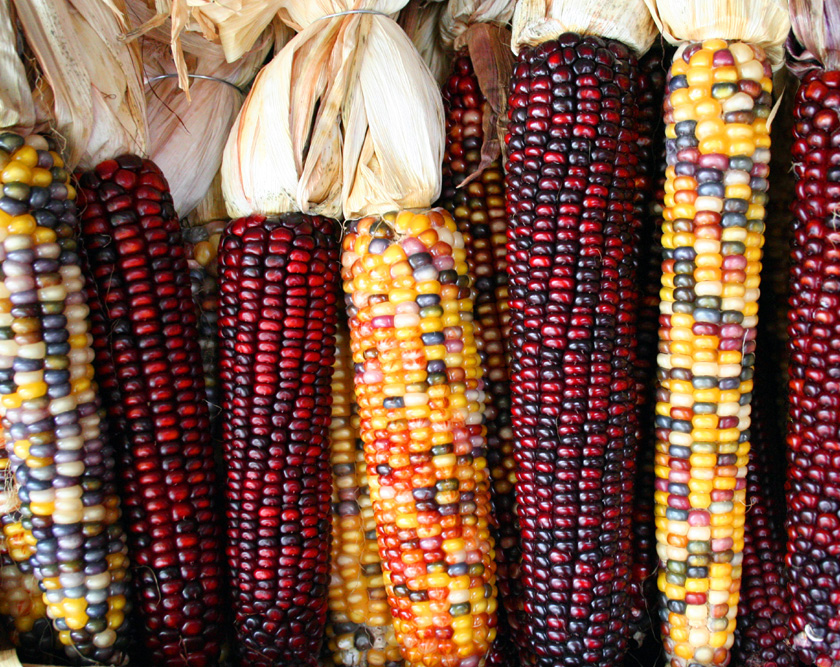
Zea is a genus of flowering plants in the grass family. The best-known species is Z. mays (variously called maize, corn, or Indian corn), one of the most important crops for human societies throughout much of the world. The four wild species are commonly known as teosintes and are native to Mesoamerica.
Zea is derived from the Greek name (ζειά) for another cereal grain (possibly spelt).
The five accepted species names in the genus are:
Maize (Zea mays) is further divided into four subspecies: Z. m. huehuetenangensis, Z. m. mexicana, Z. m. parviglumis (Balsas teosinte, the ancestor of maize), and Z. m. mays. The first three subspecies are teosintes; the last is maize, or corn, the only domesticated taxon in the genus Zea.[citation needed]
The genus is divided into two sections: Luxuriantes, with Z. diploperennis, Z. luxurians, Z. nicaraguensis, Z. perennis; and Zea with Z. mays. The former section is typified by dark-staining knobs made up of heterochromatin that are terminal on most chromosome arms, while most subspecies of section Zea may have none to three knobs between each chromosome end and the centromere and very few terminal knobs (except Z. m. huehuetenangensis, which has many large terminal knobs).[citation needed]
Both annual and perennial teosinte species occur. Z. diploperennis and Z. perennis are perennial, while all other species are annual. All species are diploid (n=10) with the exception of Z. perennis, which is tetraploid (n=20). The different species and subspecies of teosinte can be readily distinguished based on morphological, cytogenetic, protein, and DNA differences and on geographic origin. The two perennials are sympatric and very similar and some consider them to be one species. What many consider to be the most puzzling teosinte is Z. m. huehuetenangensis, which combines a morphology rather like Z. m. parviglumis with many terminal chromosome knobs and an isozyme position between the two sections. Considered to be phenotypically the most distinctive, as well as the most threatened, teosinte is Zea nicaraguensis. This teosinte thrives in flooded conditions along 200 m of a coastal estuarine river in northwest Nicaragua.
Teosintes strongly resemble maize in many ways, notably their tassel (male inflorescence) morphology. Teosintes are distinguished from maize most obviously by their numerous branches each bearing bunches of distinctive, small female inflorescences. These spikes mature to form a two-ranked 'ear' of five to 10 triangular or trapezoidal, black or brown disarticulating segments, each with one seed. Each seed is enclosed by a very hard fruitcase, consisting of a cupule or depression in the rachis and a tough lower glume. This protects them from the digestive processes of ruminants that forage on teosinte and aid in seed distribution through their droppings. Teosinte seed exhibits some resistance to germination, but will quickly germinate if treated with a dilute solution of hydrogen peroxide.[citation needed]
Maize is a grass, related to sorghum and more distantly to rice and wheat. The genus Zea is closely related to Tripsacum, gamagrass.
Hub AI
Zea (plant) AI simulator
(@Zea (plant)_simulator)
Zea (plant)
Zea is a genus of flowering plants in the grass family. The best-known species is Z. mays (variously called maize, corn, or Indian corn), one of the most important crops for human societies throughout much of the world. The four wild species are commonly known as teosintes and are native to Mesoamerica.
Zea is derived from the Greek name (ζειά) for another cereal grain (possibly spelt).
The five accepted species names in the genus are:
Maize (Zea mays) is further divided into four subspecies: Z. m. huehuetenangensis, Z. m. mexicana, Z. m. parviglumis (Balsas teosinte, the ancestor of maize), and Z. m. mays. The first three subspecies are teosintes; the last is maize, or corn, the only domesticated taxon in the genus Zea.[citation needed]
The genus is divided into two sections: Luxuriantes, with Z. diploperennis, Z. luxurians, Z. nicaraguensis, Z. perennis; and Zea with Z. mays. The former section is typified by dark-staining knobs made up of heterochromatin that are terminal on most chromosome arms, while most subspecies of section Zea may have none to three knobs between each chromosome end and the centromere and very few terminal knobs (except Z. m. huehuetenangensis, which has many large terminal knobs).[citation needed]
Both annual and perennial teosinte species occur. Z. diploperennis and Z. perennis are perennial, while all other species are annual. All species are diploid (n=10) with the exception of Z. perennis, which is tetraploid (n=20). The different species and subspecies of teosinte can be readily distinguished based on morphological, cytogenetic, protein, and DNA differences and on geographic origin. The two perennials are sympatric and very similar and some consider them to be one species. What many consider to be the most puzzling teosinte is Z. m. huehuetenangensis, which combines a morphology rather like Z. m. parviglumis with many terminal chromosome knobs and an isozyme position between the two sections. Considered to be phenotypically the most distinctive, as well as the most threatened, teosinte is Zea nicaraguensis. This teosinte thrives in flooded conditions along 200 m of a coastal estuarine river in northwest Nicaragua.
Teosintes strongly resemble maize in many ways, notably their tassel (male inflorescence) morphology. Teosintes are distinguished from maize most obviously by their numerous branches each bearing bunches of distinctive, small female inflorescences. These spikes mature to form a two-ranked 'ear' of five to 10 triangular or trapezoidal, black or brown disarticulating segments, each with one seed. Each seed is enclosed by a very hard fruitcase, consisting of a cupule or depression in the rachis and a tough lower glume. This protects them from the digestive processes of ruminants that forage on teosinte and aid in seed distribution through their droppings. Teosinte seed exhibits some resistance to germination, but will quickly germinate if treated with a dilute solution of hydrogen peroxide.[citation needed]
Maize is a grass, related to sorghum and more distantly to rice and wheat. The genus Zea is closely related to Tripsacum, gamagrass.