



Community hub
1973 Flores cyclone
View on Wikipedia
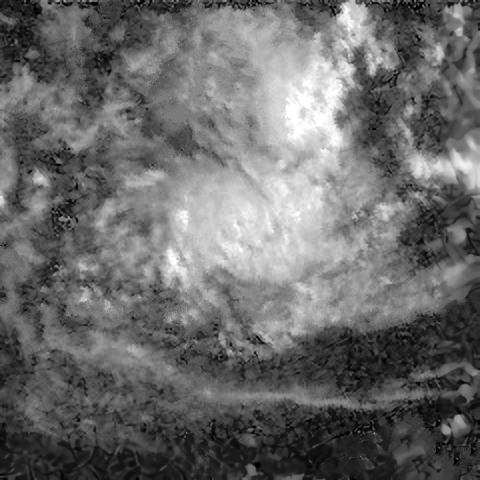
 Satellite image of the Flores cyclone on 28 April | |
| Meteorological history | |
|---|---|
| Formed | 26 April 1973 |
| Dissipated | 30 April 1973 |
| Category 3 severe tropical cyclone | |
| 10-minute sustained (Aus) | |
| Highest winds | 150 km/h (90 mph) |
| Lowest pressure | 950 hPa (mbar); 28.05 inHg |
| Category 3-equivalent tropical cyclone | |
| 1-minute sustained (SSHWS/JTWC) | |
| Highest winds | 185 km/h (115 mph) |
| Overall effects | |
| Fatalities | 1,650-1,653 total (Deadliest tropical cyclone recorded in the Southern Hemisphere) |
| Damage | $5 million (USD) |
| Areas affected | Indonesia |
| IBTrACS | |
Part of the 1972–73 Australian region cyclone season | |

The 1973 Flores cyclone was the deadliest known tropical cyclone in the Southern Hemisphere. The cyclone formed in the Banda Sea on 26 April as a tropical low. It intensified as it moved in a west-southwest direction, before shifting to the south. Early on 29 April, the cyclone peaked as a Category 3 storm on the Australian tropical cyclone intensity scale with 10-minute sustained winds of 150 km/h (90 mph) and a pressure of 950mb (28.05 inHg), before striking the north coast of the island of Flores, dissipating the following day.
The cyclone killed 1,650 to 1,653 people, including 1,500 fishermen on Palu'e island alone, and resulted in losses of around $5 million (USD). The cyclone dropped heavy rainfall across Flores, causing deadly flash flooding that damaged buildings and roads, destroying or damaging thousands of houses. Additionally, on 29 April, a Portuguese ship travelling from Portuguese Timor to Thailand capsized in the Flores Sea, leaving one survivor. Authorities in Jakarta received news of the disaster in Flores a month after the cyclone's passage, with the ship's sinking officially confirmed on 28 May.
Meteorological history
[edit]
Tropical storm (39–73 mph, 63–118 km/h)
Category 1 (74–95 mph, 119–153 km/h)
Category 2 (96–110 mph, 154–177 km/h)
Category 3 (111–129 mph, 178–208 km/h)
Category 4 (130–156 mph, 209–251 km/h)
Category 5 (≥157 mph, ≥252 km/h)
Unknown


 Extratropical cyclone, remnant low, tropical disturbance, or monsoon depression
There is no recorded data of the unnamed cyclone in the Tropical Cyclone Warning Center of the Meteorology, Climatology, and Geophysical Agency. However, Australia's Bureau of Meteorology has records of the cyclone.[1]
On 26 April, a tropical low formed in the Banda Sea in the waters of eastern Indonesia. According to Australia's Bureau of Meteorology (BoM), the low moved to the west-southwest and intensified, although this was based on a later analysis. As the storm was outside of the agency's jurisdiction, the BoM did not issue warnings on the system at the time. The low attained gale-force winds late on 27 April as it moved into the Flores Sea. Late the next day, the storm turned southwestward.[2][3]
The BoM estimated that the storm reached peak intensity early on 29 April, assessing it as a Category 3 on the Australian tropical cyclone intensity scale, with 10-minute maximum sustained winds of 150 km/h (90 mph) and a minimum central pressure of 950mb (28.05 inHg).[2][4] While near peak intensity, the small tropical cyclone had its eye embedded within a central dense overcast, 295 km (185 mi) in diameter.[3] The cyclone's eye was also evident on an infrared satellite image at 0140 UTC.[a][6] The cyclone made landfall on the northern coast of the Indonesian island of Flores at around 09:00 WITA with maximum sustained winds of 120 km/h (75 mph) and a pressure of 975 millibars (28.79 inHg).[1][7] After crossing the island, the cyclone dissipated on 30 April near Flores' southern coast.[2]
Impacts
[edit]
No warnings were issued as the cyclone was not in Australia's area of responsibility. Additionally, until an eye was visible prior to the cyclone's landfall in Flores, forecasters were uncertain of the cyclone's existence due to limited observations.[3]
O Arbiru
[edit]Manufactured in 1963,[8] O Arbiru was a Portuguese-flagged government cargo vessel that was used to transport necessities to Portuguese Timor via Bangkok.[9] The ship was on its way to Bangkok, Thailand, to requisition rice supplies and had left Dili, Portuguese Timor, on 28 April.[10][11] On 29 April,[8] while in the Flores Sea, the cyclone capsized the ship.[b][13][14] Only crew member Paulo do Rosário survived.[c][10] He was reportedly found clinging to a piece of wood and was taken to a remote part of Flores, "Bone Rata Island", by local fishermen where he was cared for.[8][15] Air-sea search and rescues failed to locate more survivors, with Australian coastal radio stations alerting ships entering the Flores Sea to search for survivors.[15] The sinking was officially announced on 28 May.[10]
Indonesia
[edit]In total, the cyclone killed 1,650[16][17] to 1,653 people.[18][19] On Palu'e island alone, the cyclone killed 1,500 fishermen who were fishing at the time of the cyclone's landfall.[4][20] The storm lashed the coast with a storm surge that broke tens of meters inland, which newspapers described as a "tidal wave".[1][21] In Ngada Regency, 24 people drowned after being swept away by high waves.[22] Another 10 people were killed in Manggarai Regency,[21] and another 10 in Maumere.[23] Reports described Ngada to be the worst hit area.[24] For three days, the storm dropped heavy rainfall across Flores, which produced deadly landslides and flash flooding that washed away rice fields, livestock, and entire homes.[25][1] The cyclone wrecked schools, homes, dams, and bridges. The storm also wrecked government buildings, with heavy damage reported in the regional capital of Ende.[21] Roads in the capital were also damaged by the tidal waves.[26] Around 1,800 houses were levelled with others being badly damaged. Boats that were in the path of the cyclone were destroyed.[1] A Kompas report from June 1973 stated that plantations on the island were destroyed with paddy fields being "ruined".[27] In Paluʼe, 1,300 houses were destroyed, representing 80% of houses on the island.[28] Smaller islands around Flores were described as being destroyed.[20]
The storm was described as apocalyptic and was nicknamed the "Flores Death Cyclone".[1][28] Kompas had previously written that "This huge sea storm covered the islands of the Sikka region and the coastal areas and mainland of Flores in Sikka Regency, and the people there called it 'doomsday'".[1]
Aftermath
[edit]The Flores cyclone is the deadliest tropical cyclone in the Southern Hemishphere.[4] At the time, losses were estimated to be at around $5 million.[1][29] News of the disaster in Flores took a month to reach authorities in the capital, Jakarta, due to lack of communications and the remoteness of the island.[3][21] The Australian Associated Press wrote: "Belated reports of disaster in Indonesia are not unusual as communications are virtually non-existent with some of the far-flung islands."[21] A governor of a chain of remote islands who was in Kupang, Timor, near Palu'e, at the time of the cyclone only received news of the disaster during a visit to Jakarta a month after the cyclone's passage. Indonesia's Minister of Information stated to reporters after a cabinet meeting: "This proves the poor communications among the islands in the province."[30] Following the cyclone, the Government of Indonesia donated Rp30,000,000[d] to seven regencies on the islands of East Nusa Tenggara, including Flores and Sumba.[26] A government relief team accompanied by the Red Cross was sent to Flores,[31] described as "battered". The team arrived on the island on 5 June and began damage assessments. The Kompas report from June 1973 also noted that locals in Flores were facing a food shortage as food and rice supplies sent to the island were not sufficient. In addition, the cyclone dragged pipes into the sea resulting in the only hospital in the town of Lela having no water.[27][32]
After the floods, the Indonesian government constructed the Sutami Weir, which was finished in 1975. The weir controlled the water flow on the island and helped irrigate 6,500 ha (16,000 acres) of rice paddy fields.[25]
See also
[edit]

List of the deadliest tropical cyclones
- 1970 Bhola cyclone – The deadliest tropical cyclone recorded worldwide
- Cyclone Inigo (2003) – Caused deadly floods in Indonesia before developing into a tropical cyclone
- Cyclone Idai (2019) – The second deadliest tropical cyclone recorded in the Southern Hemisphere
- Cyclone Seroja (2021) – Another deadly tropical cyclone that struck similar areas
Notes
[edit]- ^ Approximate location: 8°00′S 121°30′E / 8°S 121.5°E.[5]
- ^ Estimated coordinates: 08°00′S 122°00′E / 8.000°S 122.000°E.[12]
- ^ Death tolls/occupant counts vary from source to source:
- The New York Times 1973, p. 26: "... with 19 crew members and five women passengers ... Only one survivor has been found ...";
- Marine News, p. 271: "There was one survivor from the 26 persons ...";
- Druk Losel 1985, p. 26: "and of the twenty-five people on board including the captain and ...";
- Hooke 1989, p. 342: "Twenty-five lives were lost ...";
- Padgett 2002: "The Flores Cyclone was responsible for the loss of a ship with 21 lives ...";
- Callaghan & Bonell 2005, p. 166: "During April 1973, a tropical cyclone ... sunk a ship with the loss of 21 ...";
- Daly 2016, p. 30: "500-ton ship sank, killing 26";
- Arif 2021b: "Dari 19 awak dan 5 penumpangnya, hanya satu awaknya yang ditemukan selamat di Pulau Flores."
- ^ Equivalent to $180,000 (1973 USD), which is equivalent to $1,310,296,890 in 2007.
References
[edit]- ^ a b c d e f g h Arif, Ahmad (9 April 2021). "Seroja Mengingatkan pada Tragedi Siklon Flores 1973" [Seroja Reminiscent of 1973 Flores Cyclone Tragedy]. Kompas (in Indonesian). p. 8. Archived from the original on 17 November 2024. Retrieved 17 November 2024.
- ^ a b c "1973 Severe Tropical Cyclone FLORESCYCLO (1973116S05131)". International Best Track Archive for Climate Stewardship. North Carolina Institute for Climate Studies. Retrieved 15 April 2020.
- ^ a b c d Padgett, Gary (24 May 2002). "Monthly Global Tropical Cyclone Summary December 2001". Typhoon2000. Archived from the original on 14 June 2023. Retrieved 20 April 2020.
- ^ a b c Goldberg & Rankey 2023.
- ^ Callaghan & Bonell 2005, p. 166
- ^ Callaghan & Bonell 2005, p. 166.
- ^ "48 Tahun Silam, Badai Tropis Dahsyat Melanda Flores: 1650 Orang Tewas, 1800 Rumah Rata dengan Tanah" [48 Years Ago, a Devastating Tropical Storm Hit Flores: 1650 People Killed, 1800 Houses Flattened]. Kompas TV (in Indonesian). 9 April 2021. Archived from the original on 17 November 2024. Retrieved 17 November 2024.
- ^ a b c Hooke 1989, p. 342.
- ^ Ahmed, Zahra (6 March 2024). "10 Flores Sea Facts You Should Know". Marine Insight. Retrieved 6 July 2025.
- ^ a b c "RETROSPECTIVA / 73 – PROVÍNCIA" [RETROSPECTIVE / 73 – PROVINCE]. A Voz de Timor (in Portuguese). Dili, East Timor. 4 January 1974. pp. 10, 11. LCCN sn94048190. OCLC 30603137. Retrieved 6 July 2025 – via Newspapers.com.
 – Copy available via Trove from the National Library of Australia.
- ^ Gunn 2000, p. 246.
- ^ Hooke 1989, p. 342
- ^ "Ship sinks". The Canberra Times. Lisbon, Portugal. Australian Associated Press; Reuters. 21 May 1973. p. 4. Retrieved 6 July 2025 – via Trove.
- ^ "Tropical Cyclone Unnamed (Flores Sea)". Bureau of Meteorology. Archived from the original on 6 April 2023. Retrieved 22 April 2020.
- ^ a b "Ship survivor found". The Sydney Morning Herald. 20 May 1973. p. 4. Retrieved 10 November 2025 – via Newspapers.com.
- ^ Masters, Jeff (21 March 2019). "Africa's Hurricane Katrina: Tropical Cyclone Idai Causes an Extreme Catastrophe". Weather Underground. Archived from the original on 4 August 2019. Retrieved 23 March 2019.
- ^ Warren 2019.
- ^ "Death toll". The Canberra Times. Jakarta. Australian Associated Press; Reuters. 18 June 1973. p. 5. Archived from the original on 27 August 2020. Retrieved 22 April 2020 – via Trove.
- ^ Diamond et. al. 2022.
- ^ a b "Bencana taufan Flores tak akan jejas S'pura" [Flores typhoon disaster will not affect Singapore]. Berita Harian (in Malay). Singapore. 9 June 1973. p. 1. Retrieved 8 November 2025 – via NewspaperSG.
- ^ a b c d e "53 killed by tidal waves". Papua New Guinea Post-Courier. Australian Associated Press. 7 June 1973. p. 6. Archived from the original on 7 April 2023. Retrieved 22 April 2020 – via Trove.
- ^ "53 swept to deaths". The Montreal Star. Montreal, Canada. Reuters. 6 June 1973. p. 40. Retrieved 16 February 2025 – via Newspapers.com.
- ^ Rosary, Ebed (8 May 2021). "Belajar dari Siklon Tropis Seroja. Bagaimana Antisipasinya?". Mongabay (in Indonesian). Archived from the original on 7 August 2023. Retrieved 17 November 2024.
- ^ "Report of deaths in storms". The Canberra Times. Australian Associated Press. 7 June 1973. Retrieved 12 January 2025 – via Trove.
- ^ a b "Bendung Sutami di Mbay, antara Harapan dan Tantangan" [Sutami Dam in Mbay, between Hope and Challenge]. Kompasiana (in Indonesian). 25 July 2016. Archived from the original on 6 April 2023. Retrieved 22 April 2020.
- ^ a b "Terror waves kill 1,500". The Straits Times. Jakarta. Reuters. 7 June 1973. pp. 1, 24. Retrieved 8 November 2025 – via NewspaperSG.
- ^ a b "Relief team sent to storm-hit Flores Island". The Straits Times. Jakarta. Reuters. 8 June 1973. p. 30. Retrieved 8 November 2025 – via NewspaperSG.
- ^ a b Arif, Ahmad (8 April 2021). "Siklon Tropis, Ancaman Baru Indonesia" [Tropical Cyclones, Indonesia's New Threat]. Kompas (in Indonesian). Archived from the original on 18 November 2024. Retrieved 17 November 2024.
- ^ Bame, Hila (17 April 2021). "Siclon Seroja 1973 menewaskan 1500 orang dan 1800 Rumah di Flores". InaKoran (in Indonesian). Archived from the original on 17 April 2021. Retrieved 17 November 2024.
- ^ "Governor learnt of disaster a month late". The Straits Times. Jakarta. Reuters. 21 June 1973. p. 3. Retrieved 11 November 2025 – via NewspaperSG.
- ^ "Untitled". The Straits Times. Jakarta. 9 June 1973. p. 5. Retrieved 8 November 2025 – via NewspaperSG.
- ^ "Bantuan dike jar ke Pulau Flores yang dilanda taufan" [Aid rushed to typhoon-hit Flores Island]. Berita Harian (in Malay). Jakarta. Reuters. 8 June 1973. p. 3. Retrieved 8 November 2025 – via NewspaperSG.

Sources
[edit]- "Ship Sinks Off Indonesia". The New York Times. Lisbon, Portugal. Reuters. 19 May 1973 [18 May 1973]. p. 26. Archived from the original on 6 April 2023. Retrieved 22 April 2020.
- "[...]". Marine News. Vol. 26–27. United Kingdom: World Ship Society. 1972–1973. p. 271. Retrieved 8 November 2025 – via Google Books.
- "O Arbiru". Druk Losel. Vol. 6, no. 1–3. Bhutan: Department of Information. 1985 [1984]. p. 26. OCLC 06182557. Retrieved 8 November 2025 – via Google Books.
- Hooke, Norman (1989). Modern shipping disasters, 1963-1987. London; New York: Lloyd's of London Press. p. 342. ISBN 978-1-85044-211-0. Retrieved 8 November 2025 – via Internet Archive.
- Gunn, Geoffrey C. (2000). "From Salazar to Suharto: Toponymy, Public Architecture, and Memory in the Making of East Timorese Identity". New world hegemony in the Malay world (1. print ed.). Lawrenceville, NJ: The Red Sea Press. p. 246. ISBN 978-1-56902-135-4. Retrieved 9 November 2025 – via Google Books.
- Callaghan, J.; Bonell, M. (2005). "An overview of the meteorology and climatology of the humid tropics". In Bonell, M.; Bruijnzeel, L. A. (eds.). Forests, water, and people in the humid tropics: past, present, and future hydrological research for intergrated land and water management. Cambridge, UK: Cambridge University Press. p. 166. doi:10.1017/CBO9780511535666. ISBN 978-0-521-82953-3. Retrieved 10 November 2025.
{{cite book}}: CS1 maint: ref duplicates default (link) - Daly, Patrick; Feener, R. Michael, eds. (2016). Rebuilding Asia Following Natural Disasters: Approaches to Reconstruction in the Asia-Pacific Region. Cambridge, United Kingdom: Cambridge University Press. p. 30. doi:10.1017/CBO9781139683548. ISBN 978-1-107-07357-9. Retrieved 8 November 2025.
- Warren, Matthew (26 March 2019). "Why Cyclone Idai is one of the Southern Hemisphere's most devastating storms". Nature. doi:10.1038/d41586-019-00981-6. Retrieved 8 November 2025.
- Diamond, H. J.; Schreck III, C. J.; Allgood, A.; Becker, E. J.; Blake, E. S.; Bringas, F. G.; Camargo, S. J.; Chen, L.; Coelho, C. A. S.; Fauchereau, N.; Goldenberg, S. B.; Goni, G.; Halpert, M. S.; He, Q.; Hu, Z.; Klotzbach, P. J.; Knaff, J. A.; Kumar, A.; Landsea, C. W.; L'Heureux, M.; Lin, I.; Lorrey, A. M.; Luo, J.; Magee, A. D.; Pasch, R. J.; Pezza, A. B.; Rosencrans, M.; Trewin, B. C.; Truchelut, R. E.; Wang, B.; Wang, H.; Wood, K. M.; Woolley, J. (2022). "State of the Climate in 2021". Bulletin of the American Meteorological Society. The Tropics (103). United States: American Meteorological Society: S243. doi:10.1175/bams-d-22-0069.1. ISSN 1520-0477. Retrieved 8 November 2025.
- Goldberg, Walter M.; Rankey, Eugene C. (14 July 2023). A Global Atlas of Atolls (1 ed.). CRC Press. doi:10.1201/9781003287339. ISBN 978-1-003-28733-9. Retrieved 8 November 2025.
Further reading
[edit]- Tomodok, E. M. (1994). Hari-hari akhir Timor Portugis [The Final Days of Portuguese Timor] (in Indonesian) (Cet. 1 ed.). Jakarta: Pustaka Jaya. ISBN 978-979-419-130-9 – via Google Books.
- Ferreira, Priscilla de Oliveira (2014). Que Timor é este na literatura de Luís Cardoso? [What kind of Timor is this in Luís Cardoso's literature?] (Doctorate thesis) (in Brazilian Portuguese). Federal University of Rio Grande do Sul. Retrieved 10 November 2025.
- S.H, Fransisco Soarez Pati (28 August 2022). "The sinking of the ship O ARBIRU, Dili – Bangkok 1973 in Maumere waters, Flores Island, Indonesia". Colonial Voyage. Archived from the original on 8 November 2022. Retrieved 6 July 2025.
- "MV O Arbiru [+1973]". Wrecksite.

