
Recent from talks
4-AcO-DMT
Knowledge base stats:
Talk channels stats:
Members stats:
4-AcO-DMT
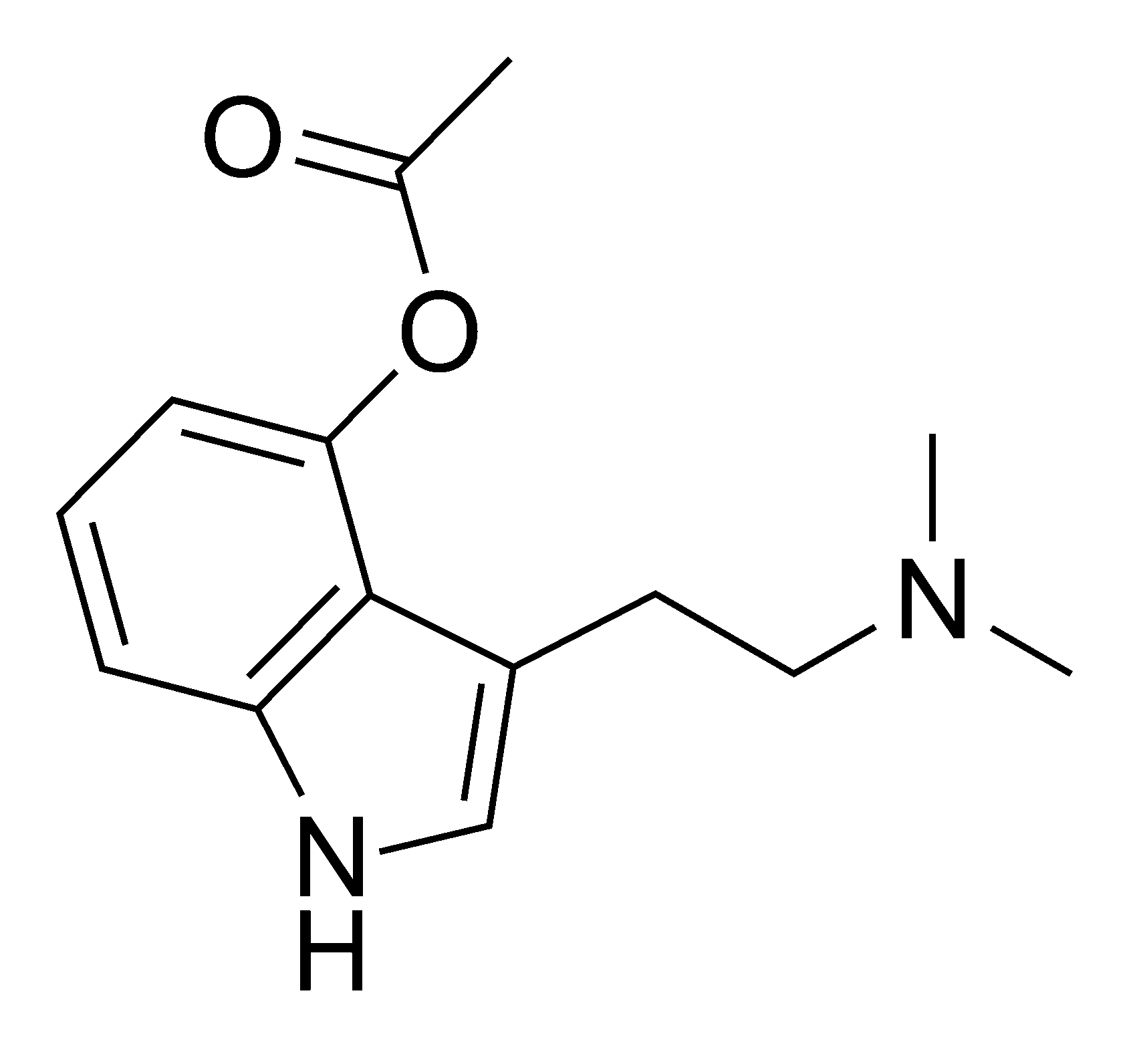
4-Acetoxy-N,N-dimethyltryptamine (4-AcO-DMT or 4-acetoxy-DMT), also known as O-acetylpsilocin or psilacetin, is a psychedelic drug of the tryptamine family related to psilocybin and psilocin. It is a synthetic derivative of psilocin (4-HO-DMT) in which the hydroxyl group has been acetylated, and is the analogue of psilocybin (4-PO-DMT) in which the phosphate ester has been replaced with an acetate ester. The drug is a prodrug of psilocin and is orally active similarly to psilocybin.
As a prodrug of psilocin, 4-AcO-DMT acts as a non-selective serotonin receptor agonist, including of the serotonin 5-HT2A receptor. The hallucinogenic effects of psilocin are thought to be mediated by activation of this receptor, although other receptors also contribute to its effects. 4-AcO-DMT's effects are reported to be similar to those of psilocybin and psilocybin mushrooms. However, it has been said to have reduced side effects such as nausea and body load that can be caused by ingestion of whole psilocybin mushrooms. It is also said to have a faster onset and shorter duration than psilocybin. The drug is not expected to differ from psilocybin or psilocin in terms of safety. 4-AcO-DMT is modestly less potent by weight than psilocybin in animals when they are given at equimolar doses.
4-AcO-DMT was first described in a patent by Albert Hofmann in 1963 and its chemical synthesis was improved by David E. Nichols and colleagues in 1999. It was suggested by Nichols as a more economical and accessible alternative to psilocybin for use in scientific research, as the synthesis of psilocybin is more challenging and as psilocybin is a controlled substance. 4-AcO-DMT was first detected as a designer drug in Europe in 2009. It became increasingly prevalent as a recreational drug in the 2010s and has been the most commonly used novel tryptamine. In the 2020s, 4-AcO-DMT became widely encountered in the form of mushroom edibles in the United States as an alternative to psilocybin. Relatedly, it has sometimes been referred to as "synthetic shrooms". Mushrooms edibles may contain 4-AcO-DMT, Amanita muscaria mushroom constituents, or non-mushroom drugs such as bath salts, and have been linked to poisonings and deaths.
4-AcO-DMT is not scheduled under United States law or any international drug schedules, including the United Nations 1971 Convention on Psychotropic Substances, making it a potentially more accessible alternative to psilocybin for research. It can be imported and possessed for research in the United States if labeled “not for human consumption,” but using it in vivo is illegal and violates the Federal Analogue Act.
Claims of subjective differences in effects between the acetylated and non-acetylated forms of psilocin vary: some users report that 4-AcO-DMT lasts slightly longer, whilst others report that it lasts for a considerably shorter time.[better source needed] Many users report less body load and nausea compared with psilocin. Some users find that the visual effects produced by 4-AcO-DMT more closely resemble those produced by DMT than those produced by psilocin or psilocybin. Despite the preceding reports however, there have been no controlled clinical studies to distinguish the subjective effects of psilacetin, psilocin, and psilocybin.
4-AcO-DMT is a prodrug of psilocin (4-HO-DMT). As a prodrug of psilocin, 4-AcO-DMT acts as a non-selective agonist of serotonin receptors, including of the serotonin 5-HT2A receptor. The psychedelic effects of 4-AcO-DMT are mediated specifically by activation of the serotonin 5-HT2A receptor.
Similarly to psilocybin, psilocin, and other serotonergic psychedelics, 4-AcO-DMT produces the head-twitch response, a behavioral proxy of psychedelic effects, in rodents. In addition, like psilocybin and other psychedelics, 4-AcO-DMT fully substitutes for the psychedelic DOM in rodent drug discrimination tests. 4-AcO-DMT produces effects such as hypolocomotion and hypothermia in rodents as with psilocin as well.
There are no clinical studies of the pharmacokinetics of 4-AcO-DMT as of 2024. However, the pharmacokinetics of 4-AcO-DMT have been studied in rodents. The drug was confirmed to act as a prodrug of psilocin similarly to psilocybin (4-PO-DMT). However, given by intraperitoneal injection at equimolar doses, 4-AcO-DMT showed only 70% of the relative bioavailability or total exposure of psilocybin. Hence, 4-AcO-DMT results in modestly lower psilocin levels than psilocybin even when the drugs are given at equivalent doses with adjustment for differences in molecular weight. Along similar lines, the psilocin concentrations with 4-AcO-DMT 15 minutes after administration were 75 to 90% of those of an equimolar dose of psilocybin. The elimination half-life of psilocin was approximately 30 minutes and did not differ between 4-AcO-DMT and psilocybin. Psilocin ester prodrugs like 4-AcO-DMT are cleaved into psilocin by esterase enzymes.
Hub AI
4-AcO-DMT AI simulator
(@4-AcO-DMT_simulator)
4-AcO-DMT
4-Acetoxy-N,N-dimethyltryptamine (4-AcO-DMT or 4-acetoxy-DMT), also known as O-acetylpsilocin or psilacetin, is a psychedelic drug of the tryptamine family related to psilocybin and psilocin. It is a synthetic derivative of psilocin (4-HO-DMT) in which the hydroxyl group has been acetylated, and is the analogue of psilocybin (4-PO-DMT) in which the phosphate ester has been replaced with an acetate ester. The drug is a prodrug of psilocin and is orally active similarly to psilocybin.
As a prodrug of psilocin, 4-AcO-DMT acts as a non-selective serotonin receptor agonist, including of the serotonin 5-HT2A receptor. The hallucinogenic effects of psilocin are thought to be mediated by activation of this receptor, although other receptors also contribute to its effects. 4-AcO-DMT's effects are reported to be similar to those of psilocybin and psilocybin mushrooms. However, it has been said to have reduced side effects such as nausea and body load that can be caused by ingestion of whole psilocybin mushrooms. It is also said to have a faster onset and shorter duration than psilocybin. The drug is not expected to differ from psilocybin or psilocin in terms of safety. 4-AcO-DMT is modestly less potent by weight than psilocybin in animals when they are given at equimolar doses.
4-AcO-DMT was first described in a patent by Albert Hofmann in 1963 and its chemical synthesis was improved by David E. Nichols and colleagues in 1999. It was suggested by Nichols as a more economical and accessible alternative to psilocybin for use in scientific research, as the synthesis of psilocybin is more challenging and as psilocybin is a controlled substance. 4-AcO-DMT was first detected as a designer drug in Europe in 2009. It became increasingly prevalent as a recreational drug in the 2010s and has been the most commonly used novel tryptamine. In the 2020s, 4-AcO-DMT became widely encountered in the form of mushroom edibles in the United States as an alternative to psilocybin. Relatedly, it has sometimes been referred to as "synthetic shrooms". Mushrooms edibles may contain 4-AcO-DMT, Amanita muscaria mushroom constituents, or non-mushroom drugs such as bath salts, and have been linked to poisonings and deaths.
4-AcO-DMT is not scheduled under United States law or any international drug schedules, including the United Nations 1971 Convention on Psychotropic Substances, making it a potentially more accessible alternative to psilocybin for research. It can be imported and possessed for research in the United States if labeled “not for human consumption,” but using it in vivo is illegal and violates the Federal Analogue Act.
Claims of subjective differences in effects between the acetylated and non-acetylated forms of psilocin vary: some users report that 4-AcO-DMT lasts slightly longer, whilst others report that it lasts for a considerably shorter time.[better source needed] Many users report less body load and nausea compared with psilocin. Some users find that the visual effects produced by 4-AcO-DMT more closely resemble those produced by DMT than those produced by psilocin or psilocybin. Despite the preceding reports however, there have been no controlled clinical studies to distinguish the subjective effects of psilacetin, psilocin, and psilocybin.
4-AcO-DMT is a prodrug of psilocin (4-HO-DMT). As a prodrug of psilocin, 4-AcO-DMT acts as a non-selective agonist of serotonin receptors, including of the serotonin 5-HT2A receptor. The psychedelic effects of 4-AcO-DMT are mediated specifically by activation of the serotonin 5-HT2A receptor.
Similarly to psilocybin, psilocin, and other serotonergic psychedelics, 4-AcO-DMT produces the head-twitch response, a behavioral proxy of psychedelic effects, in rodents. In addition, like psilocybin and other psychedelics, 4-AcO-DMT fully substitutes for the psychedelic DOM in rodent drug discrimination tests. 4-AcO-DMT produces effects such as hypolocomotion and hypothermia in rodents as with psilocin as well.
There are no clinical studies of the pharmacokinetics of 4-AcO-DMT as of 2024. However, the pharmacokinetics of 4-AcO-DMT have been studied in rodents. The drug was confirmed to act as a prodrug of psilocin similarly to psilocybin (4-PO-DMT). However, given by intraperitoneal injection at equimolar doses, 4-AcO-DMT showed only 70% of the relative bioavailability or total exposure of psilocybin. Hence, 4-AcO-DMT results in modestly lower psilocin levels than psilocybin even when the drugs are given at equivalent doses with adjustment for differences in molecular weight. Along similar lines, the psilocin concentrations with 4-AcO-DMT 15 minutes after administration were 75 to 90% of those of an equimolar dose of psilocybin. The elimination half-life of psilocin was approximately 30 minutes and did not differ between 4-AcO-DMT and psilocybin. Psilocin ester prodrugs like 4-AcO-DMT are cleaved into psilocin by esterase enzymes.
Recent media