
Recent from talks
Nothing was collected or created yet.
Binding selectivity
View on WikipediaIn chemistry, binding selectivity is defined with respect to the binding of ligands to a substrate forming a complex. Binding selectivity describes how a ligand may bind more preferentially to one receptor than another. A selectivity coefficient is the equilibrium constant for the reaction of displacement by one ligand of another ligand in a complex with the substrate. Binding selectivity is of major importance in biochemistry[1] and in chemical separation processes.
Selectivity coefficient
[edit]The concept of selectivity is used to quantify the extent to which one chemical substance, A, binds each of two other chemical substances, B and C. The simplest case is where the complexes formed have 1:1 stoichiometry. Then, the two interactions may be characterized by equilibrium constants KAB and KAC.[note 1] where [X] represents the concentration of substance X (A, B, C, …).
A selectivity coefficient is defined as the ratio of the two equilibrium constants. This selectivity coefficient is in fact the equilibrium constant for the displacement reaction
It is easy to show that the same definition applies to complexes of a different stoichiometry, ApBq and ApCq. The greater the selectivity coefficient, the more the ligand C will displace the ligand B from the complex formed with the substrate A. An alternative interpretation is that the greater the selectivity coefficient, the lower the concentration of C that is needed to displace B from AB. Selectivity coefficients are determined experimentally by measuring the two equilibrium constants, KAB and KAC.
Applications
[edit]Biochemistry
[edit]In biochemistry the substrate is known as a receptor. A receptor is a protein molecule, embedded in either the plasma membrane or the cytoplasm of a cell, to which one or more specific kinds of signalling molecules may bind. A ligand may be a peptide or another small molecule, such as a neurotransmitter, a hormone, a pharmaceutical drug, or a toxin. The specificity of a receptor is determined by its spatial geometry and the way it binds to the ligand through non-covalent interactions, such as hydrogen bonding or Van der Waals forces.[2]
If a receptor can be isolated a synthetic drug can be developed either to stimulate the receptor, an agonist or to block it, an antagonist. The stomach ulcer drug cimetidine was developed as an H2 antagonist by chemically engineering the molecule for maximum specificity to an isolated tissue containing the receptor. The further use of quantitative structure-activity relationships (QSAR) led to the development of other agents such as ranitidine.
"Selectivity" when referring to a drug is relative. For example, in a higher dose, a specific drug molecule may also bind to other receptors than those said to be "selective".
Chelation therapy
[edit]Chelation therapy is a form of medical treatment in which a chelating ligand[note 2] is used to selectively remove a metal from the body. When the metal exists as a divalent ion, such as with lead, Pb2+ or mercury, Hg2+ selectivity against calcium, Ca2+ and magnesium, Mg2+, is essential in order that the treatment does not remove essential metals.[3]
Selectivity is determined by various factors. In the case of iron overload, which may occur in individuals with β-thalessemia who have received blood transfusions, the target metal ion is in the +3 oxidation state and so forms stronger complexes than the divalent ions. It also forms stronger complexes with oxygen-donor ligands than with nitrogen-donor ligands. deferoxamine, a naturally occurring siderophore produced by the actinobacter Streptomyces pilosus and was used initially as a chelation therapy agent. Synthetic siderophores such as deferiprone and deferasirox have been developed, using the known structure of deferoxamine as a starting point.[4][5] Chelation occurs with the two oxygen atoms.
Wilson's disease is caused by a defect in copper metabolism which results in accumulation of copper metal in various organs of the body. The target ion in this case is divalent, Cu2+. This ion is classified as borderline in the scheme of Ahrland, Chatt and Davies.[6] This means that it forms roughly equally strong complexes with ligands whose donor atoms are N, O or F as with ligands whose donor atoms are P, S or Cl. Penicillamine, which contains nitrogen and sulphur donor atoms, is used as this type of ligand binds more strongly to copper ions than to calcium and magnesium ions.
Treatment of poisoning by heavy metals such as lead and mercury is more problematical, because the ligands used do not have high specificity relative to calcium. For example, EDTA may be administered as a calcium salt to reduce the removal of calcium from bone together with the heavy metal. Factors determining selectivity for lead against zinc, cadmium and calcium have been reviewed.[7]
Chromatography
[edit]In column chromatography a mixture of substances is dissolved in a mobile phase and passed over a stationary phase in a column. A selectivity factor is defined as the ratio of distribution coefficients, which describe the equilibrium distribution of an analyte between the stationary phase and the mobile phase. The selectivity factor is equal to the selectivity coefficient with the added assumption that the activity of the stationary phase, the substrate in this case, is equal to 1, the standard assumption for a pure phase.[8] The resolution of a chromatographic column, RS is related to the selectivity factor by:
where α is selectivity factor, N is the number of theoretical plates kA and kB are the retention factors of the two analytes. Retention factors are proportional to distribution coefficients. In practice substances with a selectivity factor very close to 1 can be separated. This is particularly true in gas-liquid chromatography where column lengths up to 60 m are possible, providing a very large number of theoretical plates.
In ion-exchange chromatography the selectivity coefficient is defined in a slightly different way[9]
Solvent extraction
[edit]Solvent extraction[10] is used to extract individual lanthanoid elements from the mixtures found in nature in ores such as monazite. In one process, the metal ions in aqueous solution are made to form complexes with tributylphosphate (TBP), which are extracted into an organic solvent such as kerosene. Complete separation is effected by using a countercurrent exchange method. A number of cells are arranged as a cascade. After equilibration, the aqueous component of each cell is transferred to the previous cell and the organic component is transferred to the next cell, which initially contains only water. In this way the metal ion with the most stable complex passes down the cascade in the organic phase and the metal with the least stable complex passes up the cascade in the aqueous phase.[11]
If solubility in the organic phase is not an issue, a selectivity coefficient is equal to the ratio of the stability constants of the TBP complexes of two metal ions. For lanthanoid elements which are adjacent in the periodic table this ratio is not much greater than 1, so many cells are needed in the cascade.
Chemical sensors
[edit]
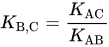
A potentiometric selectivity coefficient defines the ability of an ion-selective electrode to distinguish one particular ion from others. The selectivity coefficient, KB,C is evaluated by means of the emf response of the ion-selective electrode in mixed solutions of the primary ion, B, and interfering ion, C (fixed interference method) or less desirably, in separate solutions of B and C (separate solution method).[12] For example, a potassium ion-selective membrane electrode utilizes the naturally occurring macrocyclic antibiotic valinomycin. In this case the cavity in the macrocyclic ring is just the right size to encapsulate the potassium ion, but too large to bind the sodium ion, the most likely interference, strongly.
Chemical sensors,[13][14] are being developed for specific target molecules and ions in which the target (guest) form a complex with a sensor (host). The sensor is designed to be an excellent match in terms of the size and shape of the target in order to provide for the maximum binding selectivity. An indicator is associated with the sensor which undergoes a change when the target forms a complex with the sensor . The indicator change is usually a colour change (gray to yellow in the illustration) seen in absorbance or, with greater sensitivity, luminescence. The indicator may be attached to the sensor via a spacer, in the ISR arrangement, or it may be displaced from the sensor, IDA arrangement.
See also
[edit]Notes
[edit]- ^ The constant used here are association constants. Dissociation constants are used in some contexts. A dissociation constant is the reciprocal of an association constant.
- ^ The term "ligand" here refers to binding to a metal. In the definition of selectivity coefficient this "ligand" is in fact the substrate and ligand in that definition is the metal ion.
References
[edit]- ^ Klotz, I.M. (1997). Ligand-Receptor Energetics: A Guide for the Perplexed. Wiley. ISBN 978-0-471-17626-8.
- ^ Foreman, J.C.; Johansen, T., eds. (2003). Textbook of receptor pharmacology (2nd. ed.). Boca Raton, Fla.: CRC Press. ISBN 978-0-8493-1029-4.
- ^ Walker, M.; Shah, H.H. (1997). Everything you should know about chelation therapy (4th ed.). New Canaan, Conn.: Keats Pub. ISBN 978-0-87983-730-3.
- ^ Iron-Selective Chelators With Therapeutic Potential in Hider, Robert C.; Kong, Xiaole (2013). "Chapter 8. Iron: Effect of Overload and Deficiency". In Astrid Sigel, Helmut Sigel and Roland K. O. Sigel (ed.). Interrelations between Essential Metal Ions and Human Diseases. Metal Ions in Life Sciences. Vol. 13. Dordrecht: Springer. pp. 229–294. doi:10.1007/978-94-007-7500-8_8. ISBN 9789400774995. PMID 24470094.
- ^ Miller, Marvin J. (1989). "Syntheses and therapeutic potential of hydroxamic acid-based siderophores and analogs". Chemical Reviews. 89 (7): 1563–1579. doi:10.1021/cr00097a011.
- ^ Ahrland, S.; Chatt, J.; Davies, N. R. (1958). "The relative affinities of ligand atoms for acceptor molecules and ions". Quart. Rev. 12 (3): 265–276. doi:10.1039/QR9581200265.
- ^ Farkas, Etelka; Buglyó, Péter (2017). "Chapter 8. Lead(II) Complexes of Amino Acids, Peptides, and Other Related Ligands of Biological Interest". In Astrid, S.; Helmut, S.; Sigel, R. K. O. (eds.). Lead: Its Effects on Environment and Health. Metal Ions in Life Sciences. Vol. 17. Berlin, Boston: de Gruyter. pp. 201–240. doi:10.1515/9783110434330-008. ISBN 9783110434330. PMID 28731301.
- ^ Skoog, D.A; West, D.M.; Holler, J.F.; Crouch, S.R. (2004). Fundamentals of Analytical Chemistry (8th ed.). Thomson Brooks/Cole. ISBN 978-0-03-035523-3. Section 30E
- ^ IUPAC, Compendium of Chemical Terminology, 5th ed. (the "Gold Book") (2025). Online version: (2006–) "selectivity coefficient, kA/B in ion exchange chromatography". doi:10.1351/goldbook.S05566
- ^ Rice, N.M.; Irving, H. M. N. H.; Leonard, M.A (1993). "Nomenclature for liquid-liquid distribution (solvent extraction)". Pure Appl. Chem. 65 (11). IUPAC: 2373–2396. doi:10.1351/pac199365112373. S2CID 98514016.
- ^ Rydberg, J.; Musikas, C; Choppin, G.R., eds. (2004). Solvent Extraction Principles and Practice ( (2nd. ed.). Boca Raton, Fla.: CRC Press. ISBN 978-0-8247-5063-3.
- ^ Buck, R. P.; Linder, E. (1994). "Recommendations for nomenclature of ion-selective electrodes". Pure Appl. Chem. 66 (12). IUPAC: 2527–2536. doi:10.1351/Pac199466122527. S2CID 97126225.
- ^ Florinel-Gabriel Bănică, Chemical Sensors and Biosensors: Fundamentals and Applications, John Wiley and Sons, Chichester, 2012, Print ISBN 978-0-470-71066-1
- ^ Cattrall, R.W. (1997). Chemical sensors. Oxford University Press. ISBN 978-0-19-850090-2.
Binding selectivity
View on GrokipediaFundamentals
Definition
Binding selectivity refers to the degree to which a ligand, such as a molecule, ion, or drug, binds preferentially to a specific receptor or target site over alternative binding partners, arising from differences in binding affinity between the target and non-targets.[7] This preference is governed by the relative strengths of intermolecular interactions, enabling the ligand to discriminate among similar potential sites in a complex environment.[8] In fields such as chemistry, biology, and medicine, binding selectivity is essential for facilitating targeted functions, including precise drug delivery to diseased cells without affecting healthy tissues and efficient molecular separations in synthetic processes.[7] It underpins the design of therapeutic agents that minimize off-target effects, thereby enhancing efficacy and reducing toxicity.[9] A classic biological example is the selective binding of oxygen to hemoglobin, where the protein's heme groups exhibit a high affinity for O₂, facilitating efficient oxygen transport in blood.[10] Historically, the concept traces back to early 20th-century coordination chemistry, exemplified by Alfred Werner's pioneering studies on metal-ligand complexes, for which he received the 1913 Nobel Prize in Chemistry; his work demonstrated how central metal ions could selectively coordinate specific ligands based on geometric and electronic factors, laying the groundwork for understanding selective binding in inorganic systems. Conceptually, binding selectivity differs from specificity, as the former quantifies a relative preference on a continuum of affinities, whereas the latter implies an absolute exclusivity in target recognition.[9] This quantitative aspect is often measured by the selectivity coefficient, which compares binding constants for the target versus competitors.[7]Selectivity Coefficient
The selectivity coefficient, denoted , quantifies the relative affinity of a ligand A for two competing targets B and C and is defined as the ratio of the equilibrium binding constants , where and are the association constants for the formation of complexes AC and AB, respectively.[11] This measure arises in the context of competitive binding, where binding selectivity refers to the preferential interaction of the ligand with one target over the other. An alternative expression for the selectivity coefficient derives from the law of mass action applied to the displacement equilibrium AB + C ⇌ AC + B, yielding at equilibrium.[11] This concentration ratio directly reflects the equilibrium position and is equivalent to the ratio of association constants, as and , confirming the thermodynamic consistency of the definition. Experimentally, the selectivity coefficient is determined by measuring the individual binding constants through techniques such as titration curves, isothermal titration calorimetry (ITC), or surface plasmon resonance (SPR).[12] Titration curves involve monitoring the fractional occupancy of the target as a function of ligand concentration, fitting data to the binding isotherm to extract association constants in the appropriate regime (e.g., quadratic equation for intermediate affinities). ITC directly measures heat released or absorbed upon binding, providing association constants from integrated thermograms analyzed via models accounting for stoichiometry and saturation. SPR detects real-time changes in refractive index due to complex formation on a sensor surface, yielding association constants from association and dissociation rate fits. These methods allow computation of by separately assessing and under identical conditions to ensure comparability. The selectivity coefficient is a dimensionless quantity, as it represents a ratio of constants with identical units (typically M for association constants). A value of indicates a preference for target C over B, with larger values signifying greater selectivity; conversely, implies preference for B.[11][4] For instance, in evaluating a drug's binding to two protein isoforms, selectivity can be computed using dissociation constants (where ), such that . Consider a kinase inhibitor with nM for the target isoform and nM for the off-target isoform; the resulting demonstrates 100-fold selectivity for the intended target.[2]Factors Influencing Binding Selectivity
Molecular and Structural Factors
The binding selectivity of ligands to their targets is profoundly influenced by the molecular structure of the ligand, including its size, shape, functional groups, and stereochemistry. For instance, the size and shape of a ligand must complement the target's binding pocket to enable optimal non-covalent interactions, such as van der Waals forces and hydrophobic contacts, which minimize steric clashes and maximize surface burial. Functional groups on the ligand, such as hydrogen bond donors and acceptors or charged moieties, facilitate specific interactions that enhance affinity for one target over others. Stereochemistry plays a critical role in chiral selectivity, as seen in enzyme-substrate binding where the three-dimensional arrangement of atoms in the substrate matches the enzyme's chiral active site, allowing only one enantiomer to bind effectively while excluding the other.[13] Target site features, including pocket geometry, charge distribution, and hydrogen bonding patterns, further dictate selectivity by creating a unique chemical environment that favors particular ligands. In protein binding sites, for example, a snug-fit geometry where the cavity size precisely matches the ligand's dimensions can confer high selectivity through rigid structural constraints, as observed in ion channels like the KcsA potassium channel's S2 site, which discriminates K⁺ from Na⁺ based on ion radius and ligand coordination. Charge distribution within the site, such as negatively charged residues, enhances selectivity for oppositely charged ligands via electrostatic steering, while specific hydrogen bonding patterns lock the ligand in place, preventing dissociation of competitors. In more flexible sites, ligand adaptation via conformational changes can still achieve selectivity by optimizing these interactions.[5] Key concepts illustrating these structural influences include the lock-and-key and induced fit models of binding. The lock-and-key model posits a rigid, pre-formed complementarity between ligand and target, where selectivity arises from exact geometric and chemical matching without conformational adjustment. In contrast, the induced fit model describes a dynamic process where ligand binding induces target reconfiguration to achieve optimal fit, allowing selectivity through adaptive interactions that are energetically favorable only for specific ligands. The chelate effect exemplifies structural enhancement in multidentate ligands, where multiple donor atoms form a stable ring with the target (e.g., a metal ion), increasing selectivity and stability compared to monodentate analogs due to entropic advantages from fewer unbound molecules in solution.[14] Representative examples highlight these factors in action. Crown ethers, such as 18-crown-6, exhibit ion selectivity for alkali metals like K⁺ due to their cavity size matching the ion's diameter, enabling encapsulation via oxygen-metal coordination while excluding smaller or larger ions like Na⁺ or Rb⁺. In biological systems, antibody-antigen recognition relies on complementary surfaces formed by the antibody's complementarity-determining regions (CDRs), where shape complementarity, electrostatics, and hydrogen bonds between specific functional groups ensure high selectivity for the cognate antigen amid diverse molecular competitors.[15][16] Recent advancements post-2020 have leveraged computational tools like AlphaFold2 for designing selective ligands by predicting protein structures and simulating binding interfaces. AlphaFold2-generated models have guided prospective ligand discovery, achieving high hit rates (e.g., 55% for σ2 receptor binders at 1 µM) and identifying subtype-selective compounds for targets like 5-HT2A receptors, where structural predictions informed docking and validated selectivity via cryo-EM. These AI-driven approaches enable rational design of ligands with tailored size, shape, and functional groups to exploit target pocket features, accelerating the development of selective binders.[17]Environmental and Thermodynamic Factors
Binding selectivity is fundamentally governed by thermodynamic principles, where differences in the Gibbs free energy change () for competing binding interactions determine the preference for one ligand or substrate over another. The relationship , where is the equilibrium binding constant, is the gas constant, and is temperature, quantifies how small variations in —typically on the order of 1-2 kcal/mol—can lead to significant selectivity ratios exceeding 100-fold.[18] Enthalpic contributions arise from direct bonding interactions like hydrogen bonds or van der Waals forces, while entropic effects stem from changes in solvation shells and conformational freedom upon binding, often resulting in enthalpy-entropy compensation that fine-tunes selectivity.[19] Environmental conditions profoundly modulate these thermodynamic profiles. Variations in pH alter the protonation states of ionizable groups in biomolecules, thereby shifting electrostatic interactions and binding affinities; for instance, pH changes of approximately 0.5 units can alter binding affinities by up to 4-fold, as observed in transcription factor-DNA interactions like FOXC2 binding to the FkhP motif.[20] Ionic strength influences selectivity by screening electrostatic interactions, with higher salt concentrations (e.g., 100-500 mM NaCl) showing variable effects by system; for example, dissociation constants may increase ~2-fold in some protein-ligand complexes (e.g., trypsin/PABA) while decreasing ~3-fold in others (e.g., Cyclin A2/RRLIF).[21] Temperature affects both equilibrium constants and kinetic barriers, with affinity often decreasing for many bindings as temperature rises.[22] Solvent properties further dictate binding preferences through their polarity and dielectric constant, which modulate solvation energies and stabilize or destabilize transition states. In polar solvents like water (dielectric constant ≈80), hydrophilic interactions dominate, whereas less polar media enhance hydrophobic selectivity; the Hofmeister series exemplifies this for ions, where chaotropic anions (e.g., SCN⁻) disrupt water structure to promote protein unfolding and weaken binding compared to kosmotropic ones like SO₄²⁻.[23] In non-equilibrium conditions, kinetic factors such as activation energies and diffusion rates contribute to observed selectivity, particularly in crowded cellular environments.[24] A notable example is the temperature-dependent selectivity in protein folding mediated by chaperones like DegP, which shifts from protective binding at low temperatures (below 25°C) to proteolytic degradation at higher ones (above 30°C), ensuring proteome quality under thermal stress.[25] In a modern context, a 2023 study on CRISPR-Cas9 systems in potato demonstrated how salt stress (e.g., 20-50 mM NaCl) enhanced on-target editing efficiency up to 91.67% with no off-target effects observed.[26]Applications
In Biochemistry
In biochemistry, binding selectivity plays a crucial role in enzyme kinetics, where enzymes achieve specificity through complementary interactions between their active sites and substrates. The induced fit model, proposed by Koshland in 1958, explains this selectivity: the enzyme's active site undergoes conformational changes upon substrate binding to optimize geometric and electronic complementarity, enhancing catalytic efficiency for the correct substrate while discriminating against others. This selectivity is quantitatively reflected in the Michaelis-Menten constant (Km), which measures substrate affinity; a lower Km indicates higher selectivity for the preferred substrate, as seen in enzymes like hexokinase, where glucose binds with high affinity (Km ≈ 0.1 mM) compared to other sugars. Such precise binding ensures metabolic pathways proceed without off-target reactions, minimizing cellular energy waste. Receptor-ligand interactions further exemplify binding selectivity in biological signaling, particularly with G-protein coupled receptors (GPCRs) like the β-adrenergic receptors. These receptors distinguish between agonists and antagonists based on ligand-induced conformational changes that selectively activate downstream G-protein signaling pathways. For instance, β-blockers such as metoprolol exhibit high selectivity for the β1-adrenergic receptor (over β2) due to differential binding affinities, with pKi values of approximately 7.9 for β1 versus 6.9 for β2, allowing targeted blockade of cardiac effects while sparing bronchial smooth muscle relaxation.[27] This subtype selectivity reduces side effects in treatments for hypertension and heart failure, highlighting how structural variations in receptor binding pockets dictate ligand specificity. In drug design, binding selectivity is paramount for developing kinase inhibitors that target specific isoforms to avoid toxicity. Imatinib, approved in 2001, selectively inhibits the BCR-ABL tyrosine kinase in chronic myeloid leukemia by binding to its inactive conformation with an IC50 of 0.25 μM, while showing over 100-fold lower potency against other kinases like c-Src. Subsequent generations of inhibitors, such as dasatinib and nilotinib by the 2010s, further enhanced isoform selectivity through optimized hydrogen bonding and hydrophobic interactions, achieving sub-nanomolar IC50 values for BCR-ABL mutants and minimizing off-target effects on kinases like c-KIT. Transcription factors also rely on binding selectivity for nucleic acid recognition, where proteins like the λ repressor bind specific DNA sequences via helix-turn-helix motifs, with affinities differing by over 1,000-fold between operator sites and non-specific DNA, enabling precise gene regulation as demonstrated in Ptashne's 1967 studies on bacteriophage λ. Recent advances in 2024 have leveraged binding selectivity in proteolysis targeting chimeras (PROTACs), bifunctional molecules that recruit specific E3 ubiquitin ligases to degrade target proteins. Studies identified small-molecule ligands for KLHDC2, an E3 ligase substrate receptor, enabling PROTACs to selectively form ternary complexes with KLHDC2 (Kd ≈ 1 μM) over related ligases like KLHDC10, thus achieving degradation of neo-substrates such as BRD4 with DC50 values below 10 nM while sparing paralogs. This selectivity arises from ligand-induced relief of KLHDC2 auto-inhibition, expanding therapeutic options for undruggable targets in cancer and neurodegeneration.In Chelation Therapy
In chelation therapy, binding selectivity enables multidentate ligands to preferentially target toxic heavy metals for removal from the body while sparing essential ions, thereby reducing the risk of nutrient depletion under physiological conditions influenced by thermodynamic factors such as pH and ionic strength. A classic example is ethylenediaminetetraacetic acid (EDTA), typically administered as calcium disodium edetate, which forms a more stable complex with lead (Pb²⁺) than with calcium (Ca²⁺), reflected in their respective stability constants (log K values) of approximately 18.0 for Pb²⁺-EDTA and 10.7 for Ca²⁺-EDTA; this selectivity allows EDTA to mobilize and excrete lead via urine while the displaced calcium is retained.[28][29][30] Key therapeutic agents exemplify this principle in treating metal overload disorders. Deferoxamine, a hexadentate siderophore-based chelator approved by the FDA in 1976 for chronic iron overload in thalassemia major patients receiving transfusions, demonstrates high selectivity for ferric iron (Fe³⁺) with a log K value exceeding 30 for the Fe³⁺-deferoxamine complex, far surpassing its affinity for essential metals like zinc or copper, enabling targeted urinary and fecal excretion of excess iron without broadly disrupting homeostasis.[31][32] Similarly, D-penicillamine, approved by the FDA in 1970 for Wilson's disease, selectively binds copper (Cu²⁺) with a log K of about 15.5 for the Cu²⁺-penicillamine complex, promoting its urinary elimination while exhibiting lower affinity for other divalent cations, thus alleviating hepatic and neurological copper accumulation.[33][34] More recently, deferasirox (Exjade), an oral tridentate chelator approved by the FDA on November 2, 2005, for transfusional iron overload, binds Fe³⁺ with high selectivity (log K ≈ 39 for the 2:1 Fe³⁺-deferasirox complex) and minimal interaction with vital ions, offering improved patient compliance over injectable predecessors.[35][36] Despite these advances, selectivity challenges persist in balancing high affinity for target metals against unintended depletion of essential trace elements, necessitating careful monitoring of stability constants to optimize dosing and prevent hypozincemia or hypocupremia, as seen with agents like EDTA (log K for Zn²⁺-EDTA ≈ 16.5) or deferoxamine.[30][37] Clinical outcomes underscore the efficacy of selective chelation: long-term deferoxamine or deferasirox therapy in transfusion-dependent thalassemia patients significantly reduces hepatic and cardiac iron overload, as measured by MRI, leading to improved survival and decreased complications like cardiomyopathy, with studies showing ferritin levels dropping by 50-70% over 1-5 years of treatment.[38][39] Exploratory trials of iron chelators like deferiprone for Alzheimer's disease, such as the phase II Deferiprone to Delay Dementia (3D) study (NCT03234686) with results reported as of 2025, investigated targeting dysregulated metal binding to amyloid-beta plaques but demonstrated accelerated cognitive decline and reduced hippocampal iron levels, without benefits and highlighting risks of essential metal depletion in neurodegeneration.[40] Side effects, particularly nephrotoxicity from chelate-metal complexes accumulating in renal tubules, pose ongoing risks, as observed with deferoxamine (up to 10% incidence of acute kidney injury) and deferasirox (30-60% glomerular filtration rate decline in high-risk patients), often linked to insufficient selectivity for non-target ions under high dosing.[41][37] Optimizations focus on enhancing ligand selectivity through structural modifications, such as introducing sterically hindered groups to lower affinity for calcium or magnesium (e.g., next-generation deferasirox analogs with refined log K ratios), combined with renal-protective co-therapies like hydration protocols, which have reduced nephrotoxicity rates by 20-40% in recent thalassemia cohorts.[42][43]In Separation Techniques
Binding selectivity plays a pivotal role in separation techniques, particularly in chromatography and solvent extraction, where it enables the purification of complex mixtures by exploiting differences in analyte interactions with stationary or liquid phases. In chromatography, the selectivity factor , defined as the ratio of retention factors for two solutes A and B, quantifies the degree of separation achievable based on their differential affinities for the stationary phase relative to the mobile phase. This factor directly influences resolution, as described by the fundamental resolution equation: where is the number of theoretical plates, indicating column efficiency, and is the retention factor of the later-eluting solute; higher values enhance separation quality, allowing baseline resolution () even with modest efficiency.[44][45] Ion-exchange chromatography leverages electrostatic binding selectivity between charged analytes and oppositely charged stationary phases, such as sulfonated resins for cations or quaternary ammonium groups for anions, to separate species based on charge density and ionic strength. For instance, heparin-functionalized columns, which combine ion-exchange with affinity properties, selectively bind basic proteins like DNA-binding factors through multivalent interactions with sulfate and carboxylate groups on the heparin ligand, enabling purification from crude extracts with high specificity. Affinity chromatography extends this principle using biorecognition elements, such as immobilized antibodies or lectins, to achieve exquisite selectivity; examples include nickel-nitrilotriacetic acid (Ni-NTA) resins that bind histidine-tagged proteins via coordination chemistry, isolating targets from cell lysates with purities exceeding 95% in a single step.[46][47][48] In solvent extraction, selectivity arises from partition coefficients (), which dictate the distribution of metal ions or molecules between immiscible organic and aqueous phases, often enhanced by ligands that form extractable complexes. Tributyl phosphate (TBP), a neutral extractant, selectively partitions lanthanides from nitric acid solutions into organic diluents like kerosene, with distribution ratios increasing across the series (e.g., ) due to decreasing hydration energies, facilitating their separation in nuclear fuel reprocessing. Similarly, di-(2-ethylhexyl) phosphoric acid (D2EHPA), an acidic extractant, preferentially binds copper over zinc in hydrometallurgical leachates at pH 2–4, achieving extraction efficiencies >90% for Cu(II) while leaving Zn(II) in the raffinate, as the phosphinate complex formation is more favorable for Cu due to its higher charge density. High-performance liquid chromatography (HPLC) exemplifies practical application, where chiral stationary phases like polysaccharide derivatives (e.g., cellulose tris(3,5-dimethylphenylcarbamate)) enable enantiomer separation by forming transient diastereomeric complexes, resolving compounds such as amino acids with under normal-phase conditions. Recent advancements in metal-organic frameworks (MOFs) for gas separations, such as the 2023 development of a carborane-based MOF exhibiting CO₂/N₂ selectivity >100 at 298 K and 1 bar, highlight how tailored pore apertures and binding sites enhance kinetic and thermodynamic discrimination in post-combustion capture.[49][50][51] Optimization of binding selectivity in these techniques often involves tuning environmental parameters like pH or solvent composition to modulate analyte ionization or solvation, thereby adjusting without altering hardware; for example, in reversed-phase HPLC, increasing mobile phase pH from 3 to 5 can boost selectivity for weak bases by 20–50% through altered retention. Such adjustments, informed by environmental factors like ionic strength, ensure robust scalability from analytical to preparative scales in industrial purification.[52][53][54]In Chemical Sensors
Binding selectivity plays a crucial role in chemical sensors by enabling the specific recognition of target analytes through ligand-receptor interactions, which transduce binding events into measurable signals such as potential changes or fluorescence variations. In potentiometric sensors, this selectivity manifests as a voltage response governed by the Nernst equation, where the electrode potential varies logarithmically with the activity of the target ion, allowing discrimination against interferents based on differential binding affinities.[55] Ion-selective electrodes (ISEs) exemplify this principle, utilizing ionophores that form selective complexes with target ions to generate a membrane potential. The valinomycin-based potassium ISE, for instance, employs the antibiotic valinomycin as an ionophore that wraps around K⁺ ions via coordination with its carbonyl oxygen atoms, achieving high selectivity over Na⁺ with a selectivity coefficient of log K_{Na,K}^{pot} ≈ -4, meaning the electrode responds 10,000 times more sensitively to K⁺ than to Na⁺ at equal activities. Similarly, the glass pH electrode relies on a thin hydrated silica layer on its membrane surface, where silanol groups selectively bind H⁺ ions through ion-exchange, providing exceptional selectivity for protons over other cations like Na⁺ or K⁺ due to the higher affinity of the gel layer for H⁺.[56][57] Optical and electrochemical sensors further leverage binding selectivity for detecting heavy metals and other analytes. Fluorescent probes incorporating calixarenes, such as tetra-dansylamide calix[58]arene derivatives, exhibit ratiometric fluorescence changes upon binding Pb²⁺ through coordination at lower-rim phenolic oxygens, demonstrating high selectivity over competing ions like Cd²⁺ and Hg²⁺ in aqueous media due to the cavity size match and chelation-enhanced fluorescence quenching. In electrochemical configurations, these probes can be integrated into voltammetric setups where selective binding alters electron transfer rates, minimizing responses from interferents.[59] Biosensors enhance selectivity through biomolecular recognition elements, such as antibodies in enzyme-linked immunosorbent assays (ELISA), where monoclonal antibodies bind specific epitopes on target antigens with affinities in the nanomolar range, enabling detection of proteins or pathogens while rejecting non-cognate molecules via shape complementarity and non-covalent interactions. Recent advancements in wearable biosensors, as of 2025, incorporate aptamer-based designs for continuous glucose monitoring; these single-stranded DNA aptamers fold into structures that selectively bind glucose over interferents like ascorbic acid or uric acid, achieving detection limits below 1 mM in sweat or interstitial fluid through electrochemical transduction in microneedle patches.[60][61] Performance metrics in these sensors, particularly the limit of detection (LOD), are directly influenced by binding selectivity, as poor discrimination against interferents raises the baseline noise and effective LOD, often limiting it to micromolar levels without optimization. Strategies to minimize interference include molecular engineering of ligands for higher affinity ratios (e.g., >10^3 for target vs. interferent), use of differential sensing arrays to subtract background signals, and incorporation of permselective membranes to exclude charged interferents, thereby enhancing overall sensor reliability in complex matrices like biological fluids.[62][63]References
- A large selectivity coefficient reflects a strong preference for the ligand for the target receptor. The difference between the standard binding free energies ...
