Hubbry Logo
AgegeAgegeMain
Open search
Agege
Community hub
Agege
logo
8 pages, 0 posts
0 subscribers
Be the first to start a discussion here.
Agege
Agege
from Wikipedia

Agege is a large city and local government area in the Ikeja Division of Lagos State, Nigeria. Until 1927, Agege was the capital of Ikeja Division.

Key Information

Agege local, ogba town government
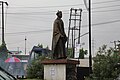
Oba Akran Statue Ogba Agege, Lagos

Etymology

[edit]

Agege is an ancient Awori city of Otta dynasty founded by Aige. It was initially used for farming while he moved several miles into the uninhabited wild forest for hunting adventure before he finally settled alongside his children, wives and slaves on the area during the 15th and 16th centuries. They were later joined by some family members and relatives from Otta, Oke Ata and other old Awori clans to form the old settlement. The name Agege was a corruption of an individual named “Aige” or “Aiyige” alias Agerige who was a hunter and warrior from Olorogun Dynasty in Osi Quarters, Iga Iloti currently Otta Ogun State.

Ancient Agege included foremost settlements like: Orile, Ogba, Ikola, Meiran, Ekoro, Aboru, Ayobo and Later Mosan, Alimosho and Ganganja and was said to cover a vast area land under the control of Baale Alaige.

Around the early 19th century, Agege had more heterogeneous population than any other town of its size in Nigeria with 6,000 people and more than 2,000 floating population. Agege Planters' Union did much good work during the food crisis in Lagos then, acting not only as a medium of agricultural intelligence but also as provident society and more.

During the Old Colony Agege was hub for cocoa and Kola nut and housed the Colonial farm settlement with the Office of the Assistant District Officer.

Orile Agege is known for Yoruba ancient deities and festivals. Festivals include Egungun festival and Gelede Festival.

Geography

[edit]

The boundary of the ancient Agege stretched from Isheri in the Northern part of Lagos, Ejigbo/Ewu through Idimu covering Mosan/Ayobo and bordering Itele Otta District while covering Ikola, Meiran in the southern and eastern part respectively and parting Agbado and borderline Abeokuta district in the western part and as shown in Lagos district map of 1842.

While the boundary of current Agege stretches from Northern part of Lagos stretches from Dopemu road through Anu-oluwapo street to olukosi down Fagbola through Osobu street to Orile road down to Old Agege Motor Road opposite Nitel. From the Southern part of Lagos it stretches from Ashade retail market to Akilo street.[2]

From the Eastern part of Lagos it stretches from Oba ogunji road up to the by-pass to Agege Motor road by Nitel office. From the Western part of Lagos, the boundary of Agege stretches from Abeokuta express road from boundary with Ikeja Local government to Dopemu junction.[2]

History

[edit]

Agege was a corruption of a name of an individual called Aige or Aiyige (just like Success "Aayege" in Yoruba language, means success or being successful in an ancient Awori aborigine dialect)) who founded and settled having consulted his oracle 'Ifa" before settling on the part of his farmland named idàà adun/Idò Adun, located within the current day ídéè bua and ipodo Orile Agege before moving to Isale odon.

"Orile" means "proper" (Agege proper) is often used to distinguish the old settlement from the recent settled town called Agege station which was settled by traders in the late 19th century thus booming kola nuts trade, accelerated by Railway shed which complemented the emerging Agege market activities in the town. As recorded in mid 20th century “About 70% of the kolas despatched to the Northern Province pass through the rail-head at Agege and it owes its size partly to the possession of Railway station and partly to its situation as the center of a large kola and cocoa producing area. And In the year 1933 more than 50% of the kolas consumed in Nigeria passed through the Agege Railway goods sheds.”

Contrary to Ilu Awon Ageigi, The old Agege was an offshoot of Otta covered about 75,000 hectares of land (75 km) include Villages like Ogba, Ikola, Ayobo, Meiran, Ekoro, Mosan, Akiogun and Anishere were all under the control of Baale of Alaige in Orile Agege and the Bale was subjected to Otta until 1840s when Otta was rumored to have been captured by Ègba during the Dahomean war. The war which lasted between 1840s to until 17th and 18th century 1850s saw the people of Agege move to Lagos for shelter and the then Bale Alaige settled at Iru (Victoria beach) where he married the daughter of Eleko Adele before he and his people returned circa 1850s.

After the cessation of Lagos in 1861 by King Dosunmu of Lagos, Agege was prominently recognized by Governor Glover of the Colony as one of the oldest villages in Lagos and the Bale Alaige (Baale of Orile Agege) was the first on the available list to be granted subsidies by Governor among other old villages during the old colony in the year 1888. While the remainder of the country was being opened up the hinterland of Lagos (including Agege ) added by cession to the territories originally ceded by the King of Lagos in 1861. In 1866 Lagos had been included in the West African Settlements, and in 1874 it was united with the Gold Coast Colony. It became the separate Colony and Protectorate of Lagos in 1886.

At a various of the second half of the 19th century, fairly large number of villages and hamlets were founded over the forested landscape of the standstone of the then Agege-Ikeja district covering about 75,500 hectares (i.e. 755km2) the area with its well drained soil and empty forestland offered great attraction to various group of Awori from Otta, Egbado from Ilaro, Égba from Abeokuta, other Yorubas, Nupe, Ekitis migrants who founded many settlements. Also most of trader whom came to trade decided to stayed due rapid economic growth. from When the kolanut plantations in the Agege area started to flourish it attracted huge settlements.

Agege Station experienced rapid development and became a powerful center of the kolanut trade. These settlements attracted different people of different backgrounds and interests such as traders, laborers, and most of these were Hausa. Whenever the Yoruba's needed labourers for jobs such as cutting of trees, they would engage the services of the Hausa people. Because of this work the immediate area where the Hausas lived was named ‘Ilu Awon Ageigi’ which translates as ‘Town (Ilu) of the tree cutters’. The name Agege was thus formed out of the word Ageigi by Hausas settlers.

The foundation of Agege as a populated and commercial settlement began when a railway station was located close to Orile -Agege, an Awori settlement; the new railway linked Lagos with Abeokuta and was subsequently extended to Ibadan and to the Northern region.[3] Prior to the construction of the station, Awori and Egba farmers cultivated food and cash crops such as Cocoa and Kola nut within the settlement.[3] It is worthy to note that large scale cocoa plantations in Yorubaland started at Agege,[3] before extending to many South Western Nigerian towns. Commercial activities sprang up around the station as collection, sorting and grading of Cocoa for transportation and export took place at Agege.[3] The kolanut trade between Agege and the Northern region also expanded as a railway service was extended to the Northern regions. Small scale market activities also rose as market women set up shops close to the railway station.[3] 1907 Jacob Coker founded the Agege Planters' Union, the first agricultural cooperative in West Africa.

In the year 1912, after the completion of Railway terminal, Agege (Station) township had grown during the last fifteen years into town with settled population of four to five thousand and floating population of two or three thousand more. The population was approximately 60% Hausa from Northern District and 40% from all part of southern Nigeria. While the land on which its stands was originally owned by Awori people of Orile Agege and Ogba respectively.

The Executive Chairman of Agege Local Government area of Lagos State is Alhaji Ganiyu Kola Egunjobi.[4][5]

Economy

[edit]

When Dasab Airlines existed, its Lagos office was in Agege.[6]

Agege Local Government Area sustains a dynamic economy through vibrant markets like the Abattoir meat market and Alade market. These markets offer diverse commodities, contributing significantly to the local economy.[7][6]

People

[edit]

The inhabitants of Agege Local Government are multi-ethnic although the Awori are the indigenous inhabitants. Some major communities making up the Agege Local Government are Ogba, Asade, Dopemu, Orile, Ido-Gòun, Magbon, Oko-Oba, Atobaje, Gbogunleri, Isale Oja, Isale Odan, Oke-Koto, Ipodo, Panada, Tabon-Tabon, Ajegunle, Oyewole, Lemomu Edara, Papa Ashafa & Ewedairo, Sango, Oyewole, Mulero, Keke, Papa uku/Olusanya, Oniwaya, Moricas, Iloro, Mangoro, Darocha, Onipetesi, Alfa Nla and Agbotikuyo. The inhabitants of Agege Local Government are essentially Yorubas with the presence of sparse population of non-Yoruba speaking people.[8] Here are some surnames traditionally associated with indigenous families from Orile Agege: Alebiosu – "One born with prestige" Ajegunle – "One who thrives in a place of struggle" Olorunfunmi – "God gave me this" Onakunle - "Craftsmanship brings honor into the house" Akinola – "A warrior is wealthy" Ogundipe – "Ogun (deity of iron/war) has increased" Oshodi – Often tied to traditional chieftaincy titles among the Awori Adeyemi – "Royalty befits me" Oyekan – "The royal one has returned" Ojugbele – A name found among Awori families in Agege and its surroundings Kusimo – Another surname known in the Awori community of Lagos

Agege Bread

The Agege bread is an unsliced bread which became popular in Agege town a long time ago. The soft texture and long shelf life of this bread were loved and cherished by people. It had no name nor label until people began to refer to it as 'Agege Bread' as its popularity grew. Agege bread is now one of Lagosians' favourite foods, being sold and enjoyed everywhere from breakfast tables to garages in almost all the streets of Lagos.[4]

Community

[edit]

Wards under Agege Local Government Area[7]

  • Agbotikuyo
  • Dopemu
  • Darocha
  • Iloro
  • Onipetesi
  • Isale Odo
  • Isale
  • Idimangoro
  • Keke
  • Okekoto
  • Oniwaya
  • Papa-uku
  • Ori
  • Orile Agege/oko Oba
  • Oyewole/papa Ashafa
  • Tabon Tabon/oko Oba

Ancient Settlements in Agege (that are still part of the town) Orile Agege:

  • Ido Aadun
  • Isale Odan
  • Ido Gaun
  • Ipodo
  • Aaromi (Araromi)
  • Ido Aagbosu
  • Magbon
  • Mulero
  • Onilekere
  • Masaku
  • Ganganja

Ogba:

  • Ashade
  • Alausa
  • Agbede
  • Adekunle
  • Operekete
  • Akinode

George:

  • Omole
  • Aguda
  • Suberu

Orile-Agege Ruling Houses & Families:

  • Okosun
  • Agbedeyi / Agbede
  • Fagbayi
  • Ewedairo
  • Alamidun / Aalamidun
  • Adeyemi
  • Olabua
  • Alaaboru / Aboru
  • Ero

Colonial & Court-Recorded Families

  • Laleye
  • Oke-Apena
  • Omotoye
  • Oyedeko
  • Itogbe
  • Olorunlabe

Traditional rulers

[edit]

In Agege / Orile Agege, the Chieftaincy Community has three recognized Obas and Six traditional members. List of Obas 1. HRM Alayige of Orile Agege 2. HRM Olu of Agege Kingdom 3. HRM Ologba of Ogba

Events

[edit]

On 3 June 2012, Dana Air Flight 992 crashed into residential buildings in Agege while attempting to land at Murtala Muhammed International Airport, killing all 153 people on board and 10 other people on the ground.[9]

Education

[edit]

It includes a campus of Lagos State University.[10]

National Youth Service Corps Permanent Orientation Camp is located at Iyana-Ipaja Road, Agege.[11]

[edit]

Railway stations in Nigeria

References

[edit]
[edit]
Revisions and contributorsEdit on WikipediaRead on Wikipedia
from Grokipedia
Agege is a and densely populated suburb in the Ikeja division of , , functioning as a major commercial and residential hub within the metropolitan region. Originating as an Awori Yoruba settlement around the , it evolved from rural homesteads focused on farming into a trading center, with the local government formally established in 1954 amid post-colonial administrative changes. The area spans about 11 square kilometers and supports a exceeding 635,000 as of recent estimates, predominantly Yoruba-speaking residents engaged in , small-scale , and services. Key features include vibrant markets like Agege Market for foodstuffs and goods, the Agege as a sports venue, and traditional institutions reflecting its pre-colonial wards and leadership structures. Its central location—bordered by areas like Abule Egba, Ogba, and —drives economic activity through retail, transport links, and informal trade, though rapid has strained .

Geography and Environment

Location and Boundaries


Agege Local Government Area (LGA) is located in the Ikeja Division of Lagos State, southwestern Nigeria, serving as a suburban extension of the Lagos metropolis. Its central coordinates are approximately 6°37′N 3°20′E. The LGA encompasses roughly 18 square kilometers of urban terrain.
Agege shares its northern boundary with LGA, its western boundary with LGA, and its eastern boundary with LGA, while the southern extent adjoins the Orile Agege Local Council Development Area. This positioning integrates Agege into the densely connected urban fabric, facilitating its role as a commuter hub proximate to the state capital in Ikeja. Prominent physical features include the Agege Motor Road, a vital east-west arterial route linking to , and the historic Lagos-Abeokuta railway line that bisects the area, influencing local transport patterns. The Ogba-Agege axis represents a key linear corridor defined by intersecting roads and rail infrastructure.

Climate and Topography

Agege exhibits a tropical wet and dry climate (Köppen Aw), with a pronounced rainy season spanning to , during which heavy downpours contribute to an annual precipitation average of approximately 1,645 mm, peaking at around 200 mm per month in and . The , from to March, features reduced rainfall under 50 mm monthly and northeasterly winds that introduce cooler, dust-laden air from the , occasionally lowering and . Year-round temperatures are consistently warm, averaging 26.4°C, with daily highs typically between 30°C and 33°C and lows ranging from 23°C to 25°C; extremes rarely dip below 21°C or exceed 35°C due to the region's equatorial proximity and coastal influence. Relative humidity remains high, often exceeding 80% during the , supporting lush vegetation in undeveloped pockets but also fostering conditions for rapid runoff. The topography of Agege consists of flat, low-lying coastal plain terrain with an average elevation of 40 meters above sea level and minimal variation in relief, rendering it vulnerable to inundation from seasonal rains and overflows from nearby tributaries of the Ogun River system. Predominant soil types include sandy clay and sandy loam, which exhibit moderate fertility and drainage potential suitable for historical cultivation of crops like cassava and maize, though extensive urbanization has led to surface sealing that alters natural percolation. These ferralitic soils, often acidic with low cation exchange capacity, underlie the area's transition from agrarian to densely built environments.

Environmental Challenges

Agege experiences recurrent flooding primarily due to inadequate , illegal constructions encroaching on waterways, and blockage from solid waste accumulation, with these issues intensified by the area's high exceeding 1.5 million in a compact urban zone. In the , heavy seasonal rains have exacerbated these vulnerabilities; for instance, Lagos-wide floods in 2022-2023 caused damages estimated at $262,500 and affected 8,000 in affected locales, with Agege's low-lying and poor contributing to localized overflows that displaced thousands and damaged properties. Studies attribute over 70% of such incidents to human factors like unregulated building on floodplains rather than solely meteorological events, underscoring causal links to rapid, unplanned without corresponding infrastructural upgrades. Waste management deficiencies pose significant health risks in Agege, where overflowing landfills and indiscriminate dumping clog drainage systems and contaminate water sources, fostering disease vectors such as and outbreaks. reports highlight that mismanagement, including plastic dominance in waste streams, blocks over 60% of drainage channels during rains, with Agege's Oko-Oba abattoir exemplifying the problem—shut down in June 2025 for unhygienic practices and improper disposal that led to environmental infractions and hazards. Empirical data from local evaluations indicate implementation gaps in policies, with residents often resorting to open dumping due to irregular private sector pickups, amplifying flood risks and in this densely packed suburb. Government efforts, such as collaborations announced in October 2025 between and Agege LGA for improved sustainability, have been criticized for lacking enforcement, as illegal dumpsites persist despite decommissioning plans. Urbanization-driven has reduced green cover in Agege, contributing to effects that elevate local temperatures by up to 2-3°C compared to vegetated areas, while diminishing natural buffers. data reveal a steady loss of tree cover, with Agege registering an average annual deforestation-related carbon emission of 7.80 metric tons of CO₂ equivalent from 2001 to 2024, linked directly to settlement expansion and agricultural encroachment. Broader trends mirror this, with vegetation shrinking from 1,905 km² in 1990 to 1,507 km² by 2020—a 21% decline—primarily from clearing plots without replanting mandates. Enforcement lapses by local authorities have allowed such , impairing and exacerbating stormwater runoff in Agege's , where green spaces now constitute less than 5% of .

History

Pre-Colonial and Colonial Periods

Prior to British colonial influence, the Agege area formed part of the broader Yoruba agricultural landscape in what is now southwestern , characterized by sparsely populated farming settlements engaged in subsistence and -oriented cultivation of staples such as yams and gari (processed ), alongside cash crops like kola nuts, which were transported to coastal markets including via established inland routes. These communities, often thinly settled and incorporating diverse groups through migration, supported regional networks that predated formal colonial administration, with kola nuts serving as a key commodity exchanged northward and southward by indigenous Muslim traders. Empirical records indicate limited urban density, with emphasis on agrarian activities rather than centralized polities, reflecting the decentralized structure of pre-colonial Yoruba society in the region. The advent of British colonial rule in the late transformed Agege into a burgeoning agricultural hub, particularly for cocoa production, which was introduced around 1880 and rapidly expanded through pioneer planters like Jacob Coker, who by 1907 had cultivated 30,000 trees on local farms. The completion of the Lagos-Ibadan railway in 1901 facilitated this growth by enabling efficient export of cocoa beans, with the Agege vicinity accounting for approximately 60 percent of the expanding cocoa acreage in western by 1905. Colonial farm settlements were established here, including administrative offices, underscoring Agege's role as a frontier for experimentation and export-oriented farming that integrated African entrepreneurs into global commodity chains. During the early , particularly amid food scarcities in the exacerbated by wartime disruptions and urban demand in , Agege's farming communities and organizations like the Agege Planters' Union played a pivotal role in stabilizing supplies of provisions such as gari and yams to the colony's capital, functioning as both intelligence networks and distribution mechanisms to mitigate shortages. This era also saw rising land values due to scarcity pressures, prompting increased sales and commercialization of holdings, which laid groundwork for Agege's integration into colonial economic structures without yet extending to post-1927 administrative shifts.

Post-Independence Urbanization

Following Nigeria's in 1960, Agege underwent accelerated as remained the national capital, drawing migrants from rural areas and other regions seeking economic opportunities. The area's strategic location near facilitated a steady influx of settlers, expanding it from a collection of homesteads into a larger community with established political wards by the mid-20th century. This migration built on pre-independence trends, with non-indigenous populations contributing to a population surge that shifted Agege toward suburban characteristics. The 1970s intensified this transformation, as Nigeria's petroleum revenues fueled economic expansion in , attracting workers and leading to rapid residential development in peripheral areas like Agege. Positioned as a key node in the metropolitan growth pattern, Agege evolved into a dormitory , with population densities rising due to commuter housing for Lagos-based employment. By the early , the area's population exceeded 650,000, underscoring the scale of influx driven by oil-era prosperity and rural-urban migration. Sustained migration pressures outpaced formal , resulting in heightened housing densities and the proliferation of informal settlements across Agege. These developments reflected broader causal dynamics of unplanned , where economic pull factors overwhelmed planning capacity, leading to ad-hoc residential expansions on available . Rapid strained living conditions, with neighborhood degeneration evident in overcrowded, underserved communities.

Recent Developments and Growth

In the and early , Agege experienced significant infrastructural expansions under successive chairmen, including Ganiyu Kola Egunjobi, who served from 2017 to mid-2025 and earned recognition for initiatives in road rehabilitation, hospital construction, and poverty alleviation programs. Egunjobi's administration prioritized development, including renovations and schemes, alongside facilities that complemented state-level efforts. These projects aligned with broader infrastructure pushes, such as road upgrades feeding into Agege's commercial corridors. The of administration through Local Council Development Areas (LCDAs), including Orile-Agege established in , facilitated targeted growth in the post-2010 period, with recent leadership under figures like Hon. Johnson Babatunde overseeing drainage improvements and road constructions to mitigate flooding and enhance connectivity. By 2025, Orile-Agege's efforts emphasized sustainable urban progress, including management meetings for coordinated . Community-driven initiatives underscored resilience amid national economic pressures, such as the May 2023 fuel subsidy removal, which triggered and higher transport costs across but did not halt local momentum. The 2022 Agege Day celebration launched a N500 million endowment fund aimed at reducing school attrition and upgrading facilities, reflecting stakeholder commitment to long-term human development. Agege's integration into State's expanding economy—projected to reach N66.47 trillion GDP in 2025—bolstered these gains through and hubs, with local budgets like Agege LG's 2025 allocation sustaining priorities.

Governance and Politics

Administrative Structure

Agege Local Government Area (LGA) operates as one of the 20 LGAs within , , functioning under the state's constitutional framework for local administration, which includes responsibilities for , , , and minor road maintenance. The LGA is headed by an executive chairman elected for a four-year term, supported by a comprising councillors from each ward, and administrative departments handling day-to-day operations such as revenue collection and service delivery. The LGA is subdivided into 11 wards—Isale/Idimangoro, Iloro/Onipetesi, Oniwaya/Papa-Uku, Agbotikuyo/Dopemu, Oyewole/Papa Ashafa, Okekoto, Keke, Oju-Oba, Agbado, Tabon Tabon/Oko-Oba, and Mangoro—each contributing to electoral representation and localized governance. Hon. Tunde Azeez of the () was elected chairman on July 13, 2025, with 31,503 votes, reflecting the party's consistent dominance in local elections. However, following Azeez's medical leave in August 2025, Hon. Abdulganiyu Vinod Obasa assumed the role of acting chairman, overseeing council affairs amid ongoing administrative continuity. The LGA's 2025 budget totaled N14.2 billion, with N13.884 billion projected from federal allocations and (VAT) receipts, earmarked primarily for recurrent expenditure on services like health facilities and road repairs, alongside capital projects to enhance local infrastructure. Agege maintains coordination with the House of Assembly through representation by Hon. , who holds Agege Constituency I and serves as Speaker, enabling legislative oversight and joint initiatives on state-funded developments. Empirical outputs include LGA-state collaborations on environmental sustainability and disaster management, alongside state-level road completions like Dopemu Road (renamed Road) in Agege by July 2025, supporting local mobility and economic access.

Traditional Rulers and Institutions

The paramount traditional ruler of Agege is the Olu of Agege, a title embodying Yoruba monarchical customs rooted in pre-colonial social structures. The current holder, Oba Kamila Oyedeji Isiba, oversees the preservation of indigenous practices amid rapid . His predecessor, Oba Akinsosonyin, reigned until his death on April 21, 2011, and was recognized as a first-class noted for fostering through community . Subsidiary traditional institutions include localized obaships, such as the Oba of Orile Agege, held by Oba Abdul Akeem Agbedeyi since approximately 2012, who engages in chieftaincy affairs and community leadership. In Ogba, a key within Agege, the Ologba of Ogba, Oba Babatunde Adewale Egbeyemi, received formal recognition from the government via presentation on July 21, 2024, affirming the integration of with contemporary administration. These rulers collaborate with advisory councils comprising titled chiefs, which historically adapted to colonial councils established in Agege by 1954, blending customary governance with statutory frameworks. Traditional institutions in Agege contribute to social cohesion by arbitrating disputes, particularly land conflicts arising from urban expansion, leveraging for resolutions that formal courts often defer to for cultural legitimacy. Oba Akinsosonyin's tenure, for instance, emphasized peacemaking, reducing communal tensions through direct intervention. This role extends to cultural preservation, where obas and councils uphold Yoruba rites, festivals, and youth orientation, countering erosion from demographic influxes while maintaining empirical stability in a multi-ethnic setting.

Political Controversies and Criticisms

In April 2025, tensions escalated in ahead of the July 12 local government elections when Speaker of the House of Assembly, , reportedly directed all (APC) chairmanship aspirants to withdraw in favor of his son, Abdulganiyu Obasa. This move prompted the vice chairman, Abiola Hamsat, to step down from his own chairmanship bid, citing party unity. Critics, including members of the APC's Presidential Campaign Council (PCC), decried it as an act of and , arguing it bypassed merit-based primaries and eroded internal within the party. Protests erupted in Agege and Orile-Agege on May 13, 2025, with residents and party members rejecting primary election results that favored Abdulganiyu Obasa, chanting slogans such as "Obasa, it's enough" to highlight perceived political monopoly by the speaker's family. The Lagos APC received over 100 petitions from aggrieved aspirants challenging the primaries across local governments, including Agege, underscoring broader disputes over candidate selection processes. Outgoing chairman Ganiyu Egunjobi dismissed the demonstrations as unfounded, asserting that Abdulganiyu deserved the position due to his qualifications and contributions, framing support as continuity in effective leadership rather than favoritism. These events reflect recurring critiques of democratic deficits in Agege's politics, where godfatherism has historically prioritized loyalty over competitive primaries, as seen in prior local polls marked by similar tensions and appeals for fair nominations. Party loyalists warn that such dynamics foster resentment and risk fracturing unity, potentially hindering merit-driven by entrenching familial or networks over empirical performance metrics.

Economy

Agricultural Roots and Trade

Agege's economy in the pre-1950s era was predominantly agrarian, with farmers cultivating cash crops such as cocoa and kola nuts alongside staple foodstuffs like , groundnuts, , and , which were transported to supply the growing metropolis. Pioneering planters, including figures like J.K. Coker, established large-scale cocoa farms in the region, leveraging the area's fertile soils and proximity to rail lines for export-oriented production. Kola nut cultivation similarly thrived, forming a key component of internal networks that connected rural Agege producers to urban markets in and beyond, predating colonial introductions in some local practices. In 1907, local farmers formed the Agege Planters' Union (APU) to foster cooperation, share best agricultural practices, and address challenges like labor shortages and market fluctuations, marking a structured response to the vulnerabilities of export . The APU played a pivotal role during early 20th-century crises in , disseminating agricultural intelligence, coordinating supply efforts, and acting as a provident society to mitigate shortages of staples and perishables. This organizational effort helped stabilize regional production amid global economic pressures, including those from the 1910s commodity downturns, by pooling resources and advocating for improved farming techniques. Trade transitioned toward centralized market hubs, with Agege serving as a primary conduit for perishable goods until at least 1951, when its main market exclusively handled foodstuffs and agricultural produce destined for consumers. This positioned Agege as a critical supplier in Lagos's supply chain, channeling farm outputs through rail and road networks to address urban demand and contribute to metropolitan availability during periods of . The market's focus on perishables underscored Agege's role in perishable flows, supporting economic linkages between rural cultivation and urban without reliance on later industrial shifts.

Modern Commerce and Markets

Agege's commerce thrives through key markets like Dopemu and general Agege Market, where vendors trade textiles, foodstuffs, clothing, and electronics, supporting daily economic activity for residents. In July 2025, Agege Local Government initiated construction of a modern market complex named after MKO Abiola, aimed at redefining local trading with state-of-the-art facilities to empower traders. A hallmark of Agege's private enterprise is Agege bread, a soft, sweet, yeasted white loaf baked in rectangular tins by local bakeries, tracing its origins to early 20th-century innovations including Jamaican-influenced techniques that enhanced fluffiness and transportability. This product, produced commercially in the district, has become a staple across , underscoring Agege's role in driven by small-scale bakers rather than large conglomerates. The informal sector predominates, with street vending integral to commerce despite prohibitions; traders often pay informal fees like daily for roadside spots near areas such as Agege Railway, sustaining livelihoods amid . Regulatory actions, including clearances of illegal trading in April 2024 and abattoir shutdowns in June 2025 for hygiene violations, have displaced small operators, highlighting tensions where enforcement prioritizes order over accommodating entrepreneurial activity. Such interventions, while aimed at safety, often exacerbate challenges for vendors reliant on flexible, low-barrier trade, suggesting potential benefits from policies easing restrictions to harness informal contributions to local turnover.

Infrastructure-Driven Growth

Infrastructure enhancements in Agege, as part of broader initiatives, have focused on road rehabilitation and rail connectivity to alleviate congestion and support logistics. The Red Rail Line, extending to Agbado and serving Agege corridors, commenced operations on October 15, 2024, reducing travel times and facilitating commuter and goods movement. In 2025, the state government commissioned multiple roads in Agege, including reconstructions aimed at improving arterial access. Orile-Agege Local Council Development Area advanced local projects such as the Egbatedo Street drainage system and interlocking pavements in September 2025, alongside installing 2,300 solar-powered streetlights to enhance nighttime mobility and safety. These developments have directly bolstered economic activity by cutting transportation costs and improving efficiency in Agege's commercial hubs. Agege Motor Road, a vital link for intra- trade, benefited from lighting upgrades under the Light Up Lagos project, aiding nocturnal despite ongoing federal rehabilitation challenges. Lagos State's overall infrastructure push contributed to a 7.6% GDP growth in Q2 2023, with subsequent expansions to N27.38 trillion in H1 2024, driven by enhanced connectivity that amplified trade volumes. In Agege, such improvements have spurred engagement, including developments and small-to-medium enterprise expansions, as reliable access reduces operational risks. Targeted infrastructure mitigates national economic pressures from 2023 currency unification and subsidy removal, which triggered spikes exceeding 20% and naira depreciation. By prioritizing upgrades, Agege counters these headwinds through causal mechanisms like lowered input costs for traders—rail and efficiencies offset fuel price hikes—and heightened investor confidence, evidenced by sustained FDI inflows into amid reforms. Local efforts in Orile-Agege, including drainage to prevent flooding disruptions, ensure resilience, enabling SMEs to maintain output despite macro volatility. This approach underscores how investments yield compounding returns, fostering growth independent of transient policy shocks.

Society and Demographics

Population and Ethnic Composition

Agege (LGA) in , , had a projected population of 683,600 residents in 2022, based on extrapolations from the 2006 national census figure of 417,981. This estimate reflects sustained growth amid Lagos's broader metropolitan expansion, with the LGA covering approximately 12.25 square kilometers, yielding a of around 55,800 persons per square kilometer. Such density underscores Agege's role in Lagos's , where informal settlements and high-rise developments accommodate influxes from Nigeria's rural areas and other regions. The ethnic composition is dominated by the Yoruba, who form the majority due to the area's historical ties to southwestern Nigeria's indigenous populations. Significant minorities include Igbo from the southeast and Hausa-Fulani from the north, reflecting Lagos's cosmopolitan character as a migration hub. among Yoruba, Hausa, and Igbo communities have historically centered on economic interactions, with Hausa traders establishing early footholds in the . This diversity, while empirically linked to vibrant local trade networks, has strained , exacerbating challenges like and for in low-income neighborhoods. Population growth in Agege traces largely to post-1970s migration, when rural Nigerians sought urban opportunities in , leading to an estimated influx of millions statewide between 1990 and 2004. This pattern continues, with Agege attracting low- to middle-income migrants drawn by proximity to commercial hubs, though official data on and age distributions remain limited to state-level aggregates showing a youthful skew (median age around 20-25 years) and near parity between males and females. Resource pressures from such demographics have prompted informal adaptations, including dense compound housing, but without comprehensive post-2006 verification, projections carry uncertainties tied to undercounting in high-mobility urban zones.

Community Organizations and Social Dynamics

Community Development Associations (CDAs) in Agege have played a pivotal role in infrastructure improvements since the mid-20th century, particularly amid intervention. Emerging prominently from the , with 42 such associations operating by the early , CDAs mobilized residents through voluntary contributions to address deficiencies in , , and road access; for instance, in the and , communities hired graders for road maintenance and constructed drains to mitigate flooding. These efforts underscore a tradition of , extending back to earlier ethnic integrations in the 1950s, where groups like the Hausa settlement contributed to local development projects such as mosques and schools. Market associations, formalized since the under leaders like the Babaloja and Iyaloja, have complemented CDAs by enforcing internal security measures, including night guards and entry gates operational from 8:00 PM, alongside sanitation drives and dispute arbitration through sanctions like temporary "lock-outs" for non-compliant traders. In the , these organizations have intensified responses to insecurity, coordinating with groups such as the Vigilante Group of Nigeria (VGN) and Neighbourhood Watch initiatives supported by CDAs to patrol high-density areas and deter armed robbery, contributing to measurable reductions in local crime rates through community vigilance rather than sole reliance on state forces. Agege's social dynamics reflect the challenges of rapid and ethnic density, with a multi-ethnic populace—including longstanding Yoruba indigenes and Hausa migrants settled since the 1930s—fostering both symbiotic economic ties, such as intermarriages (noted in 20 out of 200 Hausa respondents in a 2007 survey) and shared compounds, and periodic tensions exacerbated by post-1999 political mobilizations involving groups like the Oodua People's Congress (OPC). The Agege Muslim Community has been instrumental in bridging these divides, intervening in conflicts like the 2000 OPC-Hausa clashes to prevent escalation and promote resolution across ethnic lines, demonstrating verifiable successes in de-escalating disputes through mediation rather than escalation. Vigilante efforts, including OPC and VGN patrols, have similarly yielded outcomes in , such as averting broader crises during ethnic flare-ups at sites like the Agege abattoir, though they operate amid ongoing debates over accountability in high-density environments.

Education and Human Capital

Agege features a mix of and private educational institutions, with private schools dominating due to higher perceived quality and availability. enrollment rates in Agege reach 70-90% for children aged 3-6, predominantly in private facilities averaging $27 monthly fees, reflecting parental prioritization of early learning amid limited options. primary and secondary schools, managed by the government, serve a significant portion of students but face overcrowding and resource constraints typical of urban suburbs. Community-driven initiatives address enrollment gaps, notably the 2022 Agege Education Endowment Fund targeting N500 million to support out-of-school children through scholarships, upgrades, and , launched during Agege Day celebrations with endorsement from Lagos Governor Babajide Sanwo-Olu. In 2025, Orile-Agege Local Council Development Area organized competitions for public primary and secondary schools, fostering academic competition and literacy skills, with winners including Faith Oluwatise from Government Senior College. These efforts underscore local recognition of government limitations in scaling quality , promoting supplementary private and models over sole reliance on state , which often yields inconsistent outcomes due to bureaucratic inefficiencies. Infrastructure deficiencies persist, including inadequate classrooms, limited ICT resources (affecting 46% of Lagos secondary schools), and poor maintenance, contributing to higher attrition rates estimated at over 16% during senior secondary transitions in similar Nigerian contexts. Such shortcomings exacerbate dropout risks, particularly among low-income families in densely populated areas like Agege, where economic pressures prioritize child labor over schooling. Lagos State initiatives aim to mitigate this via modernized facilities to curb dropouts, yet implementation lags reveal over-dependence on public systems hampers sustained progress. Low levels constrain development, with Nigeria's national adult at approximately 63% in 2021, though exhibits higher rates around 70-80% due to urban access; in Agege, workforce productivity suffers from skill gaps, as empirical data links basic deficiencies to reduced and earnings in informal sectors dominant locally. Enhanced correlates with improved economic outputs, yet persistent gaps in foundational skills perpetuate cycles of , advocating for diversified funding models emphasizing vocational and private-sector involvement to build resilient .

Culture and Events

Etymology and Naming

The name Agege originates from the and reflects the early process of land clearance by Awori settlers, who were required to chop down trees (agi in Yoruba, denoting trees or wood) to establish habitation, combining with gege meaning to cut off or fell repeatedly. This etymology is tied to the area's initial Awori settlement at Orile Agege, an ancient village of the Ota dynasty, where dense vegetation necessitated such labor for farming and building. The term thus linguistically encodes the practical challenges of pioneering in a forested region, predating formal colonial administration. Historical records indicate Agege's naming predates its recognition as a distinct administrative entity, with the local government formally established in under Western Region governance, though the area's identity as an Awori community traces to pre-colonial times. Alternative folk interpretations, such as derivations from personal names like Aige or phrases implying "elders' gathering," lack primary documentation and appear secondary to the tree-clearance origin supported by local historical accounts. The name has remained consistent in maps and records since at least the late , evolving minimally despite urban expansion.

Traditional Practices and Festivals

The Egungun festival, a cornerstone of Yoruba ancestral veneration, remains a prominent traditional practice in Orile Agege, where masqueraders embodying deceased forebears perform rituals to invoke blessings, resolve disputes, and uphold communal harmony. These elaborate displays, featuring intricately costumed figures dancing to drumbeats and offering sacrifices, typically span several months annually, emphasizing the Yoruba belief in the ongoing influence of ancestors on the living. The festival's scale positions Orile Agege as a key site for this rite in , with performances reinforcing social hierarchies and moral codes through public enactments of tradition. Complementing Egungun observances, the Gelede festival occurs in Agege communities, honoring motherhood and female spiritual forces via masked spectacles that praise women's roles while cautioning against disruptive behaviors. Dancers in vibrant, exaggerated costumes satirize societal flaws and propitiate egbe (female spirits) to ensure fertility, peace, and agricultural bounty, drawing on Yoruba cosmology where such rites balance male and female cosmic energies. These practices persist amid , serving as mechanisms for cultural transmission and conflict mediation, though participation has waned in denser urban pockets due to space constraints and competing modern influences. Sallah celebrations, marking and , integrate Islamic tenets with local customs in Agege's Muslim-majority areas, featuring communal prayers, feasting on rams, and youth-oriented competitions organized by traditional rulers to channel energies constructively. In September 2015, Oba Kamila Isiba of Agege instituted events including football, wrestling, , chess, and traditional games like ayo and draughts during , aiming to curb youth restiveness and promote skill-building in a densely populated setting. Such initiatives blend religious observance with competitive traditions, fostering social cohesion in a multi-faith environment where and coexist, often using festivals for moral reinforcement and dispute avoidance. Christian influences manifest in adapted practices like processions and vigils, which parallel Yoruba rites in emphasizing communal gatherings for ethical guidance, though documentation remains sparse compared to indigenous festivals. Overall, these traditions function as tools for , with obas leveraging events to instill discipline and unity, countering urban anonymity; however, tensions arise where rites—rooted in patrilineal inheritance and communal tenure—clash with statutory , occasionally sparking litigation over development encroachments.

Notable Events and Initiatives

In February 2023, Agege launched a seven-day cultural celebration featuring secondary school debates, traditional displays, a , and novelty football matches at venues including Anwar-Islam Model College and Dairy Farm , with the explicit goal of raising ₦500 million for an endowment fund to support out-of-school children. The event emphasized community unity and youth engagement through competitive activities, culminating in a fundraising launch that highlighted as a priority amid local demographic pressures. Agege Day, an annual initiative starting in 2022, has promoted and social cohesion via events such as the on February 10, 2023, at WAB Event Centre and a football final on February 12, 2023, fostering participation across religious, educational, and sports domains. In 2025, the Gbogunleri Isale-Oja edition (Season 2) on October 10 included a rally, Jumat , football competition, and performances by Fuji musicians, reinforcing themes of cultural unity and youth involvement. On October 7, 2025, Orile-Agege LCDA hosted "Culture Meets Innovation: Uniting Through ," a heritage exposition at its secretariat featuring masquerade displays, traditional performances, and exhibitions that blended ancestral practices with modern elements to enhance community and awareness. Sports initiatives have driven youth development, exemplified by Agege LGEA's victory in the Public Primary School Debate Competition on June 14, 2025, which underscored educational competitiveness. Additionally, the Boxing Championships returned to Agege on October 25, 2025 (one day prior to reporting), attracting crowds for bouts that promoted and local talent scouting. These events have yielded measurable engagement, such as increased participation in debates and matches, though long-term funding outcomes like the ₦500 million target remain tied to ongoing contributions.

References

Add your contribution
Related Hubs
User Avatar
No comments yet.