Hubbry Logo
Al BorgesAl BorgesMain
Open search
Al Borges
Community hub
Al Borges
logo
8 pages, 0 posts
0 subscribers
Be the first to start a discussion here.
Al Borges
Al Borges
from Wikipedia

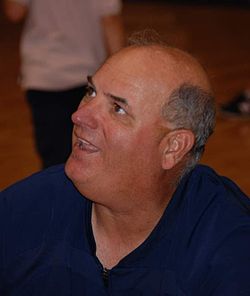
Alan Anthony Borges (born October 8, 1955) is an American football coach. Borges is known for quarterback development[1] having mentored Cade McNown and Jason Campbell, both first round NFL draft picks.[1][2] Borges has been described as "one of the best offensive coordinators I've ever seen," by former Auburn head coach Pat Dye.[3]

Key Information

Coaching career

[edit]

Early career

[edit]

Borges began his coaching career as an assistant coach at Salinas High School from 1975 to 1978, followed by a stint as an assistant at Pleasant Valley High School from 1979 to 1980.[4][5] He earned a Bachelor of Arts degree in 1981 from California State University, Chico.[4][5] Borges began his college coaching career at California as a part-time assistant in 1982 and 1983. He then moved on to his first full-time collegiate job at Diablo Valley College from 1983 to 1985. He split time with Diablo for two years in 1984 and 1985 as a defensive assistant with the USFL's Oakland Invaders.

From 1986 to 1992 he was the offensive coordinator for Division II Portland State University where he coached three All-American quarterbacks.[5] In 1993, he moved up to then Division I-AA Boise State University where his offense reached the Division I-AA championship game in 1994[5] and was seen trying to take down the goal posts after Boise State defeated its rival University of Idaho. In a single season as offensive coordinator at Oregon in 1995, his team led the Pac-10 in passing offense with 263.8 yards per game. The Ducks also averaged 406.3 yards and 29.1 points per game. His quarterback that season, Tony Graziani, led the Pac-10 in both total offense and passing.[5]

UCLA

[edit]

Borges was the offensive coordinator for five years (1996–2000) at UCLA under head coach Bob Toledo. Over that five-year period, UCLA averaged 31.9 points a game as well as reaching season averages over 40 points per game in 1997 (40.7 ppg) and 1998 (40.5 ppg).[5] He is also credited with developing Cade McNown from an average quarterback into a first-team AP All-American and first round NFL Draft pick and personally considers McNown his biggest turnaround.[6]

California and Indiana

[edit]

In January 2001, Borges left UCLA for a $50,000 raise and two-year contract for the same position at California.[7] After a losing season in which the entire California staff was replaced, Borges accepted the offensive coordinator position at Indiana where he coached for two seasons until Auburn head coach Tommy Tuberville called in early 2004.

Auburn

[edit]

Borges joined the Auburn staff in 2004. Auburn went 41-9 in the four seasons Borges was the offensive coordinator. Auburn was the only Southeastern Conference (SEC) team to finish ranked in the top 15 each of those seasons.[2] Borges is credited with much of the success of the 2004 Auburn Tigers football team which recorded a perfect 13-0 season under his "West Coast Offense" scheme. Borges resigned from Auburn December 10, 2007, after a steady decline in the team's offensive production, before the team's appearance in the New Year's Eve Chick-fil-A Bowl.[8]

San Diego State

[edit]

On December 24, 2008, Brady Hoke (new head coach at San Diego State) hired Borges as offensive coordinator for the Aztecs.[9]

Borges worked as the offensive coordinator at San Diego State for two years, and helped lead the team to a 9-4 record in 2010, marking the Aztec's first nine or more win season since 1977. Borges' offense averaged 35 points per game in 2010.[10]

In 2009, Borges was a finalist to be the head coach at Portland State.[11]

Michigan

[edit]

On January 11, 2011, Brady Hoke, the new head coach at University of Michigan, hired Borges for the same position that he had held under Hoke at San Diego State.[12]

Borges had quick offensive success with the Michigan Wolverines football team in 2011 and helped lead the team to an 11-2 record, putting Michigan in the 2012 Sugar Bowl, Michigan's first BCS bowl game since the 2006 season.[13]

In 2012, Michigan lost early in the season to Alabama (41-14) and Notre Dame (13-6). Quarterback Denard Robinson threw four interceptions and was blamed for the Notre Dame loss. Robinson was injured in the third loss of the season against Nebraska, and backup quarterback Russell Bellomy performed poorly. Borges was criticized for not preparing then wide receiver and third-string quarterback Devin Gardner. Michigan went on to win their next three games before falling to Ohio State 26-21. Borges was criticized for poor play calling in the second half, in which Michigan failed to cross midfield.

In 2013, Michigan won close games against Akron (28-24) and UConn (24-21) and lost in four overtimes to Penn State. Borges and Michigan's offensive line were criticized, as starting tailback Fitzgerald Toussaint gained only 27 yards on 27 carries against Penn State. The following week Michigan had an offensive breakout game against Indiana, winning 63-47, with Jeremy Gallon having a record setting day. However, Michigan then had one of the worst statistical offensive performances in Michigan football history, losing to Michigan State 29-6 with -46 yards rushing in the game. The next week, Michigan again accumulated negative rushing yardage and lost to Nebraska 17-13. The loss was particularly troubling because Nebraska had one of the worst statistical defenses in college football. The team's offensive troubles continued through the second half of the season, leading to heightened criticism of Borges. In the final game of the regular season, Michigan regained its offensive rhythm and lost a close game to Ohio State, 42-41. Michigan played Kansas State in the Buffalo Wild Wings Bowl without starting quarterback Devin Gardner, who broke his toe against Ohio State in the second half. Backup quarterback Shane Morris played a solid game for a true freshman, but the offense still struggled to get things going. Michigan fell to Kansas State, 31-14. On January 8, 2014, Brady Hoke announced that Borges would not be retained for the 2014 season.[14]

San Jose State

[edit]

On February 5, 2015, San Jose State University announced that Borges was hired as offensive coordinator and quarterbacks coach under head coach Ron Caragher.[15]

UTSA

[edit]

On January 19, 2018, the University of Texas at San Antonio announced that Borges was hired as offensive coordinator and quarterbacks coach under head coach Frank Wilson.[16] Borges’ offense finished the season ranked 129th out of 130 teams in major college football in scoring, managing just 14.2 points per game. Their rushing offense ranked 128th, and were 119th nationally throwing the ball. He was released at the end of the season.[17]

Awards and honors

[edit]
  • Rivals.com Offensive Coordinator of the Year, 2005[4]
  • Finalist - Frank Broyles Assistant Coach of the Year Award, 1997 and 1998[4][5]
  • Football Coach Quarterly's Offensive Coordinator of the Year, 1997.[4]

Instruction

[edit]

Borges and his brother Keith, an assistant with him at California in 2001, collaborated on a book titled Coaching the West Coast Quarterback (ISBN 1-58518-341-5) as well as a series of instructional videos by the same name.[18] Borges also contributed a chapter on strategy using the I formation for the American Football Coaches Association-published book, Football Offenses & Plays (ISBN 0-7360-6261-0) published in 2006.[19]

Personal life

[edit]

Borges is married to the former Susan Malnick. Susan served as a paralegal for over 25 years. Borges is the son of Josephine and Gordon Borges and is one of seven children (John, Leslie, Teresa, Toni, Keith, and Cathy).[20] [5][21]

References

[edit]
[edit]
Revisions and contributorsEdit on WikipediaRead on Wikipedia
from Grokipedia
Alan Anthony Borges (born October 8, 1955) is an American coach best known for his extensive career as an and quarterbacks coach at the level, where he developed numerous professional quarterbacks and led programs to multiple titles and victories. Over four decades, Borges coached at institutions including Auburn, UCLA, , , Boise State, , and , amassing nine championships and appearances in 11 games, including three Bowls and two Bowls. His innovative schemes emphasized protection and precise passing, earning him recognition as a finalist for the —given to the nation's top assistant coach—in 1997 and 1998 while at UCLA. Born in , Borges graduated from North Salinas High School and earned a in from , in 1981. He began his coaching career in , serving as an assistant at Salinas High School from 1975 to 1978 and at Pleasant Valley High School from 1979 to 1980, before transitioning to the collegiate ranks as a at Chico State in 1981. Early in his career, Borges worked primarily on offense, serving as at Portland State (1986–1992), where his teams won five titles over seven years, at Boise State (1993–1994), and at the in 1995. Borges's most prominent achievements came during stints at major programs, including his role at (2004–2007), where as he helped orchestrate a perfect 13–0 season and SEC championship in 2004, though the team was controversially excluded from the game. At UCLA (1996–2000), he guided the Bruins to a 20-game winning streak and two Pac-10 titles, while mentoring quarterback to become the 18th overall pick in the . He coached three first-round NFL quarterbacks in total—Cade McNown (UCLA), (California), and (Auburn)—and over 100 players who reached the professional level, seven of them quarterbacks. Later roles included at (2011–2013) and at (2002–2003), contributing to consistent . In recent years, following his final full-time position as offensive coordinator at UTSA in 2018, Borges has transitioned to analysis and authorship, publishing Deny of the Tiger in 2022—a memoir detailing Auburn's 2004 campaign—and providing expert commentary on Michigan Wolverines football for 247Sports as of 2025. He was inducted into the Salinas Valley Sports Hall of Fame in 2019, recognizing his contributions to football from his hometown roots.

Early life and education

Childhood in Salinas

Alan Anthony Borges was born on October 8, 1955, in Salinas, California. Raised in the agricultural heart of the Salinas Valley, Borges grew up immersed in a close-knit family environment that emphasized community and sports. Borges was one of seven children born to Josephine and Gordon Borges, sharing his upbringing with siblings John, Keith, Leslie, Teresa, Toni, and Cathy. His father, Gordon, played a pivotal role in fostering Borges' early interest in football through active involvement in local sports organizations; Gordon served as president of the Pop Warner Football League and the North Salinas High School Booster Club, promoting youth athletics in the Salinas area. The Salinas Valley's vibrant football culture, rooted in the region's tight communities and tradition of high school rivalries, further shaped this environment, where sports served as a central social and familial bond. From a young age, Borges gained hands-on exposure to football through family-supported participation in local youth leagues, including programs led by his father's organizational efforts. This early involvement, combined with the pervasive influence of Salinas' sports scene—highlighted by competitive high school programs like North Salinas High, from which Borges later graduated—laid the groundwork for his lifelong passion for the game.

College education

Borges attended , earning a degree in in 1981. While pursuing his studies, he balanced academics with initial coaching roles at local high schools, gaining hands-on experience that ignited his passion for the sport. These early coaching opportunities during college allowed Borges to develop foundational skills in offensive play-calling and player development, influencing his long-term approach to the game. Following graduation, Borges transitioned to his first full-time position at , where he served as tight ends and receivers coach from 1983 to 1984 before becoming in 1985. This role at the level further honed his offensive mindset, emphasizing balanced attacks and quarterback fundamentals that would define his career. Supported by his family's encouragement from his Salinas roots, Borges leveraged these educational and early professional steps to build a trajectory in football coaching.

Coaching career

High school beginnings

Al Borges began his coaching career as an assistant coach at Salinas High School in his hometown, serving from 1975 to 1978 while still a college student. He started at age 19 under Mike Welsh, gaining initial hands-on experience in football instruction at the high school level. In 1979 and 1980, Borges took on an assistant coaching position at Pleasant Valley High School in , continuing to build his expertise during his undergraduate years. He returned to Salinas High School as an assistant coach in 1981, shortly after graduating from . That year, he also served as a at Chico State. From 1982 to 1983, Borges coached quarterbacks at the University of Hawaii. He then spent 1984 and 1985 as quarterbacks coach for the USFL's . These early assistant roles focused on supporting offensive strategies and developing young players' skills, laying the groundwork for Borges' emphasis on team fundamentals and athlete mentorship throughout his career. In reflecting on this period, Borges highlighted how setbacks, such as not securing a head job at nearby King City High School in 1981, ultimately steered him toward higher levels of and reinforced lessons in resilience and preparation. Borges briefly drew on his college education in to integrate structured teaching approaches into mentoring high school athletes.

Portland State and Boise State

Al Borges served as and quarterbacks coach at from 1986 to 1992, under head coach Pokey Allen. During this tenure, the achieved sustained success in the Western Football Conference, capturing five league championships with a 30-7 conference record and an overall 63-26-2 mark over seven seasons. Borges' schemes emphasized a pass-oriented attack, which propelled the team to two game appearances in 1987 and 1988, fostering an environment where quarterback precision and timing became hallmarks of the offense. Influenced by the West Coast offense's focus on short, accurate passes and play-action, Borges began refining these principles at Portland State, integrating them into a system that maximized quarterback mobility and receiver routes. His initial mentoring efforts produced multiple Division II All-American quarterbacks, such as , who shattered passing records with over 7,000 yards and 78 touchdowns in two seasons, exemplifying Borges' emphasis on footwork, decision-making, and progression reads. This period laid the groundwork for Borges' reputation in quarterback development, as his coaching transformed raw talents into efficient leaders within a high-tempo, spread passing framework. In 1993, Borges reunited with Allen at in the same roles, marking his transition to NCAA Division I-AA. The inaugural season yielded a 3-8 record amid adjustments, but 1994 saw explosive growth, with the Broncos posting a 13-2 overall mark, a 6-1 record, and a league title. Borges' offense ranked 10th nationally in scoring (37.3 points per game) and 19th in total yards (423.1 per game), powering Boise State through the I-AA playoffs to the game, where they fell to Youngstown State. This campaign underscored Borges' adaptation of West Coast elements—such as quick releases and bootlegs—to a run-pass balance, while continuing his quarterback coaching to elevate signal-callers in a rebuilding program.

Oregon and UCLA

In 1995, Al Borges served as and quarterbacks coach at the , where he directed a balanced attack that emphasized passing efficiency, leading the Pac-10 in passing yards per game at 263.8 while averaging 406.3 total yards and 35.5 points per contest nationally ranked 18th in total offense. Drawing briefly from his prior coordinator role at Portland State, Borges adapted schemes to leverage Tony Graziani's arm strength, contributing to a 9-3 regular season record and a Cotton Bowl appearance, though the Ducks fell 38-6 to . Borges joined UCLA in 1996 as and quarterbacks coach under head coach , a position he held through 2000, during which the Bruins compiled a 36-22 overall record and appeared in three games. His offenses showed marked improvement in explosiveness, peaking in 1998 with 482.6 total yards per game—13th nationally—and setting school records for single-season passing yards (3,838 by ) and total offense in a game (541 passing yards vs. USC in 1997). Over the five-year span, UCLA averaged 31.9 points per game, with notable gains in rushing efficiency (up to 188.1 yards per game in 1998) and play volume, reflecting Borges' focus on pro-style passing integrated with balanced runs. A cornerstone of Borges' UCLA tenure was his development of quarterback , whom he mentored from 1996 to 1998 into a standout performer: a 1998 Pac-10 Co-Offensive Player of the Year, winner, finalist, and consensus All-American who threw for 10,708 career yards. McNown's growth under Borges culminated in his selection as the 12th overall pick in the by the , highlighting Borges' expertise in quarterback footwork, decision-making, and progression reads. Under Borges, UCLA participated in the Cotton Bowl (a 29-23 victory over Texas A&M, powered by 433 total yards), the (a 38-31 loss to despite 482 yards of offense), and the 2000 Sun Bowl (a 21-20 defeat to ). These postseason outings underscored offensive strides, such as the team's Pac-10-leading 266.3 passing yards per game, though inconsistencies emerged in 1999 (327 total yards per game) and 2000 amid quarterback transitions.

California, Indiana, and Auburn

In 2001, Al Borges served as at the , where he implemented a emphasizing precise passing routes and quarterback protection to revitalize the Golden Bears' struggling attack. Hired in January by head coach Tom Holmoe, Borges focused on developing Kyle Boller, who threw for 3,129 yards and 20 touchdowns that season, marking a significant improvement in the team's aerial production despite a 5-6 overall record. Borges transitioned to the in 2002 as and quarterbacks coach at , bringing his West Coast principles to a program seeking offensive consistency under head coach . Over two seasons (2002-2003), his units averaged around 22 points per game, with quarterback adjustments like those for in 2002 highlighting adaptive play-calling, though the Hoosiers finished 4-8 and 3-9, respectively, amid broader team challenges. Borges reached the pinnacle of his mid-career tenure from to 2007 as and quarterbacks coach at in the SEC, orchestrating a balanced pro-style attack that propelled the Tigers to national prominence. In , under head coach , Borges' offense supported an undefeated 13-0 season, capturing the SEC championship and defeating No. 14 16-13 in the to finish No. 2 nationally, with the unit ranking top-10 in total offense at 402.5 yards per game through efficient run-pass balance and game-planning against five ranked opponents. Subsequent years included bowl appearances in all four seasons (42-9 overall record), with Borges mentoring quarterback —who started in and led Auburn to consistent production—into a first-round NFL draft pick (No. 25 overall by the Washington in 2007) by refining his pocket presence and decision-making in Borges' system.

San Diego State and Michigan

In 2009, Al Borges returned to the West Coast as for under head coach , a role he held through 2010. Hired on December 24, 2008, Borges implemented a balanced offensive scheme emphasizing a power-run approach, which began to show promise despite initial challenges with a young roster. The ' rushing attack, which had struggled at 73.2 yards per game in 2008, improved marginally to 78.3 yards per game in 2009 as Borges focused on establishing a physical ground game to complement quarterback Ryan Lindley's passing. By 2010, the revitalization became evident, with State's rushing output surging to 161.3 yards per game—more than double the previous year's mark—driven by Ronnie Hillman's 1,532 yards and the implementation of varied run concepts that stressed defenses. This turnaround contributed to an 8-5 record and a notable upset victory over No. 21 in the inaugural Bridgepoint Education , where the rushed for 204 yards. Following the 2010 season, Borges reunited with Hoke at the , serving as and quarterbacks coach from to 2013. His arrival marked a shift toward a tailored to leverage Denard Robinson's abilities while building a more robust running game suited to Big Ten competition. In , Borges' unit exploded for 404.7 total yards and 33.3 points per game, powering an 11-2 record that included a dramatic 23-20 overtime victory over in the —Michigan's first major bowl win since 2000. The offense balanced 221.8 rushing yards per game with 182.8 passing yards, earning Borges recognition for adapting high-tempo elements from his prior successes. However, performance dipped in subsequent years as the team transitioned to a more traditional scheme; 2012 saw 383.1 total yards and 31.2 points per game en route to an 8-5 finish, while 2013 yielded only 373.5 yards and 24.2 points per game amid a 7-6 season marred by inconsistencies. Borges faced significant challenges integrating Michigan's offensive line, particularly in synchronizing protection schemes with his play-calling during the shift away from spread elements. In , the line's struggles contributed to a dismal 125.7 rushing yards per game—ranking 102nd nationally—and frequent negative plays, as younger players adapted slowly to the demands of a power-run focus influenced by Borges' earlier Auburn experiences in the SEC. Scheme adjustments, including increased under-center snaps and play-action passes, aimed to protect quarterbacks like but exposed vulnerabilities against stout defenses, leading to Borges' departure after the 2013 Buffalo Wild Wings Bowl loss to Kansas State. Despite these hurdles, his tenure restored Michigan's offensive potency early on, mentoring quarterbacks who threw for over 2,900 yards in 2013 while emphasizing ball security and red-zone efficiency.

San Jose State and UTSA

In February 2015, hired Al Borges as and quarterbacks coach under Ron Caragher, marking his return to on-field coaching after a brief hiatus following his tenure at . In his first season, Borges oversaw an offense that averaged 404.6 yards per game, contributing to a 6-7 overall record and a 4-4 mark in play. The Spartans qualified for the inaugural , where they defeated Georgia State 27-16 on December 19, 2015, with quarterback Kenny Potter accounting for two touchdowns in the comeback victory. Returning for the 2016 season, Borges continued in his role as the Spartans posted a 4-8 record and went 3-5 in conference play, failing to reach a . The offense struggled, ranking near the bottom nationally in scoring at just under 23 points per game, reflecting challenges in a rebuilding program similar to those Borges had navigated earlier at . Following the season, Borges departed San Jose State after two years. Borges concluded his active coaching career in 2018 as and quarterbacks coach at the of Texas at San Antonio (UTSA), hired on January 19 by head coach Frank Wilson to revitalize the Roadrunners' attack. Drawing on his extensive experience, Borges implemented an offensive scheme emphasizing development and balanced play-calling, though the unit averaged only 14.2 , ranking 129th out of 130 FBS teams in scoring. UTSA finished 3-9 overall and 2-6 in play. After the season, Borges did not return to the staff, effectively transitioning out of full-time on-field coaching roles at age 63.

Post-coaching activities

Media commentary and publications

In 2022, Al Borges published Deny of the Tiger, a memoir detailing his experiences as offensive coordinator during Auburn University's undefeated 2004 football season. The book provides week-by-week insights into the team's preparation and performance, drawing on Borges' firsthand observations of key games against ranked opponents and the program's internal dynamics under head coach Tommy Tuberville. It highlights the strategic adjustments that contributed to Auburn's 13-0 regular season record, though the team was denied a national championship opportunity due to the Bowl Championship Series format. Following his retirement from active coaching, Borges has engaged in media commentary focused on offenses, particularly those of the . In 2025, he appeared regularly on The Michigan Insider podcast hosted by , offering detailed breakdowns of 's offensive schemes and execution. For instance, in episodes analyzing the October 25 victory over Michigan State, Borges examined passing game inefficiencies and decision-making, attributing struggles to protection breakdowns and route precision issues. Similar discussions in November segments on the Purdue and Northwestern games emphasized the need for improved mobility and play-action usage to counter defensive pressures. Borges' online analyses extend these podcast contributions, where he provides film-based evaluations accessible via platforms. These pieces, co-authored with analyst Sam Webb, dissect specific plays and schematic trends, such as Michigan's run-pass balance during bye weeks and non-conference matchups. His perspectives are informed by prior analyst roles, offering a blend of historical context and tactical foresight for audiences interested in Big Ten offensive evolution.

Awards and honors

Coaching accolades

During his tenure as offensive coordinator at , Al Borges was named the Rivals.com Offensive Coordinator of the Year in 2005, recognizing his role in orchestrating one of the nation's top-scoring offenses during the 2004 season, which helped the Tigers achieve an undefeated regular season and secure the championship. Earlier in his career at UCLA, Borges earned finalist honors for the Award—presented annually to the top assistant coach in —in both 1997 and 1998, honors that highlighted his contributions to the Bruins' high-powered aerial attack and back-to-back Pac-10 titles. In 1997, Borges also received the Football Coach Quarterly Offensive Coordinator of the Year award, further acknowledging his innovative play-calling that propelled UCLA to a 10-2 record and a No. 5 national ranking that season.

Hall of Fame recognition

In 2019, Al Borges was inducted into the Sports Hall of Fame, recognizing his extensive contributions to football as a coach and his origins as a North Salinas High School graduate from the region. The honor celebrated his 44-year coaching career, during which his teams secured nine conference championships across major leagues like the Pac-10, SEC, and Big Sky, alongside appearances in 11 bowl games, including three Cotton Bowls and two Sugar Bowls. This induction served as a culmination of Borges' earlier coaching accolades, affirming his legacy in offensive coordination and program building at institutions such as UCLA, Auburn, and . No further regional or coaching-specific Hall of Fame recognitions have been reported for Borges through 2025. Borges' overall impact on football is underscored by his mentorship of over 100 players who advanced to the , including seven and three first-round draft picks at the position, highlighting his expertise in quarterback development and offensive strategy.

Coaching philosophy

Offensive strategies

Al Borges is renowned for his adoption of the , a system emphasizing short, precise passing routes to control the tempo and set up play-action runs, drawing directly from Bill Walsh's principles. Borges adapted this framework throughout his career, incorporating pre-snap reads and rhythm passing to exploit defensive alignments, as detailed in his co-authored book Coaching the West Coast Quarterback, where he outlines techniques for 3-, 5-, and 7-step drops alongside rollout actions to maintain quarterback protection and quick decision-making. This approach prioritizes horizontal stretching of the field, using slants, hitches, and choice routes to create mismatches, while integrating play-action to complement a balanced run game, allowing offenses under his coordination to average over 30 points per game in multiple seasons. His early defensive coaching roles at Oregon State and California informed his offensive philosophy, emphasizing adaptability. Borges' offensive philosophy evolved from a traditional pro-style West Coast system during his tenure as UCLA's offensive coordinator from 1996 to 2000, where he relied on under-center snaps, I-formation runs, and tight end involvement to execute a power-based passing attack, producing quarterbacks like who threw for over 3,000 yards in 1998. By the time he returned to as offensive coordinator in 2011, Borges had incorporated spread concepts, influenced by a year of study during his 2008 unemployment, blending shotgun formations and no-huddle tempos to accommodate mobile quarterbacks like . This hybrid "spread-West Coast" offense maintained core West Coast elements like quick passes and play-action but added spread-option runs to enhance explosiveness, with averaging 183 passing yards per game that season. A hallmark of Borges' tactical innovations was his integration of run-pass options (RPOs) later in his career, particularly at and UTSA, to create defensive indecision by packaging run plays with quick-pass tags like or bubbles, allowing the to read the box and choose based on the defense's reaction. This multiplicity balanced the offense, forcing defenses to honor both run and pass equally, as seen in 's scheme where RPOs contributed to a 7-6 record despite transitional challenges. At Auburn in 2004, Borges emphasized pro-style balance with a strong running game to support the undefeated season, highlighting his core innovations in adaptability across personnel.

Quarterback mentoring

Al Borges has built a reputation for his specialized coaching of , emphasizing precision and fundamentals to elevate their performance in high-stakes college environments. His methods draw from decades of experience, focusing on transforming raw talent into polished passers capable of reading complex defenses and executing under pressure. A cornerstone of Borges' quarterback mentoring involves rigorous training in footwork and pocket movement, which he views as essential for maintaining balance and delivering accurate throws amid defensive chaos. He teaches structured drop-back techniques, such as 3-, 5-, and 7-step progressions, to ensure quarterbacks plant their feet correctly while scanning the field. This footwork drills extend to roll-out actions, where mobility in the pocket allows for quick adjustments without sacrificing throwing mechanics. Borges integrates these elements with decision-making drills that sharpen progression reads, instructing players to prioritize primary targets while anticipating coverages like zone or man defenses. Through repetitive film study and on-field simulations, he hones a quarterback's ability to process plays in real time, reducing hesitation and turnovers. Borges' impact is evident in the careers of standout pupils like at UCLA, whom he coached from 1996 to 1998, guiding the signal-caller to become a finalist and first-round NFL draft pick by the in 1999. Under Borges' tutelage, McNown refined his pocket presence and arm strength, leading UCLA to 20 straight wins and earning Pac-10 co-offensive player of the year honors in 1998. Similarly, at Auburn in 2004, Borges developed in a single season, elevating the senior quarterback's accuracy and leadership to secure a first-round selection by the Washington Redskins in the . Campbell credited Borges' emphasis on mental preparation and footwork for his breakout performance, which included setting Auburn records in passing efficiency during an undefeated regular season. Over his 40-year career, Borges' mentoring has produced a lasting legacy, with seven quarterbacks advancing to football levels, including multiple starters who attribute their success to his foundational techniques. This track record underscores his role in bridging college development to pro readiness, often incorporating principles to enhance pocket passing efficiency.

Personal life

Family and relationships

Al Borges was born into a large family in , as one of seven children to parents Gordon and Jo Borges, an upbringing that instilled strong family values central to his personal life. Among his six siblings is his brother Keith Borges, with whom Al maintained a close professional and familial bond, including co-authoring coaching materials on quarterback development. Borges married Nikki Borges, whom he met at a seminar; she is 16 years younger and has built a career in athletic department administration and sports business, adapting to the demands of his nomadic path across multiple states. The couple adopted two: son Cole in 2005 while Borges served as at , and daughter Mady Jo two years later. Throughout Borges' career transitions—from California to Oregon, UCLA, Auburn, Michigan, and beyond—his family provided unwavering support, with Nikki securing professional roles at each stop and the children embracing the frequent relocations as part of their adventurous life. This familial resilience was particularly evident during the 2012 move to the , where head coach Brady Hoke's family-oriented program aligned with their priorities, allowing Borges to balance fatherhood with coaching responsibilities.

Later interests

Following his retirement from coaching in 2018, Al Borges turned his attention to writing and football analysis, drawing on decades of experience to share insights from his career. Living in , he authored Deny of the Tiger in 2022, a recounting his tenure as Auburn University's during the team's undefeated 13-0 season in 2004, including their SEC championship and the controversial exclusion from the national title game. The incorporates personal anecdotes, strategic breakdowns, and reflections on key players like Jason Campbell, based on Borges' review of game footage and notes from the era. This marked his second foray into authorship, following a 2000 publication on the written during his time at the . Borges has also maintained an active role in football commentary through detailed . Since at least 2023, he has contributed weekly breakdowns for The Michigan Insider on , dissecting Wolverines' offensive performances in games such as their 35-7 victory over UNLV, where he evaluated J.J. McCarthy's footwork, play-calling schemes, and run-game execution. These sessions, often featuring telestration for visual explanation, emphasize teaching moments on player development and tactical adjustments, collaborating with analysts like Sam Webb and former players such as . His analyses highlight enduring principles like the "fourth-and-one mentality" for high-stakes decisions, informed by his coaching philosophy. In 2021, Borges returned to Auburn with his son to tour the campus as a potential option, receiving an emotional welcome from fans and staff during the , underscoring his lasting connections to the program. These pursuits reflect Borges' ongoing passion for football and beyond the sideline.

References

Add your contribution
Related Hubs
User Avatar
No comments yet.